Choosing the right pipe material affects how long your plumbing lasts, how much you spend on installation, and how well your system handles heat, cold, and pressure. PEX, copper, and CPVC each have real strengths and clear limitations — and the best choice depends on your home’s age, layout, water quality, and budget.
Picking the wrong pipe type leads to premature failures, costly repairs, and disruption to your daily routine as a homeowner or property manager.
This guide compares all three materials across cost, durability, performance, and best-use scenarios so you can make a confident, informed decision.
What Are PEX, Copper, and CPVC Pipes?
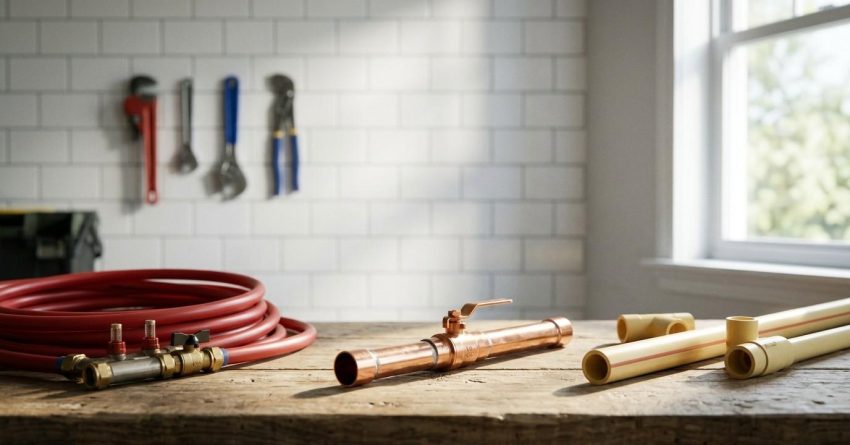
PEX, copper, and CPVC are the three most widely used pipe materials in residential plumbing across the United States. Each one carries water through your home’s supply lines, but they differ significantly in material composition, installation method, and long-term behavior.
What Is PEX Pipe?
PEX stands for cross-linked polyethylene. It is a flexible plastic tubing introduced to the U.S. residential market in the 1980s and now used in the majority of new home construction. PEX bends around corners without fittings, resists freezing better than rigid pipes, and installs faster than most alternatives. It comes in three types — PEX-A, PEX-B, and PEX-C — with PEX-A offering the most flexibility and freeze resistance.
What Is Copper Pipe?
Copper pipe is a rigid metal pipe that has been the standard for residential plumbing in the United States for decades. It is highly durable, naturally antimicrobial, and tolerates both hot and cold water without degrading. Copper is available in three common grades: Type K (thickest walls, used underground), Type L (standard residential use), and Type M (thinner walls, used in low-pressure applications). Its main drawbacks are higher material cost and susceptibility to corrosion in homes with acidic water.
What Is CPVC Pipe?
CPVC stands for chlorinated polyvinyl chloride. It is a rigid plastic pipe that handles higher temperatures than standard PVC, making it suitable for both hot and cold water supply lines. CPVC is lighter than copper, costs less per linear foot, and connects using solvent cement rather than solder. It is a common choice in older retrofits and in regions where copper prices make metal piping cost-prohibitive.
Understanding which pipe material suits your home starts with knowing how your plumbing system works — our residential plumbing services covers the full range of pipe installation, repair, and replacement solutions available for homeowners and property managers.
How Each Pipe Material Performs in Real Conditions
Material specifications matter, but real-world performance is what homeowners and landlords actually experience. PEX, copper, and CPVC behave differently under the conditions most homes face: temperature swings, high water pressure, and the physical demands of installation.
Temperature and Pressure Tolerance
Copper handles the widest temperature range of the three materials. It performs reliably from freezing conditions up to 400°F, making it suitable for high-heat applications like radiant heating systems. CPVC is rated for water temperatures up to 200°F, which covers standard residential hot water supply. PEX is rated for temperatures up to 200°F as well, but its advantage is freeze resistance — PEX expands under freezing pressure and returns to shape, significantly reducing the risk of burst pipes in cold climates.
For water pressure, all three materials handle standard residential supply pressure of 40–80 PSI without issue. Copper and CPVC are rigid and maintain consistent pressure throughout the line. PEX, being flexible, can experience minor pressure variation at bends but performs reliably within normal residential ranges.
Flexibility and Ease of Installation
PEX is the easiest of the three to install. Its flexibility allows it to run through walls, floors, and tight spaces without requiring as many fittings as rigid pipe. Fewer fittings mean fewer potential leak points. PEX connects using crimp rings, clamp rings, or expansion fittings — no soldering required.
Copper requires soldering at every joint, which demands skill, proper tools, and time. Mistakes in soldering create leak points that may not appear immediately. CPVC uses solvent cement, which is simpler than soldering but requires precise application and adequate cure time before the system is pressurized.
Pipe material performance matters most during renovation work, and choosing the right option before walls close up can prevent costly repairs later — learn how our home remodeling projects team coordinates plumbing upgrades as part of a complete remodel.
Cost Comparison: PEX vs Copper vs CPVC
Cost is one of the most significant factors in pipe material selection, particularly for whole-home repiping or new construction projects. The price difference between materials is substantial.
| Material | Material Cost (per linear foot) | Labor Cost | Overall Project Cost |
| PEX | $0.50–$2.00 | Low | Lowest overall |
| CPVC | $0.50–$1.00 | Low-Medium | Low-Medium overall |
| Copper | $3.00–$10.00+ | High | Highest overall |
Copper’s material cost has risen significantly over the past decade due to global commodity pricing. For a whole-home repiping project, the difference between PEX and copper can reach several thousand dollars depending on home size and local labor rates. If you need a whole-home repiping estimate, our whole-home repiping cost guide breaks down what to expect by home size, pipe length, and material choice.
CPVC sits in the middle ground — cheaper than copper but slightly more expensive to install than PEX due to the precision required for solvent cement connections. For smaller pipe replacement jobs that do not require a full plumbing overhaul, our handyman pipe installation service offers a cost-effective option for straightforward repairs and fixture connections.
Lifespan and Durability: Which Pipe Lasts Longest?
Durability directly affects long-term property value and maintenance costs. Each material has a different expected service life and a different set of failure risks.
Copper pipe has the longest proven track record, with a lifespan of 50–70 years under normal conditions. Its primary durability risk is corrosion. Homes with acidic water (pH below 7.0) or high mineral content can experience pinhole leaks in copper lines within 10–15 years. Copper is also vulnerable to physical damage from freezing, though less so than rigid plastic.
CPVC has an expected lifespan of 50–75 years in ideal conditions, but it becomes brittle over time, particularly when exposed to UV light or certain chemical cleaners. CPVC is more prone to cracking under physical stress than either copper or PEX, and connections can fail if the solvent cement was not applied correctly during installation.
PEX has a manufacturer-rated lifespan of 25–50 years, though it has not been in widespread residential use long enough to confirm the upper end of that range. PEX is resistant to corrosion and scale buildup, but it degrades when exposed to UV light and can be damaged by rodents in crawl spaces or unfinished areas.
Pipe failures — whether from corrosion, freezing, or age — are one of the leading causes of interior water damage, and our water damage repair team responds quickly to minimize structural harm and restore affected areas.
Which Pipe Is Best for Your Home?
There is no single best pipe material for every situation. The right choice depends on your home’s specific conditions, your budget, and the type of work being done.
Best for New Construction
PEX is the dominant choice for new residential construction in the United States. Its low material cost, fast installation, freeze resistance, and flexibility make it the most practical option when building from the ground up. Most major homebuilders have shifted to PEX as their standard pipe material.
Best for Remodeling and Retrofits
CPVC and PEX both work well for remodeling projects, but PEX has an advantage in retrofit situations because it can be snaked through existing wall cavities without opening large sections of drywall. CPVC is a strong option when the existing system uses CPVC and a partial replacement is needed, since mixing pipe materials requires careful transition fittings.
Copper remains a viable retrofit option in older homes where the existing system is copper and only a section needs replacement. Matching materials avoids compatibility issues and maintains system consistency.
Best for Hot and Cold Water Lines
All three materials handle cold water supply lines reliably. For hot water lines, copper and CPVC both perform well at standard residential water heater temperatures (120–140°F). PEX handles hot water supply effectively but should not be connected directly to a water heater — a short section of copper or CPVC is typically used at the heater connection point before transitioning to PEX.
Every home has different plumbing demands based on age, layout, and water quality, and our pipe replacement options help homeowners and landlords select the right material with professional guidance from start to finish.
Common Plumbing Problems by Pipe Type
Knowing the failure patterns of each material helps homeowners and property managers catch problems early and avoid emergency repairs.
PEX common problems: UV degradation in exposed areas, rodent damage in crawl spaces, and fitting failures from improper crimp tool use. PEX connections made with the wrong tool or incorrect ring size are a leading cause of PEX leaks.
Copper common problems: Pinhole leaks from corrosion in acidic water environments, solder joint failures from improper installation, and physical damage from freezing. Homes built between the 1960s and 1980s with original copper plumbing may be approaching the end of their service life.
CPVC common problems: Cracking from physical impact or thermal expansion stress, brittle failure in older installations, and joint failures from incomplete solvent cement coverage. CPVC is also incompatible with certain petroleum-based products and some pipe thread sealants, which can cause chemical degradation.
Leaks and burst pipes can escalate into serious structural problems if not addressed immediately — our pipe leak damage restoration service handles everything from emergency water extraction to full drywall and flooring repair.
When to Call a Professional Plumber
Some plumbing tasks are within reach of experienced DIYers, but pipe material selection, whole-home repiping, and any work involving your main supply line should involve a licensed professional. Incorrect pipe installation — regardless of material — creates leak points that may not appear for months or years, leading to water damage, mold growth, and structural repairs that far exceed the original plumbing cost.
Call a professional plumber when you are replacing more than a single fixture connection, when you notice discolored water or reduced pressure throughout the home, when you are planning a remodel that requires moving supply lines, or when your home has original pipes that are approaching or past their expected service life.
Whether you are dealing with a failing pipe, planning a remodel, or upgrading an aging system, connecting with professional plumbing help through Mr. Local Services ensures the job is done correctly, safely, and to code.
Conclusion
PEX, copper, and CPVC each serve distinct roles in residential plumbing — PEX leads in flexibility and cost, copper in proven longevity, and CPVC in rigid plastic performance for hot and cold lines.
The right pipe material depends on your home’s age, water chemistry, budget, and the scope of the project — whether new construction, a full repipe, or a targeted repair.
Mr. Local Services connects homeowners and property managers with skilled plumbing professionals who assess your specific system and recommend the right material for lasting, code-compliant results. Contact us today to get started.
Frequently Asked Questions
Is PEX pipe safe for drinking water?
Yes, PEX pipe is approved for potable water use in all 50 U.S. states and meets NSF/ANSI 61 standards for drinking water system components. Some early PEX formulations had concerns about taste and odor, but modern PEX-A and PEX-B products do not affect water quality under normal conditions.
Can you use PEX and copper together in the same plumbing system?
Yes, PEX and copper can be used together using transition fittings designed for that purpose. This is common in retrofit projects where existing copper lines are extended or partially replaced with PEX. Using the correct transition fitting prevents galvanic corrosion at the connection point.
How long does CPVC pipe last before it needs to be replaced?
CPVC pipe has an expected lifespan of 50–75 years under normal conditions, but it becomes brittle with age and can crack under physical stress or thermal cycling. Homes with CPVC installed in the 1970s and 1980s may be showing signs of brittleness and should be inspected by a licensed plumber.
Which pipe material is best for cold climates?
PEX is the best choice for cold climates because it expands under freezing pressure rather than cracking. Copper and CPVC are both rigid and more susceptible to burst pipes when water inside the line freezes. Proper insulation is still required for all pipe types in unheated spaces.
Does copper pipe add value to a home?
Copper plumbing is generally viewed positively by home inspectors and buyers because of its long track record and durability. However, the presence of copper alone does not significantly increase resale value — the condition and age of the system matter more than the material.
What is the cheapest pipe to install for a whole-home repipe?
PEX is consistently the least expensive option for whole-home repiping when both material and labor costs are combined. Its faster installation time reduces labor hours, and its lower material cost per linear foot makes it significantly cheaper than copper for large-scale projects.
Can CPVC pipe be used for outdoor plumbing?
CPVC should not be used in outdoor applications where it is exposed to direct sunlight. UV radiation degrades CPVC over time, causing it to become brittle and crack. For outdoor supply lines, copper or UV-resistant PEX with appropriate sheathing is a better choice.