A manifold plumbing system — also called a home run system — connects each fixture in your home to a central distribution hub using its own dedicated supply line, giving homeowners precise control over water flow, pressure, and shutoff at every point.
Most homes built before 2000 rely on older trunk-and-branch layouts that share water supply lines across multiple fixtures. That shared design creates pressure drops, hidden leak risks, and limited control. Manifold systems solve all three problems with a cleaner, more reliable approach.
This guide explains what a manifold system is, how it works, how it compares to traditional plumbing, and what homeowners and property managers need to know before installation or upgrade.
What Is a Plumbing Manifold System?
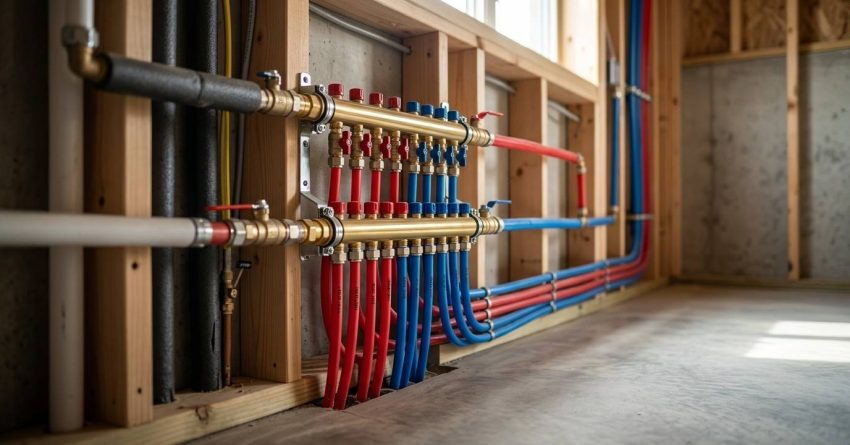
A plumbing manifold is a central distribution block — typically made from brass, stainless steel, or engineered polymer — that receives the main water supply and splits it into individual lines, one for each fixture or zone in the home. Each port on the manifold connects to a single fixture: a sink, toilet, shower, dishwasher, or washing machine.
The manifold itself is usually installed in a utility room, basement, or mechanical closet where it remains accessible for inspection and shutoff. Each port has its own valve, which means any fixture can be isolated and shut off independently without affecting water supply to the rest of the home.
This design is the defining feature of the home run approach. Rather than routing water through a shared main line that branches off to multiple fixtures, every fixture gets its own direct, uninterrupted run from the manifold to the point of use. A manifold system is one of the most efficient configurations in modern residential plumbing — our plumbing services overview covers the full range of supply, drain, and fixture solutions available for homeowners and property managers.
How a Home Run Plumbing System Works
In a home run system, the main water supply — both hot and cold — enters the manifold from the water heater and the main supply line. The manifold distributes that supply through individual ports, each connected to a single flexible supply tube, most commonly made from cross-linked polyethylene, known as PEX tubing.
PEX is the material of choice in manifold installations because it is flexible enough to route through walls, floors, and ceilings without joints or fittings along the run. Fewer joints mean fewer potential failure points. The tubing runs continuously from the manifold port to the fixture connection, with no intermediate connections in between.
Individual Supply Lines and Port Configuration
Each port on the manifold is sized to match the flow requirements of the fixture it serves. High-demand fixtures like showers and bathtubs typically receive larger-diameter lines, while lower-demand fixtures like bathroom sinks use smaller-diameter tubing. The manifold is configured during installation to match the home’s fixture layout, and ports can be capped if a fixture is not yet installed or is removed.
Because each fixture runs on its own dedicated line, the risk of widespread water damage is significantly reduced — but when leaks or failures do occur, our water damage restoration team is equipped to assess and resolve the problem quickly.
Manifold Plumbing vs. Traditional Trunk-and-Branch Systems
The trunk-and-branch system is the standard plumbing layout found in most existing homes. A large main supply line — the trunk — runs through the home, and smaller branch lines tap off it to reach individual fixtures. Multiple fixtures share the same branch, which means water pressure at one fixture is directly affected by demand at another.
The most common complaint in trunk-and-branch homes is pressure loss. Running the dishwasher while someone showers, or flushing a toilet while someone is at the sink, causes noticeable pressure drops throughout the shared line. Locating a leak in a trunk-and-branch system also requires tracing the branch back through walls and floors, which can be time-consuming and disruptive.
Manifold systems eliminate shared-line pressure competition entirely. Because each fixture has its own dedicated run, demand at one fixture does not affect pressure at another. Leak isolation is also straightforward: close the port valve at the manifold, and only that fixture loses water. The rest of the home continues operating normally.
Homeowners planning home remodeling projects often face the decision between upgrading to a manifold layout or retaining their existing trunk-and-branch configuration, and understanding the differences helps clarify which system fits the scope and budget of the work ahead.
Benefits of Manifold (Home Run) Plumbing for Homeowners
The practical advantages of a manifold system extend across daily comfort, long-term maintenance, and property value. The most significant benefits include:
Consistent water pressure at every fixture. Because no two fixtures share a supply line, pressure remains stable regardless of how many fixtures are in use simultaneously. This is particularly valuable in multi-bathroom homes and properties with high daily water demand.
Simplified leak detection and shutoff. Every fixture has its own labeled port valve at the manifold. If a leak is suspected or a fixture needs repair, the corresponding port is closed at the manifold without disrupting water supply to the rest of the home. This reduces repair time and limits water exposure during maintenance.
Fewer joints and connection points. PEX tubing runs continuously from the manifold to the fixture with no intermediate fittings. Fewer connections mean fewer opportunities for leaks to develop over time, which contributes to a longer system lifespan and lower maintenance costs.
Faster access to hot water. Dedicated lines from the water heater to each fixture reduce the distance hot water must travel, which shortens wait times at the tap and reduces water waste.
Leak Detection, Water Pressure, and Efficiency Gains
The combination of individual shutoff control and continuous tubing runs makes manifold systems significantly easier to maintain than trunk-and-branch layouts. Property managers overseeing multi-unit buildings find the centralized shutoff capability especially useful — a single manifold location provides control over every fixture in the unit without requiring access to individual rooms.
Minor adjustments to manifold ports, shutoff valves, and supply line connections are tasks well-suited to skilled tradespeople — our handyman repair services handle small-scale plumbing maintenance and fixture work that does not require a full plumbing callout.
When Is a Manifold Plumbing System the Right Choice?
Manifold systems are most appropriate in specific situations where their design advantages align with the property’s needs and the homeowner’s priorities.
New construction. Installing a manifold system during new construction is the most cost-effective approach. Routing PEX tubing through open framing before walls are closed is straightforward, and the manifold can be positioned in the optimal location from the start.
Full remodels with open walls. When a remodel exposes wall cavities and floor systems, retrofitting a manifold layout becomes practical. The cost of rerouting supply lines is offset by the long-term benefits of the new system.
Homes with chronic pressure problems. Properties where pressure complaints are ongoing — particularly in multi-bathroom homes — benefit most directly from the dedicated-line design of a manifold system.
Compact and high-efficiency builds. Manifold systems are especially well-suited to compact builds, and homeowners exploring tiny home construction will find that the space-efficient, centralized design of a home run layout aligns naturally with the demands of smaller footprints.
Properties with aging plumbing infrastructure. Homes with galvanized steel or polybutylene supply lines that are approaching the end of their service life are strong candidates for a full manifold retrofit during the replacement process.
What the Installation Process Involves
Installing a manifold plumbing system is a multi-stage process that requires planning, licensed plumbing work, and coordination with other trades if walls or floors need to be opened.
The process begins with a layout assessment. A licensed plumber evaluates the home’s fixture count, water demand, and available space for manifold placement. The manifold location must be accessible, centrally positioned relative to the fixtures it serves, and protected from freezing temperatures.
Once the layout is confirmed, supply lines are routed from the manifold location to each fixture. In new construction, this happens before drywall installation. In retrofit situations, tubing is typically run through wall cavities, under floors, or through attic spaces using flexible PEX, which can navigate turns without fittings.
Materials, Labor, and Timeline Expectations
The primary materials in a manifold installation are the manifold block itself, PEX tubing in the appropriate diameters, port fittings, and shutoff valves. Manifold blocks are available in configurations ranging from 4 ports to 24 or more, depending on the fixture count.
Labor timelines vary based on property size and whether walls are open or closed. A new construction manifold installation in a standard single-family home typically takes one to two days. A retrofit installation in an occupied home with closed walls requires additional time for access, routing, and restoration.
Every manifold system installation requires precise planning, correct port sizing, and proper pressure testing — our licensed plumbing installation professionals manage every stage of the process from layout design through final inspection.
Maintenance and Long-Term Care for Manifold Systems
Manifold systems are designed for low maintenance, but periodic inspection keeps the system performing reliably over its full service life.
Annual inspection of the manifold block and port valves confirms that all valves operate freely and that no corrosion or mineral buildup is present at the connections. In areas with hard water, mineral deposits can accumulate at valve seats over time and affect shutoff performance. Flushing individual lines periodically helps clear sediment from the tubing runs.
PEX tubing has an expected service life of 25 to 50 years under normal operating conditions, making it one of the most durable supply line materials available. However, exposure to UV light degrades PEX over time, so any sections of tubing that run through areas with direct sunlight exposure should be protected or replaced with UV-resistant alternatives.
Manifold systems work in close coordination with water-fed appliances throughout the home, and scheduling regular appliance and fixture maintenance alongside plumbing inspections helps ensure consistent water pressure and reliable performance across every connected unit.
Conclusion
Manifold plumbing systems represent a significant improvement over traditional trunk-and-branch layouts in terms of pressure consistency, leak control, and long-term maintenance efficiency. Understanding how the system works helps homeowners and property managers make informed decisions about new construction, remodeling, and infrastructure upgrades.
The home run design’s centralized control, dedicated supply lines, and durable PEX tubing make it a practical investment for properties where reliability and ease of maintenance are priorities. Whether you are building new or retrofitting an existing home, the manifold approach delivers measurable advantages across the life of the system.
At Mr. Local Services, our licensed plumbing professionals are ready to assess your property, recommend the right manifold configuration, and handle every stage of installation and ongoing maintenance with the quality and transparency you can count on.
Frequently Asked Questions
What is the difference between a manifold plumbing system and a trunk-and-branch system?
A manifold system gives each fixture its own dedicated supply line running directly from a central hub, while a trunk-and-branch system routes water through a shared main line with branches splitting off to multiple fixtures. Manifold systems provide better pressure consistency and easier leak isolation.
Is manifold plumbing worth the cost for an existing home?
Manifold plumbing is most cost-effective during new construction or full remodels when walls are already open. For existing homes with chronic pressure problems or aging supply lines, the long-term maintenance savings and improved performance often justify the retrofit investment.
What material is used for supply lines in a home run plumbing system?
Most manifold systems use PEX (cross-linked polyethylene) tubing because it is flexible, durable, resistant to corrosion, and can be routed through walls and floors without intermediate fittings. PEX has an expected service life of 25 to 50 years under normal conditions.
Can I shut off water to one fixture without affecting the rest of the house?
Yes. Each port on the manifold has its own shutoff valve, which allows any individual fixture to be isolated and turned off independently. The rest of the home’s water supply continues operating normally during repairs or maintenance.
How long does a manifold plumbing installation take?
In new construction with open framing, a standard single-family home installation typically takes one to two days. Retrofit installations in occupied homes with closed walls require additional time for access, tubing routing, and surface restoration.
Does a manifold system improve hot water delivery speed?
Yes. Because each fixture has a dedicated line running directly from the water heater, hot water travels a shorter, more direct path to the tap. This reduces wait time and limits the amount of cold water that runs before hot water arrives.
How often should a manifold plumbing system be inspected?
Annual inspection of the manifold block, port valves, and visible tubing connections is recommended. In hard water areas, more frequent checks help identify mineral buildup at valve seats before it affects shutoff performance or water flow.