Natural gas, propane, and all-electric systems each power your home differently — and choosing the wrong one can cost you thousands in installation, operating expenses, and long-term maintenance. For homeowners, landlords, and property managers across the USA, this decision affects every major system in the building, from heating and cooking to water and laundry.
Picking the right energy source is one of the most consequential property decisions you will make, directly shaping your monthly bills, safety requirements, and resale value.
This guide compares all three options across cost, efficiency, reliability, safety, and environmental impact so you can choose with confidence and take action.
What Are the Three Main Home Energy Sources?
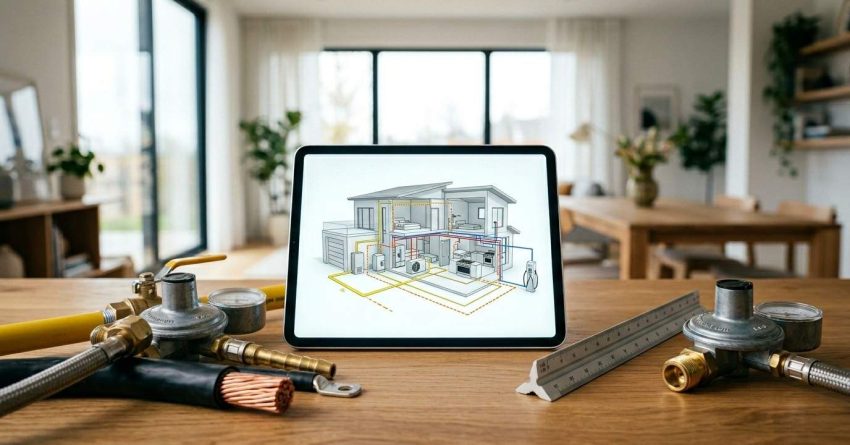
Most residential and commercial properties in the USA rely on one of three primary energy sources: natural gas, propane, or electricity. Each delivers energy to your home through a different supply chain, and each connects to a distinct set of appliances, infrastructure requirements, and ongoing costs.
How Natural Gas Works in a Home
Natural gas is delivered through underground utility pipelines directly to your property. It powers furnaces, water heaters, stoves, dryers, and fireplaces through a network of interior gas lines connected to a meter outside your home. Because it arrives on demand through the utility grid, there is no storage tank required and no risk of running out as long as your account is active. Natural gas is available in most urban and suburban areas across the USA, though rural properties often cannot access it.
How Propane Works in a Home
Propane is a liquefied petroleum gas stored in a tank on your property — either above ground or buried underground. A delivery service refills the tank on a scheduled or on-demand basis. Propane powers the same appliances as natural gas and is the most common alternative for rural homes and properties where utility pipelines do not reach. Because you own or lease the tank, you have more control over your fuel supply, but you also carry the responsibility of monitoring levels and scheduling deliveries.
How All-Electric Systems Work
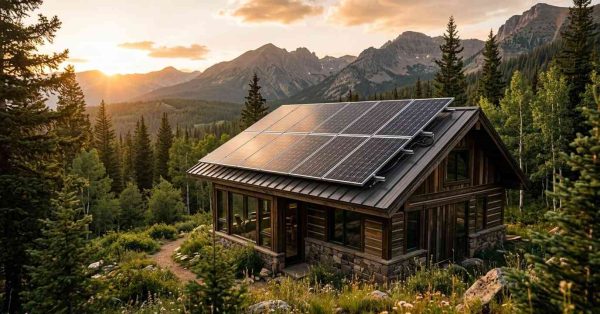
All-electric homes use no combustion fuel at all. Every appliance — heating, cooling, water heating, cooking, and laundry — runs on electricity supplied through the utility grid. Modern all-electric homes increasingly rely on heat pumps for both heating and cooling, which are significantly more efficient than older electric resistance systems. Solar panels and battery storage can further reduce dependence on the grid, making all-electric the most flexible option for homeowners pursuing energy independence.
Understanding which fuel source powers your home is the foundation of every heating and cooling decision — our guide to HVAC system options covers the full range of equipment, installation types, and service needs that connect directly to your energy source choice.
Upfront Costs and Installation Requirements
The initial investment required to set up each energy system varies considerably depending on your property’s existing infrastructure, location, and the appliances you plan to install.
Natural Gas Installation Costs
If your property already has a gas line connection at the street, connecting to natural gas typically costs between $500 and $2,000 for interior line work and meter setup. If no line exists, extending a utility pipeline to your property can cost $10,000 to $25,000 or more depending on distance and local utility fees. Appliances designed for natural gas — furnaces, ranges, water heaters — are generally priced comparably to their propane counterparts.
Natural gas and propane systems both require dedicated fuel line work before any appliance can operate — a licensed professional handling gas line installation ensures the connection meets local code and operates safely from day one.
Propane System Setup Costs
Installing a propane system requires purchasing or leasing a storage tank, which ranges from $400 to $2,000 for above-ground tanks and $1,500 to $3,500 for buried tanks. Tank installation, including excavation for underground units, adds another $1,000 to $5,000. If you are converting from natural gas to propane or vice versa, appliance conversion kits or full appliance replacements add to the total. Many propane suppliers offer free or subsidized tank installation when you commit to a long-term fuel contract.
All-Electric Home Setup Costs
Converting a gas home to all-electric is often the most expensive upfront option. A heat pump system for heating and cooling typically costs $5,000 to $15,000 installed. An electric water heater runs $500 to $1,500, and an induction range costs $1,000 to $3,000. If your electrical panel cannot handle the increased load, a panel upgrade adds $1,500 to $4,000. However, federal tax credits under the Inflation Reduction Act and state-level utility rebates can offset a significant portion of these costs for qualifying homeowners.
Monthly Operating Costs and Energy Efficiency
Day-to-day energy costs depend on local utility rates, your climate, the efficiency of your appliances, and how much energy your household consumes. No single fuel source is cheapest in every market.
Natural gas is typically the lowest-cost option per BTU in areas with established utility infrastructure. In most US markets, natural gas costs roughly $10 to $15 per million BTU, making it the most economical choice for high-consumption households in cold climates. Propane costs more per BTU — typically $20 to $35 per million BTU depending on regional supply and delivery costs — but remains competitive in rural areas where natural gas is unavailable.
All-electric systems present a more complex cost picture. Older electric resistance heating is the most expensive option per BTU. However, modern heat pumps deliver two to four units of heat energy for every unit of electricity consumed, making them two to four times more efficient than any combustion system. In mild climates or in states with low electricity rates, an all-electric heat pump home can have lower monthly energy costs than either gas option.
The appliances connected to your energy source have a direct impact on monthly operating costs — upgrading to energy-efficient appliances can reduce consumption significantly regardless of whether your home runs on gas, propane, or electricity.
Performance, Reliability, and Climate Considerations
Each energy source performs differently depending on your climate, local infrastructure, and the specific demands of your property.
Natural gas delivers consistent, high-output heat and is well-suited to cold climates where heating demand is high. Because it arrives through a utility pipeline, supply is generally reliable unless a widespread outage affects the grid. Gas appliances heat up quickly and maintain performance in extreme cold without efficiency loss.
Propane performs nearly identically to natural gas in terms of heat output and appliance compatibility. The key reliability variable is your tank level. Running out of propane mid-winter is a real risk if deliveries are not scheduled properly. In very cold climates, propane can also experience pressure drops when tank levels fall below 20 percent, reducing appliance performance.
All-electric heat pumps perform exceptionally well in moderate climates but historically lost efficiency in temperatures below 20 degrees Fahrenheit. Cold-climate heat pumps — now widely available — maintain strong performance down to minus 13 degrees Fahrenheit, making them viable in most US regions. Electric systems are also immune to fuel supply disruptions, though they remain vulnerable to power outages unless paired with a backup generator or battery storage.
Safety, Maintenance, and Long-Term Upkeep
All three energy systems are safe when properly installed and maintained. The risks associated with each are different in nature and require different preventive measures.
Natural gas and propane both involve combustion, which introduces risks of gas leaks, carbon monoxide buildup, and fire. Both require annual inspections of burners, venting systems, and gas lines. Carbon monoxide detectors are mandatory in any home using combustion appliances. Gas leaks, while rare, require immediate evacuation and emergency service response.
Gas and propane dryers require regular vent inspections to prevent dangerous buildup — proper dryer vent maintenance is one of the most overlooked safety steps in homes that rely on combustion-based fuel sources.
All-electric homes eliminate combustion risks entirely but introduce different maintenance considerations. Heat pumps require annual filter cleaning and coil inspections. Electric resistance elements in water heaters and baseboard heaters need periodic checks for corrosion and sediment buildup.
All-electric homes place greater demand on wiring, panels, and circuits — a professional assessment of your home electrical systems ensures your infrastructure can safely handle the load from heat pumps, EV chargers, and high-draw appliances.
Environmental Impact and Energy Trends
Environmental considerations are increasingly influencing energy source decisions for homeowners, landlords, and property managers — both for personal values and for long-term property value.
Natural gas burns cleaner than coal or oil but still produces carbon dioxide and methane emissions. Methane leaks during extraction and distribution are a significant environmental concern, and natural gas infrastructure is increasingly subject to regulatory scrutiny in states pursuing aggressive emissions reduction targets.
Propane produces slightly lower carbon emissions per BTU than natural gas and is classified as a clean fuel under the Clean Air Act. It does not contaminate soil or groundwater if spilled, making it a lower environmental risk than heating oil. However, it remains a fossil fuel with associated emissions.
All-electric systems produce zero direct emissions at the point of use. Their overall environmental footprint depends on how the electricity is generated in your region. In states with high renewable energy penetration, all-electric homes have a substantially lower carbon footprint than any combustion alternative. As the US grid continues to decarbonize, the environmental advantage of all-electric systems will grow over time.
Homeowners transitioning from gas to electric systems often pair the switch with broader renovations — exploring home energy upgrades through a remodeling project can improve insulation, ventilation, and overall efficiency at the same time.
Which Energy Source Is Right for Your Property?
The best energy source for your property depends on four factors: location and infrastructure access, upfront budget, long-term cost priorities, and climate.
Choose natural gas if your property has access to a utility pipeline, you are in a cold climate with high heating demand, and you want the lowest ongoing fuel costs with reliable supply. It is the most practical choice for urban and suburban properties in established gas service areas.
Choose propane if your property is in a rural area without gas pipeline access, you need the performance of a combustion system, and you are comfortable managing tank levels and delivery schedules. Propane is the most versatile combustion option for off-grid and semi-rural properties.
Choose all-electric if you are in a moderate climate, your electricity rates are competitive, you want to eliminate combustion risks, or you are planning to add solar panels. All-electric is also the strongest choice for new construction where you can design the electrical system from the ground up without conversion costs.
Many properties benefit from a hybrid approach — using a heat pump as the primary system with a gas or propane backup for extreme cold days. This strategy captures the efficiency advantages of electric heat pumps while maintaining the reliability of a combustion backup.
Regardless of which energy source you choose, keeping all connected systems in working order requires consistent upkeep — our property maintenance help connects you with skilled professionals who handle the ongoing tasks that protect your investment.
Conclusion
Natural gas, propane, and all-electric systems each offer distinct advantages depending on your property’s location, budget, and long-term goals. The right choice balances upfront costs, monthly efficiency, safety requirements, and climate performance.
As energy markets shift and electrification incentives expand, all-electric systems are becoming more competitive — but gas and propane remain the practical choice for millions of properties across the USA.
At Mr. Local Services, we connect homeowners and property managers with trusted professionals who handle installation, maintenance, and upgrades across all three energy systems — so your property stays safe, efficient, and well-maintained year-round.
Frequently Asked Questions
Is natural gas cheaper than propane?
Natural gas is typically cheaper per BTU than propane in areas with utility pipeline access. Propane costs roughly two to three times more per unit of energy, though rural properties without gas access have no direct comparison available.
Can I convert my home from natural gas to propane?
Yes, most natural gas appliances can be converted to propane using a conversion kit, or replaced with propane-compatible models. A licensed technician should handle all gas line and appliance conversion work to ensure safety and code compliance.
Are all-electric homes more expensive to operate than gas homes?
It depends on your climate and local electricity rates. Heat pump systems are two to four times more efficient than combustion heating, which can offset higher electricity costs. In mild climates with competitive electricity rates, all-electric homes often cost less to operate monthly.
What is the safest home energy source?
All-electric systems eliminate combustion risks including gas leaks and carbon monoxide exposure, making them the lowest-risk option from a fire and air quality standpoint. Natural gas and propane are safe when properly installed and maintained with annual inspections and working carbon monoxide detectors.
Does switching to all-electric increase home value?
In many markets, all-electric homes with modern heat pump systems and updated electrical panels are increasingly attractive to buyers, particularly as energy efficiency becomes a stronger purchase consideration. Federal and state incentives also reduce the cost of the transition.
How long do propane tanks last?
Above-ground propane tanks typically last 30 to 40 years with proper maintenance. Underground tanks have a similar lifespan but require periodic inspection for corrosion. Most propane suppliers offer tank inspection services as part of their delivery agreements.
What happens if I run out of propane in winter?
Running out of propane during cold weather leaves your home without heat, hot water, and cooking capability until a delivery can be arranged. Most suppliers offer automatic delivery programs that monitor usage and schedule refills before your tank drops below 20 to 25 percent capacity.