A heat pump water heater uses electricity to move heat from the surrounding air into a storage tank rather than generating heat directly — making it two to three times more energy-efficient than a standard electric water heater. For homeowners looking to reduce utility bills without sacrificing hot water reliability, this technology represents one of the most cost-effective upgrades available today.
Rising energy costs and expanded federal incentive programs have made heat pump water heaters a practical priority for millions of households across the USA right now.
This guide covers how heat pump water heaters work, what installation involves, how to choose the right unit, and what maintenance and costs to expect.
What Is a Heat Pump Water Heater?
A heat pump water heater is an electric appliance that extracts thermal energy from the ambient air around it and transfers that heat into a water storage tank. Unlike a conventional electric water heater that uses resistance coils to generate heat directly, a heat pump water heater moves existing heat rather than creating it — a process that requires significantly less electricity to produce the same volume of hot water.
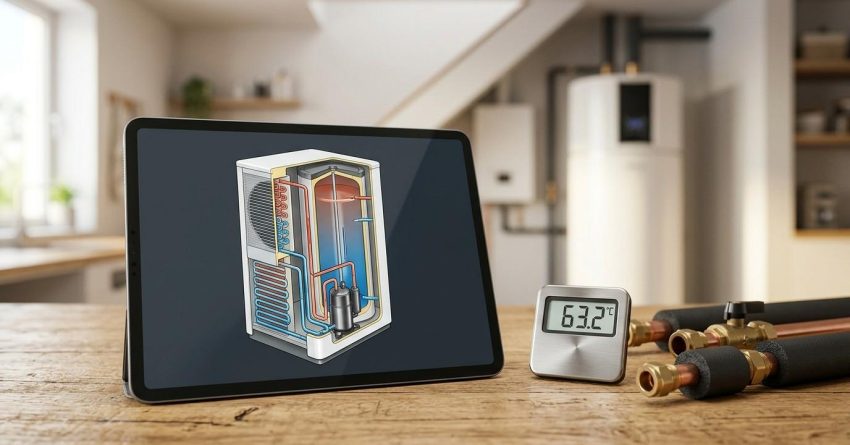
The unit consists of a compressor, an evaporator coil, a condenser coil, a refrigerant loop, and an insulated storage tank. Most models also include a backup resistance heating element that activates during periods of high demand or when ambient temperatures drop too low for the heat pump to operate efficiently.
How Heat Pump Technology Works
The operating cycle begins when a fan draws warm air across the evaporator coil. Refrigerant inside the coil absorbs the heat from that air and evaporates into a gas. The compressor pressurizes the gas, raising its temperature further. That hot gas then passes through the condenser coil, which is wrapped around or submerged in the water tank, transferring heat directly into the water. The refrigerant cools, returns to liquid form, and the cycle repeats.
Heat pump water heaters operate using the same refrigerant-cycle principles found across modern heating and cooling systems — our HVAC services overview covers the full range of climate control solutions available for residential and commercial properties.
Heat Pump vs. Traditional Water Heater
The primary difference between a heat pump water heater and a traditional electric or gas model is energy consumption. A heat pump water heater typically achieves a Uniform Energy Factor (UEF) of 3.0 to 4.0, meaning it delivers three to four units of heat energy for every one unit of electrical energy consumed. A standard electric resistance water heater has a UEF near 0.9. Gas water heaters typically range between 0.6 and 0.7 UEF. The efficiency advantage of heat pump technology is substantial and directly reflected in monthly utility costs.
Key Benefits of Heat Pump Water Heaters
Heat pump water heaters offer a combination of financial, environmental, and practical advantages that make them a strong choice for most residential applications in the USA.
Energy Efficiency and Utility Savings
The U.S. Department of Energy estimates that a heat pump water heater can save a typical household $550 or more per year compared to a standard electric resistance model. Over a 10-to-15-year lifespan, those savings can total several thousand dollars — often exceeding the initial purchase price difference between the two technologies.
Most heat pump water heaters include multiple operating modes, including heat pump only, hybrid (heat pump plus resistance backup), and resistance only. Running in heat pump only mode maximizes efficiency during normal demand periods, while hybrid mode balances efficiency with faster recovery during high-use periods.
Upgrading to a heat pump water heater is one of the most impactful appliance decisions a homeowner can make — if other home appliances also need attention, our appliance efficiency services explains the full range of appliance repair and replacement options available.
Environmental Impact and Rebate Eligibility
Heat pump water heaters produce significantly fewer greenhouse gas emissions than gas water heaters and reduce overall electricity demand compared to resistance models. Many utility companies across the USA offer rebates ranging from $100 to $500 for qualifying installations, and the federal Inflation Reduction Act provides a tax credit of up to 30% of the installed cost, capped at $2,000, for heat pump water heaters that meet efficiency thresholds. Homeowners interested in the full scope of available incentives should consult the ENERGY STAR Rebate Finder to identify programs specific to their state and utility provider.
Heat Pump Water Heater Installation Requirements
Installing a heat pump water heater involves more site preparation than replacing a like-for-like water heater. Understanding the requirements before purchasing a unit prevents costly surprises during installation.
Space and Location Requirements
Heat pump water heaters need adequate surrounding air volume to operate efficiently. Most manufacturers specify a minimum of 700 to 1,000 cubic feet of unconditioned or semi-conditioned space — equivalent to a room roughly 12 by 12 feet with an 8-foot ceiling. Garages, basements, and utility rooms are common installation locations. The unit also produces cool, dehumidified exhaust air as a byproduct of the heat extraction process, which can be an advantage in warm climates but may increase heating loads in cold spaces during winter months.
Clearance requirements around the unit vary by model but typically include 7 to 10 inches on all sides and several feet of vertical clearance above the unit for the fan and air intake.
Electrical and Plumbing Considerations
Heat pump water heaters typically require a dedicated 240-volt, 30-amp circuit. Older homes with smaller electrical panels may need an upgrade before installation can proceed — our electrical panel upgrades explains what an electrical inspection and upgrade involves.
On the plumbing side, the installation requires properly configured cold water supply lines, a pressure relief valve, a drain pan, and a compliant discharge line. Proper water heater installation depends on correctly configured water supply lines, pressure relief valves, and drain connections — our plumbing installation services details how licensed plumbers handle these requirements safely and to code.
How to Choose the Right Heat Pump Water Heater
Selecting the correct unit requires matching tank capacity to household demand, evaluating efficiency ratings, and identifying features that align with how the home uses hot water.
Sizing and Capacity Guidelines
Tank capacity is measured in gallons and should be matched to the number of occupants and daily hot water usage patterns. General guidelines suggest:
- 1–2 people: 40–50 gallon tank
- 3–4 people: 50–65 gallon tank
- 5 or more people: 65–80 gallon tank
First Hour Rating (FHR) is an equally important metric — it measures how many gallons of hot water the unit can deliver in the first hour of use starting with a full tank. Households with high simultaneous demand (multiple showers, laundry, and dishwasher running at the same time) should prioritize a high FHR alongside adequate tank capacity.
Top Features to Look For
Key features to evaluate when comparing heat pump water heater models include:
- UEF rating: Higher is more efficient. Look for a minimum UEF of 3.5 for strong energy performance.
- ENERGY STAR certification: Confirms the unit meets federal efficiency standards and qualifies for rebates and tax credits.
- Smart controls and Wi-Fi connectivity: Allow scheduling, mode adjustment, and energy monitoring from a smartphone app.
- Leak detection: Built-in sensors that shut off water supply automatically if a leak is detected.
- Warranty length: Most quality units carry a 10-year tank warranty and a 1-to-2-year parts warranty.
Heat Pump Water Heater Maintenance and Lifespan
A well-maintained heat pump water heater typically lasts 10 to 15 years — longer than most conventional water heaters. Routine maintenance keeps efficiency high and prevents premature failure.
Routine Maintenance Tasks
The most important maintenance tasks for a heat pump water heater include:
- Air filter cleaning: The inlet air filter should be rinsed or vacuumed every 3 to 6 months to prevent restricted airflow, which reduces efficiency and strains the compressor.
- Anode rod inspection: The sacrificial anode rod inside the tank protects against corrosion. It should be inspected annually and replaced when more than 50% depleted — typically every 3 to 5 years.
- Sediment flushing: Mineral sediment accumulates at the bottom of the tank over time, reducing heating efficiency and increasing energy consumption. Flushing the tank annually removes buildup.
- Pressure relief valve testing: The temperature and pressure relief valve should be tested annually to confirm it opens and closes correctly.
Common Issues and When to Call a Professional
Common problems include reduced hot water output, unusual noises from the compressor or fan, error codes on the control panel, and visible corrosion or moisture around the base of the unit. Many of these issues can be diagnosed through the unit’s built-in diagnostics, but compressor failures, refrigerant leaks, and tank corrosion require a licensed technician.
A failing water heater can cause significant water damage if leaks go undetected — our water damage repair services explains how professionals assess and restore properties affected by appliance-related water intrusion.
Heat Pump Water Heater Cost and Rebates
The upfront cost of a heat pump water heater is higher than a conventional electric model, but incentives and long-term savings significantly improve the financial picture.
Heat pump water heater units typically range from $800 to $1,500 for the equipment alone. Professional installation adds $300 to $600 depending on the complexity of the electrical and plumbing work required. Total installed costs commonly fall between $1,100 and $2,100 before incentives.
Federal Tax Credits and Utility Incentives
The Inflation Reduction Act’s 25C tax credit covers 30% of the installed cost of a qualifying heat pump water heater, up to a $2,000 annual cap. To qualify, the unit must meet ENERGY STAR’s Most Efficient criteria. This credit is non-refundable but can be carried forward in some circumstances — homeowners should consult a tax professional for guidance specific to their situation.
State-level rebates and utility incentives vary widely. Programs in states like California, New York, and Massachusetts offer additional rebates that can reduce net costs by several hundred dollars beyond the federal credit. The ENERGY STAR Rebate Finder provides a searchable database of current programs by ZIP code.
Many homeowners pair a heat pump water heater upgrade with broader energy-efficiency renovations — our home remodeling services outlines how full-property improvement projects are planned and executed.
Professional Installation vs. DIY
Heat pump water heater installation involves electrical work, plumbing connections, and refrigerant-cycle equipment — a combination that places it firmly in the category of projects requiring licensed professionals in most jurisdictions across the USA.
Electrical work on a 240-volt dedicated circuit must comply with the National Electrical Code and local building codes. Plumbing connections must meet local code requirements and pass inspection in many municipalities. Attempting either without the appropriate licenses can void the unit’s warranty, disqualify the installation from rebate programs, and create liability issues if damage or injury occurs.
For smaller preparatory tasks around the installation area — such as clearing space, patching walls, or adjusting shelving — our handyman repair services covers the range of tasks a skilled handyman can handle quickly and affordably.
The practical recommendation for most homeowners is to hire a licensed plumber or HVAC technician for the installation itself and use a handyman for any surrounding prep work. Getting multiple quotes and confirming that the installer is familiar with heat pump water heater requirements — not just conventional water heater replacement — ensures the job is done correctly and that all rebate documentation is completed properly.
Conclusion
Heat pump water heaters deliver a compelling combination of energy efficiency, long-term cost savings, and environmental benefits that make them one of the most valuable home upgrades available today.
Federal tax credits, utility rebates, and falling equipment prices have made the financial case stronger than ever for homeowners across the USA considering this technology.
At Mr. Local Services, our network of licensed plumbers, electricians, and HVAC professionals handles every aspect of heat pump water heater installation — from site assessment to final inspection — so you get the full benefit of this upgrade without the complexity.
Frequently Asked Questions
What is the main advantage of a heat pump water heater over a gas model?
A heat pump water heater uses significantly less energy than a gas model and produces no combustion byproducts inside the home. Over a 10-to-15-year lifespan, the energy savings typically outweigh the higher upfront cost.
How much space does a heat pump water heater need to operate efficiently?
Most manufacturers require a minimum of 700 to 1,000 cubic feet of surrounding air space. Garages, basements, and large utility rooms are the most common and suitable installation locations.
Can a heat pump water heater work in a cold climate?
Yes, most modern heat pump water heaters operate efficiently in ambient temperatures as low as 37 to 40 degrees Fahrenheit. Below that threshold, the unit automatically switches to resistance heating mode to maintain hot water supply.
How long does a heat pump water heater last?
A properly maintained heat pump water heater typically lasts 10 to 15 years. Regular anode rod replacement, sediment flushing, and air filter cleaning are the most important factors in achieving maximum lifespan.
Does a heat pump water heater qualify for a federal tax credit?
Yes. Under the Inflation Reduction Act’s 25C provision, qualifying ENERGY STAR-certified heat pump water heaters are eligible for a tax credit of 30% of the installed cost, up to a $2,000 annual cap.
What electrical requirements does a heat pump water heater have?
Heat pump water heaters require a dedicated 240-volt, 30-amp circuit. Homes with older or smaller electrical panels may need a panel upgrade before installation can be completed safely and to code.
How often does a heat pump water heater need maintenance?
The air filter should be cleaned every 3 to 6 months. The anode rod should be inspected annually and replaced every 3 to 5 years. The tank should be flushed annually to remove sediment buildup and maintain heating efficiency.