Choosing the right water heater affects your energy bills, hot water supply, and long-term home maintenance costs. Tankless models heat water on demand, while tank models store a ready supply — and the difference between them goes well beyond how they look in your utility room.
Most homeowners replace a water heater only once or twice in their lives, which makes this decision more consequential than it might first appear.
This guide compares both types across efficiency, cost, lifespan, installation, and household fit so you can choose with confidence.
What Is a Tankless Water Heater and How Does It Work?
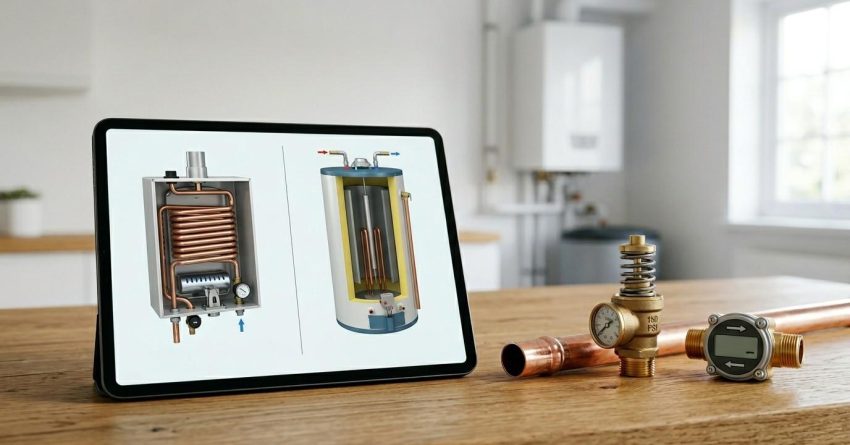
A tankless water heater, also called an on-demand water heater, heats water directly as it flows through the unit rather than storing it in a tank. When you turn on a hot water tap, cold water travels through a pipe into the unit, where either a gas burner or an electric element heats it instantly. There is no storage vessel, no standby heat loss, and no waiting for a tank to refill.
On-Demand Heating Explained
The core advantage of on-demand heating is that hot water is available continuously as long as the unit can keep up with flow rate demand. A single tankless unit typically delivers between 2 and 5 gallons per minute, depending on the model and fuel source. This makes it well-suited for households that use hot water sequentially rather than simultaneously across multiple fixtures.
Gas vs. Electric Tankless Models
Gas-powered tankless heaters produce higher flow rates and are better suited to larger households or climates with cold incoming water temperatures. Electric tankless models are more compact, easier to install, and cost less upfront, but they draw significant electrical load and may require panel upgrades. Understanding how a tankless water heater fits into your home’s overall water system is easier when you know what professional plumbing services cover — our plumbing services overview explains the full range of installation, repair, and maintenance work available for residential and commercial properties.
What Is a Tank Water Heater and How Does It Work?
A tank water heater, also called a storage water heater, holds a pre-heated supply of water in an insulated tank — typically between 30 and 80 gallons — ready for use at any time. A thermostat monitors the water temperature and triggers the heating element or gas burner to reheat the water whenever it drops below the set point.
Storage Tank Heating Cycle
The heating cycle runs continuously throughout the day and night, even when no hot water is being used. This is called standby heat loss, and it is the primary reason tank water heaters are less energy-efficient than tankless models. The tank must maintain temperature around the clock to ensure hot water is available on demand.
Tank Capacity and Recovery Rate
Tank capacity determines how much hot water is available at one time, while recovery rate measures how quickly the unit can reheat a full tank after depletion. A 50-gallon tank with a fast recovery rate can serve a family of four comfortably, but a household with high simultaneous demand — multiple showers, laundry, and dishwasher running at once — may exhaust the supply before recovery is complete.
Tankless vs Tank Water Heater: Side-by-Side Comparison
The differences between tankless and tank water heaters become clearest when you compare them directly across the factors that matter most to homeowners: energy use, cost, and how long the unit will last.
Energy Efficiency
Tankless water heaters are significantly more energy-efficient than tank models. According to the U.S. Department of Energy, for homes that use 41 gallons or less of hot water daily, tankless water heaters can be 24 to 34 percent more energy-efficient than conventional storage tank heaters. For homes that use a lot of hot water — around 86 gallons per day — tankless models are still 8 to 14 percent more efficient. The efficiency gap exists because tankless units eliminate standby heat loss entirely.
Upfront Cost vs. Long-Term Savings
Tank water heaters cost less to purchase and install. A standard 50-gallon gas tank unit typically runs between $500 and $1,000 installed, while a whole-home tankless gas unit can cost $1,000 to $3,000 or more installed, depending on whether gas line upgrades or electrical panel work is required. However, the energy savings from a tankless unit accumulate over time. Homeowners who stay in a property for 10 or more years often recover the higher upfront cost through lower monthly utility bills.
| Factor | Tankless | Tank |
| Upfront cost | Higher ($1,000–$3,000+) | Lower ($500–$1,000) |
| Energy efficiency | 24–34% more efficient | Baseline |
| Hot water supply | Continuous (flow-rate limited) | Limited by tank size |
| Lifespan | 20+ years | 8–12 years |
| Space required | Minimal (wall-mounted) | Significant (floor space) |
| Standby heat loss | None | Present |
Lifespan and Durability
Tankless water heaters last significantly longer than tank models. A well-maintained tankless unit typically lasts 20 years or more, while a conventional tank water heater has an average lifespan of 8 to 12 years. This lifespan difference is a meaningful factor in total cost of ownership, particularly for homeowners who plan to stay in their property long-term or landlords managing multiple units.
Which Water Heater Is Right for Your Home?
Neither type is universally better. The right choice depends on how your household uses hot water, the physical constraints of your property, and your budget priorities.
Household Size and Hot Water Demand
Tank water heaters are generally better suited to larger households with high simultaneous hot water demand — multiple bathrooms in use at the same time, frequent laundry, or commercial-style kitchens. A properly sized tank ensures everyone gets hot water without waiting. Tankless units are ideal for smaller households, vacation properties, or homes where hot water use is spread out across the day rather than concentrated in peak morning or evening windows.
Space, Installation, and Fuel Type Considerations
Tankless units are wall-mounted and take up very little space, making them a strong choice for smaller homes, condos, or properties where utility space is limited. Tank units require floor space and adequate clearance, which can be a constraint in tight mechanical rooms. Fuel availability also matters: gas tankless units require adequate gas line capacity, and electric tankless units may require a panel upgrade. These installation variables affect both cost and feasibility and should be assessed by a licensed plumber before a final decision is made.
Installation and Maintenance Requirements
Installation complexity and ongoing maintenance differ meaningfully between the two types, and both factors affect the true cost of ownership over time.
What Tankless Installation Involves
Installing a tankless water heater is more involved than replacing a tank unit. Gas models may require upgrading the gas supply line to handle higher BTU demand. Electric models often require dedicated high-amperage circuits. Venting requirements also differ from traditional tank systems. Annual descaling — flushing mineral deposits from the heat exchanger — is the primary maintenance task for tankless units, particularly in areas with hard water. Whether you choose tankless or tank, proper setup requires a licensed professional — our residential plumbing installation outlines what the process involves, what to expect on installation day, and how to prepare your home.
What Tank Water Heater Maintenance Involves
Tank water heaters require periodic flushing to remove sediment buildup, anode rod inspection and replacement every 3 to 5 years, and temperature-pressure relief valve testing annually. These tasks are straightforward and inexpensive when performed on schedule. Neglecting them accelerates corrosion, reduces efficiency, and shortens the unit’s lifespan.
Signs It’s Time to Replace Your Water Heater
Knowing when to replace rather than repair a water heater saves money and prevents the disruption of an unexpected failure. The most common warning signs include water that takes longer than usual to heat, inconsistent temperature, discolored or rusty water, unusual popping or rumbling sounds from the tank, and visible corrosion or moisture around the unit.
Age is also a reliable indicator. If a tank water heater is more than 10 years old and showing any of these symptoms, replacement is almost always more cost-effective than repair. A failing water heater can cause leaks that escalate quickly into structural damage — if you’ve noticed moisture, rust stains, or pooling water near your unit, our water damage repair explains how professionals assess and restore affected areas before the problem spreads. When your water heater shows signs of failure, it may be time to consider full replacement rather than repeated repairs — our appliance repair and replacement covers how technicians evaluate aging units and recommend the most cost-effective path forward.
Conclusion
Tankless and tank water heaters each serve different household needs, and the right choice comes down to hot water demand, available space, fuel type, and long-term budget priorities. Energy efficiency and lifespan favor tankless units, while lower upfront cost and simpler installation favor tank models.
Both types require professional installation and regular maintenance to perform reliably and reach their full service life. Skipping either step shortens the unit’s lifespan and increases the risk of costly failures.
At Mr. Local Services, our plumbing professionals help homeowners and property managers choose, install, and maintain the right water heater for their property — contact us today to get expert guidance and a transparent quote.
Frequently Asked Questions
How long does a tankless water heater last compared to a tank model?
A tankless water heater typically lasts 20 years or more with proper maintenance. A conventional tank water heater has an average lifespan of 8 to 12 years, making tankless units a longer-term investment despite their higher upfront cost.
Can a tankless water heater run out of hot water?
A tankless water heater does not run out of hot water the way a tank model does, but it can be overwhelmed if demand exceeds its flow rate. Running multiple high-demand fixtures simultaneously — such as two showers and a dishwasher — may exceed the unit’s capacity and result in reduced water temperature.
Is a tankless water heater worth the extra cost?
For homeowners planning to stay in their property for 10 or more years, the energy savings from a tankless unit often offset the higher upfront installation cost. The answer depends on household size, hot water usage patterns, and local energy rates.
What size tank water heater do I need for a family of four?
A 50-gallon tank water heater is typically sufficient for a family of four with average hot water usage. Households with higher simultaneous demand — multiple bathrooms in use at peak times — may benefit from a 60- to 80-gallon unit or a tankless system.
Do tankless water heaters require more maintenance than tank models?
Tankless water heaters require annual descaling to remove mineral buildup from the heat exchanger, particularly in hard water areas. Tank models require periodic sediment flushing, anode rod replacement, and pressure relief valve testing. Both types need regular maintenance to perform efficiently and reach their expected lifespan.
Can I replace a tank water heater with a tankless unit myself?
Replacing a tank water heater with a tankless unit is not a DIY project. It typically involves gas line or electrical upgrades, new venting, and code-compliant installation that requires a licensed plumber or contractor. Improper installation can void the warranty and create safety hazards.
What is the most energy-efficient water heater type?
Tankless water heaters are the most energy-efficient conventional option, eliminating standby heat loss entirely. Heat pump water heaters are even more efficient but require specific installation conditions. For most residential applications, a gas or electric tankless unit offers the best balance of efficiency, performance, and installation feasibility.