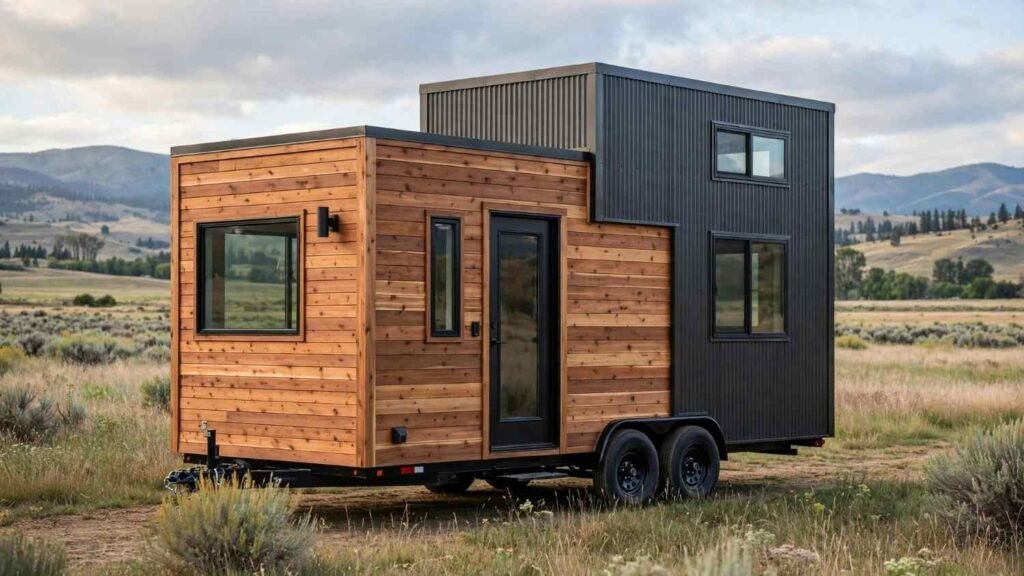
Wood, metal, vinyl, and fiber cement all work as tiny home siding, but each one shifts total trailer weight differently, and that number matters more than paint color or texture. A tiny home on wheels carries strict weight limits set by its trailer axles, and siding accounts for a meaningful chunk of that total.
I’ve walked through builds where the wrong siding choice pushed total weight past the trailer’s rated capacity before the owner even added furniture. That’s a real problem, not a hypothetical one. Getting siding right early protects the build’s road legality and its long-term durability.
I cover the core differences between siding materials for towable homes, how weight and vibration change the calculation, what protects against moisture and weather damage, and how cost and climate ultimately guide the final decision.
What Makes Siding Different for Tiny Homes on Wheels
A tiny home on wheels is a structure built on a trailer chassis and designed for legal road travel. That single fact changes every siding decision compared to a stationary house.
Standard homes sit on a fixed foundation. They never experience highway vibration, wind shear at 65 mph, or repeated flexing from the road. Siding on a towable home deals with all three, every time it moves.
Weight, Vibration & Movement Factors
Weight is the first constraint. Every pound of siding subtracts from the payload available for water tanks, appliances, and furniture.
Vibration is the second. Fasteners that hold fine on a stationary wall can work loose over thousands of highway miles. Siding systems for tiny homes need mechanical fastening patterns rated for movement, not just static wind load.
Code and Trailer-Frame Considerations
Tiny homes on wheels often fall under RV code (NFPA 1192) rather than residential building code, depending on state and certification path. That affects which materials are approved and how they’re inspected.
The trailer frame itself dictates maximum width and height, which limits how thick a siding assembly can be before it exceeds road-legal dimensions.
Wood Siding Options for Tiny Homes
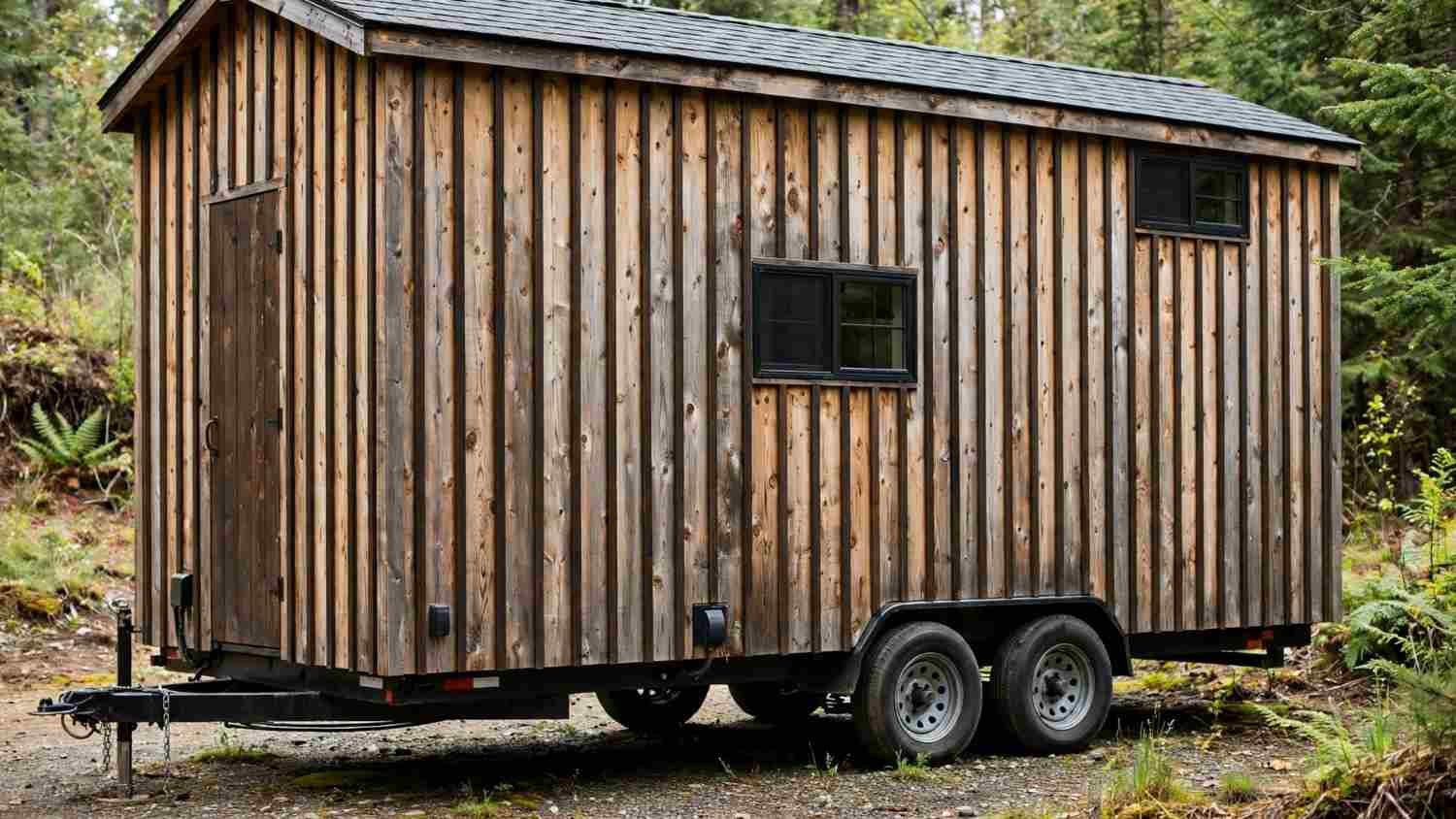
Wood siding is a classic choice for tiny homes because it’s lightweight relative to its visual impact and easy to source in small quantities.
Board and Batten
Board and batten uses wide vertical boards with narrow strips covering the seams. It’s a traditional look that reads well on small structures, and it hides trailer proportions nicely.
I like it for owner-builders because the installation forgives minor framing imperfections better than lap siding does.
Shiplap and Cedar Shingles
Shiplap boards interlock with a rabbeted edge, creating a tight, layered look with strong water shedding. Cedar shingles cost more upfront but naturally resist rot and insects without heavy chemical treatment.
Both need annual inspection on a towable home, since vibration loosens fasteners faster than it does on a stationary house.
Metal Siding and Corrugated Cladding
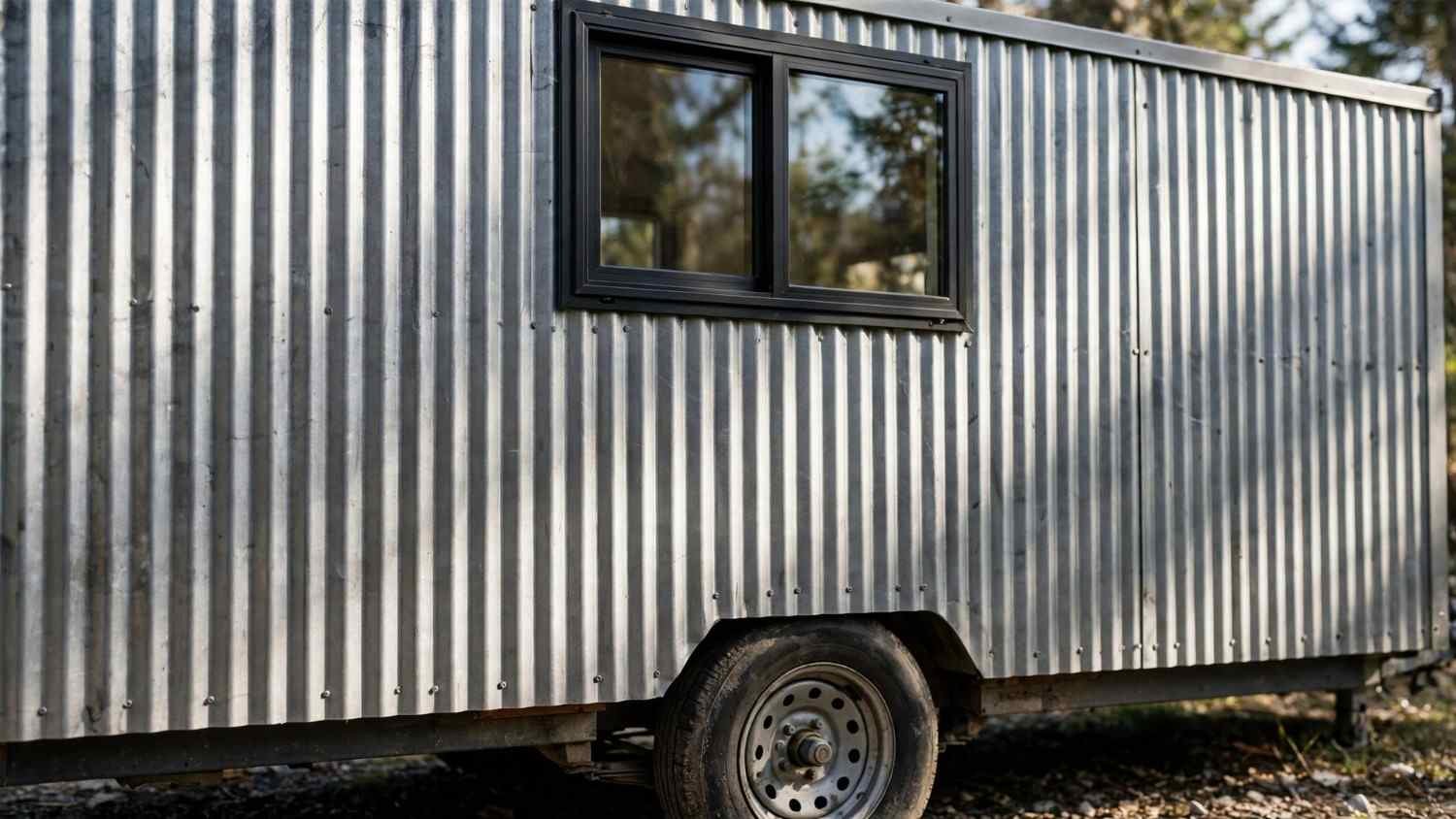
Metal siding trades a natural look for durability and low maintenance, and it’s become a popular choice on modern tiny home builds.
Corrugated Steel
Corrugated steel is a ridged metal panel that resists dents, sheds water instantly, and holds up against UV exposure better than most painted wood options. It’s heavier than vinyl but lighter than stone veneer, which puts it in a reasonable middle ground for trailer weight budgets.
Standing Seam Aluminum
Standing seam aluminum uses raised, interlocking seams that create a nearly seamless water barrier. Aluminum is notably light, which makes it one of the better metal choices when payload is tight.
It also won’t rust, which matters on a structure that travels through varied climates and road salt exposure.
Vinyl and Composite Siding
Vinyl siding is one of the lightest cladding options available, and that alone makes it attractive for weight-conscious tiny home builds. It’s also inexpensive and requires almost no maintenance beyond an occasional wash.
The tradeoff is flexibility in extreme heat. Vinyl can warp in direct, sustained sun exposure, which matters more on a tiny home than a house, since a trailer often sits without shade for stretches during transport.
Composite siding blends wood fibers with resin binders, giving it more rigidity than pure vinyl while staying lighter than solid wood boards.
Fiber Cement Siding for Tiny Homes6
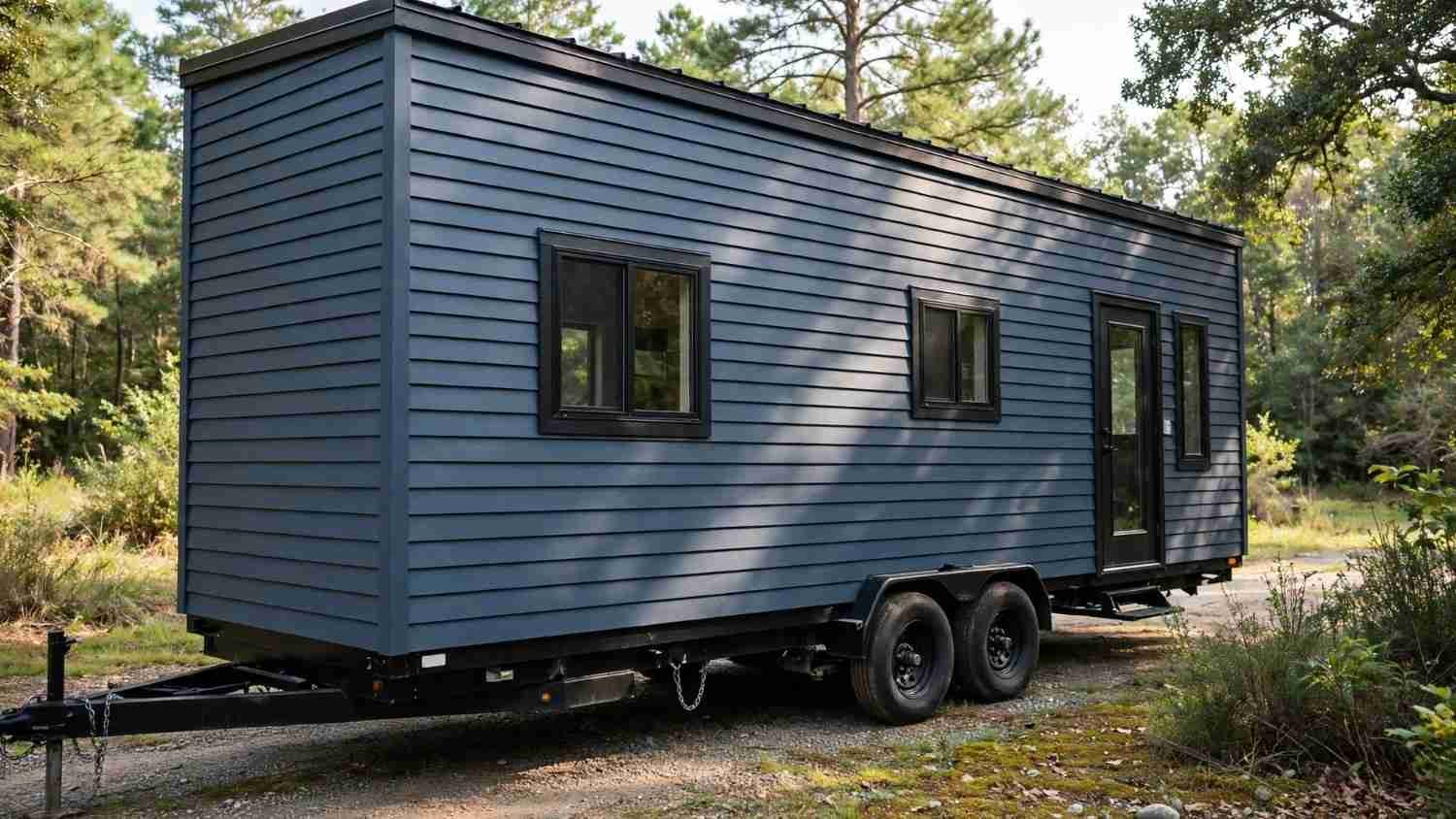
Fiber cement siding is a composite material made from cement, sand, and cellulose fibers, engineered to mimic the look of wood without the rot risk. It’s heavier than vinyl or wood, so it eats into payload more aggressively.
I only recommend it on tiny homes with generous axle capacity, because the weight savings elsewhere in the build usually need to offset it. Where the trailer allows it, fiber cement delivers excellent fire resistance and a 30+ year lifespan.
Natural and Faux Stone Cladding Accents
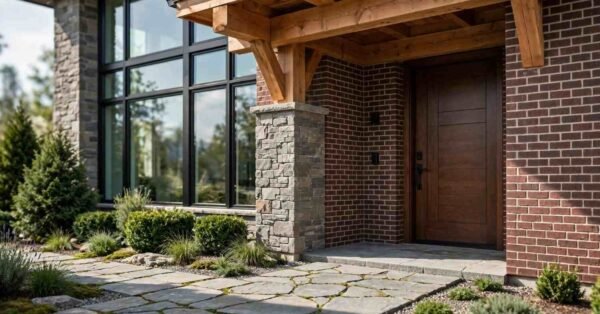
Full stone veneer is rarely practical on a towable structure. It’s simply too heavy for the weight budget most tiny home trailers allow.
Faux stone panels solve this by replicating the look with lightweight polyurethane or resin composites. They’re typically used as accent sections rather than full wall coverage, often around a base or entry feature, which keeps the weight addition minimal while still delivering visual texture.
Weight Considerations for Trailer-Mounted Homes
Every siding material carries a weight-per-square-foot figure that owner-builders should calculate before committing to a design. Vinyl sits at the lightest end, fiber cement and stone veneer sit at the heaviest, and wood and metal fall in between depending on thickness and treatment.
Total exterior weight, siding included, typically needs to stay under 10-15% of overall trailer payload capacity to leave room for tanks, appliances, and furnishings.
I always tell owner-builders to weigh siding samples before ordering full runs. A square-foot test is cheap insurance against a build that comes in overweight.
Weatherproofing and Moisture Protection
Moisture control matters more on a tiny home than a house, because trailer wall cavities are thinner and drainage paths are shorter. A weather-resistant barrier goes behind every siding type, regardless of material, to stop water that gets past the outer layer.
Flashing at windows, doors, and roof transitions prevents the majority of leaks that owner-builders encounter. Skipping proper flashing to save a weekend of work is the single most common mistake I see in DIY tiny home siding jobs.
Ventilated rain-screen gaps behind the siding let moisture escape rather than trap it against the sheathing, which extends the life of both the siding and the structure underneath.
Cost Comparison by Siding Material
Vinyl remains the cheapest option per square foot, followed by wood, then metal, with fiber cement and stone veneer accents at the top of the range. Material cost is only part of the picture though, since labor complexity and long-term maintenance shift the real cost over a decade of ownership.
Wood needs periodic refinishing. Metal and vinyl need almost none. Fiber cement sits in between, needing occasional caulking and paint touch-ups but no full refinish cycle.
I weigh upfront cost against a five-year maintenance estimate when I help someone compare options, because the cheapest material at purchase isn’t always the cheapest material to own.
Choosing Siding by Climate and Region
Coastal climates favor metal and vinyl, since both resist salt corrosion and humidity swelling better than wood. Cold, snow-heavy regions benefit from fiber cement’s rigidity, which holds up under freeze-thaw cycles without cracking.
Hot, sun-heavy climates push against vinyl’s heat tolerance, so wood or metal often perform better long-term in those regions. Wind-prone areas need siding rated for higher fastening schedules, regardless of material, since a towable home experiences wind loading from every direction during transport, not just one prevailing side.
Conclusion
Siding on a tiny home carries different demands than siding on a house, driven by weight limits, vibration, and road exposure. Wood, metal, vinyl, fiber cement, and stone accents each solve that puzzle differently.
Climate, budget, and payload capacity ultimately narrow the field to the right material for a specific build. Getting that match right protects both the structure and its road legality for years of travel.
We help homeowners and property managers work through exterior material decisions with clear, practical guidance from real project experience. Reach out to Mr. Local Services when it’s time to plan or execute your exterior project with confidence.
Frequently Asked Questions
What is the lightest siding option for a tiny home on wheels?
Vinyl siding is the lightest common option, which makes it popular on weight-sensitive builds. It also costs less upfront than most alternatives.
Can you use regular house siding on a tiny home?
Regular house siding works physically but often exceeds weight budgets and lacks vibration-rated fastening. Purpose-selected materials perform better over years of travel.
How much does siding weigh on average for a tiny home?
Weight varies by material, from roughly 0.5 pounds per square foot for vinyl to over 3 pounds for fiber cement. I always recommend weighing samples before ordering a full order.
Does metal siding rust on a tiny home?
Standing seam aluminum won’t rust at all, while corrugated steel resists rust when properly coated. Regular inspection catches early wear before it becomes a real problem.
What siding holds up best in cold climates?
Fiber cement performs well in freeze-thaw cycles due to its rigidity and low expansion rate. Wood and metal also hold up, provided fasteners are inspected each season.
Is wood siding a good choice for a tiny home on wheels?
Wood siding works well and stays relatively lightweight, especially with board and batten styles. It does need more maintenance than metal or vinyl over time.
How often should tiny home siding be inspected?
I recommend inspecting siding fasteners and flashing at least once a year, or after any long highway trip. Vibration loosens connections faster on a towable structure than on a stationary house.