
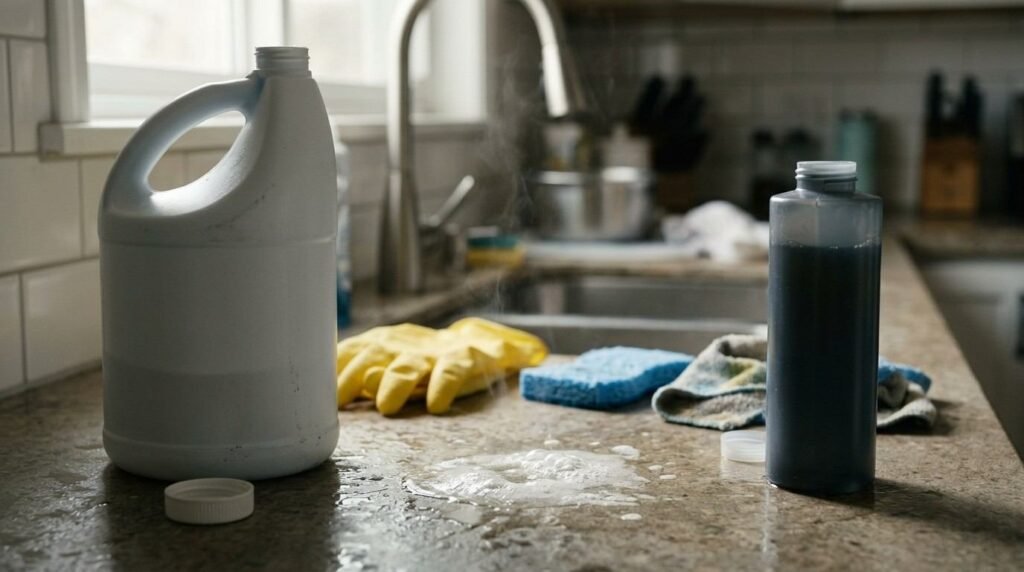
Mixing bleach with ammonia or vinegar creates toxic gas in seconds, and it sends thousands of people to the emergency room every year. The reaction happens fast, often before anyone realizes two products were combined at all.
I’ve seen how easily this happens in a regular kitchen or bathroom. Someone reaches for two cleaners under the sink, uses them back to back on the same surface, and doesn’t think twice about it.
This guide breaks down the exact combinations that turn dangerous, why the chemistry works the way it does, and what safe storage looks like in a real household.
Bleach and Ammonia Chloramine Gas Danger

Bleach and ammonia react to form chloramine vapors, and that gas attacks the eyes, throat, and lungs almost immediately. This is the most common and most dangerous cleaning product mix in American homes.
Chloramine gas is a toxic compound that forms when hypochlorite in bleach reacts with ammonia molecules. Even a small amount of ammonia meeting bleach residue on a sponge or in a bucket produces enough gas to cause serious symptoms.
Symptoms show up fast. Coughing, chest pain, watery eyes, and difficulty breathing can all hit within minutes of exposure.
I always tell people the real danger here is that ammonia is not always labeled as ammonia. It hides under brand names and generic terms that don’t sound like a warning at all.
Where Ammonia Hides in Everyday Cleaners
Glass cleaners are the biggest culprit. Most blue window sprays contain ammonia, and people use them right after bleach without rinsing the surface first.
Some multi-surface cleaners and a few toilet bowl cleaners also carry ammonia compounds. Urine itself contains ammonia too, which is why bleaching a pet accident or a bathroom floor without proper ventilation carries real risk.
Check labels for “ammonium hydroxide” or simply “ammonia” listed in the ingredients. If it’s not on the label, don’t assume it’s safe. Contact your municipality’s household hazardous waste program if you’re unsure how to dispose of either product.
Bleach and Vinegar Chlorine Gas Risk

Bleach and vinegar seem like a harmless pairing since both show up in natural cleaning routines. Combined, they release chlorine gas, which is the same toxic gas used as a chemical weapon in World War I.
Vinegar is acidic, and that acidity reacts with the sodium hypochlorite in bleach to release chlorine gas almost on contact. The smell alone, a sharp, pool-like odor, is often the first warning sign something’s gone wrong.
Exposure causes coughing, eye irritation, and burning in the nose and throat. Higher concentrations can cause fluid buildup in the lungs, which turns a cleaning accident into a medical emergency.
Why Acidic Cleaners Trigger This Reaction
Any acidic cleaner reacts this way with bleach, not just vinegar. Lemon juice, citric acid based cleaners, and some rust removers carry the same risk.
I keep this rule simple in my own house: bleach only ever touches water, and nothing else. That one habit eliminates almost every accidental gas exposure risk in a typical cleaning routine.
Rinse surfaces completely between using an acidic cleaner and switching to bleach. A few seconds of rinsing removes enough residue to prevent a reaction.
Hydrogen Peroxide and Vinegar Peracetic Acid Formation
Hydrogen peroxide and vinegar each work well as cleaners on their own, and plenty of people keep both in a spray bottle rotation. Combined together, they form peracetic acid, which is corrosive and irritating to skin, eyes, and the respiratory tract.
Peracetic acid is a corrosive compound formed by combining hydrogen peroxide and acetic acid, and it’s used industrially as a strong disinfectant precisely because it’s harsh. That strength is exactly what makes it a problem in an unventilated bathroom or kitchen.
The risk climbs when both liquids sit in the same container. A quick spray of one right after the other on the same surface produces a lower dose, but repeated exposure over time still isn’t worth the risk.
Safe Ways to Use Both Separately
Use hydrogen peroxide on one cleaning pass and vinegar on a separate pass, with a full water rinse in between. Never combine them in a single spray bottle, even temporarily.
Label every spray bottle clearly the moment you fill it. I’ve walked into more than one client’s home where an unlabeled bottle sat forgotten on a shelf next to three others that looked identical.
Different Drain Cleaners Toxic Fumes and Chemical Burns
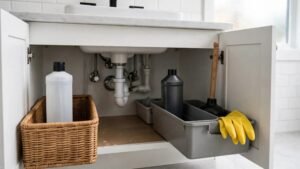
Drain cleaners are some of the harshest products under a typical sink, and mixing two different brands or formulas creates unpredictable and often violent reactions. Some combinations generate enough heat to boil the liquid inside the pipe.
Acidic drain cleaners and alkaline drain cleaners neutralize each other in a reaction that releases heat and toxic fumes at the same time. This can crack pipes, splash caustic liquid back up the drain, and fill a bathroom with fumes in seconds.
A study published by the National Capital Poison Center found that drain cleaner exposures are among the most frequent chemical injury calls reported to poison control centers nationwide.
Signs You’ve Mixed the Wrong Chemicals
A strong chemical odor, visible fumes rising from the drain, or a hissing and bubbling sound all signal a dangerous reaction in progress. Leave the room immediately and open windows and doors on your way out.
Never pour a second drain product down a clogged drain that already has a different product sitting in it. Wait at least 24 hours and flush thoroughly with water first, or call a plumber instead.
How to Store and Use Cleaning Products Safely

Good storage habits prevent almost every accidental mixing incident before it starts. Keep bleach, ammonia-based products, and acidic cleaners on separate shelves, never stacked together in the same bin under the sink.
Ventilation matters as much as storage. Open a window or run an exhaust fan any time you’re using bleach, ammonia, or a strong acid-based cleaner, even for a quick five-minute job.
One cleaning tool per product type cuts down on cross-contamination too. A sponge that touched bleach shouldn’t touch ammonia five minutes later without a thorough rinse first.
I walk clients through their cleaning closet during service visits more often than people expect. A five-minute reorganization usually solves problems that have been sitting there for years.
What to Do If You Accidentally Mix Chemicals
Leave the area immediately and get fresh air. Don’t try to clean up the spill or neutralize the reaction yourself.
Call Poison Control at 1-800-222-1222 right away, or call 911 if anyone is having trouble breathing. Give them the product names if you have them, since that speeds up the right treatment advice.
Conclusion
Dangerous cleaning combinations hide in plain sight, tucked under nearly every kitchen and bathroom sink in the country. Bleach, ammonia, vinegar, and drain cleaners each work fine alone but turn toxic together.
We built this guide because a few minutes of label-reading prevents a trip to the emergency room. Simple habits, separate storage, good ventilation, one product at a time, protect your household every day.
Mr. Local Services connects you with cleaning and home safety professionals who know how to handle chemical storage and ventilation the right way. Reach out to us for a home safety check today.
Frequently Asked Questions
Can I mix bleach and dish soap?
Mixing bleach and dish soap isn’t typically as dangerous as bleach and ammonia, but it can still release chloramine-like fumes depending on the soap’s formula. I recommend keeping them separate and rinsing surfaces between uses to stay safe.
Is it safe to use bleach and baking soda together?
Bleach and baking soda don’t create toxic gas, so this combination is generally considered safe. Baking soda can actually help scrub away residue after bleach has disinfected a surface.
How long should I wait between using different cleaning products?
I recommend rinsing the surface completely with water and waiting at least a few minutes before switching to a different cleaning chemical. This removes leftover residue that could react with the next product you apply.
What are the symptoms of chemical fume exposure?
Coughing, watery eyes, chest tightness, and difficulty breathing are the most common early symptoms of toxic fume exposure. Symptoms can escalate quickly, so leaving the area and getting fresh air immediately is critical.
Can mixing cleaning chemicals cause long-term health problems?
Repeated low-level exposure to toxic fumes can cause lasting respiratory irritation and sensitivity over time. A single accidental exposure is usually treated as an acute emergency rather than a long-term risk, but it still needs prompt medical attention.
Should I ventilate a room even when using just one cleaning product?
Yes, ventilation matters even with a single strong cleaner like bleach or a concentrated drain cleaner. Fumes build up in enclosed bathrooms and small spaces faster than most people expect.
What should I do with leftover mixed cleaning chemicals?
Never pour mixed chemicals down the drain or store them for later use. Contact your local household hazardous waste program for safe disposal instructions specific to your area.