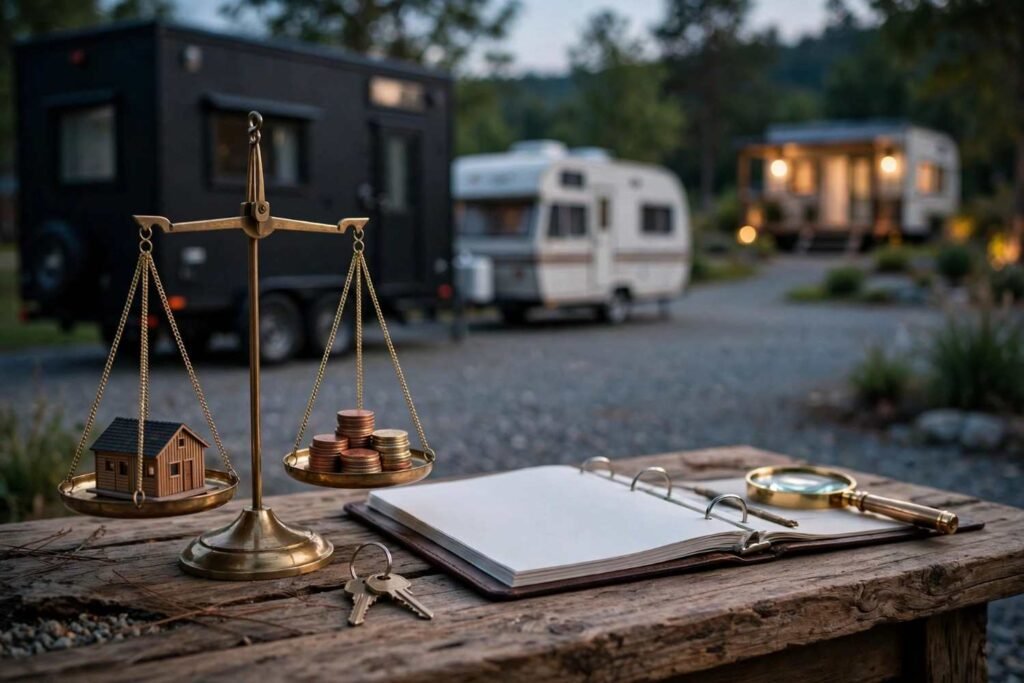
Tiny home resale value is the price a small dwelling commands on the secondary market, and it moves in two very different directions depending on whether that home sits on wheels or on a permanent foundation. I’ve watched owners gain equity, and I’ve watched others lose thousands.
That difference matters right now because tiny homes have moved from novelty to real estate asset. Owners who misunderstand depreciation overpay at purchase and underprice at sale, every single time.
In this guide, I cover valuation basics, depreciation curves, value factors, foundation versus wheels, paperwork, maintenance, upgrades, location, pricing, selling strategy, financing, rentals, and costly mistakes.
What Tiny Home Resale Value Really Means
Tiny home resale value is the market price a buyer will actually pay for a used tiny dwelling today, not the amount the original owner spent building it. I see that gap constantly. Build cost and resale price are two separate numbers.
The confusion comes from how tiny homes are legally classified. A traditional house is real property tied to land. A tiny home on wheels is titled as a vehicle or a recreational vehicle in most states, and that single legal distinction reshapes the entire value equation.
Resale Value vs. Appraised Value vs. Market Value
Appraised value comes from a licensed appraiser using comparable sales. Market value reflects what similar homes are currently selling for in your region. Resale value is what you personally net after negotiation, repairs, and closing.
For tiny homes on wheels, appraisals often lean on RV valuation methods rather than residential comps. That surprises sellers who expected a real estate-style appraisal.
Why Tiny Homes Are Valued Differently Than Traditional Houses
Traditional home value rides largely on land. Land appreciates, structures age, and the combination usually trends upward over decades. A tiny home on wheels carries no land, so the structure carries the entire value.
Buyer pools also stay smaller. Fewer buyers means longer sale timelines and more price pressure at negotiation.
The Three Tiny Home Classifications That Drive Value
Foundation-built tiny homes qualify as real property and behave like small houses. Tiny homes on wheels certified to RVIA standards title as recreational vehicles. Park model RVs sit in their own category with their own resale market.
Each classification pulls from a different buyer pool, a different lender set, and a different pricing benchmark. I always identify classification before quoting any value.
How Tiny Home Depreciation Actually Works
Depreciation is the gradual loss of value as a structure ages and wears. Tiny homes on wheels depreciate. Foundation-built tiny homes generally appreciate alongside local real estate.
That split is the single most important idea in this guide. Owners who grasp it make better buying decisions and set realistic sale expectations from day one.
RV-Style Depreciation Curves for Tiny Homes on Wheels
Towable RVs commonly lose a substantial share of value in the first several years of ownership, and Kelley Blue Book RV valuation data reflects that steep early curve. Tiny homes on wheels follow a similar pattern, though better construction slows the decline.
The curve flattens after roughly year five. A well-maintained ten-year-old tiny home on wheels holds value far more predictably than a two-year-old one.
Appreciation Potential for Foundation-Built Tiny Homes
A tiny home on a permanent foundation with a deeded lot follows residential market forces. The land appreciates. The structure depreciates slowly and gets offset by land gains and local demand.
Accessory dwelling units follow this same logic. Freddie Mac research documents ADU growth across U.S. housing markets, and that growth supports resale demand for permitted small dwellings.
The First-Five-Years Value Drop Explained
The sharpest drop happens immediately after purchase, exactly like a new vehicle. Custom build premiums, dealer margins, and delivery fees vanish the moment ownership transfers.
Owners who buy used at year three to five skip that cliff entirely. I recommend that entry point to most budget-focused buyers.
Factors That Increase or Destroy Tiny Home Resale Value

Resale value comes down to build integrity, documentation, market appeal, and legal placement. Four categories, and every one of them sits within your control as an owner.
I’ve inspected tiny homes that held 80% of purchase price after six years. I’ve also seen five-year-old builds worth a third of their cost. The difference was never luck.
Build Quality, Certification, and Documentation
Certified builds command higher prices because buyers and lenders trust third-party verification. Homes built to ANSI A119.5 park model standards or RVIA specifications sell faster and closer to asking price.
Documentation matters just as much. Build photos, material receipts, wiring diagrams, and service records all raise buyer confidence.
Materials, Finishes, and System Longevity
Metal roofing, fiber cement siding, and hardwood interiors age gracefully. Vinyl flooring, particleboard cabinetry, and residential windows in a towable build show wear fast.
Mini-split HVAC systems, tankless water heaters, and quality electrical panels signal a serious build. Cheap systems telegraph cheap construction to every inspector.
Customization vs. Broad-Market Appeal
Heavy personalization narrows your buyer pool. A custom rock-climbing wall, a single oversized loft, or a highly themed interior reads as a renovation project to most buyers.
Neutral finishes and flexible layouts sell wider. I tell owners to save the personality for removable decor, not permanent millwork.
Land, Placement, and Legal Parking Status
A tiny home with a legal, permitted place to sit is worth dramatically more than one with nowhere to go. Buyers pay premiums for included land, a transferable long-term lease, or a confirmed tiny home community slot.
Zoning legality is the hidden multiplier. No legal placement means a much smaller buyer pool and a much longer sale.
Foundation vs. Wheels: The Value Divide

This is the fork in the road for every tiny home owner. Wheels give mobility and depreciate. Foundations give appreciation potential and take that mobility away.
| Factor | Tiny Home on Wheels | Foundation-Built Tiny Home |
| Legal status | Vehicle / RV title | Real property, deeded |
| Value trend | Depreciates | Appreciates with the market |
| Financing | RV or personal loan | Mortgage eligible |
| Buyer pool | Narrow, national | Wider, local |
| Resale timeline | 3 to 9 months typical | Standard residential |
Converting wheels to a foundation is possible in many jurisdictions and often raises long-term value. That conversion requires permits, engineering, and a compliant electrical system upgrade to meet residential code.
I’ve guided owners through both paths. The right choice depends entirely on whether you want equity or mobility.
Certifications, Titles, and Paperwork That Protect Value

Paperwork is free value protection, and most owners neglect it until sale week. I keep a single binder for every property I advise on.
Your title or deed proves ownership and transfers cleanly. Certification labels from RVIA, ANSI, or a state modular program prove code compliance. Build documentation proves quality.
Insurance history proves the home was covered and cared for. Utility and inspection records prove systems work. Missing paperwork forces buyers to assume the worst and discount accordingly.
Lost titles create the biggest headaches. State DMV replacement processes take weeks and stall closings, so I handle that long before listing.
Maintenance and Repairs That Preserve Resale Value
Deferred maintenance destroys tiny home value faster than age does. Small footprints concentrate damage, so a single roof leak reaches framing, insulation, and flooring within one season.
Routine upkeep protects the structure and creates the service record buyers want. I treat maintenance as an investment, not an expense.
Exterior Envelope: Roofing, Siding, and Sealants
The envelope takes every hit from weather and road travel. Annual sealant inspection at seams, windows, and roof penetrations catches problems while they cost dollars instead of thousands.
Metal roofs need fastener checks and touch-up coating. Siding needs cleaning and periodic refinishing, and scheduled roof inspection and repair work keeps small failures from becoming structural ones.
Interior Systems: Plumbing, Electrical, and HVAC
Tiny home plumbing runs tight and often sits in unheated cavities, which makes freeze protection a yearly task. Water lines, drains, and fixtures deserve seasonal inspection.
Electrical systems in towable builds endure road vibration that loosens connections over time. Mini-splits need coil cleaning and filter changes, and consistent HVAC servicing keeps efficiency and resale appeal intact.
Moisture, Mold, and Water Damage Prevention
Moisture is the number one tiny home value killer. Small air volume plus high occupancy density plus cooking and showering equals condensation on cold surfaces.
Ventilation fans, dehumidifiers, and vapor barriers handle the daily load. When a leak does happen, fast water damage restoration prevents mold claims that permanently mark a home’s history.
Renovations and Upgrades With the Best Resale Return
Not every upgrade pays back. I rank tiny home improvements by how much they widen the buyer pool rather than how much they cost.
High-return upgrades include roof replacement, mini-split HVAC installation, upgraded insulation, and full electrical panel modernization. These fix buyer objections and pass inspection scrutiny.
Cosmetic refreshes also punch above their weight in small spaces. Fresh neutral interior painting and updated flooring transform showing photos for a modest budget.
Low-return projects include hyper-custom built-ins, luxury fixtures beyond market expectations, and themed finishes. Those choices please one owner and shrink demand for everyone else.
Location, Zoning, and Local Market Demand
Where your tiny home sits shapes its price more than most owners expect. Legality drives demand, and demand drives price.
States with clear tiny home pathways generate stronger resale markets. The International Code Council’s Appendix Q gave jurisdictions a formal framework for homes under 400 square feet, and adoption keeps expanding.
Regional demand varies sharply too. West Coast and mountain markets carry active tiny home communities and faster sales, while some rural areas offer land but thin buyer pools.
Delivery distance factors into every offer. Buyers subtract transport cost from what they’ll pay, so a home near a strong market sells for more.
How to Estimate Your Tiny Home’s Current Value
I start with three inputs: original build cost, age, and classification. Then I adjust for condition, documentation, and included placement.
For homes on wheels, I check comparable listings on tiny home marketplaces and RV valuation tools, then subtract for age and add for certification. For foundation builds, I pull local residential comps and treat the home as a small permitted dwelling or ADU.
Condition adjustments carry real weight. A documented service history and recent system upgrades add measurable dollars, while visible moisture damage subtracts far more than the repair cost.
Professional inspection removes guesswork. A written condition report gives you a defensible asking price and gives buyers a reason to trust it.
Selling Strategy: Timing, Pricing, and Presentation

Tiny homes sell on presentation and paperwork. I prepare both before the first listing photo goes live.
Spring and early summer bring the strongest buyer activity in most U.S. markets. Listing into that window shortens time on market and protects your price.
Pricing works best slightly above your target with documented justification attached. Buyers negotiate harder on unexplained numbers than on numbers backed by receipts and inspection reports.
Presentation means deep cleaning, decluttering, and honest photography in natural light. A professional deep cleaning service before photos consistently returns more than it costs.
Listing channels matter as well. Dedicated tiny home marketplaces, regional Facebook groups, and RV classifieds each reach different buyers.
Is a tiny home a good investment if it depreciates?
That question sits at the border between value mechanics and ownership economics, so the next sections cover financing, rental income, and the mistakes that quietly erase equity.
Financing and Insurance Effects on Resale
Financing availability determines how many buyers can actually purchase your home. Fewer financing options mean fewer qualified buyers and slower sales.
Foundation-built tiny homes access conventional mortgages. Certified homes on wheels qualify for RV loans through many credit unions. Uncertified DIY builds usually require cash or a personal loan, which shrinks the buyer pool hard.
Insurance follows the same pattern. RVIA certification unlocks standard RV policies, and permitted foundation builds fall under homeowners coverage.
I advise every owner to secure certification and insurability early. Both raise resale price and both cost far less before a sale than during one.
Tiny Homes as Rentals and Income Property
Income potential changes the resale math entirely. A tiny home with documented rental history sells as a cash-flowing asset rather than a lifestyle purchase.
Short-term rental demand for unique small stays stays strong across U.S. markets, and AirDNA market data tracks that performance by region. Documented occupancy and revenue give buyers a concrete return calculation.
ADU rentals work similarly for foundation builds. A permitted backyard unit with a lease in place adds appraisable value to the primary property.
Rental use also accelerates wear, so I pair income strategy with a tighter maintenance schedule and consistent handyman service coverage.
Common Mistakes That Cost Tiny Home Owners at Resale
Most lost value traces back to a handful of avoidable decisions. I see the same list repeatedly.
Skipping certification tops it. An uncertified build limits financing, insurance, and legal placement all at once, and that combination cuts resale price sharply.
Over-customizing comes second. Ignoring moisture control comes third, and deferred exterior maintenance follows close behind.
Poor documentation costs real money at negotiation. So does pricing from emotion instead of comparable sales, which leaves homes sitting for months and invites lowball offers.
Selling without legal placement options rounds out the list. Buyers walk when they can’t answer the question of where the home will go.
Conclusion
I’ve mapped how classification, depreciation curves, build quality, paperwork, maintenance, location, and pricing strategy together determine what your tiny home sells for.
Tiny home markets keep maturing as zoning expands and ADU demand grows, and the deeper resources in this cluster cover each factor in full detail.
We help owners protect and grow property value with trusted maintenance, repair, and upgrade professionals. Connect with Mr. Local Services today.
Frequently Asked Questions
Do tiny homes lose value over time?
Tiny homes on wheels typically lose value like RVs do. Foundation-built tiny homes on owned land generally appreciate alongside the local real estate market.
How much do tiny homes depreciate per year?
Towable tiny homes commonly drop sharply in the first three to five years, then decline slowly. Build quality and certification meaningfully slow that curve.
Do tiny homes on foundations appreciate like regular houses?
Yes. A permitted tiny home on a deeded lot behaves as real property, so land appreciation and local demand drive its value upward over time.
What hurts tiny home resale value the most?
Moisture damage and missing certification cause the biggest losses. Heavy customization, deferred exterior maintenance, and poor documentation follow close behind.
Are certified tiny homes worth more at resale?
Yes. RVIA or ANSI certification unlocks financing, insurance, and legal placement, which widens the buyer pool and raises the price buyers will pay.
How long does it take to sell a tiny home?
Most tiny homes sell within three to nine months. Certified homes with documentation and included placement move considerably faster than uncertified builds.
Does renovating a tiny home increase resale value?
Targeted renovations do. Roofing, HVAC, insulation, electrical upgrades, and neutral cosmetic refreshes return the most, while hyper-custom projects rarely pay back.