The beginning of water damage usually looks like faint discoloration, soft staining, or subtle changes in texture on walls, ceilings, or floors. Early signs are easy to miss because they appear gradually and often blend with normal wear. Catching these clues early protects your property from structural decay, mold growth, and expensive repairs. Knowing exactly what to look for helps homeowners and property managers act before small moisture issues turn into major restoration projects.
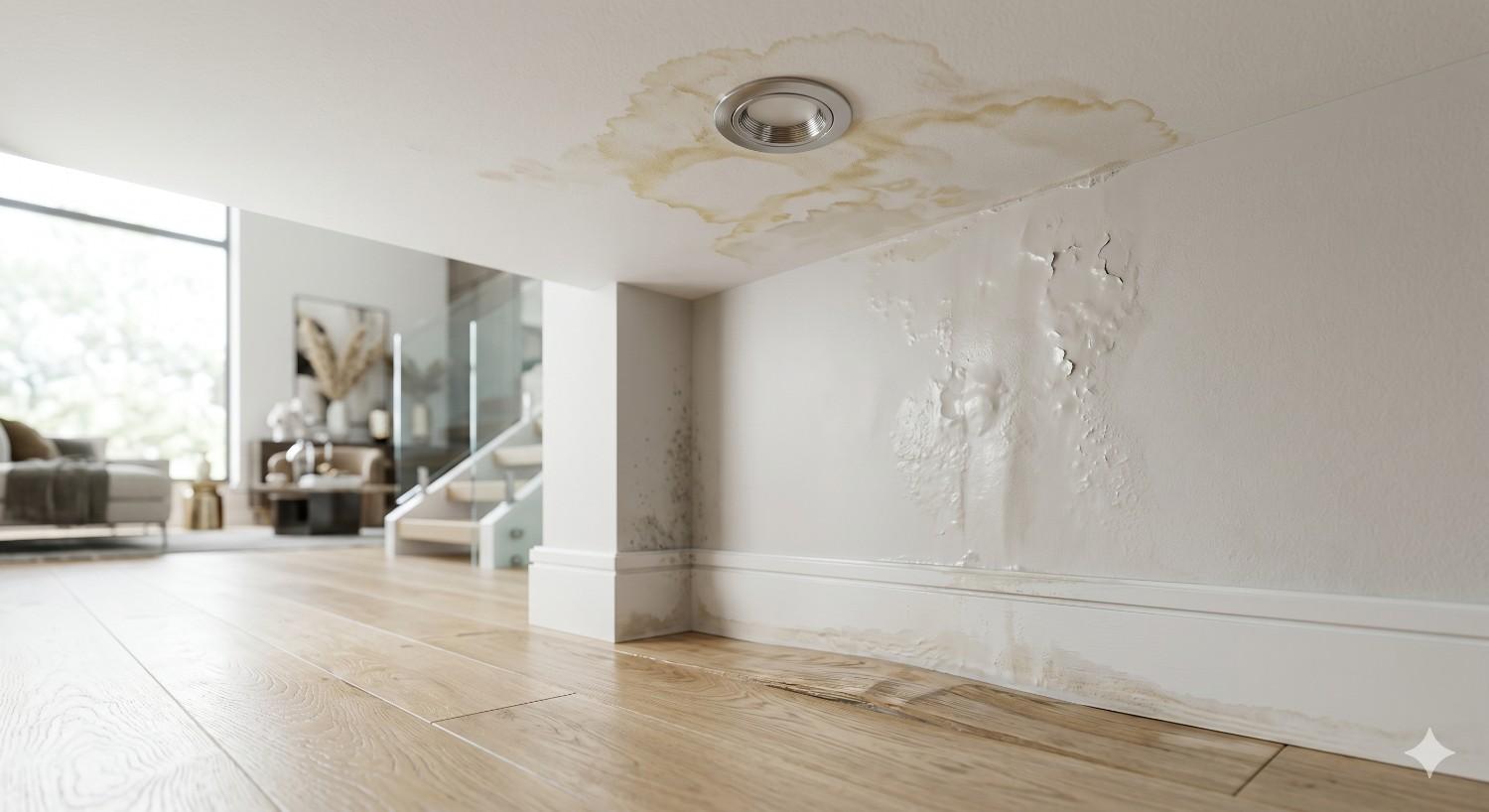
Early Visual Signs of Water Damage
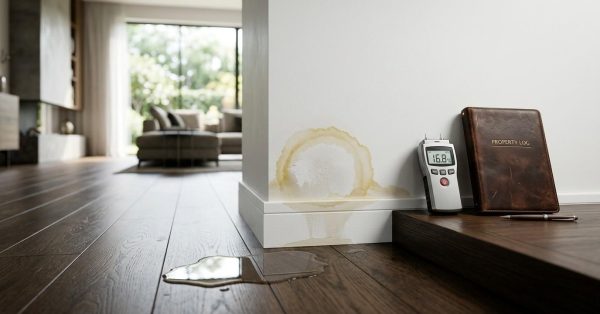
Early water damage appears as light yellow, brown, or rust-colored stains, soft spots, slight bubbling under paint, or thin cracks where surfaces meet. Walls may feel cool or slightly damp. Ceilings often show faint rings. Floors near appliances or bathrooms may darken or feel uneven. These quiet visual shifts are the first warnings.
Discoloration, Stains, and Yellowing
Color changes are the earliest red flag. A pale ring on the ceiling, a yellow halo near a baseboard, or a darker patch beneath a window points to moisture moving through the material. Drywall absorbs water unevenly, leaving uneven tones. Wood develops dark streaks along the grain. Paint may look chalky or faded in one spot while the surrounding area stays normal. These small color shifts often appear weeks before any leak becomes obvious, making them the most reliable early signal.
Texture Changes — Bubbling, Peeling, Warping
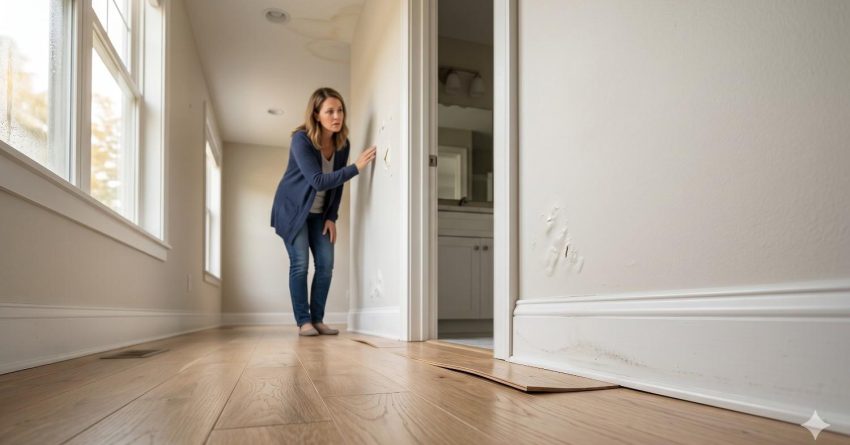
Surfaces also begin to change shape. Paint may bubble in tiny blisters. Wallpaper edges curl. Baseboards pull slightly away from the wall. Hardwood planks cup or crown. Laminate edges swell and lift. Drywall feels spongy when pressed. Tile grout may darken or crumble. These texture shifts mean water has already moved past the surface and is reacting with the material underneath. Acting at this stage is far cheaper than waiting until sagging, cracking, or collapse occurs.
The visible signs answer what early damage looks like, but recognizing the problem is only the first step. Professional water damage restoration becomes the natural next step once these clues appear, since stopping the source and drying the affected materials quickly determines how much can be saved.
Hidden Clues Beyond What You Can See
Not every early sign is visible. A musty or earthy smell in a closet, basement, or under a sink often appears before any stain. Higher indoor humidity, fogged windows, or a sudden increase in your water bill can all signal a slow leak. You may hear faint dripping inside walls or notice that paint feels cooler in certain spots.
These sensory clues matter because mold growth follows moisture within 24 to 48 hours, often hiding behind drywall long before any spot appears on the surface.
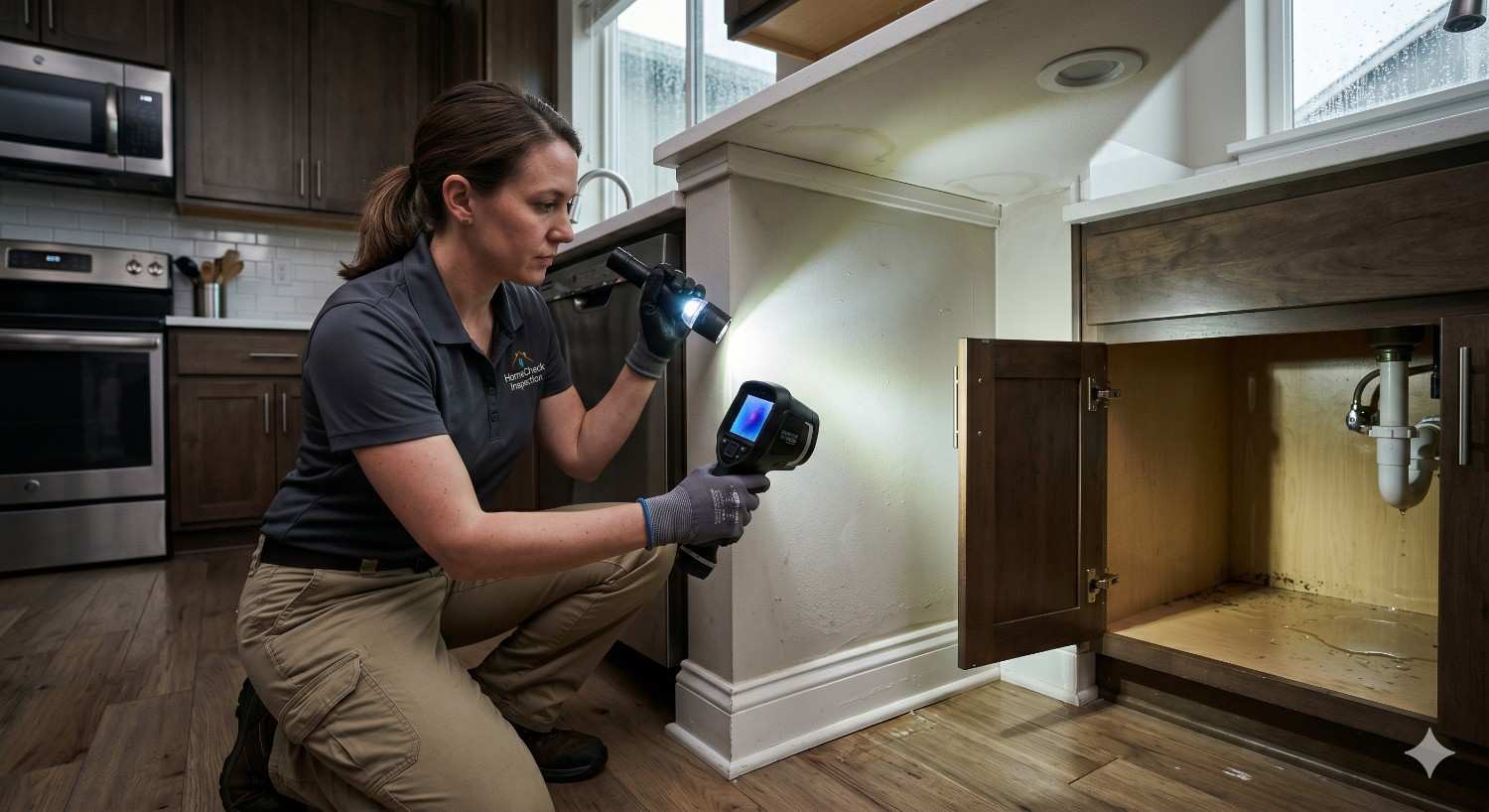
Where Early Water Damage Usually Starts
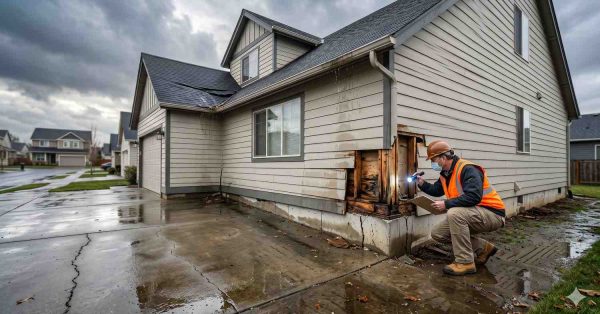
Most early water damage begins in predictable places. Bathrooms, kitchens, laundry rooms, water heater closets, and areas around dishwashers or refrigerators top the list. Roof valleys, attic corners, and window frames are also common starting points. Outside, look near gutters, downspouts, and foundation lines.
In many cases, the source traces back to slow plumbing failures, which is why hidden plumbing leak detection often reveals the true origin before the visible damage spreads further.
Conclusion
Early water damage shows up as soft stains, subtle texture shifts, musty smells, and rising humidity long before structural problems appear. Spotting these signs quickly protects your home, your budget, and your indoor air quality from larger restoration work later.
For homeowners and property managers across the USA, fast action keeps small issues small and preserves long-term property value, safety, and comfort.
We help you catch, contain, and repair water damage at every stage. Contact Mr. Local Services today to connect with trusted local experts who restore your property quickly and reliably.
Frequently Asked Questions
How long does it take for early water damage to become serious?
Most early water damage worsens within 24 to 48 hours, when mold can begin forming and materials start to weaken or stain permanently.
Can early water damage dry on its own?
Surface moisture may dry, but trapped water inside walls, floors, or insulation rarely evaporates fully and almost always leads to hidden long-term damage.
What color are early water damage stains?
Early stains usually appear yellow, light brown, or rust-colored, often forming faint rings or halos that gradually darken as moisture continues to spread.
Does early water damage always smell musty?
Not always, but a musty or earthy odor is one of the most reliable early warnings, especially in basements, cabinets, or closets near plumbing.
Should I call a professional for small water stains?
Yes, even small stains can hide larger problems behind walls, so a professional inspection confirms the source and prevents costly hidden damage later.