Building an energy-efficient home means constructing a structure that uses significantly less energy for heating, cooling, lighting, and water heating — while maintaining or improving comfort, air quality, and long-term durability. In the USA, energy-efficient homes can reduce utility costs by 20% to 30% compared to standard construction, according to the U.S. Department of Energy.
Energy costs continue to rise, and building codes across the country are tightening — making energy-efficient construction not just a preference but a practical necessity for homeowners and property managers today.
This guide covers every stage of energy-efficient home construction: materials, systems, certifications, costs, the step-by-step building process, and how to upgrade an existing home for better performance.
What Is Energy-Efficient Home Construction?
Energy-efficient home construction is the practice of designing and building a residential structure to minimize energy consumption while maximizing comfort, indoor air quality, and long-term durability. It applies principles from building science — including thermal dynamics, moisture management, and mechanical system design — to create a home that performs better than standard code-minimum construction.
The goal is not simply to add insulation or install efficient appliances. It is to treat the home as an integrated system where every component — the foundation, walls, roof, windows, doors, HVAC, plumbing, and electrical — works together to reduce energy demand and maintain consistent interior conditions.
Core Principles Behind Energy-Efficient Building
Four principles form the foundation of every energy-efficient home:
Reduce the load first. Before selecting mechanical systems, the building envelope — walls, roof, windows, doors, and foundation — must be designed to minimize heat gain in summer and heat loss in winter. A well-designed envelope reduces the size and cost of the mechanical systems needed to maintain comfort.
Control air movement. Uncontrolled air leakage is responsible for 25% to 40% of heating and cooling energy loss in typical homes, according to the U.S. Environmental Protection Agency. Continuous air barriers, sealed penetrations, and proper weatherstripping are non-negotiable in efficient construction.
Manage moisture. Moisture that enters the building assembly through air movement or vapor diffusion causes structural damage, mold growth, and insulation failure. Vapor retarders, drainage planes, and proper ventilation prevent moisture accumulation without sacrificing airtightness.
Ventilate intentionally. Tight homes require mechanical ventilation to maintain indoor air quality. Heat recovery ventilators (HRVs) and energy recovery ventilators (ERVs) bring in fresh air while recovering 70% to 80% of the energy from outgoing air, according to the U.S. Department of Energy.
How Energy-Efficient Homes Differ from Standard Construction
Standard code-minimum construction meets the legal requirements for habitability and basic safety. Energy-efficient construction exceeds those minimums — often significantly — in every system category.
The differences show up in insulation levels, window performance ratings, air sealing quality, mechanical system efficiency, and the integration of renewable energy readiness. A code-minimum home might use R-13 wall insulation; an energy-efficient home in the same climate zone might use R-21 or higher. A code-minimum window might have a U-factor of 0.35; a high-performance window targets 0.20 or below.
Understanding what makes a home energy-efficient starts with its mechanical systems — our HVAC system efficiency guide explains how heating and cooling equipment selection directly affects a home’s overall energy performance.
Key Benefits of Building an Energy-Efficient Home
Energy-efficient construction delivers measurable advantages across three categories: financial performance, occupant health and comfort, and long-term property value. These benefits compound over time, making the upfront investment in efficiency one of the most reliable returns available in residential construction.
Long-Term Cost Savings on Utility Bills
The most immediate financial benefit is reduced monthly energy spending. The U.S. Department of Energy reports that energy-efficient homes can cut heating and cooling costs by 20% to 50% compared to standard construction, depending on climate zone, design choices, and mechanical system selection.
Over a 30-year mortgage, those savings accumulate significantly. A homeowner saving $150 per month on energy costs saves $54,000 over that period — before accounting for energy price inflation, which has averaged 2% to 3% annually over the past decade according to the U.S. Energy Information Administration.
Improved Indoor Comfort and Air Quality
Energy-efficient homes maintain more consistent interior temperatures because the building envelope limits heat transfer and the mechanical systems are properly sized for the actual load. Cold spots near windows, drafts along exterior walls, and humidity fluctuations — common complaints in standard construction — are largely eliminated in a well-built efficient home.
Indoor air quality also improves. Controlled mechanical ventilation replaces random air leakage as the primary source of fresh air, allowing filtration and humidity control that uncontrolled infiltration cannot provide. The American Lung Association notes that improved indoor air quality reduces respiratory irritation and long-term health risks associated with poor ventilation and moisture-related mold growth.
Higher Property Value and Resale Appeal
Energy-efficient homes command measurable premiums in the resale market. A study published by the National Association of Realtors found that 61% of real estate agents reported that energy efficiency promotion in listings was valuable to their clients, and homes with green certifications sold for 2% to 9% more than comparable non-certified properties.
As energy costs rise and buyer awareness grows, that premium is expected to increase. Energy-efficient construction consistently raises resale value, and homeowners looking to maximize that return will find that our home remodeling services covers the upgrades that deliver the strongest long-term property gains.
Energy-Efficient Building Materials and Systems
Material selection determines how well the building envelope performs before any mechanical system is turned on. The right materials reduce heat transfer, control moisture, and extend the service life of the structure — reducing both energy costs and long-term maintenance expenses.
Insulation Types and R-Value Requirements
Insulation resists heat flow. Its effectiveness is measured by R-value — the higher the R-value, the greater the resistance to heat transfer. The U.S. Department of Energy recommends R-values by climate zone, ranging from R-13 to R-60 depending on the building assembly and location.
Common insulation types used in energy-efficient construction include:
- Spray polyurethane foam (SPF): Provides both insulation and air sealing in a single application. Closed-cell SPF achieves R-6 to R-7 per inch and acts as a vapor retarder.
- Rigid foam board: Used on exterior walls and under slabs to eliminate thermal bridging through framing members. Achieves R-3.8 to R-6.5 per inch depending on type.
- Blown-in cellulose or fiberglass: Cost-effective for attic applications; cellulose achieves R-3.2 to R-3.8 per inch and is made from recycled content.
- Mineral wool (rock wool): Fire-resistant, moisture-resistant, and achieves R-3.0 to R-3.3 per inch with excellent sound attenuation.
A comprehensive breakdown of installation methods, climate-zone requirements, and cost comparisons is available in our home insulation guide , which covers every material type and the professional installation standards that ensure rated performance in the field.
High-Performance Windows and Doors
Windows and doors are the weakest thermal links in most building envelopes. Standard double-pane windows lose heat at a rate two to three times higher than a well-insulated wall, according to the U.S. Department of Energy. High-performance glazing addresses this through low-emissivity (low-e) coatings, gas fills (argon or krypton), and thermally broken frame systems.
Key performance metrics for windows in energy-efficient construction:
- U-factor: Measures heat loss rate. Target 0.20 or below for cold climates; 0.30 or below for mixed climates.
- Solar Heat Gain Coefficient (SHGC): Measures solar heat admitted. Lower values (0.25 or below) suit cooling-dominated climates; higher values (0.40+) benefit heating-dominated climates.
- Air leakage rating: Target 0.1 cfm/ft² or less.
High-performance glazing is one of the most impactful material choices in energy-efficient construction — our energy-efficient window options details the frame types, glass coatings, and installation standards that reduce heat transfer most effectively.
Exterior doors are equally critical to the building envelope, and our insulated door installation resource walks through the door ratings, weatherstripping standards, and professional installation practices that prevent energy loss at every entry point.
Roofing Materials That Reduce Heat Transfer
The roof assembly manages solar heat gain, moisture, and ventilation simultaneously. In energy-efficient construction, roofing material selection, attic ventilation design, and radiant barrier installation work together to reduce cooling loads and protect the structural assembly.
Cool roof materials — including reflective shingles, metal roofing, and white membrane systems — reflect solar radiation rather than absorbing it. The Lawrence Berkeley National Laboratory reports that cool roofs can reduce roof surface temperatures by 50°F to 60°F compared to standard dark shingles, directly reducing attic temperatures and cooling energy demand.
The roofing system plays a direct role in a home’s thermal performance, and our energy-efficient roofing materials guide covers cool roof coatings, reflective shingles, and ventilation strategies that reduce attic heat gain year-round.
HVAC, Plumbing, and Electrical Systems for Energy Efficiency
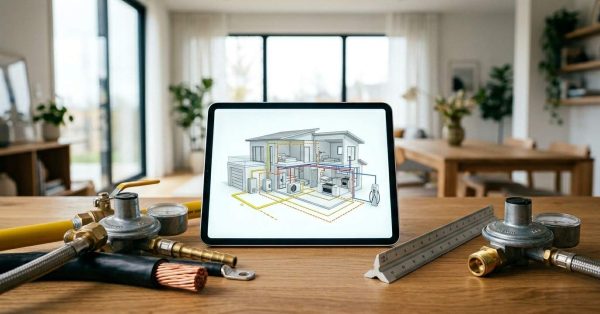
Mechanical systems account for the majority of a home’s energy consumption. In an energy-efficient home, these systems are selected, sized, and installed to match the actual load created by the building envelope — not oversized to compensate for a leaky, poorly insulated structure.
Choosing the Right HVAC System
HVAC system selection begins with a Manual J load calculation — a room-by-room analysis of heating and cooling loads based on the building’s actual envelope performance, climate data, and occupancy patterns. Oversized systems short-cycle, fail to dehumidify properly, and wear out faster. Undersized systems cannot maintain comfort during peak conditions.
High-efficiency options for energy-efficient homes include:
- Heat pumps: Air-source heat pumps achieve efficiencies of 200% to 400% (measured as Coefficient of Performance), meaning they deliver two to four units of heat energy for every unit of electrical energy consumed, according to the U.S. Department of Energy.
- Ground-source (geothermal) heat pumps: Use stable ground temperatures to achieve even higher efficiencies — typically 300% to 500% COP — but require significant upfront installation investment.
- Variable refrigerant flow (VRF) systems: Allow precise zone-by-zone temperature control with high part-load efficiency, well-suited to larger homes with distinct occupancy zones.
Selecting the right heating and cooling equipment is one of the most consequential decisions in energy-efficient construction — our high-efficiency HVAC systems covers equipment ratings, sizing calculations, and installation best practices for maximum performance.
Energy-Efficient Plumbing Fixtures and Water Heating
Water heating accounts for approximately 18% of a home’s total energy use, according to the U.S. Energy Information Administration. Energy-efficient construction addresses this through fixture selection, pipe insulation, and water heater technology.
Tankless (on-demand) water heaters eliminate standby heat loss — the energy wasted keeping a tank of water hot when no hot water is being used. The U.S. Department of Energy reports that tankless water heaters are 24% to 34% more energy-efficient than conventional storage tank heaters for homes using 41 gallons or less of hot water daily.
Low-flow fixtures — showerheads rated at 1.5 gallons per minute or less, faucet aerators, and WaterSense-certified toilets — reduce both water consumption and the energy required to heat that water. Low-flow fixtures and tankless water heaters are foundational to an energy-efficient plumbing system, and our water-efficient plumbing fixtures guide explains the fixture ratings, installation requirements, and expected savings for each option.
Electrical Planning for Solar and Smart Home Integration
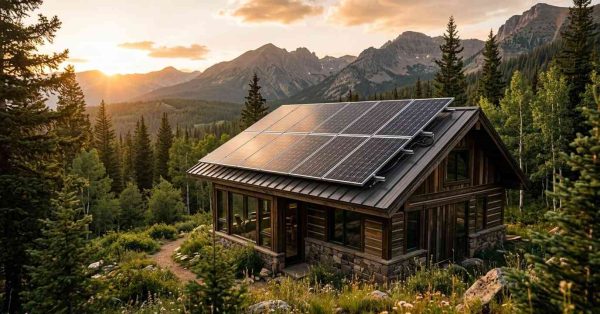
An energy-efficient home’s electrical system should be designed from the start to accommodate solar photovoltaic panels, battery storage, electric vehicle charging, and smart home automation — even if those systems are not installed immediately. Retrofitting conduit runs, panel capacity, and sub-panel locations after construction is significantly more expensive than planning for them during the build.
Key electrical planning elements for energy-efficient construction include:
- Panel sizing: A minimum 200-amp service panel with space for future circuit additions, including a dedicated EV charging circuit (NEMA 14-50 or Level 2 EVSE).
- Solar conduit stub-out: Pre-installed conduit from the roof to the electrical panel eliminates the need for surface-mounted conduit during future solar installation.
- Smart thermostat wiring: Ensure C-wire availability at all thermostat locations to support smart thermostat installation without adapters.
- Whole-home energy monitoring: Pre-wire for a circuit-level energy monitor (such as Sense or Emporia) to track consumption by circuit from day one.
Designing the electrical system to accommodate solar panels and smart home technology from the start avoids costly retrofits later — our solar-ready electrical planning outlines the panel sizing, conduit routing, and EV-ready outlet standards builders should follow.
Energy Efficiency Standards, Certifications, and Codes
Certifications and codes provide third-party verification that an energy-efficient home performs as designed. They also unlock access to tax credits, utility rebates, and financing programs that reduce the net cost of efficient construction.
ENERGY STAR, LEED, and Net Zero Building Standards
ENERGY STAR Certified Homes is the most widely recognized residential energy efficiency certification in the USA. Homes must be at least 10% more efficient than the 2009 IECC baseline and meet additional requirements for air sealing, insulation, windows, and HVAC, according to the U.S. Environmental Protection Agency. Third-party verification by a certified HERS rater is required.
LEED for Homes (Leadership in Energy and Environmental Design) is a point-based certification system administered by the U.S. Green Building Council that addresses energy, water, materials, indoor air quality, and site sustainability. LEED Certified, Silver, Gold, and Platinum levels reflect increasing performance thresholds.
Net Zero Energy (NZE) / Zero Energy Ready Home (ZERH): The DOE’s Zero Energy Ready Home program certifies homes that are so efficient they can offset all annual energy consumption with a renewable energy system. ZERH homes must meet ENERGY STAR requirements plus additional envelope and mechanical standards.
Meeting ENERGY STAR and Net Zero certification standards requires airtight interior assemblies, and our airtight drywall installation guide covers the techniques and materials that help walls and ceilings contribute to a certified building envelope.
Local Building Codes and Energy Compliance in the USA
The International Energy Conservation Code (IECC) is the model energy code adopted — in whole or in modified form — by most U.S. states. The 2021 IECC represents the current benchmark, with requirements for insulation levels, window performance, air leakage limits (3 ACH50 or less in most climate zones), and mechanical system efficiency.
State adoption varies significantly. California operates under its own Title 24 energy code, which is among the most stringent in the country. Other states adopt older IECC editions or apply state-specific amendments. Builders must verify the applicable code edition and any local amendments before finalizing design specifications.
The Energy-Efficient Home Construction Process Step by Step
Energy-efficient construction follows the same general sequence as standard construction but applies additional rigor at each phase — particularly during design, framing, and mechanical rough-in — where decisions made early have the greatest impact on final performance.
Site Selection and Orientation Planning
Site selection and building orientation are the first and most permanent energy efficiency decisions. A home oriented with its long axis running east-west maximizes south-facing glazing for passive solar heat gain in winter while minimizing east and west exposure that causes overheating in summer.
Topography, prevailing wind patterns, and existing vegetation all affect heating and cooling loads. A site with natural windbreaks on the north and west sides reduces infiltration pressure and heating demand. Deciduous trees on the south and west sides provide summer shading while allowing winter solar gain after leaf drop.
Detailed guidance on how landscaping and site planning interact with energy performance is available in our landscaping for energy efficiency resource, which covers tree placement, grading, and site orientation strategies for new construction.
Design Phase — Passive Solar and Building Envelope
The design phase establishes the building envelope’s thermal performance before a single material is purchased. Passive solar design principles — south-facing glazing, thermal mass, roof overhangs sized to block summer sun while admitting winter sun, and natural ventilation pathways — reduce mechanical system loads without adding operating costs.
Building envelope design decisions made during this phase include:
- Wall assembly type and insulation strategy (continuous exterior insulation vs. advanced framing vs. structural insulated panels)
- Window-to-wall ratio by orientation
- Roof assembly and attic strategy (vented vs. unvented)
- Foundation type and below-grade insulation approach
- Air barrier system selection and continuity plan
A dedicated resource on passive solar design covers the glazing ratios, thermal mass calculations, and overhang geometry that make passive solar strategies effective across different U.S. climate zones.
Construction Phase — Air Sealing and Thermal Bridging
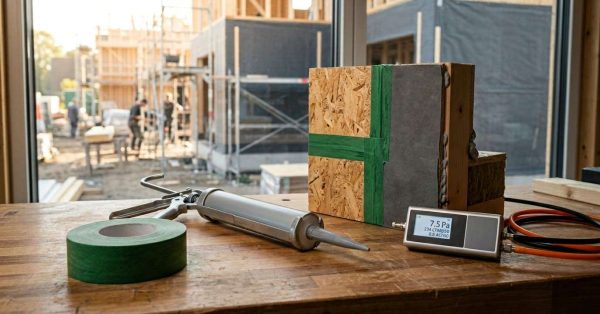
Air sealing is the most labor-intensive and most commonly under-executed element of energy-efficient construction. Every penetration through the building envelope — electrical boxes, plumbing rough-ins, HVAC ducts, recessed lights, and framing connections — must be sealed with appropriate materials before insulation is installed.
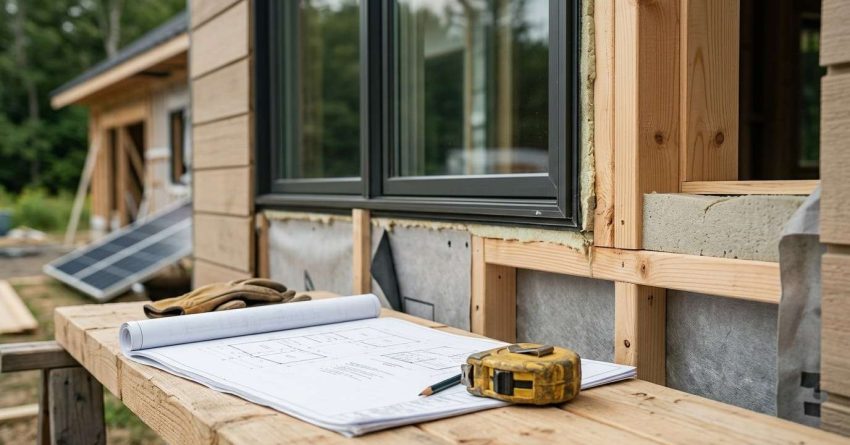
Thermal bridging occurs wherever a thermally conductive material — typically wood or steel framing — passes through the insulation layer, creating a path for heat to bypass the insulation. Advanced framing techniques (also called optimum value engineering) reduce framing material by 20% to 30%, reducing thermal bridging while also reducing lumber costs.
One of the most overlooked mistakes in energy-efficient construction is failing to address structural framing gaps before insulating — our structural carpentry repairs explains how professional carpentry work closes the thermal bridging pathways that undermine even the best insulation systems.
Post-Construction — Blower Door Testing and Commissioning
A blower door test measures the airtightness of the completed building envelope by depressurizing the home and measuring airflow at a standardized pressure differential (50 Pascals). Results are expressed in ACH50 (air changes per hour at 50 Pascals). Most energy efficiency programs require 3 ACH50 or less; Passive House certification requires 0.6 ACH50 or less.
Post-construction commissioning also includes:
- Duct leakage testing (duct blaster test) to verify that HVAC distribution systems are properly sealed
- Mechanical ventilation verification to confirm that HRV/ERV systems are delivering design airflow rates
- Combustion safety testing for any gas appliances to verify proper draft and carbon monoxide safety
Post-construction commissioning includes verifying that all exhaust systems are properly sealed and vented — our dryer vent inspection services explains why professional vent inspection is a critical step in completing a tight, energy-efficient building envelope.
Cost of Building an Energy-Efficient Home
Cost is the most common barrier cited by homeowners and builders considering energy-efficient construction. Understanding the actual cost structure — and the financial tools available to offset upfront investment — changes the calculation significantly.
Upfront Construction Costs vs. Long-Term Savings
Energy-efficient construction typically adds 2% to 10% to the base construction cost of a standard home, according to the U.S. Department of Energy. For a $350,000 home, that represents an additional $7,000 to $35,000 — a range that reflects the wide variation in efficiency levels, climate zones, and design choices.
That upfront premium is offset by monthly energy savings that begin on day one of occupancy. A home saving $200 per month in energy costs recovers a $24,000 efficiency premium in 10 years — before accounting for energy price inflation, reduced maintenance costs from right-sized mechanical systems, and the property value premium associated with certified efficient homes.
The payback period for most energy efficiency investments in new construction ranges from 7 to 15 years, with the most cost-effective measures — air sealing, insulation upgrades, and high-efficiency HVAC — typically paying back in under 10 years.
Federal Tax Credits, Rebates, and Financing Options
The Inflation Reduction Act of 2022 significantly expanded federal incentives for energy-efficient construction and home improvement. Key programs available to homeowners in 2025 and 2026 include:
- Energy Efficient Home Improvement Credit (25C): A tax credit of up to 30% of the cost of qualifying improvements, including insulation, windows, doors, heat pumps, and heat pump water heaters, with an annual cap of $3,200 per household, per the IRS.
- New Energy Efficient Home Credit (45L): Builders of new energy-efficient homes can claim a credit of $2,500 per ENERGY STAR certified home or $5,000 per Zero Energy Ready Home, per the IRS.
- High-Efficiency Electric Home Rebate Act (HEEHRA): Point-of-sale rebates of up to $14,000 for qualifying electrification upgrades, administered through state energy offices.
A complete breakdown of current incentive programs, income eligibility thresholds, and application processes is available in our federal energy tax credits resource, which is updated to reflect 2025 and 2026 program rules.
Federal energy efficiency incentives often extend to safety and accessibility upgrades as well — our home safety improvements outlines the modifications that qualify for tax credits alongside energy efficiency investments.
Hiring the Right Professionals for Energy-Efficient Construction
Energy-efficient construction requires professionals who understand building science — not just construction trades. The difference between a home that performs as designed and one that falls short of its efficiency targets often comes down to the knowledge and attention to detail of the people who build it.
What to Look for in a Green Building Contractor
A qualified green building contractor should demonstrate:
- Familiarity with the IECC energy code edition applicable in your jurisdiction
- Experience with blower door testing and air sealing protocols
- Knowledge of Manual J load calculations and right-sized mechanical system selection
- Certification or training from recognized programs such as the Building Performance Institute (BPI), RESNET, or the National Association of Home Builders (NAHB) Green Building program
- A portfolio of completed projects with documented energy performance results (HERS scores, blower door test results, or utility bill comparisons)
A detailed checklist for evaluating and selecting a qualified contractor is available in our green contractor selection guide, which covers the questions to ask, credentials to verify, and red flags to watch for during the hiring process.
Working with Energy Auditors and Building Performance Specialists
A certified energy auditor or building performance specialist provides independent verification that the home is performing as designed. For new construction, a HERS (Home Energy Rating System) rater performs the blower door test, duct leakage test, and final energy rating that certifications such as ENERGY STAR require.
For existing homes, a home energy audit identifies the specific improvements that will deliver the greatest energy savings for the investment. A professional audit includes a blower door test, infrared thermal imaging, combustion safety testing, and a prioritized improvement report.
Not every energy-efficient upgrade requires a specialized contractor — our skilled handyman services explains which tasks a qualified handyman can handle as part of a broader energy improvement project, from weatherstripping to minor insulation work.
A professional home energy audit is the most reliable starting point for any homeowner or property manager planning energy efficiency improvements — it identifies exactly where energy is being lost and which upgrades will deliver the fastest payback.
Energy-Efficient Upgrades for Existing Homes
Most of the USA’s housing stock was built before modern energy codes existed. Retrofitting an existing home for energy efficiency follows the same principles as new construction — reduce the load, control air movement, manage moisture, and ventilate intentionally — but applies them to an existing structure with constraints that new construction does not face.
Retrofitting Insulation, Windows, and Doors
The retrofit sequence for most existing homes follows a consistent priority order: air sealing first, then insulation, then windows and doors. Air sealing delivers the highest return per dollar invested because it addresses the largest source of energy loss in most existing homes.
Insulation retrofits in existing homes typically focus on the attic (most accessible and highest impact), crawl space or basement (addresses floor-level heat loss and moisture), and exterior walls (most disruptive but highest performance gain). Blown-in insulation through small holes in exterior siding or interior drywall allows wall insulation upgrades without full gut renovation.
Retrofitting an existing home for energy efficiency almost always begins with the windows, and our window replacement guide covers the full process from measuring and selecting replacement units to professional installation and air sealing.
HVAC Upgrades and Smart Thermostat Installation
Replacing an aging heating and cooling system is one of the highest-impact retrofits available to homeowners. A heat pump replacing a 15-year-old gas furnace and central air conditioner can reduce HVAC energy consumption by 40% to 60%, according to the U.S. Department of Energy.
Smart thermostats add an additional layer of savings by learning occupancy patterns and optimizing system operation automatically. The U.S. Environmental Protection Agency estimates that ENERGY STAR certified smart thermostats save homeowners an average of $50 per year on heating and cooling costs — a modest figure that compounds when combined with a high-efficiency system.
Replacing an aging heating and cooling system is one of the highest-impact retrofits available to homeowners — our HVAC upgrade options compares equipment types, efficiency ratings, and the installation process for both full replacements and targeted improvements.
Roofing, Siding, and Exterior Improvements
Exterior envelope upgrades — new roofing, siding replacement, and continuous exterior insulation — address thermal bridging and moisture management issues that interior-only retrofits cannot reach. Adding rigid foam insulation to the exterior of an existing wall assembly eliminates thermal bridging through framing members and can increase effective wall R-value by 30% to 50%.
When retrofitting an existing home’s exterior, the roof is often the first system to address — our roof replacement services details the material options, ventilation requirements, and professional installation standards that improve energy performance from the top down.
Before applying new coatings or siding materials during an energy retrofit, proper surface preparation is essential — our exterior surface preparation guide explains how professional power washing removes contaminants that would otherwise compromise adhesion and long-term performance.
Flooring selection is frequently deprioritized in energy-efficient builds, yet the wrong materials can create significant thermal loss at the slab level — our energy-efficient flooring options covers the materials and installation methods that support a complete thermal envelope from floor to ceiling.
Common Mistakes to Avoid in Energy-Efficient Construction
Even well-intentioned energy-efficient projects fall short when common errors go unaddressed. Understanding these mistakes before construction begins prevents costly corrections after the fact.
Skipping the Manual J load calculation. Oversized HVAC systems are one of the most common and most damaging errors in residential construction. A system sized for a leaky, poorly insulated home will short-cycle in an efficient home, fail to dehumidify, and wear out prematurely. Always require a Manual J calculation before equipment selection.
Treating air sealing as optional. Insulation without air sealing is significantly less effective than the R-value rating suggests. Air movement through insulation bypasses its thermal resistance entirely. Air sealing must be completed before insulation is installed and verified with a blower door test before drywall.
Ignoring thermal bridging. Standard framing creates thermal bridges that reduce effective wall R-value by 15% to 25% compared to the nominal insulation value. Advanced framing, exterior continuous insulation, or structural insulated panels (SIPs) address thermal bridging at the design stage.
Selecting windows by price alone. Low-cost windows with poor U-factor and SHGC ratings undermine the performance of an otherwise well-insulated envelope. Window performance specifications should be set during the design phase and verified against the building’s climate zone requirements before purchase.
Neglecting moisture management. Airtight construction without proper vapor management creates conditions for moisture accumulation within wall assemblies. The vapor retarder strategy — interior, exterior, or none — must match the climate zone and wall assembly type.
Overlooking ventilation. A tight home without mechanical ventilation accumulates indoor air pollutants, excess humidity, and carbon dioxide. HRV or ERV installation is not optional in homes achieving 3 ACH50 or less — it is a health and code requirement in most jurisdictions.
One of the most overlooked mistakes in energy-efficient construction is failing to address structural framing gaps before insulating — our structural carpentry repairs explains how professional carpentry work closes the thermal bridging pathways that undermine even the best insulation systems.
Conclusion
Energy-efficient home construction integrates building science principles — thermal performance, air sealing, moisture management, and mechanical system design — into a unified approach that reduces energy consumption while improving comfort, air quality, and long-term durability.
The financial case is clear: lower utility bills, federal tax credits, and a measurable property value premium make efficient construction one of the most reliable investments in residential real estate, with payback periods typically ranging from 7 to 15 years.
At Mr. Local Services, our network of skilled professionals covers every system involved in energy-efficient construction and retrofitting — from HVAC and electrical to roofing, windows, and insulation — so you can take action with confidence, knowing every upgrade is handled by qualified experts who deliver consistent, quality results.
Frequently Asked Questions
What makes a home “energy-efficient”?
An energy-efficient home uses significantly less energy for heating, cooling, lighting, and water heating than a standard code-minimum home. It achieves this through a high-performance building envelope, right-sized mechanical systems, controlled ventilation, and often renewable energy readiness — working together as an integrated system rather than a collection of individual upgrades.
How much does it cost to build an energy-efficient home?
Energy-efficient construction typically adds 2% to 10% to the base cost of a standard home. For a $350,000 home, that represents an additional $7,000 to $35,000 upfront. Federal tax credits, utility rebates, and long-term energy savings offset this premium, with most efficiency investments paying back within 7 to 15 years.
What is a HERS score and why does it matter?
A HERS (Home Energy Rating System) score measures a home’s energy efficiency relative to a standard reference home. A score of 100 represents the reference home; a score of 50 means the home uses 50% less energy. Most ENERGY STAR certified homes score 60 or below. Lower scores indicate better performance and are required for many certification programs and financing incentives.
What is the most cost-effective energy efficiency upgrade for an existing home?
Air sealing consistently delivers the highest return per dollar invested in existing homes. Sealing gaps around electrical outlets, plumbing penetrations, attic hatches, and recessed lights costs relatively little but can reduce heating and cooling energy use by 10% to 20%. Air sealing should always be completed before adding insulation to maximize the benefit of both improvements.
Do energy-efficient homes require special maintenance?
Energy-efficient homes require the same general maintenance as standard homes, with additional attention to mechanical ventilation systems (HRV/ERV filter cleaning every 3 to 6 months), air sealing integrity after any renovation work, and HVAC filter replacement on schedule. The tight building envelope that makes these homes efficient also means that any breach in the air barrier should be repaired promptly.
What certifications should I look for when buying an energy-efficient home?
ENERGY STAR Certified Homes, DOE Zero Energy Ready Home (ZERH), LEED for Homes, and Passive House certifications are the most recognized and rigorous residential energy efficiency certifications in the USA. Each requires third-party verification of actual performance — not just design intent — making them reliable indicators of a home’s real-world energy performance.
Can I make my existing home energy-efficient without a full renovation?
Yes. The most impactful improvements — air sealing, attic insulation, HVAC replacement, and smart thermostat installation — can be completed without a full renovation and deliver significant energy savings. A professional home energy audit identifies the specific improvements that will deliver the greatest return for your home’s age, construction type, and climate zone, allowing you to prioritize upgrades strategically.
What is passive solar design and does it work in all climates?
Passive solar design uses building orientation, south-facing glazing, thermal mass, and roof overhangs to capture solar heat in winter and block it in summer — without mechanical systems. It works in most U.S. climates but requires careful design calibration. In heating-dominated climates, passive solar can meaningfully reduce heating loads. In cooling-dominated climates, the emphasis shifts to shading, natural ventilation, and minimizing east and west glazing.