The Passive House standard is a rigorous building performance framework that reduces a home’s heating and cooling energy demand by up to 90% compared to conventional construction — achieved through superior insulation, airtight envelopes, high-performance windows, and controlled mechanical ventilation. It is one of the most energy-efficient building standards available to homeowners and builders in the USA today.
For homeowners, landlords, and property managers, understanding this standard matters because it directly affects long-term energy costs, indoor comfort, and the maintenance requirements of any property built or retrofitted to meet it.
This guide explains what the Passive House standard requires, how certification works in the USA, what energy savings look like in practice, and which professional services keep a Passive House performing at its best.
What Is the Passive House Standard?
The Passive House standard — known internationally as Passivhaus — is a voluntary building performance standard focused on dramatically reducing the energy a building needs to stay comfortable year-round. Unlike green building certifications that reward a broad range of sustainability features, Passive House is specifically focused on the building envelope and mechanical systems that control heat, air, and moisture.
A home built to this standard does not rely on a large heating or cooling system to maintain comfortable temperatures. Instead, the building itself does the work — retaining heat in winter and blocking it in summer through a combination of insulation, airtightness, and controlled ventilation. Understanding the Passive House standard is one part of a broader approach to energy-efficient home building — our complete guide covers every method, material, and upgrade path available to homeowners looking to reduce energy use across their entire property.
Core Principles Behind Passive House Design
Passive House design is built around five measurable performance targets: maximum annual heating energy demand, maximum annual cooling energy demand, maximum peak heating load, maximum airtightness level, and maximum primary energy demand. Every design decision — from wall thickness to window orientation — is made to meet these specific numerical thresholds.
How Passive House Differs from Standard Construction
Standard construction in the USA meets minimum code requirements for insulation and air sealing, which vary significantly by state and climate zone. Passive House goes far beyond code minimums, requiring continuous insulation without thermal bridges, airtightness levels roughly ten times tighter than typical new construction, and a mechanical ventilation system that recovers heat from exhaust air before it leaves the building.
The Five Pillars of Passive House Construction
Every Passive House project — whether new construction or a deep retrofit — is built around five interconnected components. Each one contributes to the overall energy performance target, and weakness in any single area undermines the others.
Superior Insulation and Thermal Envelope
Passive House buildings use significantly more insulation than standard construction, applied continuously around the entire building shell — walls, roof, and foundation. The goal is to eliminate thermal bridges: points where heat can bypass the insulation layer and escape through structural elements like studs, beams, or window frames. Insulation thickness varies by climate zone, but R-values well above code minimums are standard across all Passive House projects in the USA.
High-Performance Windows and Doors
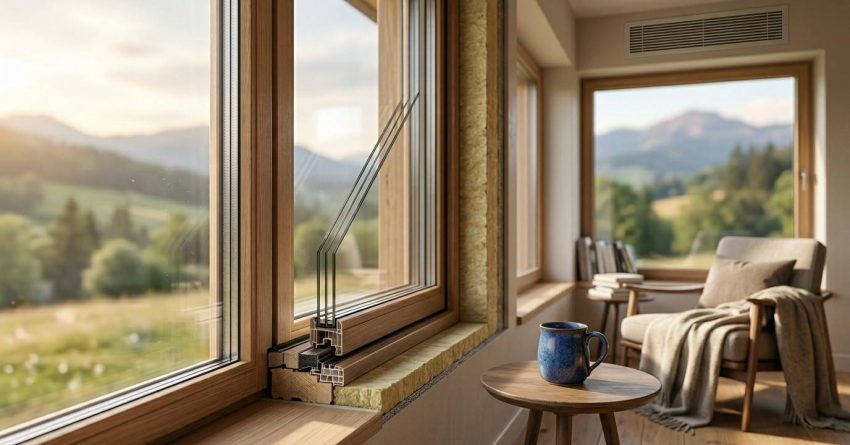
Windows and doors are the most thermally vulnerable parts of any building envelope. Passive House specifications require triple-pane glazing with low-emissivity coatings, insulated frames, and warm-edge spacers to minimize heat loss at the glass edge. One of the most impactful upgrades in any Passive House build is the window system — our high-performance windows resource explains what to look for in glazing, framing, and installation to meet thermal performance targets. Proper installation is just as critical as the window itself, and our window installation services outlines how professional fitting protects your thermal envelope and prevents air leakage around frames. Doors are a common weak point in building envelopes, and our exterior door upgrades explains how insulated, airtight door systems contribute to Passive House performance targets.
Airtight Building Envelope and Ventilation
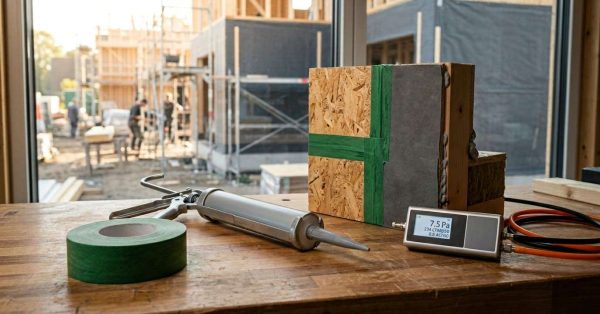
Airtightness is measured using a blower door test, which pressurizes the building and measures how much air leaks through the envelope. Passive House requires a result of 0.6 air changes per hour at 50 pascals of pressure — a standard that demands careful detailing at every penetration, joint, and connection in the building shell. Because the envelope is so tight, a mechanical heat recovery ventilation (HRV) or energy recovery ventilation (ERV) system is required to supply fresh air continuously without losing the heat already inside the building.
Passive House Certification Requirements in the USA
Two certification bodies operate in the USA: the Passive House Institute US (PHIUS) and the European-based Passive House Institute (PHI). Both certify buildings that meet defined energy performance thresholds, but they use different calculation methods and climate-specific targets.
PHIUS uses a climate-specific approach, setting unique heating and cooling targets for each of the USA’s climate zones — from hot-humid Florida to cold Minnesota. PHI uses a single set of targets derived from Central European climate conditions, which can be more or less demanding depending on where in the USA a project is located. Navigating the certification process can be complex — our PHIUS certification process guide walks through every documentation requirement, energy modeling step, and third-party verification stage homeowners and builders need to complete.
PHIUS vs. PHI — Which Standard Applies to You?
For most homeowners and builders in the USA, PHIUS certification is the more practical choice because its climate-specific targets are calibrated to local conditions. PHI certification may be preferred when a project team has international experience or when a building is intended to meet European market standards. Both certifications require third-party verification by a certified rater or consultant, energy modeling using approved software, and a blower door test confirming airtightness.
Energy Performance and Cost Savings
The energy savings delivered by a Passive House building are substantial and measurable. According to the Passive House Institute US, certified Passive House buildings use 40 to 60 percent less energy for space conditioning than comparable code-built homes, with some projects achieving reductions of up to 90 percent depending on climate and building type.
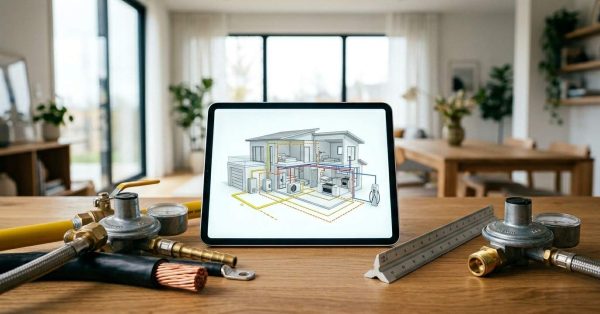
Because Passive House buildings rely on mechanical ventilation systems to maintain air quality, our HVAC efficiency upgrades explains how proper system selection and maintenance directly affect both comfort and energy performance.
How Much Can Homeowners Save on Energy Bills?
Actual savings depend on local energy prices, climate zone, building size, and occupant behavior. In cold climates, heating cost reductions are the most significant benefit. In hot climates, cooling load reductions deliver the greatest savings. The US Department of Energy notes that building envelope improvements — the foundation of Passive House design — consistently deliver the highest return on investment of any energy efficiency measure applied to residential buildings.
Passive House and Home Maintenance Considerations
A Passive House building performs differently from a standard home, and that difference has direct implications for maintenance. The airtight envelope means that any penetration — for plumbing, electrical, or mechanical systems — must be carefully sealed to maintain performance. Routine maintenance tasks that are minor in a standard home can have a measurable impact on energy performance in a Passive House.
In airtight homes, dryer vent cleaning becomes especially important — our dryer vent cleaning explains why lint buildup and improper venting create air quality and fire risks that are amplified in sealed building envelopes. Maintaining the integrity of interior walls is critical in a Passive House — our drywall repair services covers how cracks, gaps, and penetrations in drywall can compromise the airtight layer and reduce thermal performance.
Services That Keep a Passive House Performing
Several professional services are particularly relevant to Passive House properties. The roof assembly is a primary component of the thermal envelope, and our roofing inspection services outlines how regular inspections identify insulation gaps, moisture intrusion, and structural issues before they affect energy performance. HVAC filter replacement and HRV or ERV cleaning are required on a regular schedule to maintain ventilation efficiency. Window and door seals should be inspected annually for signs of air leakage. Any renovation or repair work that penetrates the building envelope requires careful re-sealing to restore airtightness.
Is Passive House Right for Your Property?
The Passive House standard is well-suited to new construction projects where the design can be optimized from the ground up. It is also achievable through deep retrofits of existing buildings, though the cost and complexity are higher because existing structures must be upgraded to meet airtightness and insulation requirements that were not part of the original design.
For homeowners considering a retrofit rather than new construction, our home remodeling options explains which upgrades deliver the greatest energy performance gains and how to sequence a Passive House renovation project. Properties in extreme climates — very cold or very hot — tend to see the greatest financial return from Passive House investment because the energy savings are largest where the difference between indoor and outdoor temperatures is most significant. Landlords and property managers should also consider the long-term tenant appeal of ultra-low energy bills and superior indoor comfort as a competitive advantage in rental markets.
Working with Professionals on Passive House Projects
Passive House construction and retrofit work requires professionals with specific training and experience. Not every contractor is familiar with the airtightness detailing, thermal bridge-free construction methods, and energy modeling required to meet certification standards. Homeowners should look for builders, architects, and consultants who hold PHIUS or PHI credentials, or who have documented experience on certified projects.
Many Passive House maintenance tasks — from sealing penetrations to replacing weatherstripping — fall within the scope of professional handyman repair services, which our handyman repair services explains in full detail. Achieving and maintaining Passive House performance depends heavily on the quality of insulation and air sealing work — our dedicated resource explains the materials, methods, and professional standards involved in achieving Passive House performance targets.
Conclusion
The Passive House standard delivers measurable, verifiable energy performance through a disciplined approach to insulation, airtightness, windows, doors, and mechanical ventilation — making it one of the most effective building frameworks available to homeowners and property managers in the USA today.
For existing properties, understanding where Passive House principles apply — even partially — helps prioritize upgrades that deliver the greatest long-term return on energy, comfort, and property value.
At Mr. Local Services, our network of skilled professionals supports every stage of Passive House maintenance and improvement — from roofing and window services to HVAC, drywall, and air sealing — so your property continues to perform at the standard it was built to meet.
Frequently Asked Questions
What does the Passive House standard actually measure?
The Passive House standard measures a building’s annual heating and cooling energy demand, peak heating load, airtightness, and total primary energy use. All values must fall below defined thresholds to achieve certification.
How much does it cost to build a Passive House in the USA?
Construction costs for a certified Passive House typically run 5 to 15 percent higher than standard construction, depending on climate zone, design complexity, and local labor costs. Energy savings over the building’s lifetime generally offset the premium within 10 to 20 years.
Can an existing home be retrofitted to meet the Passive House standard?
Yes, existing homes can be retrofitted to meet Passive House certification requirements, though the process is more complex and costly than new construction. Deep energy retrofits typically address the building envelope, windows, doors, and mechanical ventilation systems in a phased or whole-house approach.
What is the difference between PHIUS and PHI certification?
PHIUS uses climate-specific energy targets calibrated to each US climate zone, while PHI applies a single set of targets based on Central European conditions. For most US projects, PHIUS certification is the more practical and locally relevant choice.
Do Passive House buildings require special maintenance?
Passive House buildings require the same general maintenance as any home, but with greater attention to airtightness integrity. HRV or ERV filters need regular cleaning, window and door seals should be inspected annually, and any work that penetrates the building envelope must be properly re-sealed.
Is the Passive House standard the same as net-zero energy?
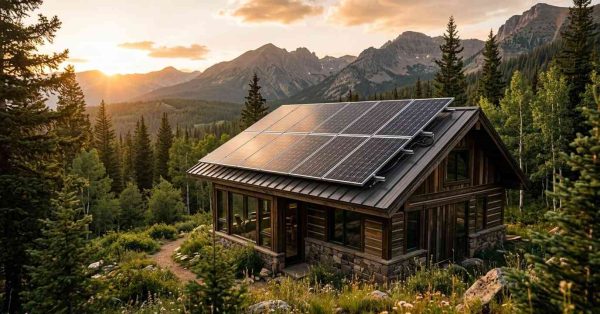
No. Passive House focuses on reducing energy demand through the building envelope and ventilation system. Net-zero energy means the building produces as much energy as it consumes, typically through solar panels or other on-site generation. A Passive House can also be net-zero, but the two standards address different aspects of energy performance.
Which climate zones in the USA benefit most from Passive House construction?
All US climate zones benefit from Passive House construction, but cold climates — such as the Northeast, Midwest, and Mountain West — typically see the largest heating cost reductions. Hot climates benefit significantly from reduced cooling loads and improved indoor comfort during peak summer months.