Whole-home audio distribution design is the process of planning and installing a system that delivers synchronized, controllable sound to multiple rooms or zones throughout a residential property. A well-designed system lets homeowners play music, podcasts, or broadcast audio in any room independently or simultaneously, using a single source or multiple inputs routed through a central controller.
Getting this right matters because a poorly planned system creates dead zones, uneven volume, and wiring problems that are expensive to fix after walls are closed. This guide covers every decision point before installation begins.
You will learn how audio distribution works, what components are required, how to compare wired and wireless options, and what professional installation involves from start to finish.
What Is Whole-Home Audio Distribution?
Whole-home audio distribution is a structured approach to routing audio signals from one or more source devices to speakers installed throughout a home. Unlike a single Bluetooth speaker or a standalone stereo system, a distributed audio system is designed into the property itself, with speakers mounted in walls or ceilings and wiring routed through the structure.
The system operates through zones. Each zone is a defined area, typically a room or an open-plan space, that can be controlled independently. A homeowner can play different audio in the kitchen and the living room at the same time, or send the same source to every zone simultaneously.
Distributed audio is distinct from a home theater setup. Home theater systems are optimized for a single room and a single listening position. Distributed audio prioritizes consistent, comfortable sound across many spaces rather than cinematic performance in one location.
Whole-home audio distribution is one of the more specialized installations within the broader category of home electrical work — our electrical services overview covers the full range of residential electrical solutions available to homeowners and property managers across the USA.
How Audio Signals Travel Through Your Home
Audio signals originate at a source device, which may be a streaming player, a network-attached media server, a turntable, or a cable television receiver. The signal travels from the source to a distribution amplifier or multi-zone controller, which processes and amplifies it before sending it to individual speaker zones.
In a wired system, the signal travels through dedicated speaker wire or structured cabling routed inside walls and ceilings. In a wireless system, the signal is transmitted over a home Wi-Fi network or a proprietary wireless protocol to powered speakers or wireless receivers connected to passive speakers.
The controller is the brain of the system. It manages which source plays in which zone, at what volume, and whether zones are grouped or independent.
Key Components of a Whole-Home Audio System
A complete whole-home audio distribution system consists of four primary component categories: source devices, a distribution controller or amplifier, speaker wire or network infrastructure, and the speakers themselves. Each category involves decisions that affect system performance, installation complexity, and long-term flexibility.
Audio Sources and Input Devices
Source devices are the origin points for all audio content. Common sources include streaming devices such as Sonos, Apple AirPlay-compatible players, or Amazon Echo Link units, as well as physical media players, AM/FM tuners, and television audio outputs.
Most modern systems support multiple simultaneous sources. A homeowner might stream music from a phone in the kitchen zone while a television audio feed plays in the living room zone, all managed through the same controller.
Source selection should account for how the household actually consumes audio. Streaming-first households benefit from network-based sources. Properties with existing vinyl or CD collections may require analog inputs at the controller level.
Distribution Amplifiers and Controllers
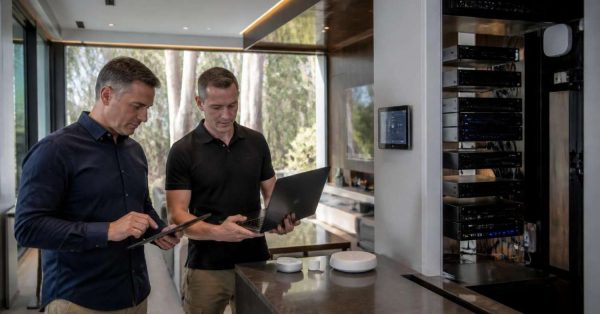
The distribution amplifier or multi-zone controller is the central component of any wired whole-home audio system. It receives signals from all source devices, amplifies them to the correct power level for the connected speakers, and routes them to the appropriate zones.
Controllers range from simple two-zone units designed for smaller homes to enterprise-grade systems supporting 16 or more independent zones. Key specifications include the number of zones supported, the power output per channel measured in watts, the number of source inputs, and whether the unit supports remote or app-based control.
For wireless systems, the controller function is distributed across the network. Each wireless speaker or receiver handles its own amplification, and a software platform manages zone grouping and source routing.
In-Wall and In-Ceiling Speaker Placement
Speaker placement is one of the most consequential decisions in whole-home audio design. In-wall and in-ceiling speakers are the standard choice for distributed audio because they preserve room aesthetics, eliminate floor-standing equipment, and deliver consistent coverage when positioned correctly.
Ceiling speakers are typically placed in the center of a room or spaced evenly across larger open-plan areas. In-wall speakers are used where ceiling installation is not practical, such as in rooms with vaulted ceilings or finished basements with limited overhead access.
Speaker impedance, sensitivity, and power handling must match the amplifier specifications. Mismatched components cause distortion, premature equipment failure, or insufficient volume in large rooms.
Choosing the right speaker type is only part of the equation — our dedicated guide to in-wall speaker installation walks through every placement, wiring, and finishing consideration you need before committing to a layout.
Wired vs. Wireless Whole-Home Audio Systems
The choice between a wired and wireless whole-home audio system is one of the first and most important decisions in the design process. Both approaches can deliver high-quality distributed audio, but they differ significantly in installation requirements, long-term reliability, and flexibility.
Wired systems use physical speaker wire routed through walls and ceilings to connect a central amplifier to passive speakers in each zone. They offer the highest reliability, the lowest susceptibility to interference, and the best audio quality at equivalent price points. The trade-off is installation complexity. Wired systems require access to wall cavities, which is easiest during new construction or major renovation and significantly more disruptive in finished homes.
Wireless systems use Wi-Fi or proprietary mesh protocols to connect powered speakers or wireless receivers throughout the home. They are far easier to install in existing homes because they require only a power outlet at each speaker location. Modern wireless systems from established manufacturers deliver audio quality that satisfies most residential use cases. The trade-off is dependence on network stability and the ongoing cost of powered speakers at every location.
Understanding the trade-offs between wired and wireless setups is easier when you can compare all available formats side by side — our resource on home audio system types breaks down every major category with practical guidance for each property type.
When to Choose Each System Type
A wired system is the right choice for new construction, whole-home renovations, or properties where audio quality and long-term reliability are the primary priorities. It is also the better choice for commercial properties, rental units, or any application where the system needs to operate without ongoing user management.
A wireless system is the right choice for finished homes where running new wire is impractical, for renters who cannot make structural modifications, or for homeowners who want a system they can expand incrementally without a single large installation project.
Hybrid systems are increasingly common. A wired backbone handles the primary living areas and outdoor zones, while wireless speakers extend coverage to secondary rooms, garages, or areas where running wire is cost-prohibitive.
Planning Your Home Audio Distribution Layout
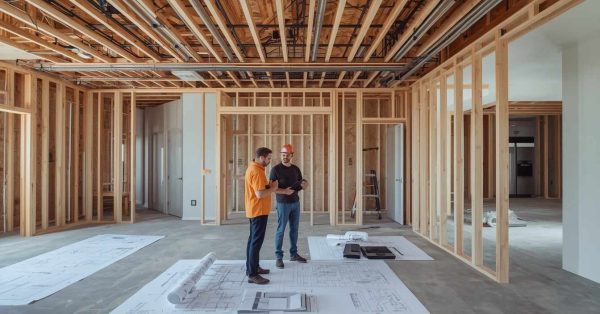
Effective layout planning begins with a floor plan review. Every room or zone that will receive audio needs to be identified, along with the intended use of audio in each space. A kitchen zone has different volume and coverage requirements than a home office or a master bedroom.
The planning process should document the number of zones required, the speaker count per zone, the location of the central equipment rack or controller, and the routing path for all speaker wire or network cabling.
Room Zoning and Coverage Mapping
A zone is any independently controlled audio area. In most residential systems, a zone corresponds to a single room. In open-plan homes, a large open area may function as a single zone even if it spans what would traditionally be considered multiple rooms.
Coverage mapping determines how many speakers are needed per zone and where they should be positioned to achieve even sound distribution. A standard bedroom typically requires two ceiling speakers. A large open-plan kitchen and living area may require four to six speakers to avoid hot spots and dead zones.
Outdoor zones require weatherproof speakers rated for exterior use and may require longer cable runs, which affects amplifier selection and wire gauge requirements.
Electrical and Structural Considerations
Whole-home audio installation intersects with a home’s electrical and structural systems in ways that require professional assessment before work begins. Speaker wire must be rated for in-wall use, typically CL2 or CL3 rated cable, to meet residential building codes. Low-voltage wiring must be routed to avoid proximity to high-voltage electrical circuits, which can introduce hum and interference.
Structural elements including fire blocks, insulation, and HVAC ductwork affect wire routing paths and may require specialized tools or techniques to navigate. In older homes, knob-and-tube wiring or aluminum wiring may require additional precautions.
Proper layout planning depends heavily on your home’s existing wiring infrastructure — our low-voltage wiring services explains how our technicians assess, route, and install the cabling that whole-home audio systems rely on.
Professional Installation vs. DIY Setup
Whole-home audio distribution can be approached as a DIY project by technically capable homeowners, but professional installation is the recommended path for most residential applications. The distinction comes down to the scope of work involved and the consequences of errors.
A DIY installation is feasible for wireless systems in finished homes where no new wiring is required. Placing powered speakers, connecting them to a home network, and configuring a software platform is within reach for homeowners comfortable with basic technology setup.
Wired systems in finished homes, any installation requiring new in-wall wiring, and systems with more than four zones are consistently better served by professional installation. Errors in wire routing, amplifier configuration, or speaker impedance matching are difficult and expensive to correct after walls are closed.
For homeowners who want professional help without a full electrical contractor, our handyman services outlines the range of skilled installation tasks our team handles, including audio component mounting, cable management, and equipment setup.
What a Professional Audio Installer Does
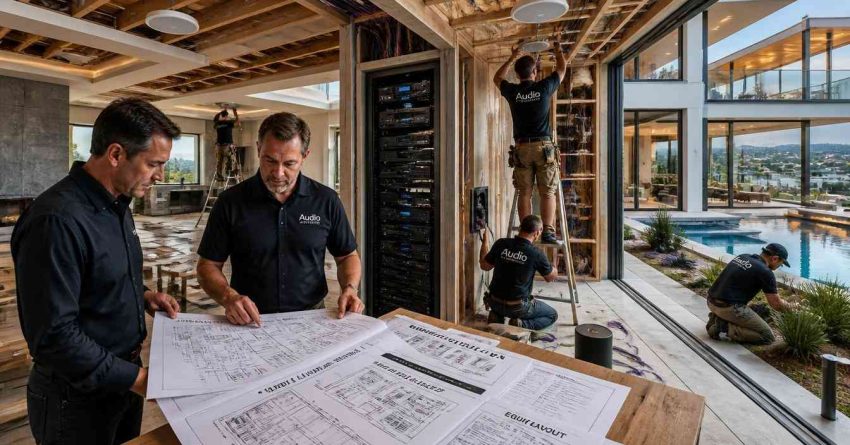
A professional audio installer begins with a site assessment that reviews the floor plan, identifies equipment locations, maps wire routing paths, and confirms compatibility between all specified components. This assessment produces a detailed installation plan before any work begins.
During installation, the technician runs and terminates all speaker wire, mounts speakers and volume controls, installs and configures the central controller or amplifier, connects all source devices, and tests every zone for correct operation and balanced volume levels.
A professional installation also includes documentation of the system layout, which is essential for future service, expansion, or troubleshooting.
Integrating Whole-Home Audio with Smart Home Systems
Whole-home audio distribution pairs naturally with broader smart home automation platforms. When integrated correctly, audio zones can be triggered by smart home events, controlled through voice assistants, and incorporated into automated routines alongside lighting, climate, and security systems.
Common integration platforms include Control4, Crestron, Savant, and consumer-grade options such as Amazon Alexa, Google Home, and Apple HomeKit. The right platform depends on the complexity of the overall smart home system, the budget, and whether professional programming is available.
Connecting your audio system to a broader smart home platform requires careful device compatibility planning — our smart home installation service explains how our technicians integrate audio, lighting, security, and climate controls into a single unified system. Integration also affects how zones are named, grouped, and controlled. A well-integrated system allows a homeowner to say “play jazz in the kitchen” or trigger a “good morning” routine that gradually raises audio volume in the bedroom while adjusting thermostat settings and raising smart blinds.
Cost of Whole-Home Audio Distribution in the USA
The cost of a whole-home audio distribution system in the USA varies significantly based on the number of zones, the choice between wired and wireless architecture, the quality of components selected, and the complexity of the installation.
A basic two-zone wireless system using consumer-grade equipment can be assembled and installed for between $500 and $1,500, including equipment and basic setup. A mid-range wired system covering four to six zones in a finished home, including professional installation, typically ranges from $3,000 to $8,000. Whole-home systems covering eight or more zones with premium components, smart home integration, and professional programming can range from $10,000 to $30,000 or more for larger properties.
The largest cost variables are the number of zones, the need for new in-wall wiring in a finished home, and the level of smart home integration required. Budgeting for audio distribution is easier when you understand the full scope of residential electrical work involved — our residential electrical costs resource provides transparent pricing context across all major electrical service categories.
Maintaining Your Whole-Home Audio System
A whole-home audio system requires periodic maintenance to sustain performance and prevent component failures. Most maintenance tasks are straightforward and can be performed by the homeowner, but annual professional inspection is recommended for wired systems with central amplifiers.
Routine maintenance includes checking all speaker connections for corrosion or loosening, updating firmware on network-connected controllers and wireless speakers, verifying that all zones respond correctly to control inputs, and cleaning speaker grilles to prevent dust accumulation that can affect sound quality.
Amplifiers and controllers generate heat during operation and require adequate ventilation. Equipment racks should be checked periodically to confirm that ventilation clearances have not been blocked by stored items.
Keeping your audio system performing at its best is part of a broader property maintenance routine — our home maintenance services team provides scheduled inspections, system checks, and minor repairs to protect your investment year-round.
Conclusion
Whole-home audio distribution design brings together component selection, zone planning, wiring infrastructure, and system integration into a single coordinated project. The decisions made during the planning phase directly determine how well the system performs and how easy it is to expand or service over time.
A properly designed system adds lasting value to a residential property, improves daily living quality, and integrates cleanly with smart home platforms that homeowners and property managers increasingly rely on.
At Mr. Local Services, our team handles every stage of whole-home audio distribution design and installation, from initial site assessment through final zone testing, so your system works exactly as planned from day one.
Frequently Asked Questions
What is the best system for whole-home audio distribution?
The best system depends on your home’s construction and your priorities. Wired systems with a central multi-zone amplifier offer the highest reliability and audio quality. Wireless systems from established manufacturers are the better choice for finished homes where running new wire is impractical.
How many zones do I need for whole-home audio?
Most residential systems use between four and eight zones. A zone typically corresponds to one room or one open-plan area. Start by listing every space where you want audio, then group adjacent open areas into single zones to keep the system manageable and cost-effective.
Can I add whole-home audio to an existing home?
Yes. Wireless systems can be added to any existing home without structural modification, requiring only a power outlet at each speaker location. Wired systems can also be retrofitted into finished homes, though the process requires more labor to route cables through existing walls and ceilings.
How long does whole-home audio installation take?
A wireless system installation typically takes one to two days. A wired system installation in a finished home ranges from two to five days depending on the number of zones and the complexity of the wire routing. New construction installations are faster because walls are open during the framing stage.
Does whole-home audio work without Wi-Fi?
Wired systems with a traditional multi-zone amplifier and passive speakers operate entirely without Wi-Fi and are not affected by network outages. Wireless systems and smart home integrations require a stable Wi-Fi network to function. Hybrid systems can be designed so that core zones remain operational even if the network goes down.
What is the difference between a zone and a room in audio distribution?
A zone is an independently controlled audio area, which usually corresponds to one room but does not have to. A large open-plan kitchen and living area is typically treated as one zone even though it spans multiple functional spaces. A single room can also be divided into two zones if different areas require independent volume control.
How much does whole-home audio distribution cost in the USA?
Costs range from approximately $500 for a basic two-zone wireless setup to $30,000 or more for a large wired system with premium components and full smart home integration. Most mid-range residential installations covering four to six zones fall between $3,000 and $8,000, including professional installation.