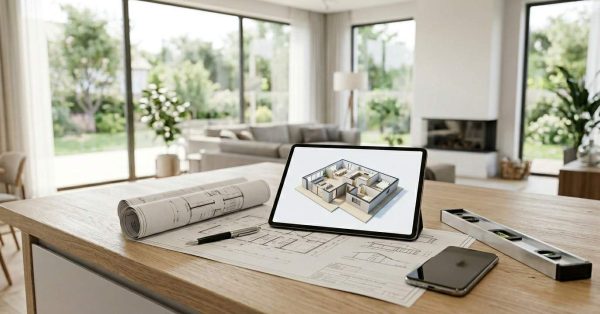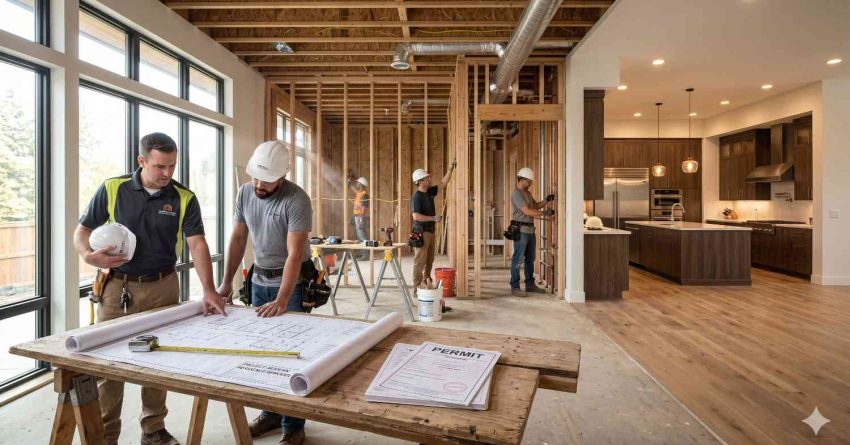
Start with a plan, then work from the structure outward — demolition and systems before surfaces, and finishes always last. Skipping this sequence is the most common reason remodels go over budget, over schedule, and over everyone’s patience.
Whether you are updating a single bathroom or overhauling an entire home, the order of operations matters more than most homeowners expect. Each phase depends on the one before it. Getting the sequence right protects your investment, keeps your contractors coordinated, and prevents costly rework down the line.
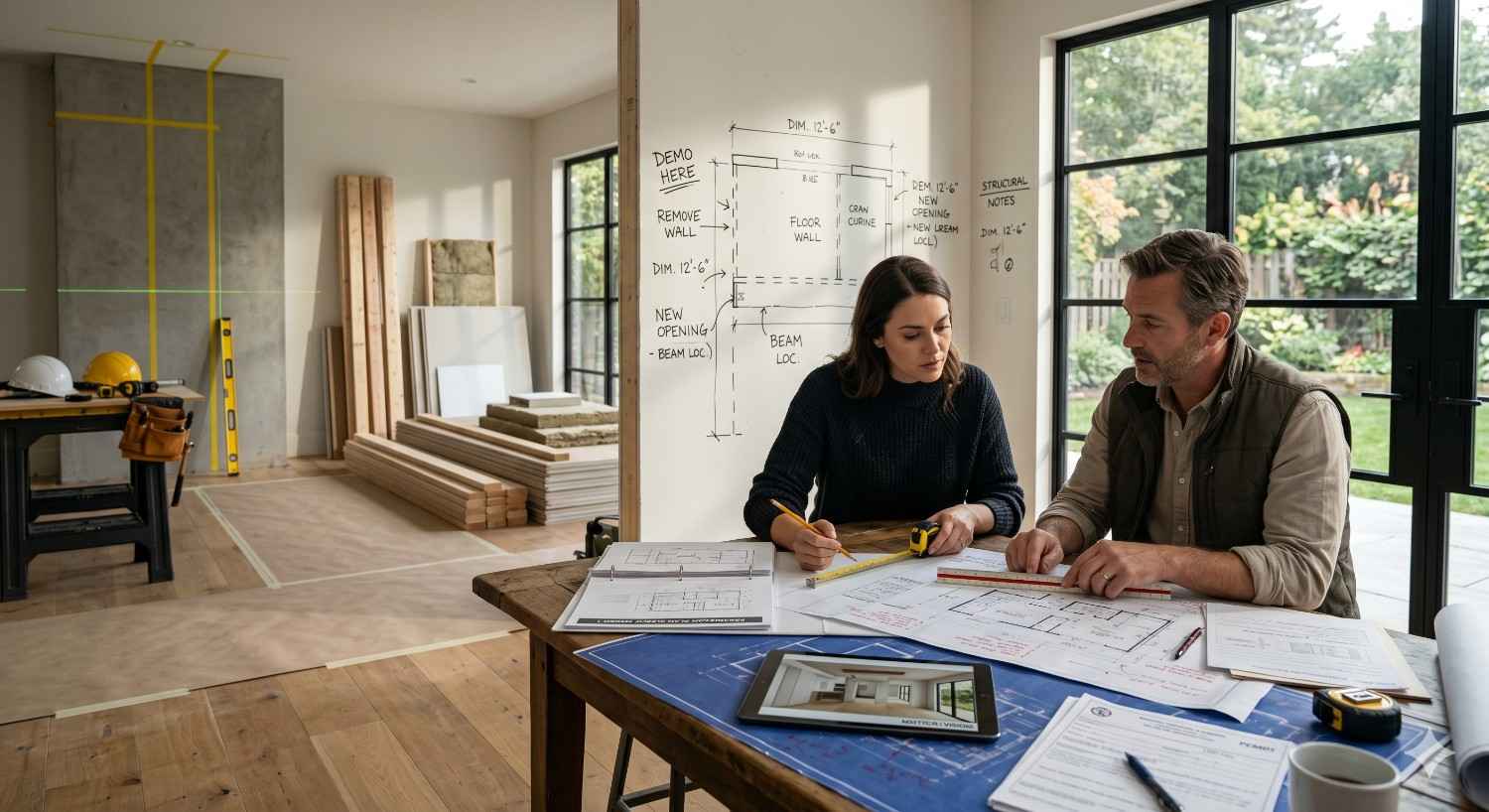
Start With a Plan Before Touching a Single Wall
Before any demolition begins, a remodeling project needs a clear plan. That means knowing exactly what you are changing, what it will cost, and what approvals you need before the first tool comes out.
Jumping straight into demolition without a defined scope is one of the most expensive mistakes a homeowner can make. Walls come down, surprises appear, and without a plan, every surprise becomes a delay.
Define Scope, Budget, and Permit Requirements
Start by writing out exactly what the remodel includes. Room by room, surface by surface. Vague plans produce vague results and unpredictable costs.
Once scope is defined, set a realistic budget with a contingency of at least 10 to 20 percent for unexpected conditions. Older homes especially tend to reveal hidden issues once walls open up — outdated wiring, aging pipes, or inadequate insulation.
Permits come next. Most structural changes, electrical upgrades, plumbing modifications, and HVAC work require permits from your local building department. Skipping permits can result in fines, failed inspections, and complications when selling the property. Check requirements before any work begins.
Hire the Right Professionals Before Work Begins
Lining up your contractors before demolition starts keeps the project moving without gaps between trades. A general contractor can coordinate the full sequence. For specialized work — electrical, plumbing, HVAC — licensed professionals are not optional.
Confirm licensing, insurance, and availability before signing anything. Get written estimates that break down labor and materials separately. A clear contract protects both sides and sets expectations for timeline and scope.
Once your plan is locked, permits are pulled, and your team is in place, the remodeling project moves into the physical work phase where sequence becomes everything.
The Correct Order of Remodeling Work
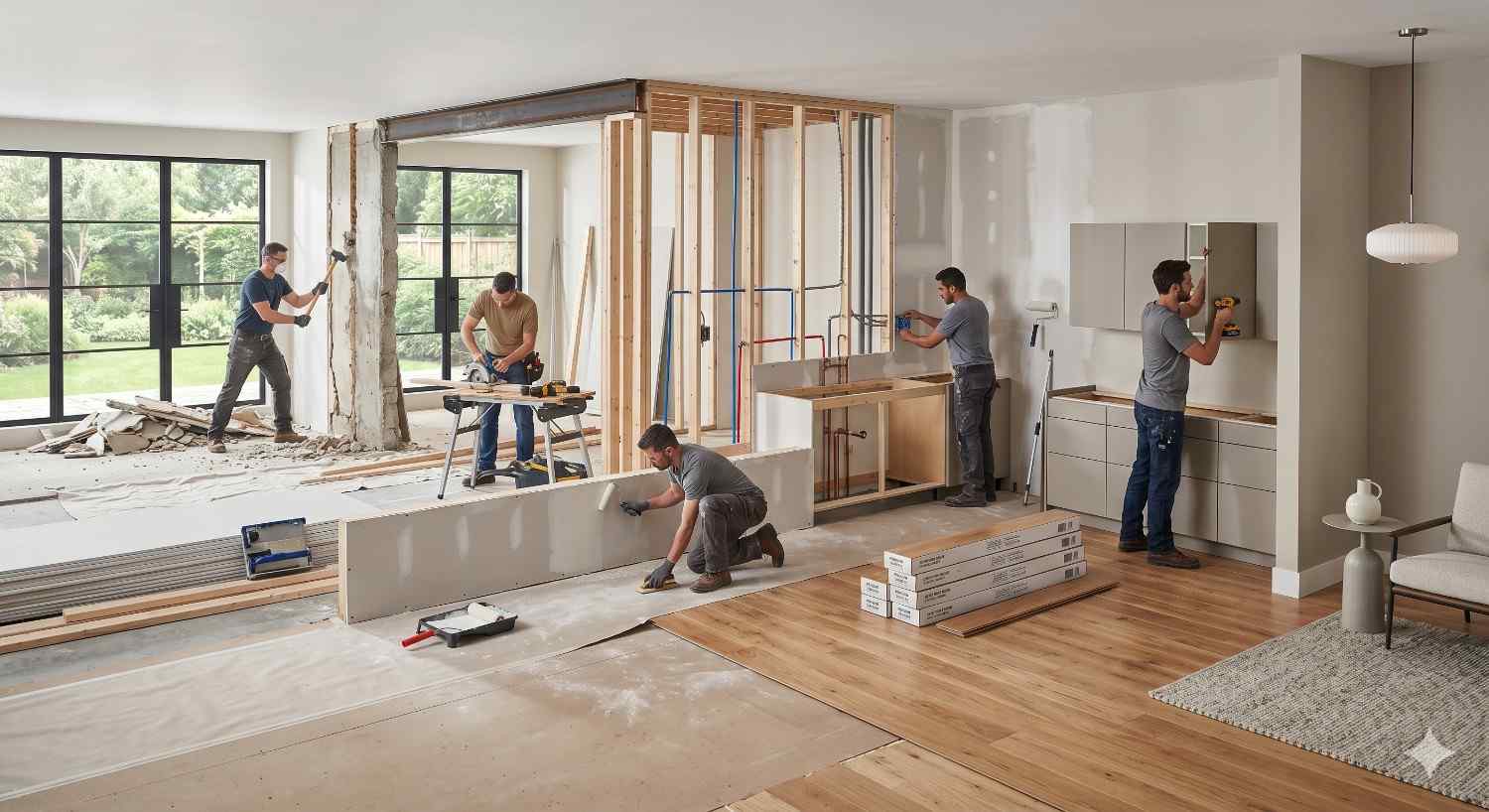
Remodeling follows a logical sequence built around one principle: complete work that will be hidden before installing anything that will be visible. Systems go in before surfaces. Rough work happens before finish work.
Demolition and Structural Changes First
Demolition clears the space and reveals what is actually there. Remove everything that is being replaced — walls, flooring, fixtures, cabinets. This is also when structural changes happen: moving walls, adding beams, widening doorways, or altering the roofline.
Structural work must be completed and inspected before any systems are installed. You cannot run new electrical through a wall that has not been framed correctly.
Rough-In Work — Plumbing, Electrical, and HVAC
After structure comes the rough-in phase. This is when plumbing, electrical, and HVAC systems are installed inside the walls and ceilings before anything is closed up.
Rough-in plumbing work sets the path for every fixture location — sinks, showers, toilets, and appliances. Electrical rough-in places wiring for outlets, switches, lighting, and panels. HVAC rough-in runs ductwork and positions equipment. All three trades work in this phase, and their work must pass inspection before walls close.
This is the phase most homeowners underestimate. It is invisible once finished, but it determines how every room functions for decades.
Insulation, Drywall, and Interior Prep
Once rough-in inspections pass, insulation goes in. Then drywall installation closes the walls and ceilings, creating the surfaces everything else will attach to or sit against.
Drywall finishing — taping, mudding, and sanding — takes time and must be fully dry before painting begins. Rushing this step shows in the final result.
When Finishes and Fixtures Come In
Finishes are the last phase, and they go in a specific order too. Getting this sequence wrong means redoing work.
Flooring, Painting, Cabinets, and Final Installations
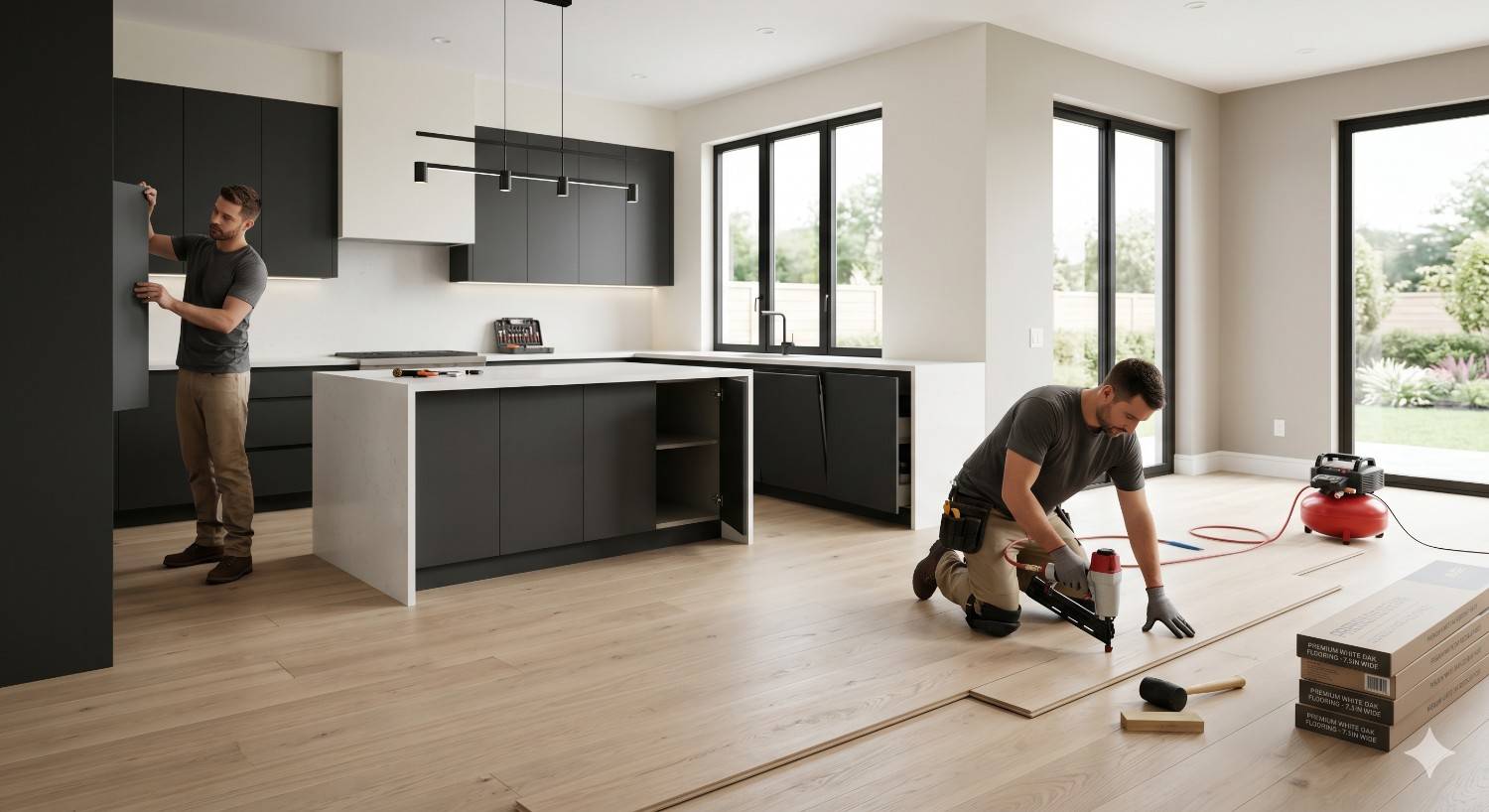
Painting comes before flooring in most cases. It is easier to protect floors that are not yet installed than to protect floors that are. Prime and paint walls and ceilings first.
Cabinets and built-ins go in after painting. Flooring follows cabinets in kitchens and bathrooms so it runs under toe kicks cleanly. Trim, baseboards, and door casings come after flooring.
Fixtures — light fixtures, plumbing fixtures, hardware, and appliances — are the final installations. These go in last because they are the most vulnerable to damage during active construction.
Conclusion
Remodeling done in the right order protects every phase of work that follows. Plan first, handle structure and systems next, and save finishes for last.
For homeowners and property managers, following this sequence reduces rework, controls costs, and keeps timelines realistic across any size project.
At Mr. Local Services, our team coordinates every phase of your remodel — from planning through final installation — so nothing gets done out of order and nothing gets done twice.
Frequently Asked Questions
Can I remodel one room at a time?
Yes. Tackling one room at a time is practical for occupied homes. It limits disruption and allows budget to be spread across phases without stopping the project entirely.
Do I need permits before starting a remodel?
Most structural, electrical, plumbing, and HVAC work requires permits. Requirements vary by location. Always check with your local building department before work begins to avoid fines or failed inspections.
Should plumbing or electrical be done first?
Both happen during the rough-in phase and are often scheduled simultaneously by different trades. Plumbing typically starts slightly ahead since pipe routing affects framing decisions that electrical must work around.
How long does a full home remodel take?
A full home remodel typically takes three to nine months depending on scope, permit timelines, and contractor availability. Larger projects with structural changes or custom work take longer.
What happens if I skip the correct remodeling order?
Skipping the sequence leads to rework. Installing flooring before plumbing rough-in is complete, for example, means tearing it out if a leak or access issue appears. Rework adds cost and extends timelines significantly.