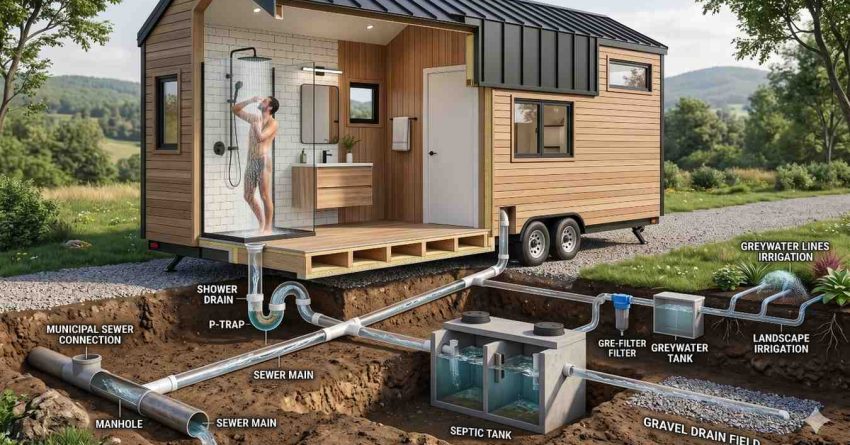
In a tiny home, shower water drains through a pipe system and exits to one of three destinations: a municipal sewer connection, a septic tank, or a dedicated gray water disposal system. Which option applies depends on whether the home sits on a permanent foundation, connects to a campground or RV hookup, or operates fully off-grid.
Tiny homes handle wastewater the same way any residential structure does — water leaves the drain, travels through pipes, and reaches a disposal point. The difference is scale, mobility, and the range of legal options available. Understanding how your system works protects your property, keeps your home compliant, and prevents costly plumbing failures down the road.
Where Shower Water Actually Goes in a Tiny Home
Shower water in a tiny home follows a gravity-fed drain path from the shower floor through a P-trap, into a drain line, and out to a wastewater disposal system. The P-trap holds a small amount of water that blocks sewer gases from entering the living space. From there, the drain line connects to whichever disposal system the home uses.
The Drain Path From Shower to Disposal
The shower drain connects to a sloped drain pipe, typically 1.5 to 2 inches in diameter, that carries water away from the shower floor. That pipe feeds into a larger main drain line running beneath or alongside the home’s structure. In tiny homes on wheels, this line often runs along the undercarriage and connects to an external hookup point. In foundation-based tiny homes, the pipe runs underground to a septic system or municipal sewer line, just like a standard house.
The P-trap is a critical component. Without it, sewer gases including hydrogen sulfide can enter the home through the drain opening. Every properly built tiny home shower includes one, regardless of the disposal system used.
The Three Main Wastewater Systems Used in Tiny Homes
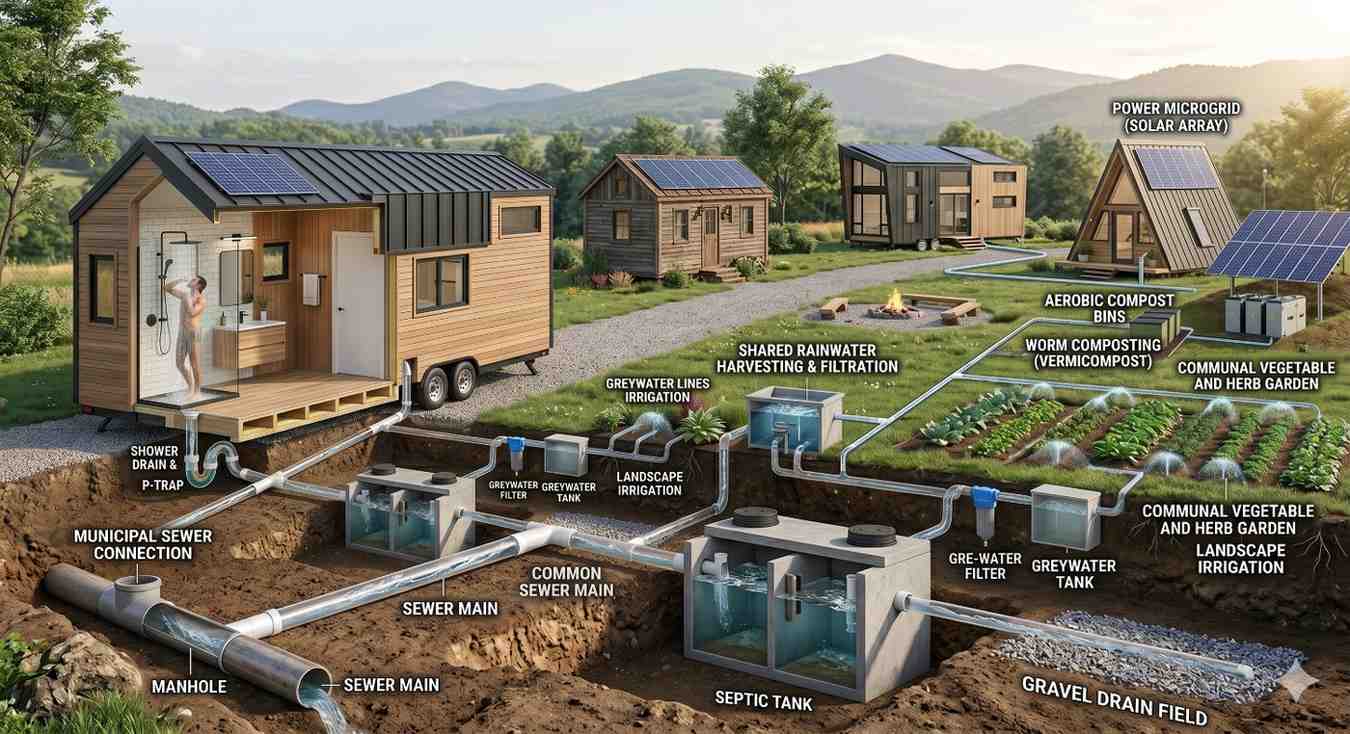
Tiny homes use one of three systems to handle shower water and other wastewater:
Municipal sewer connection: The drain line ties directly into a city or county sewer system. This is the simplest option and requires no on-site treatment. It is available when the tiny home sits on a lot with sewer access or connects to a campground or RV park with full hookups.
Septic tank system: A buried tank collects wastewater, separates solids from liquids, and releases treated effluent into a drain field. This is common for tiny homes on rural or semi-rural land where municipal sewer service is unavailable. Septic systems require periodic pumping, typically every 3 to 5 years depending on usage and tank size.
Gray water system: Some tiny home owners separate shower water — classified as gray water because it contains no sewage — from toilet waste. Gray water can be filtered and dispersed on-site through a leach field or subsurface irrigation system. Local regulations vary significantly on what gray water reuse is permitted, so checking municipal codes before installation is essential.
A well-designed tiny home plumbing system determines which of these options is viable, how the pipes are routed, and what maintenance the system will require over time.
What Determines Which System a Tiny Home Uses
The disposal system a tiny home uses is not a matter of preference alone. It is shaped by the home’s physical setup, local regulations, and available infrastructure.
Permanent Foundation vs. Mobile Tiny Homes
Tiny homes on permanent foundations are treated similarly to conventional homes under most building codes. They typically connect to municipal sewer or install a permitted septic system. Permitting requirements, setback rules, and inspection standards apply just as they would for a standard residential build.
Tiny homes on wheels operate differently. When parked at an RV park or campground, they connect to the site’s sewer hookup through a standard RV drain connection. When parked on private land without hookups, owners must use a holding tank that requires regular pumping, a composting toilet system to reduce liquid waste volume, or a permitted gray water dispersal system for shower and sink water.
Mobile tiny homes face more variability in what is legally allowed because zoning and wastewater regulations differ by county, state, and municipality. Before parking a tiny home on any property, confirming local wastewater requirements with the relevant authority is a necessary step.
Why Proper Drainage Matters for Tiny Home Owners
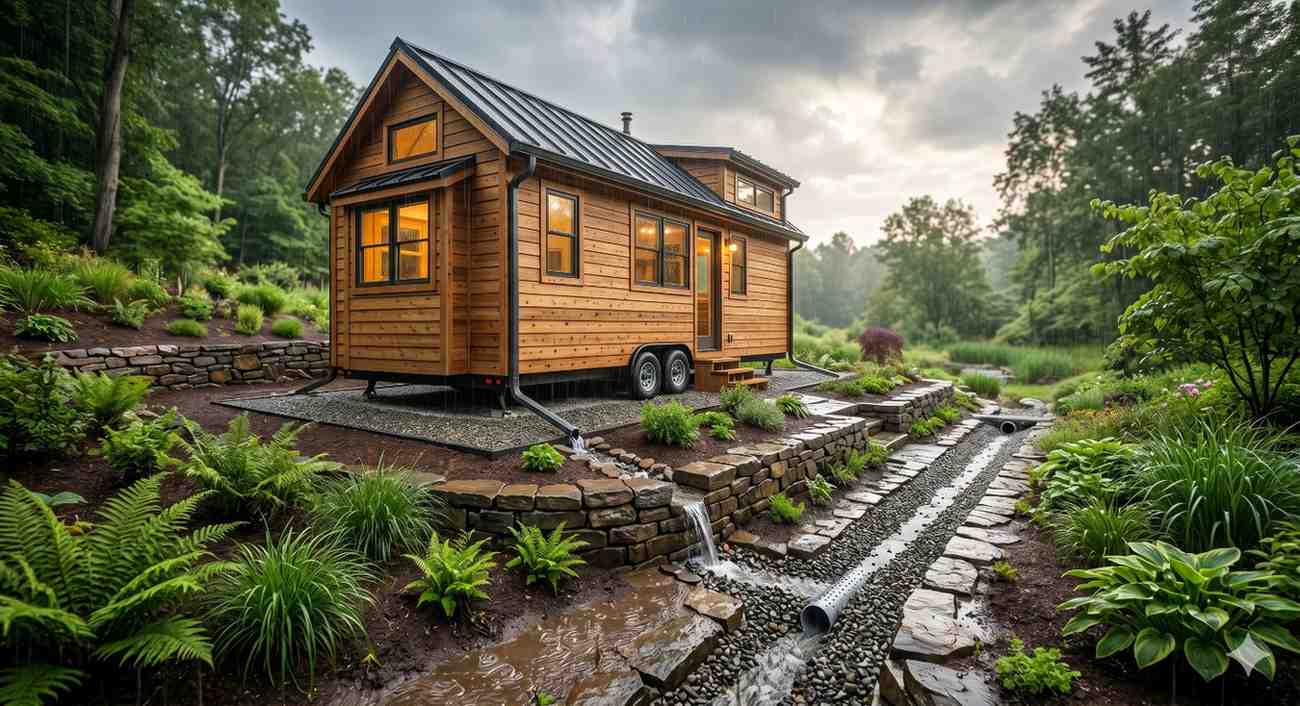
A poorly designed or improperly connected drain system creates problems that go beyond inconvenience. Standing water under a tiny home accelerates structural decay. Blocked or undersized drain lines cause backups that damage flooring, walls, and subfloor materials. Unpermitted gray water dispersal can result in fines or forced removal of the system.
Scheduling a residential plumbing inspection before purchasing or installing a tiny home identifies whether the existing drain configuration meets code, handles the home’s water usage load, and connects correctly to the chosen disposal system. Catching a misaligned P-trap or an undersized drain line early costs far less than repairing water damage after the fact.
For property managers overseeing tiny home rentals or accessory dwelling units, routine drain maintenance is part of responsible property upkeep. Drain lines in compact homes are shorter but more sensitive to blockages because there is less pipe volume to absorb debris before a clog forms.
Conclusion
Shower water in a tiny home travels through a drain line to a municipal sewer, septic tank, or gray water system — the right choice depends on the home’s location, mobility, and local code requirements.
Property owners and managers who understand their wastewater setup make better decisions about maintenance schedules, system upgrades, and tiny home utility connections when expanding or relocating a unit.
At Mr. Local Services, our plumbing professionals help tiny home owners and property managers assess, install, and maintain the right drainage system for their specific setup.
Frequently Asked Questions
Can a tiny home use a regular septic system?
Yes. A tiny home on a permanent foundation can connect to a conventional septic system if the tank and drain field are sized appropriately for the home’s water usage and the installation meets local permitting requirements.
What is gray water and how is it handled in tiny homes?
Gray water is wastewater from showers, sinks, and laundry that contains no sewage. In tiny homes, it can be separated from toilet waste and dispersed through a permitted leach field or subsurface system, depending on local regulations.
Do tiny homes on wheels need a special drain hookup?
Tiny homes on wheels use a standard RV-style drain connection when parked at a campground or RV park. On private land without hookups, a holding tank, composting system, or permitted gray water system is required.
How often should a tiny home’s drain system be inspected?
A drain system inspection is recommended annually for tiny homes, particularly those on wheels where pipe connections experience movement stress. Septic systems should be pumped every three to five years based on usage.
What happens if a tiny home’s drainage system is not properly set up?
Improper drainage leads to pipe backups, water damage to the subfloor and structure, sewer gas infiltration, and potential code violations. Unpermitted gray water systems can result in fines or mandatory removal by local authorities.