Water damage is one of the most common and costly threats to residential and commercial properties across the USA. For homeowners, landlords, and property managers, understanding what it actually means is the first step toward protecting a building’s structure, value, and safety. This guide breaks down the definition, sources, categories, and consequences of water damage, giving you a clear, practical foundation for prevention, response, and informed decisions about professional restoration services.
What Water Damage Means in a Property
Water damage refers to any destruction, deterioration, or loss caused when water intrudes into a property and contacts materials or systems not designed to handle moisture. It includes structural decay, mold growth, ruined finishes, and damaged belongings. The term covers both sudden incidents and slow, hidden moisture problems that compound over time.
How Water Damage Is Officially Defined
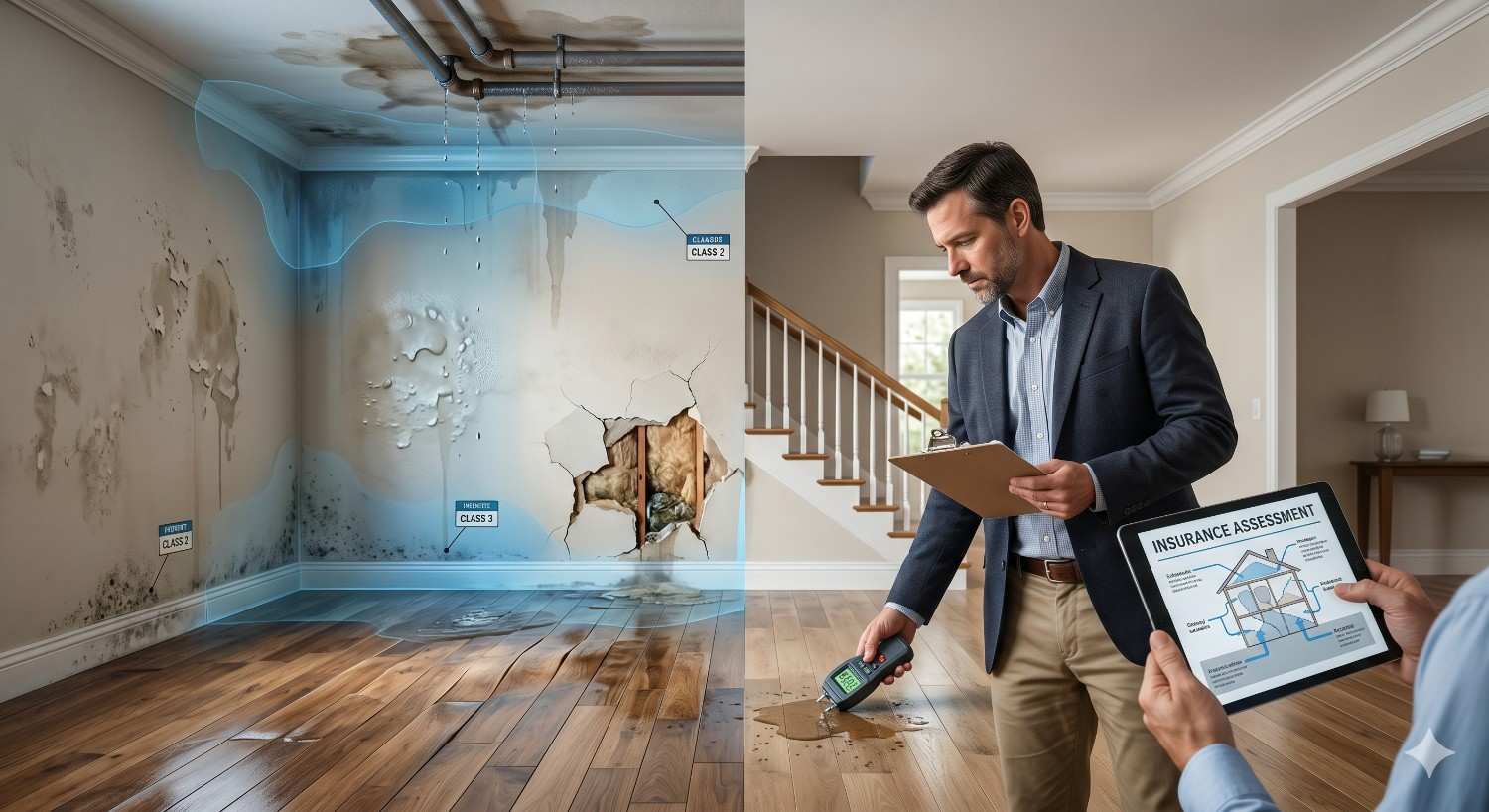
In the property and insurance industries, water damage is defined as the harmful effect of unwanted water intrusion on building materials, electrical systems, finishes, and personal contents. It is measured by the source of the water, the duration of exposure, and the extent of contamination. Restoration professionals use industry standards like the IICRC S500 to classify each incident, which then determines the cleanup process, drying timeline, and which materials can be salvaged versus replaced.
Common Sources That Cause Water Damage
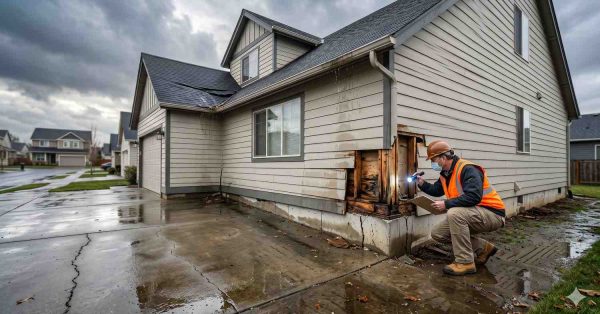
Most water damage starts from predictable sources. Burst or leaking pipes, failed water heaters, overflowing toilets, malfunctioning appliances, roof leaks, foundation seepage, and severe weather events are the leading causes. Hidden slow leaks behind walls or under floors are especially dangerous because they go undetected for weeks or months. Clogged gutters, damaged flashing, and aging plumbing connections also contribute. Identifying the source quickly is essential, because stopping the water is the first step before any drying or repair work can begin effectively.
The definition is the starting point. The practical reality of professional water damage restoration depends on how quickly each situation is assessed and contained.
How Water Damage Affects Homes and Buildings
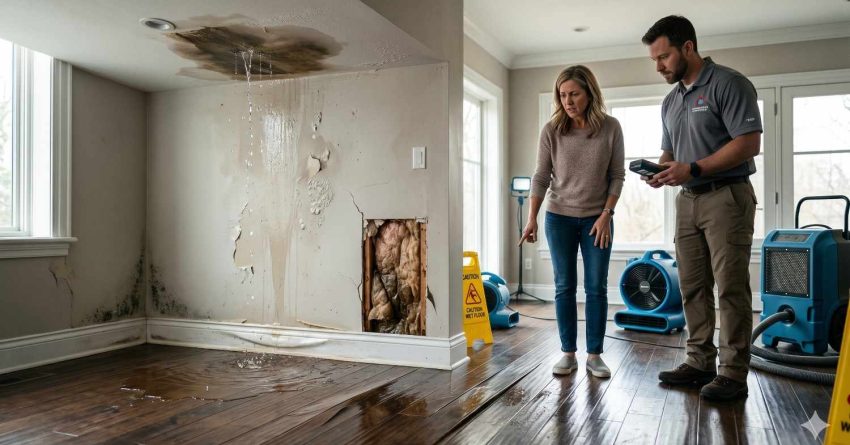
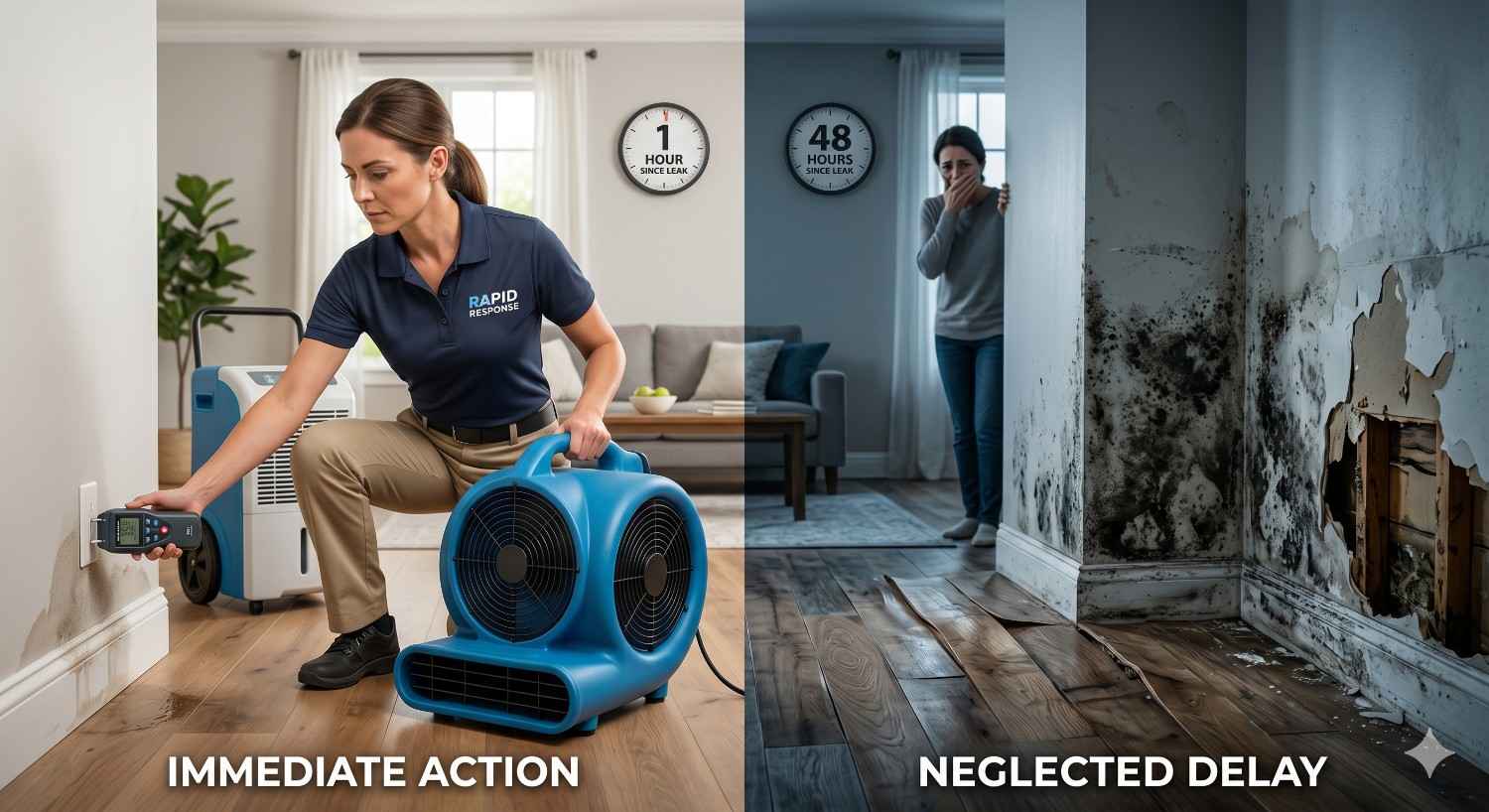
Water damage harms a property in layered ways. It weakens wood framing, warps flooring, swells drywall, corrodes metal fasteners, and ruins insulation. Within 24 to 48 hours, untreated moisture creates ideal conditions for mold growth, which compounds health risks and repair costs. Electrical systems exposed to water become safety hazards. Personal belongings, documents, and finishes often suffer permanent loss. Beyond the visible harm, water damage reduces a property’s market value and can trigger insurance complications if not documented and addressed properly.
Categories and Classes of Water Damage
Restoration professionals separate water damage into three categories based on contamination. Category 1 is clean water from supply lines. Category 2 is gray water with some contaminants, such as appliance overflow. Category 3 is black water containing sewage or floodwater, which poses serious health risks. Classes one through four describe how much material is saturated and how difficult drying will be. These classifications guide every restoration decision, from protective gear to whether materials can be dried in place or must be removed.
Why Acting Fast on Water Damage Matters
Time is the single most important factor in water damage outcomes. Tracking down common household water leaks early prevents most major losses. Once water spreads, costs rise sharply each hour. Fast response limits structural harm, prevents mold, reduces total restoration expense, and improves insurance claim outcomes. Calling emergency plumbing repairs and certified water damage specialists within the first 24 hours often determines whether a problem stays minor or becomes a major reconstruction project.
Conclusion
Water damage means any harm caused by unwanted water intrusion, ranging from minor staining to full structural failure across residential and commercial properties.
For homeowners, landlords, and property managers, understanding the meaning, categories, and urgency of water damage protects both property value and occupant safety long term.
If your property is showing signs of water damage, we at Mr. Local Services connect you with trusted restoration experts who respond fast and restore your space right.
Frequently Asked Questions
What is considered water damage in a house?
Any harm to materials, structure, finishes, or contents caused by unwanted water intrusion, including leaks, flooding, seepage, condensation buildup, and slow moisture problems hidden behind walls or floors.
How long does it take for water damage to appear?
Visible signs can appear within hours, but mold growth typically begins within 24 to 48 hours of moisture exposure if the affected area is not dried properly and quickly.
Is water damage covered by homeowners insurance?
Sudden, accidental water damage is usually covered, but gradual leaks, flooding, and neglect often are not. Always review your specific policy and document incidents thoroughly with photos.
Can water damage be fixed without professional help?
Minor surface incidents may be handled DIY, but anything involving hidden moisture, contamination, or structural materials requires certified restoration professionals to prevent mold and lasting harm.
What are the warning signs of hidden water damage?
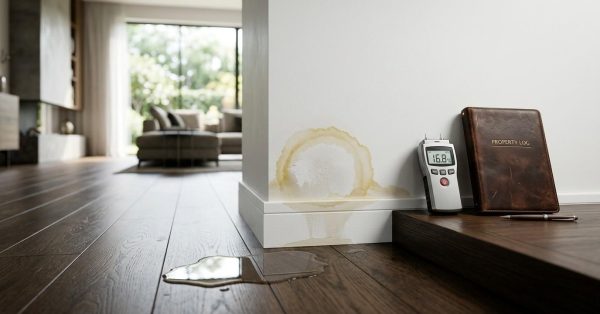
Look for stains, peeling paint, warped floors, musty odors, soft drywall, unexplained spikes in your water bill, and visible mold near plumbing fixtures or exterior walls.