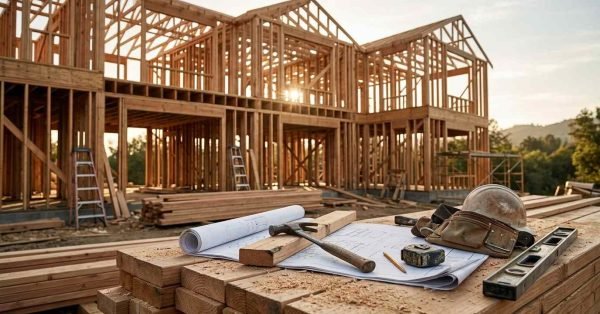
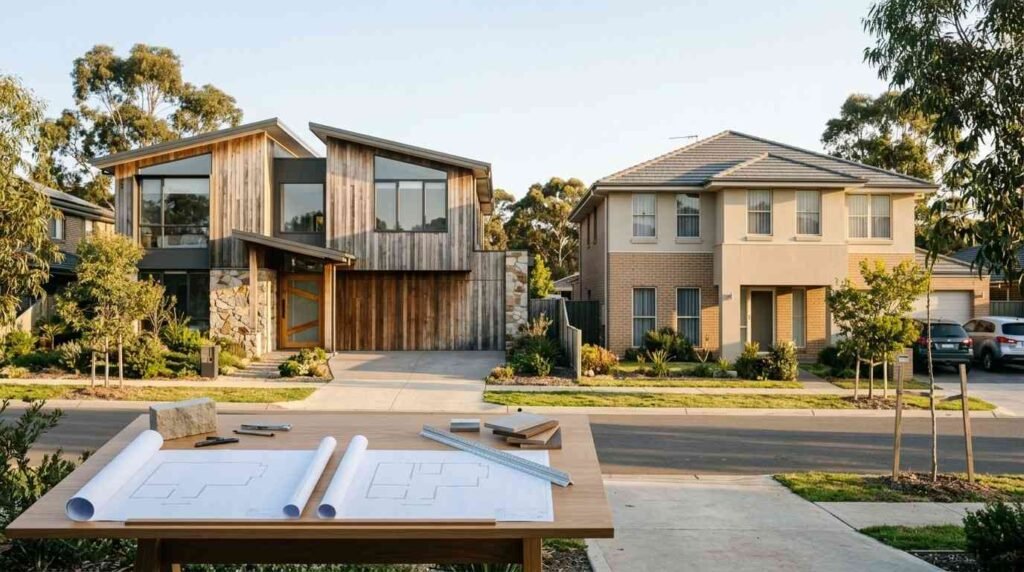
The difference between a custom home and a production home comes down to one thing: who makes the decisions. In a production home, the builder decides almost everything in advance. In a custom home, you do. That single distinction drives every terminology difference you’ll encounter when talking to builders, agents, and contractors.
Understanding these terms matters right now because the wrong vocabulary costs real money in negotiations and contracts.
This guide breaks down every major term cost language, timeline language, and home type labels so you walk into any builder conversation fully prepared.
What Is a Production Home?
A production home is a house built from a set of pre-designed floor plans on land the builder already owns, usually inside a planned subdivision. The builder constructs many homes at once using the same materials, the same subcontractors, and the same construction sequence across every lot.
You’ll also hear these called tract homes or spec homes, though those terms carry slightly different meanings I’ll cover below. The core idea is volume production builders profit by repeating the same process hundreds or thousands of times per year.
How Production Builders Operate
Production builders work on a standardized construction model. They buy land in bulk, develop the subdivision infrastructure, and then sell lots with homes attached not lots alone.
You choose from a menu of available floor plans, not from a blank canvas. The builder controls the schedule, the subcontractors, and the material suppliers, which is exactly how they keep costs predictable and timelines tight.
Standard Features and Floor Plans
Every production home comes with a defined set of builder-grade standard features the finishes, fixtures, and materials included in the base price. Anything above that baseline is an upgrade, and upgrades cost extra.
Floor plan options in a production community are real choices, but they’re bounded choices. You might pick between four layouts and three exterior elevations. That’s the range of your structural input.
What Is a Custom Home?
A custom home is a house designed and built specifically for one buyer, on a lot that buyer either already owns or selects independently. No two custom homes are identical because the floor plan, materials, layout, and finishes all come from the owner’s specifications not a builder’s catalog.
Custom homes are almost always architect-designed or produced through a design-build firm that handles both the architectural drawings and the construction. The process is longer, more involved, and more expensive than production building, but the result is a home built entirely around your life.
How Custom Builders Work
A custom builder works directly with you and your architect from the earliest planning stages. They price the project based on your specific drawings, your chosen materials, and your site conditions not a standardized formula.
This is a fundamentally different relationship than buying a production home. You’re not a buyer selecting from inventory. You’re a client directing a construction project.
Design Flexibility and Material Choices
Design flexibility in a custom home is nearly unlimited within zoning and budget constraints. You control the room dimensions, ceiling heights, window placement <!–NEW PAGE NEEDED–>, structural layout, and every finish from flooring to cabinetry hardware.
Material choices follow the same logic. You’re not selecting from a builder’s approved vendor list. You source materials independently, and your builder prices the labor to install them.
Key Terminology Differences Side by Side
The home building industry uses several overlapping terms that confuse buyers constantly. Getting these straight before you sign anything is essential.
Semi-Custom Home Where It Fits
A semi-custom home sits between production and fully custom. The builder provides a base floor plan, but you can make structural modifications moving walls, adding rooms, changing the garage orientation within limits the builder defines.
Cosmetic customization in a semi-custom home is broad. Structural customization is possible but bounded. This is the middle-ground option most buyers don’t realize exists until they’re already deep in the process.
Spec Home vs. Model Home vs. Custom Home
A spec home is a production home the builder constructs without a buyer under contract speculating that a buyer will appear before or shortly after completion. The builder makes all design decisions. You buy it as-is or with very limited changes.
A model home is a finished spec home the builder uses as a showroom to sell the rest of the community. Model homes are often loaded with upgrades to impress buyers, which means the price you see on the model is not the base price of the community.
A custom home has a buyer under contract before a single foundation is poured. Every decision flows from that buyer’s specifications.
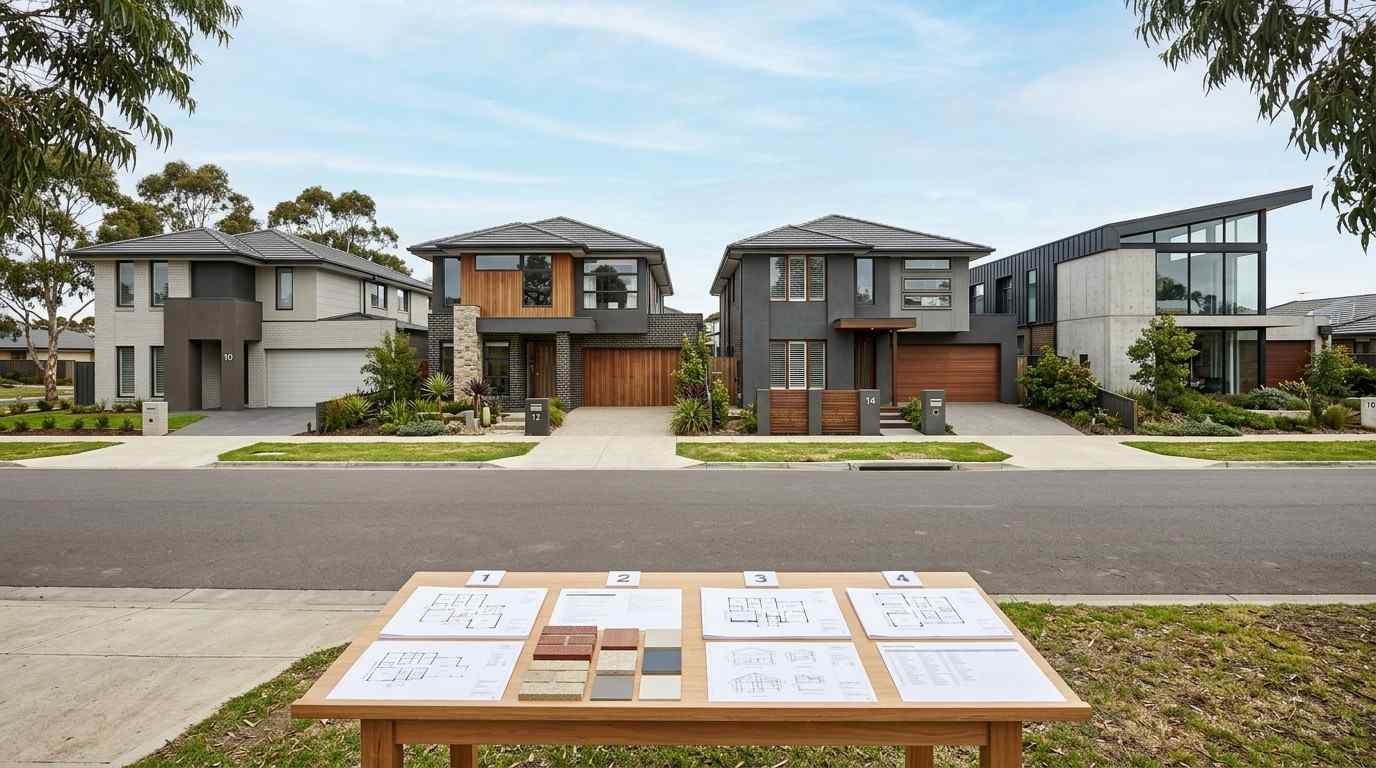
Cost Terminology: What Builders Actually Mean
Cost language in home building is where most buyers get surprised. The terms sound straightforward but carry specific meanings that affect your final price significantly.
Base Price vs. As-Built Price
The base price is what the builder advertises the cost of the home with all standard features and no upgrades. The as-built price is what you actually pay after every selection, upgrade, and change order is added to the contract.
In production communities, the gap between base price and as-built price is routinely 15% to 25% or more, depending on how many upgrades you select at the builder’s design center. That gap is not an accident it’s a deliberate part of the builder’s revenue model.
Allowances, Upgrades, and Change Orders
A builder allowance is a dollar amount the builder sets aside in your contract for a specific item flooring, lighting, or appliances, for example. If you choose options that cost more than the allowance, you pay the difference. If you choose options that cost less, you typically do not get the savings back as cash.
An upgrade is any selection above the standard builder-grade option. Upgrades are priced by the builder, and builder upgrade pricing is almost always higher than what you’d pay sourcing the same item independently.
A change order is a formal written modification to your construction contract after signing. Change orders in both custom and production building add cost and almost always add time. Builders charge a premium for change orders because they disrupt the construction sequence.
Timeline Terminology You Need to Know
Build timelines differ dramatically between production and custom homes, and the terminology around those timelines is just as important as the timelines themselves.
Production Home Build Timeline
A production home in an active subdivision typically takes four to eight months from contract signing to closing, depending on where the home sits in the builder’s construction queue. If you buy early in the community’s development, your wait is longer. If you buy a nearly finished spec home, you might close in 30 to 60 days.
Key milestones in a production timeline include site preparation, foundation pour, framing, mechanical rough-ins, drywall, finish work, and the final punch list. The certificate of occupancy the CO is the government-issued document confirming the home meets code and is legally habitable. You cannot close without it.
Custom Home Build Timeline
A custom home typically takes 12 to 24 months from the start of design to move-in, with significant variation based on plan complexity, permitting timelines in your jurisdiction, and material lead times. The design and permitting phase alone can run three to six months before construction begins.
The draw schedule is a term specific to custom home financing. It’s the schedule of payments your construction lender releases to the builder at defined milestones foundation complete, framing complete, and so on. Understanding your draw schedule is critical to managing cash flow during a custom build.
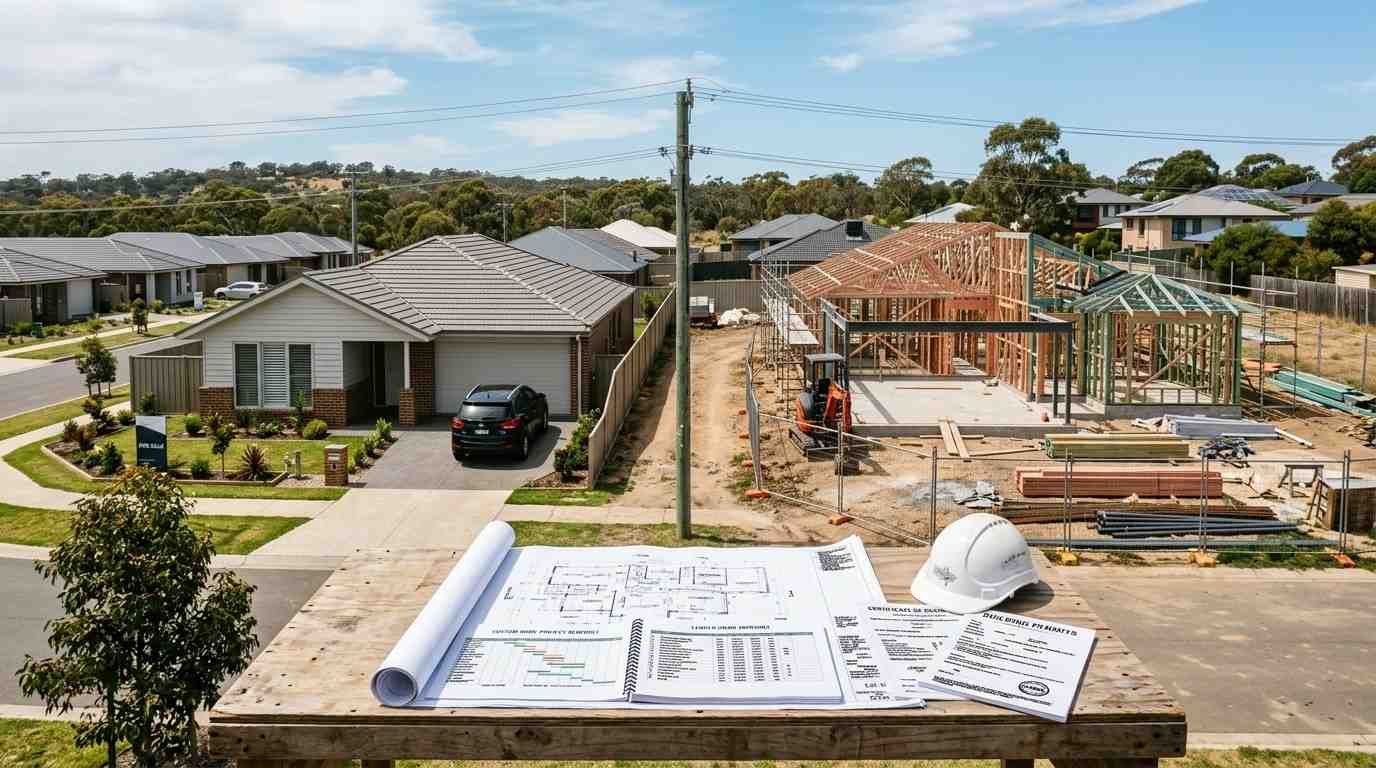
Which Type of Home Fits Your Situation?
The right choice depends on three practical factors: your budget, your timeline, and whether you already own land.
Production homes offer lower entry costs, faster timelines, and less decision fatigue. They suit buyers who want a new home without managing a complex construction process. Resale value in established production communities is generally predictable because comparable homes exist nearby.
Custom homes suit buyers who own land, have a longer timeline, and have specific lifestyle or design requirements that no production floor plan satisfies. The investment is higher, but the result is a home built precisely for how you live. Resale value depends heavily on location and how broadly appealing your custom choices are to future buyers.
Semi-custom homes are worth exploring if you want structural input without the full complexity of a ground-up custom project. Many buyers find this the most practical middle ground.
How Home Services Differ Between the Two
The type of home you buy affects your maintenance and repair experience from day one.
Production homes come with a builder warranty typically one year on workmanship, two years on mechanical systems, and ten years on structural defects, though terms vary by builder and state. During the warranty period, the builder handles covered repairs. After the warranty expires, you’re managing maintenance independently, and the builder-grade materials in many production homes mean some systems need attention sooner than in a custom build.
Custom homes are built to your specifications, which means the quality of materials and systems reflects the choices you made during construction. A well-built custom home with high-quality mechanicals and finishes often requires less reactive maintenance in the early years. But custom homes are also one-of-a-kind, which means finding replacement parts or matching materials for repairs sometimes takes more effort.
Both home types benefit from a consistent home maintenance and repair schedule managed by reliable service professionals. Whether you’re dealing with a builder warranty claim on a production home or a specialty repair on a custom build, having a trusted service provider who understands both construction types makes a real difference.
Conclusion
Custom homes and production homes use different terminology because they are fundamentally different construction processes one standardized, one bespoke, with semi-custom sitting between them.
The cost, timeline, and design language each type uses reflects that core difference, and knowing those terms protects you in every builder conversation and contract review.
We help homeowners and property managers keep both types of homes running well after move-in. Contact Mr. Local Services for reliable maintenance, repair, and improvement services built around your property’s specific needs.
Frequently Asked Questions
What is the difference between a custom home and a production home?
A production home is built from pre-designed plans on builder-owned land in a subdivision. A custom home is designed specifically for one buyer on land they own or select, with full control over the floor plan and materials.
What does “semi-custom” mean in home building?
Semi-custom means the builder provides a base floor plan that you can structurally modify within defined limits. You get more design input than a production home but less than a fully custom build.
What is a spec home?
A spec home is a production home the builder constructs without a buyer under contract, speculating that a buyer will purchase it during or after construction. Design decisions are made entirely by the builder.
What is a builder allowance?
A builder allowance is a set dollar amount included in your contract for a specific item like flooring or lighting. You choose options within that budget anything above it costs extra, and savings below it typically stay with the builder.
How long does it take to build a custom home vs. a production home?
A production home typically takes four to eight months from contract to closing. A custom home usually takes 12 to 24 months, including the design and permitting phase before construction begins.
Is a custom home more expensive than a production home?
Yes, in almost every case. Custom homes require individual architectural drawings, unique material sourcing, and a more complex construction management process all of which add cost compared to the standardized production building model.
What is a change order in home construction?
A change order is a formal written modification to your construction contract after it’s been signed. Change orders add cost and typically extend the build timeline because they disrupt the planned construction sequence.