Designing MEP systems for a cold climate new build requires more than standard specifications — every mechanical, electrical, and plumbing decision must account for sustained freezing temperatures, heavy snow loads, and the unique moisture dynamics that extreme cold creates inside and outside a structure.
Cold climate construction puts MEP systems under stress that milder regions never experience, and errors made at the design stage are costly to correct once walls are closed and systems are running. Understanding what each system requires from the start protects your investment and keeps your home safe year-round.
This guide covers the full scope of MEP design for cold climate new builds — from heating load calculations and pipe routing to electrical freeze protection, building envelope coordination, and code compliance requirements.
What MEP Design Means for Cold Climate Construction
MEP stands for mechanical, electrical, and plumbing — the three integrated systems that make a building functional, safe, and comfortable. In standard construction, these systems are designed to meet baseline performance requirements. In cold climate new builds, they must be engineered to perform reliably when outdoor temperatures drop well below freezing for extended periods.
The challenge is not just keeping systems operational in the cold. It is designing them so that temperature extremes, moisture migration, and thermal bridging do not degrade performance over time. A heating system that is undersized by 10 percent in a mild climate is an inconvenience. In a cold climate, that same undersizing creates frozen pipes, ice damming, and structural moisture damage.
How Extreme Cold Affects Mechanical, Electrical, and Plumbing Systems
Cold temperatures affect each MEP system differently. Mechanical systems must generate and distribute more heat while managing the moisture that comes with tightly sealed, well-insulated envelopes. Electrical systems face condensation risks at panel locations, heat loss through improperly routed conduit, and the need for dedicated freeze protection circuits. Plumbing systems are vulnerable wherever pipes run through exterior walls, unheated spaces, or areas with insufficient insulation.
The interaction between these systems matters as much as each system individually. A ventilation strategy that exhausts too much warm air can create negative pressure that draws cold air through plumbing penetrations. An electrical panel placed on an exterior wall without a thermal break can become a condensation point. MEP design in cold climates is a coordination problem as much as an engineering one.
Mechanical System Design for Cold Climates
Mechanical system design in cold climate new builds centers on heating capacity, distribution efficiency, and ventilation balance. The goal is a system that maintains comfortable interior temperatures without creating the moisture problems that lead to mold, rot, and air quality issues.
Heating Load Calculations and Equipment Sizing
Accurate heating load calculations are the foundation of cold climate mechanical design. A Manual J calculation — the industry standard for residential load analysis — accounts for the building’s insulation values, window performance, air leakage rates, occupancy, and the design outdoor temperature for the specific location. In cold climates, design temperatures can range from 0°F to -30°F or lower, which dramatically increases the required heating capacity compared to moderate climates.
Oversizing heating equipment is as problematic as undersizing it. An oversized furnace or boiler short-cycles, meaning it turns on and off too frequently to reach steady-state efficiency. This wastes energy, creates uneven temperatures, and accelerates wear on components. Proper sizing based on a verified load calculation produces a system that runs longer cycles, distributes heat more evenly, and lasts longer.
Ventilation Strategies That Prevent Moisture and Ice Buildup
Tight building envelopes — essential for cold climate energy performance — require mechanical ventilation to maintain indoor air quality. Without controlled ventilation, moisture from cooking, bathing, and occupant respiration accumulates in the building, leading to condensation on cold surfaces, mold growth, and structural damage.
Heat recovery ventilators (HRVs) and energy recovery ventilators (ERVs) are the standard solution for cold climate new builds. An HRV captures heat from outgoing stale air and transfers it to incoming fresh air, recovering 70 to 80 percent of the heat that would otherwise be lost. ERVs perform the same function while also managing moisture transfer, which is particularly valuable in very cold climates where incoming air is extremely dry.
Proper cold climate construction depends on coordinated HVAC system design — our resource explains how heating, ventilation, and air conditioning components are selected and sized for residential properties across all climate zones.
Electrical System Design Considerations in Freezing Conditions
Electrical systems in cold climate new builds face challenges that go beyond standard residential wiring requirements. Panel placement, conduit routing, and freeze protection circuits all require deliberate planning to prevent failures that are expensive and sometimes dangerous to correct after construction is complete.
Freeze Protection, Heat Tape, and Panel Placement
Electrical panels should never be placed on exterior walls in cold climate construction. An exterior wall panel creates a thermal bridge, allows cold air infiltration around the enclosure, and is prone to condensation when warm interior air contacts the cold surface. Panels belong on interior walls, in conditioned spaces, with all penetrations properly sealed.
Heat tape — also called heat cable or pipe heating cable — is a resistive heating element installed along pipes, gutters, and roof edges to prevent ice formation. In cold climate new builds, heat tape circuits are typically dedicated circuits planned during the electrical design phase, not added as an afterthought. Proper circuit sizing, thermostat controls, and GFCI protection are all part of a correctly designed freeze protection system.
Freeze protection for electrical systems requires careful panel placement and circuit routing — our residential electrical planning outlines how licensed electricians approach wiring layouts in cold climate new construction.
Plumbing Design to Prevent Freezing and Water Damage
Plumbing is the MEP system most visibly affected by cold climate conditions. Frozen pipes are one of the most common and costly failures in cold climate homes, and virtually all of them are preventable through proper design decisions made before construction begins.
Pipe Routing, Insulation, and Frost-Free Fixture Selection
The first rule of cold climate plumbing design is to keep pipes out of exterior walls wherever possible. When pipe routing through exterior walls cannot be avoided, pipes must be placed on the warm side of the insulation — between the insulation and the interior finish — never between the insulation and the exterior sheathing.
Pipe insulation adds a layer of protection but is not a substitute for correct routing. Foam pipe insulation slows heat loss but does not generate heat. In sustained freezing conditions, an unheated pipe will eventually freeze regardless of insulation thickness. The design solution is routing, not insulation alone.
Frost-free hose bibs and sillcocks are standard in cold climate construction. These fixtures have a long stem that positions the actual shutoff valve inside the conditioned space, so the water in the exposed portion of the fixture drains back when the valve is closed. They eliminate one of the most common freeze points in residential plumbing.
Preventing frozen pipes starts well before the first winter — our guide to cold climate plumbing covers pipe material selection, insulation requirements, and emergency shutoff planning for new residential builds.
Drain, Waste, and Vent System Planning in Cold Climates
Drain, waste, and vent (DWV) systems present a different set of cold climate challenges. Vent stacks that penetrate the roof can frost over in extreme cold, blocking the air flow that allows drains to function properly. Frost closure of vent stacks causes slow drains, gurgling, and sewer gas entry into the building.
Solutions include increasing vent stack diameter at the roof penetration — a larger diameter is harder to frost over — and using air admittance valves in locations where extending a vent to the roof is impractical. Drain lines that run through unheated crawl spaces or garages must be insulated and, in extreme climates, may require heat tape to prevent freezing of standing water in low-slope sections.
Building Envelope Integration with MEP Systems
MEP systems do not operate independently of the building envelope. Every pipe, duct, conduit, and wire that penetrates the thermal boundary of the building creates a potential path for air leakage, moisture infiltration, and heat loss. In cold climate new builds, managing these penetrations is as important as the systems themselves.
Coordinating Insulation, Air Sealing, and Mechanical Penetrations
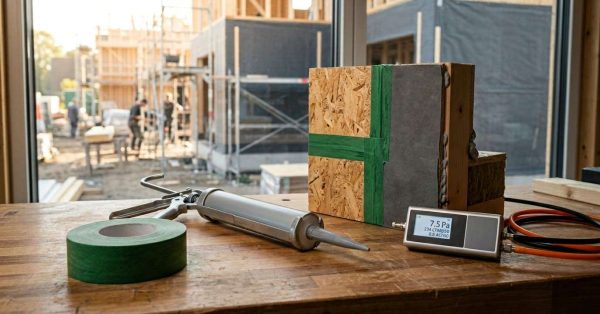
Every MEP penetration through an insulated assembly — exterior walls, roof decks, foundation walls — must be air-sealed and thermally addressed. An unsealed pipe penetration through an exterior wall is not just a small air leak. In cold climates, warm interior air flowing through that gap carries moisture that condenses inside the wall cavity, creating conditions for mold and rot that may not be visible for years.
The coordination between MEP designers and the building envelope team should happen during the design phase, not during construction. Penetration locations should be minimized, grouped where possible, and detailed on drawings so that insulation contractors and air sealing crews know exactly what is required at each location.
When MEP penetrations through the building envelope are not properly sealed, condensation and air infiltration create serious risks for moisture and water damage that can compromise insulation, framing, and interior finishes.
Code Compliance and Energy Standards for Cold Climate MEP
Cold climate new builds in the United States are subject to the International Energy Conservation Code (IECC), which establishes minimum performance requirements for building envelopes and mechanical systems based on climate zone. Most cold climate regions fall into IECC Climate Zones 5 through 8, with Zone 8 covering the most extreme Arctic conditions.
IECC requirements for cold climate zones include minimum insulation R-values for walls, roofs, and foundations; maximum window U-factors and solar heat gain coefficients; and mechanical system efficiency minimums. HVAC equipment must meet minimum AFUE ratings for furnaces and boilers, and ventilation systems must comply with ASHRAE 62.2 for residential air quality.
Energy codes are updated on a regular cycle, and many states and municipalities adopt amendments that are more stringent than the base IECC. Confirming the applicable code version and any local amendments before finalizing MEP specifications is a required step in the design process.
Meeting cold climate energy codes requires systems that go beyond minimum performance thresholds — our energy-efficient HVAC details how modern heating and ventilation equipment is specified to satisfy IECC and ASHRAE requirements.
Working with MEP Professionals for Your Cold Climate Build
Cold climate MEP design is not a task for generalists. The interaction between heating loads, ventilation balance, freeze protection, and building envelope performance requires professionals who have specific experience with cold climate construction — not just standard residential MEP work.
When selecting MEP engineers or contractors for a cold climate new build, look for demonstrated experience with the specific climate zone of the project, familiarity with the applicable energy code cycle, and a process that includes coordination with the building envelope team. Ask for examples of completed cold climate projects and references from general contractors who have worked with them in similar conditions.
For smaller-scope coordination tasks during a new build — such as fixture installation, minor mechanical connections, or pre-inspection walkthroughs — our home systems coordination team supports homeowners and contractors at every stage.
Conclusion
MEP design for cold climate new builds requires every mechanical, electrical, and plumbing decision to account for sustained freezing temperatures, moisture dynamics, and the interaction between systems and the building envelope.
Getting these systems right at the design stage prevents the frozen pipes, moisture damage, and energy waste that result from specifications built for milder conditions applied to cold climate construction.
At Mr. Local Services, our network of skilled professionals supports homeowners and property managers through every phase of residential construction and maintenance — contact us today to connect with experienced specialists who understand what cold climate builds demand.
Frequently Asked Questions
What does MEP stand for in construction?
MEP stands for mechanical, electrical, and plumbing — the three integrated systems that provide heating, cooling, ventilation, power, lighting, and water supply and drainage in a building. In cold climate new builds, all three systems require design decisions that account for sustained freezing temperatures.
Why is MEP design different for cold climates?
Cold climates impose conditions that standard MEP specifications are not designed to handle, including sustained sub-freezing temperatures, heavy snow loads, and moisture dynamics created by tight building envelopes. Systems must be sized, routed, and protected specifically for these conditions to avoid failures like frozen pipes, condensation damage, and heating system breakdowns.
What is a Manual J calculation and why does it matter?
A Manual J calculation is the industry-standard method for determining the heating and cooling load of a residential building. In cold climates, it accounts for design outdoor temperatures that can reach -30°F or lower, ensuring that heating equipment is correctly sized — neither undersized, which causes comfort failures, nor oversized, which causes short-cycling and efficiency loss.
Where should pipes be routed in cold climate construction?
Pipes should be routed through interior walls and conditioned spaces wherever possible. When exterior wall routing cannot be avoided, pipes must be placed on the warm side of the insulation — between the insulation and the interior finish — and never between the insulation and the exterior sheathing where they are exposed to cold temperatures.
What is an HRV and why is it used in cold climate homes?
An HRV, or heat recovery ventilator, is a mechanical ventilation device that exchanges stale indoor air for fresh outdoor air while recovering 70 to 80 percent of the heat from the outgoing air stream. It is used in cold climate homes because tight, well-insulated envelopes require controlled ventilation, and an HRV provides that ventilation without the significant heat loss of simple exhaust fans.
What causes vent stack frost closure and how is it prevented?
Vent stack frost closure occurs when moisture in the exhaust air freezes at the roof penetration, gradually blocking the vent opening. It is prevented by increasing the diameter of the vent stack at the roof penetration — a larger opening is harder to frost over — and by ensuring vent stacks are properly insulated through the attic space to maintain enough warmth to prevent ice formation.
What energy codes apply to cold climate new builds in the USA?
Cold climate new builds in the United States are governed by the International Energy Conservation Code (IECC), with most cold climate regions falling in Climate Zones 5 through 8. Requirements include minimum insulation R-values, maximum window U-factors, and mechanical system efficiency minimums. Many states adopt local amendments that are more stringent than the base IECC, so confirming the applicable version and local amendments before finalizing MEP specifications is essential.