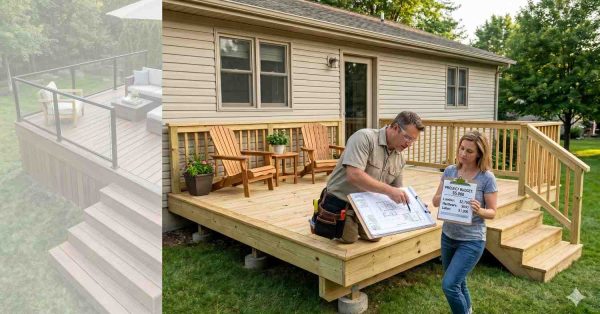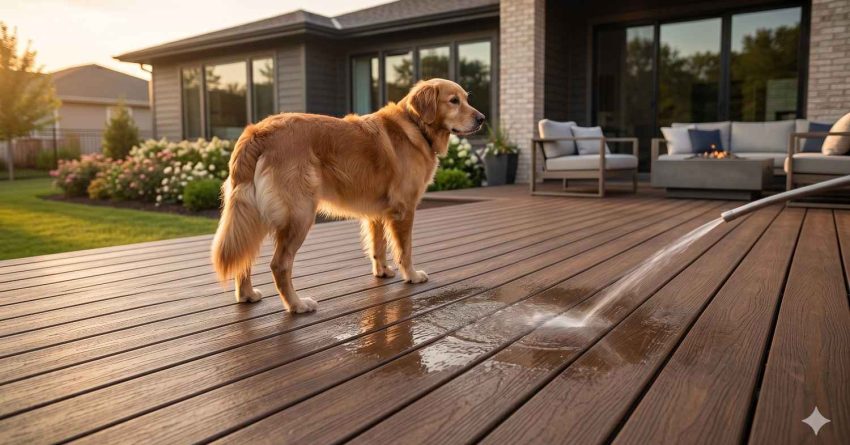
Dog pee will not ruin composite decking in most cases, but it can cause staining, odor, and surface discoloration if left untreated. Modern composite boards are engineered with a protective polymer cap that resists moisture absorption, making them far more pet-friendly than traditional wood. Homeowners, landlords, and property managers can keep composite decks looking new with simple cleaning habits and timely maintenance to prevent long-term cosmetic issues.
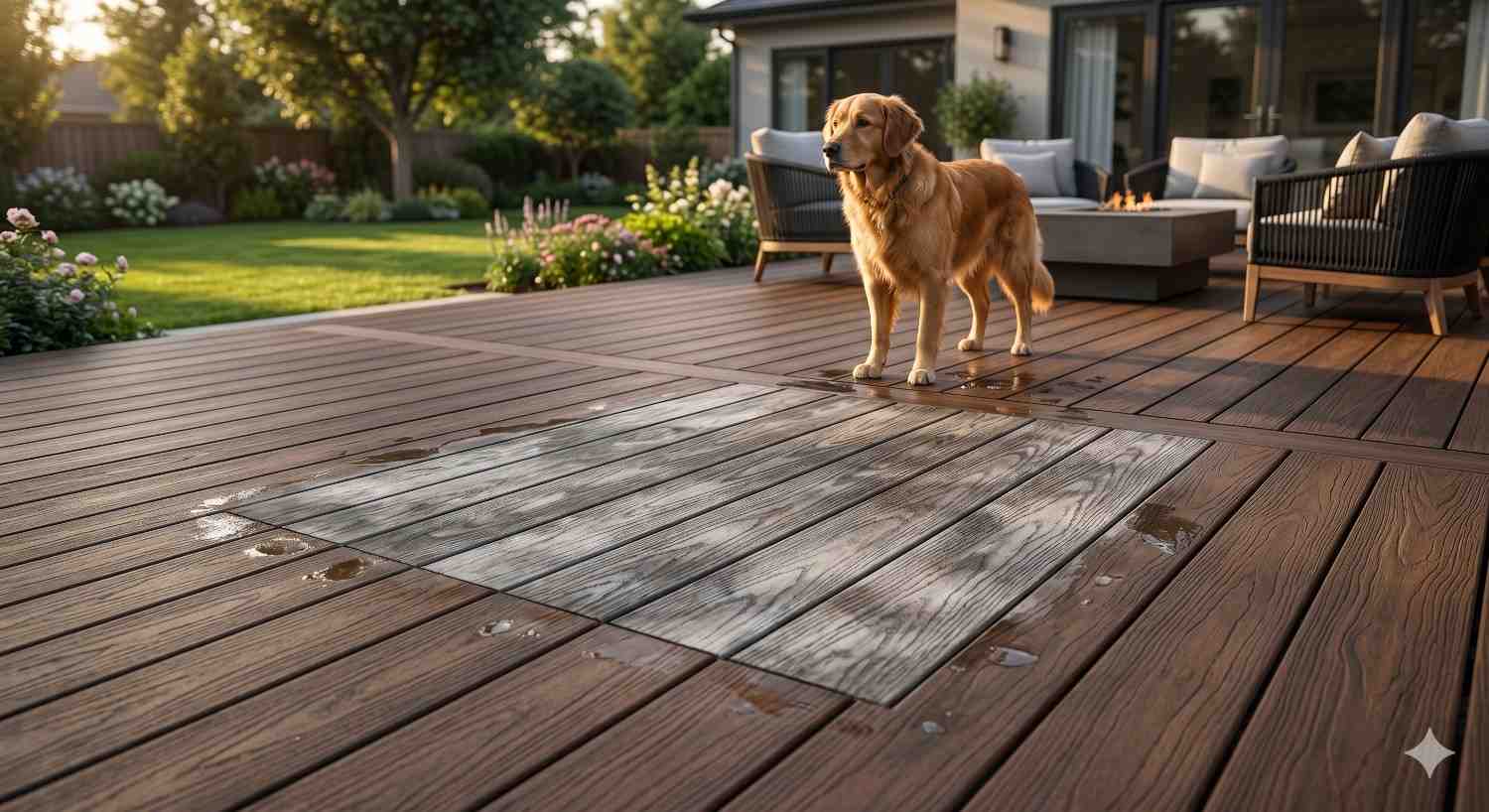
The Short Answer — Will Dog Urine Damage Composite Decking?
Dog urine does not structurally damage capped composite decking. The polymer shell blocks liquid penetration, so wood fibers underneath stay protected from rot, swelling, or warping. However, dried urine can leave white salt residue, mild stains, or lingering odor if not rinsed within a day or two of contact.
Why Composite Resists Urine Better Than Wood
Composite decking combines recycled wood fibers with plastic resin, then seals the surface with a tough polymer cap. This cap repels moisture, blocks UV fading, and prevents urine acids from soaking into the core. Traditional wood absorbs urine directly into its grain, where ammonia breaks down lignin and causes dark stains, soft spots, and accelerated decay. Capped composite avoids that chemical reaction entirely, which is why pet owners increasingly choose it for backyards, balconies, and rental properties. The result is a deck that handles repeat exposure without permanent harm.
When Dog Pee Can Still Cause Problems
Problems appear when urine sits too long or pools in the same spot daily. Repeated saturation in one area can leave a faint white ring from concentrated salts and uric acid crystals. Uncapped or older first-generation composite boards, common before 2010, are more vulnerable because they lack the protective shell. Hot weather speeds drying and intensifies odor. Cracked boards, exposed edges, and gaps between planks also let urine reach the substructure below, which is where real damage to joists or fasteners can begin.
Routine rinsing keeps these issues from ever starting, and routine composite deck cleaning handles the deeper buildup that household tools cannot reach.
<!– INTERNAL LINK SUGGESTION: Replace with your actual URL for the page covering composite deck cleaning services. If this page does not exist, consider creating it. –>
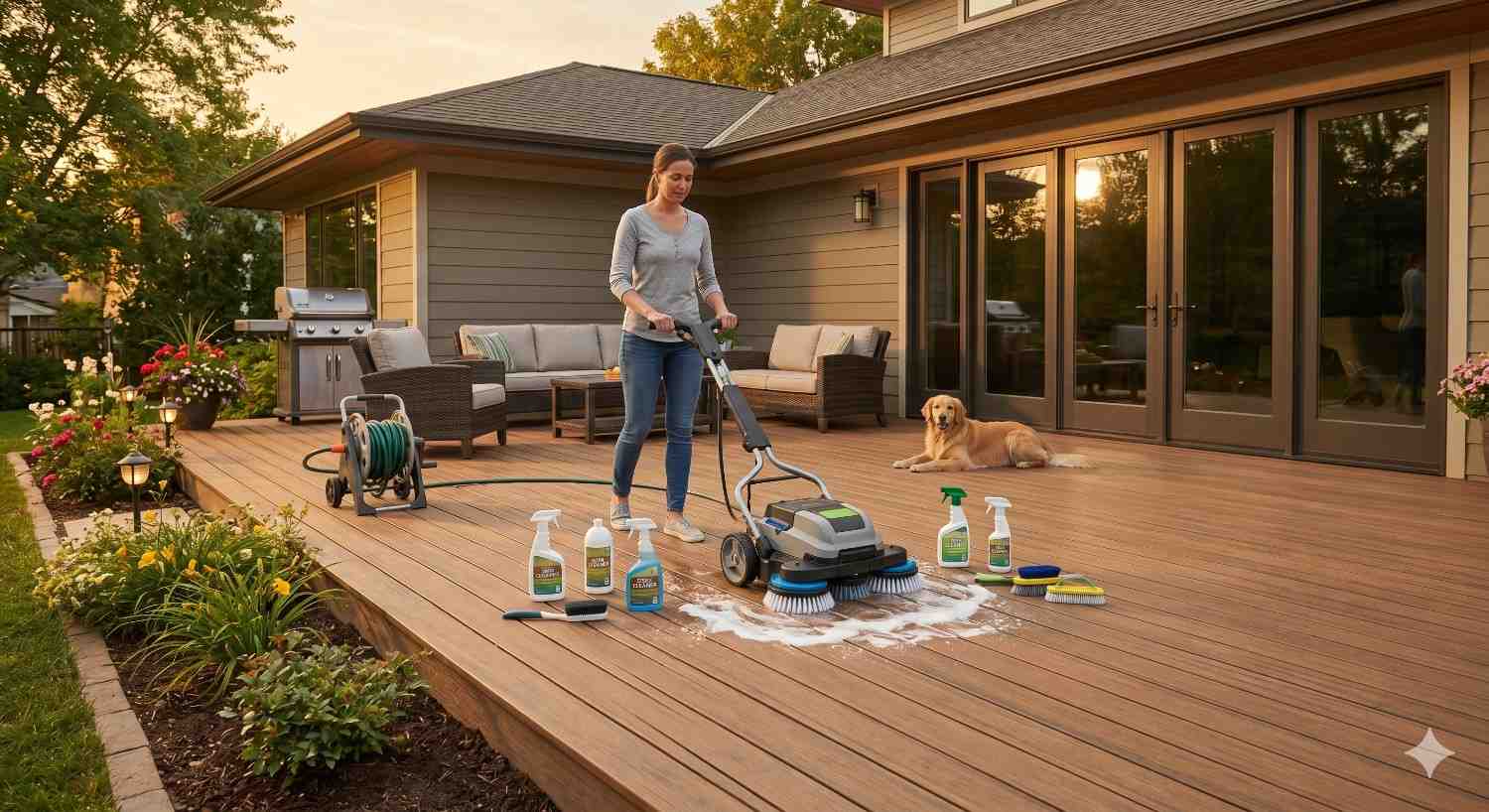
How to Clean and Prevent Dog Urine Stains on Composite Decks
Rinse fresh urine with water within hours of contact. For dried spots, mix warm water with mild dish soap and scrub gently using a soft-bristle brush. Avoid wire brushes, bleach, and acidic cleaners, which can dull the cap finish. For stubborn stains or widespread discoloration, professional pressure washing at low PSI safely removes salt residue without harming the board surface.
<!– INTERNAL LINK SUGGESTION: Replace with your actual URL for the page covering pressure washing services. If this page does not exist, consider creating it. –>
Daily and Weekly Maintenance Habits for Pet Owners
Hose down high-traffic pee zones once a day during warm months. Train dogs to use a designated turf or gravel area when possible. Inspect board edges and gaps monthly for moisture pooling underneath. A quarterly deep clean keeps salts from accumulating in textured grain patterns where odor tends to linger.
Composite vs. Wood Decking for Homes With Dogs
Composite outperforms wood for pet households on nearly every measure. Wood absorbs urine, splinters under claws, and requires staining every two to three years. Composite resists scratches, repels liquids, and needs only soap and water. Upfront costs run higher, but lifetime savings on sealers, stains, and replacements close the gap quickly. For new installations, working with experienced deck builders ensures the right capped composite product and proper drainage design for pet-heavy use.
<!– INTERNAL LINK SUGGESTION: Replace with your actual URL for the page covering deck builder services. If this page does not exist, consider creating it. –>
Conclusion
Dog pee will not ruin a properly capped composite deck, though regular rinsing prevents stains, salt buildup, and odor over time.
For homeowners and property managers, composite decking offers a low-maintenance, pet-friendly surface that protects long-term property value and curb appeal.
Need expert cleaning, repair, or installation? Contact Mr. Local Services today to connect with trusted deck professionals in your area.
Frequently Asked Questions
Can dog urine cause permanent stains on composite decking?
Permanent stains are rare on capped composite. Most discoloration is salt residue that lifts with soap, water, and gentle scrubbing within a few days.
How often should I clean my composite deck if I have dogs?
Rinse high-use areas daily during warm months and perform a full soap-and-water cleaning weekly. Schedule a deep clean every three months.
Does dog pee smell stick to composite decking?
Odor can linger if urine dries into textured grain patterns. Regular rinsing and quarterly deep cleaning eliminate buildup before smell becomes noticeable.
Will dog urine damage the wood frame under composite boards?
Only if urine reaches the substructure through cracks or gaps. Sealed boards, proper spacing, and intact flashing protect joists from moisture exposure.
Is composite decking safer for dogs than pressure-treated wood?
Yes. Composite contains no chemical preservatives, resists splintering, and stays cooler underfoot, making it a safer surface for pets year-round.