Hiring a deck contractor sounds simple until the wrong sentence costs you thousands. Certain phrases signal inexperience, weaken your negotiating position, or invite shortcuts that show up years later as warped boards, loose railings, or sinking footings. The good news: replacing those phrases with sharper questions changes everything. This guide breaks down what not to say to a deck contractor, why those statements backfire, and the exact questions that lead to a stronger contract, fair pricing, and a deck built to last.
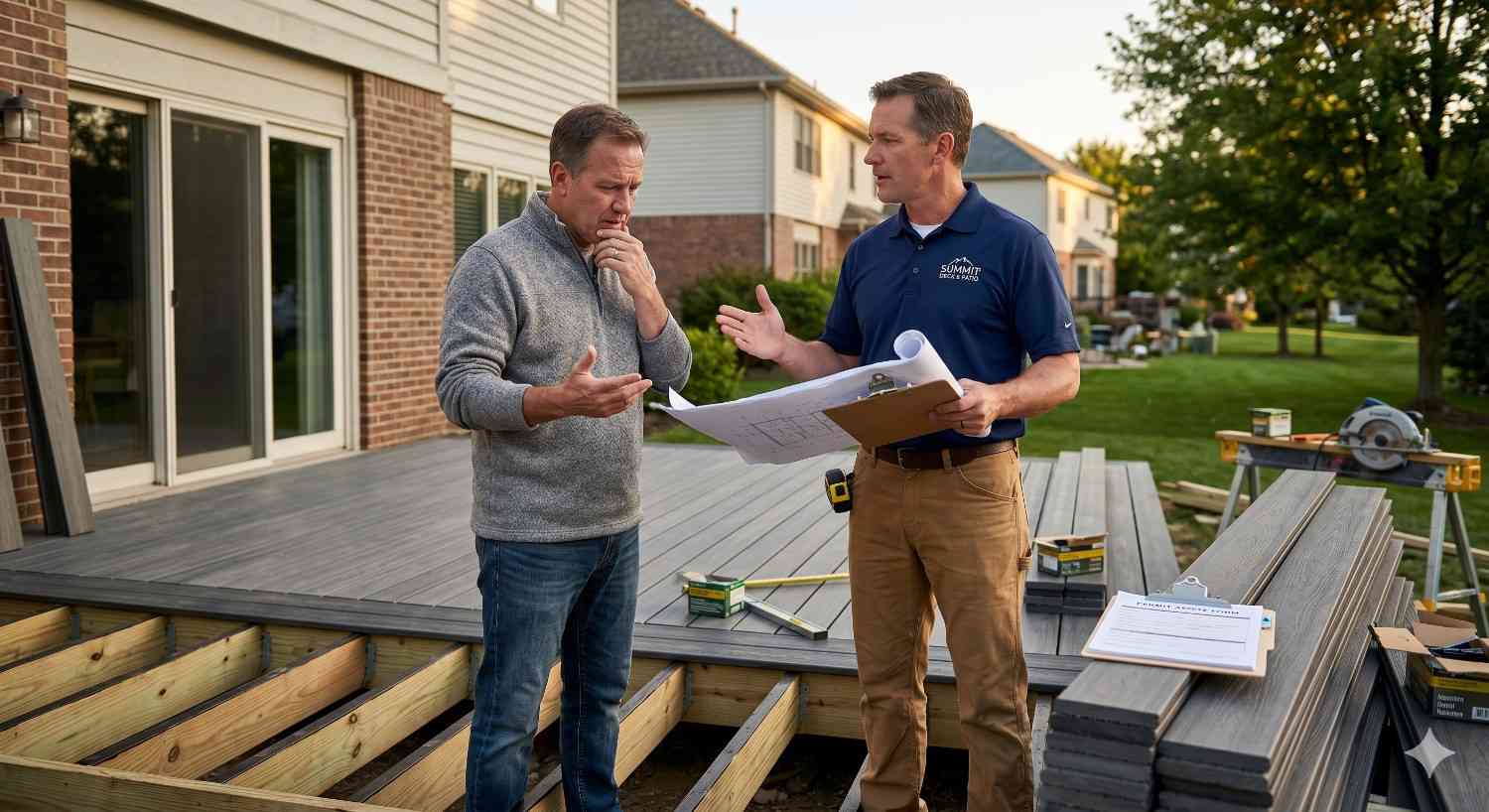
Phrases That Put You at a Disadvantage With a Deck Contractor
Avoid telling a deck contractor you want the cheapest option, that you don’t need permits, or that you’ll skip a written contract. These statements push contractors toward lower-grade materials, unlicensed crews, and verbal promises that disappear when problems arise. Clear expectations, written terms, and quality-focused questions protect both your budget and the finished deck.
Homeowners often lose leverage before the first board is cut. The cause is rarely the contractor. It’s the language used during the estimate. Saying “whatever is fastest” or “I trust you, just handle it” removes accountability and opens the door to cut corners on framing, fasteners, and flashing.
“Just Give Me Your Cheapest Price”
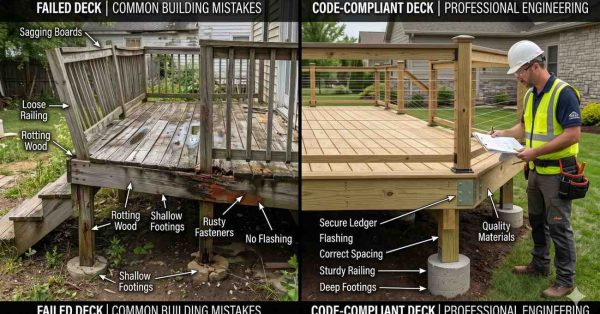
This phrase tells a contractor that quality is negotiable. Reputable deck builders price work based on lumber grade, joist spacing, hardware rating, and labor hours. When you ask only for the lowest number, you invite thinner boards, fewer joists, and ungalvanized fasteners that rust within seasons. Ask instead: “What does your standard build include, and where would upgrades make the biggest long-term difference?” That question forces a transparent breakdown of materials and methods rather than a race to the bottom.
“I Don’t Need a Written Contract”
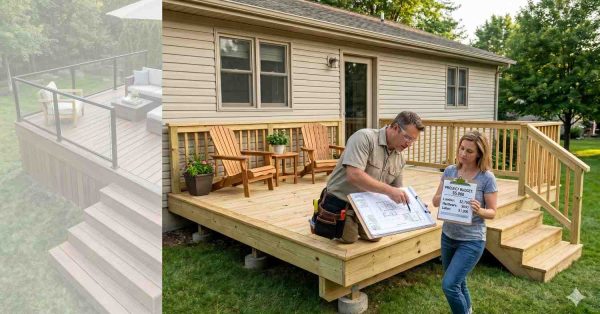
Verbal agreements collapse the moment a dispute begins. Without a signed contract, you have no documented scope, payment schedule, warranty, or completion date. Skipping paperwork also signals that you may waive other protections like permits or lien releases. Reliable contractors expect a written agreement and welcome it. Ask instead: “Can you walk me through your contract, payment milestones, and warranty terms before we move forward?” That single question separates professionals from operators who plan to disappear after the deposit clears.
Knowing what to avoid is only half the equation. The next step is how to vet a deck builder properly, which depends on the questions you bring to the conversation.
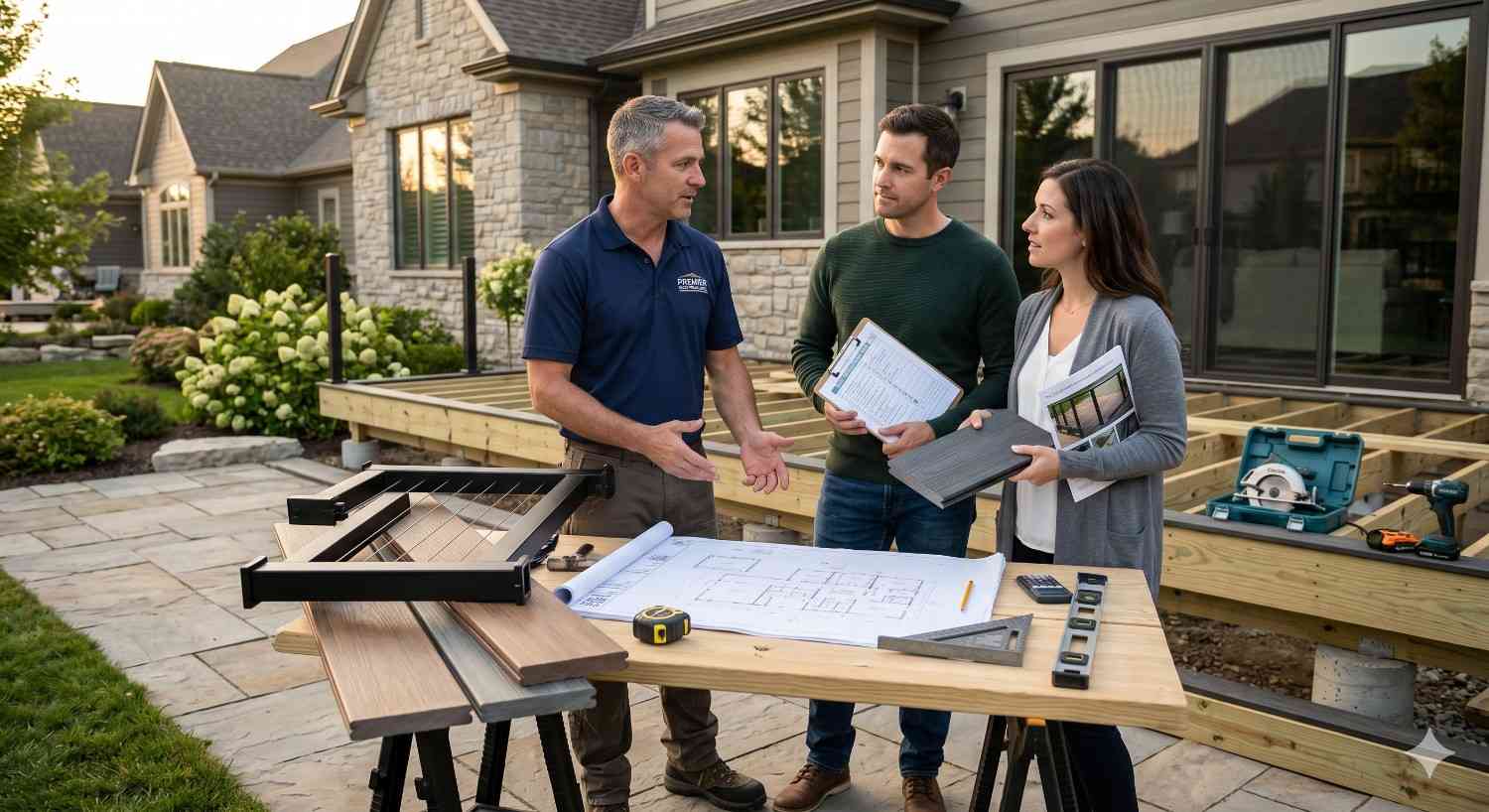
Smarter Questions to Ask a Deck Builder Before Hiring
Strong questions reveal a contractor’s licensing, insurance, experience, warranty structure, and material standards within minutes. They also shift the dynamic from “sell me a deck” to “prove you’re the right builder.”
Questions That Reveal Quality, Licensing, and Warranty
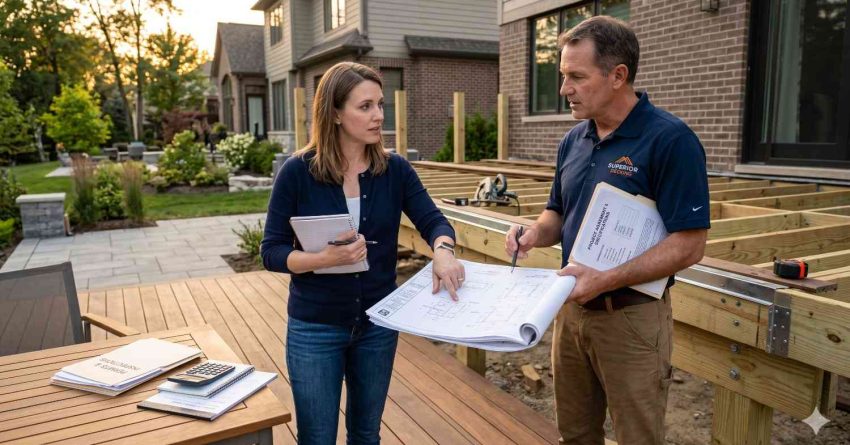
Start with credentials: “Are you licensed and insured in this state, and can I see proof?” Follow with experience: “How many decks like mine have you built in the last two years, and can I see one?” Then move to materials: “What lumber grade, fasteners, and flashing do you use, and why?” Close with accountability: “What does your workmanship warranty cover, and how are callbacks handled?” These four questions filter out unqualified bidders fast.
Pricing deserves the same precision. Instead of asking “How much?”, ask “Can you itemize materials, labor, permits, and disposal separately?” That structure exposes hidden markups and helps you compare bids fairly. For context on what realistic deck pricing looks like, expect detailed line items rather than a single lump-sum figure.
How the Right Conversation Protects Your Deck Investment
A deck is a structural addition exposed to weather, weight, and constant use. The conversation you have before construction determines whether it lasts 10 years or 30. Clear questions about footings, joist spacing, ledger flashing, and code compliance ensure the build meets safety standards rather than minimum effort. Documentation matters equally. A signed scope, lien waivers from subcontractors, and a final walkthrough checklist turn a handshake into a protected investment that holds value when you sell.
Conclusion
Choosing the right deck contractor starts with what you say at the estimate. Avoid price-only framing and verbal deals. Ask about licensing, materials, warranty, and itemized costs to protect your build.
A well-built deck pays back for decades when paired with long-term deck maintenance planning and routine inspections.
Ready to connect with vetted deck professionals? We help you hire with confidence at Mr. Local Services, your trusted source for skilled, transparent contractors nationwide.
Frequently Asked Questions
What should you never say to a deck contractor?
Avoid saying “give me your cheapest price,” “skip the permit,” or “we don’t need a written contract.” These phrases invite shortcuts, unlicensed work, and disputes you cannot enforce later.
How do I know if a deck contractor is trustworthy?
Verify state licensing, current liability and workers’ compensation insurance, recent project photos, written references, and a clear contract that lists scope, payment milestones, materials, and warranty coverage.
What questions should I ask before signing a deck contract?
Ask about itemized pricing, lumber and fastener grades, footing depth, permit responsibility, project timeline, workmanship warranty length, and how change orders are documented and approved during construction.
Should a deck contractor pull the permit?
Yes. A licensed deck contractor should pull permits in their name. This keeps the builder accountable for code compliance and protects you from liability if inspections fail.
How long should a professionally built deck last?
A properly built deck using pressure-treated framing, quality fasteners, and correct flashing typically lasts 20 to 30 years with routine cleaning, sealing, and minor repairs every few seasons.