Yes, adding a deck typically increases your property value. A well-built deck delivers one of the strongest returns of any home improvement project, often recouping 50% to 80% of its cost at resale. The exact value gain depends on materials, size, design, regional demand, and build quality. For homeowners across the USA, a deck is both a lifestyle upgrade and a measurable financial asset that appeals to nearly every buyer segment.
Yes, Adding a Deck Increases Property Value
A new deck reliably raises property value. According to Remodeling Magazine’s Cost vs. Value Report, a wood deck addition recoups roughly 50% of its cost, while composite decks return slightly less upfront but require less maintenance long term. Buyers consistently rank outdoor living space among their top-requested features, which makes decks one of the most resale-friendly upgrades available.
Average ROI for a New Deck
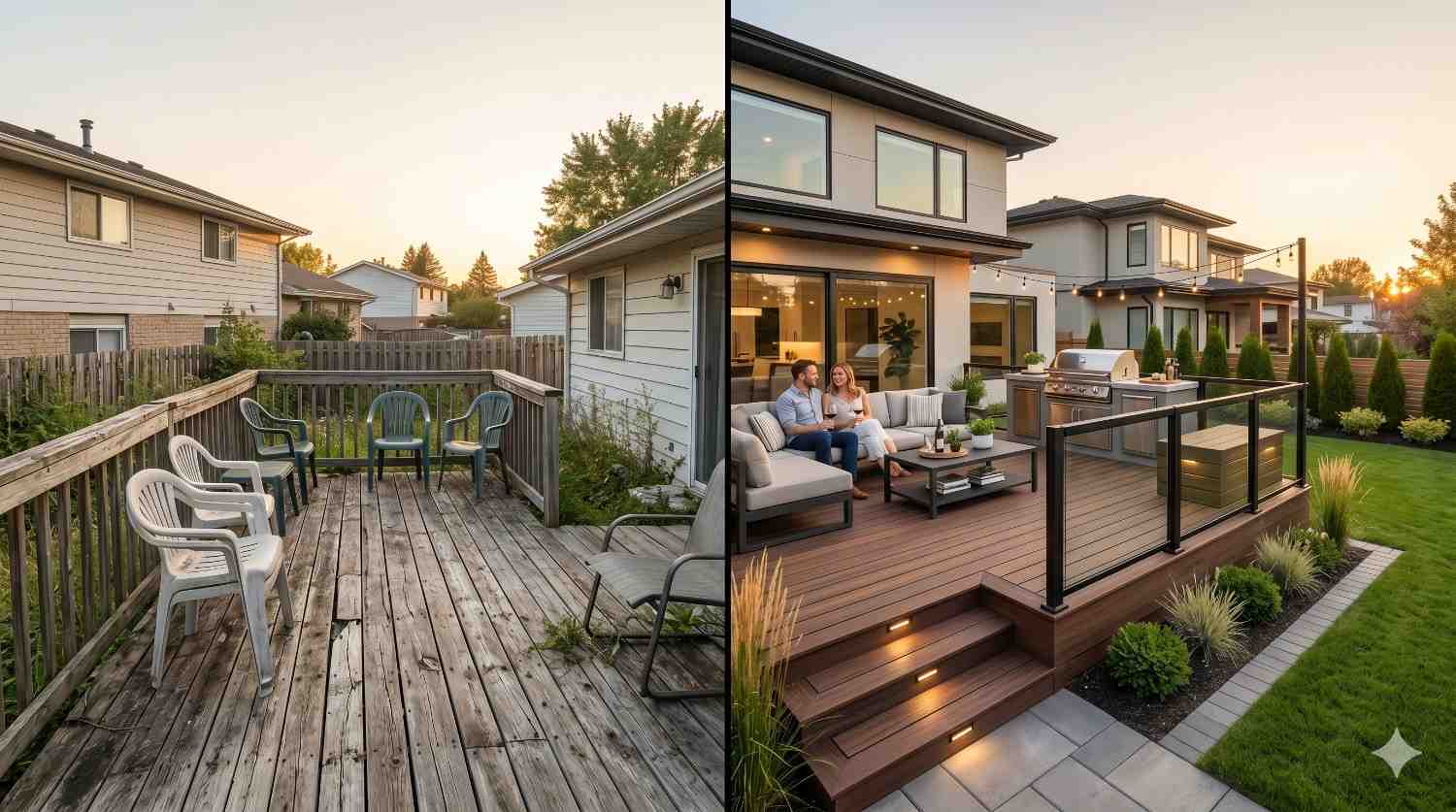
ROI varies by region, but most homeowners see meaningful returns. A pressure-treated wood deck commonly returns 50% to 65% of its build cost at sale. Composite decks return slightly less, around 40% to 55%, but appeal to buyers who want low upkeep. Warmer climates and outdoor-focused markets push returns higher, since usable outdoor space extends the functional square footage of a home.
Why Decks Appeal to Buyers
Buyers view decks as ready-made outdoor living rooms. They expand entertaining space without the cost of a full addition, improve curb appeal at the rear of the home, and create a visual selling point in listing photos. For families, decks signal lifestyle value. For investors and landlords, they raise rental appeal and justify higher monthly rates in competitive markets.
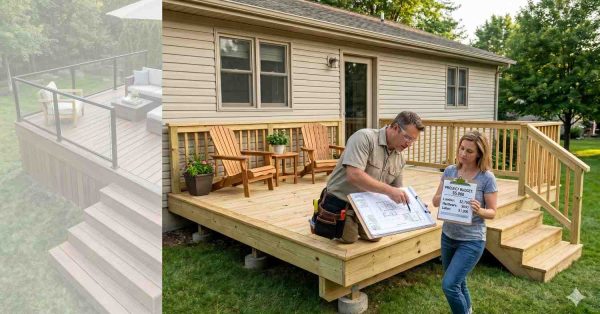
Building the deck correctly matters as much as building it at all. Returns depend heavily on permits, structural integrity, and finish quality, which is why hiring a qualified deck builder protects both the investment and the resale value.

Factors That Influence How Much Value a Deck Adds
Not every deck delivers the same return. Material, size, layout, and craftsmanship all shift the final value impact. Homeowners comparing projects often weigh decks against other high-return home improvements such as kitchen refreshes or bathroom updates, but decks stand out for cost efficiency and broad buyer appeal.
Material Choice (Wood vs. Composite)
Pressure-treated wood costs less upfront and recovers a higher percentage of its build cost at resale. Composite and PVC decking cost more initially but resist rot, fading, and insect damage. Buyers in higher-end markets often prefer composite for its longevity and low maintenance, while mid-market homes see stronger returns from clean, well-finished wood builds.
Size, Design, and Build Quality
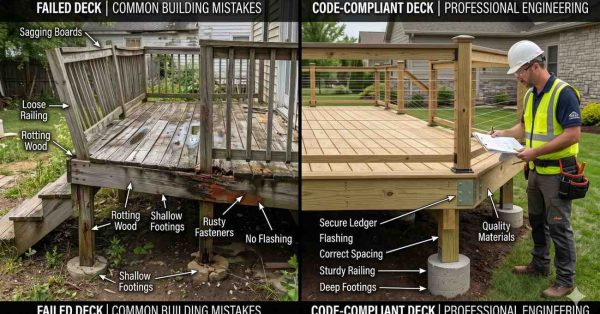
A deck should match the scale of the home. Oversized decks on small homes look unbalanced and rarely pay back. Multi-level designs, built-in seating, and integrated lighting raise perceived value when executed cleanly. Poor framing, exposed fasteners, or missing permits drag value down quickly, so build quality directly determines whether the project adds equity or creates buyer hesitation.
When a Deck May Not Increase Value
A deck can fail to add value when it overshoots the neighborhood, blocks natural light, or shows poor workmanship. Unpermitted builds often reduce value because they create inspection and insurance complications. Decks built on homes in regions where outdoor living is less central, or those that consume usable yard space buyers wanted preserved, may also underperform. Matching the deck to local buyer expectations is the difference between an asset and a liability.
Conclusion
A deck reliably increases property value when sized, designed, and built to match the home and the local market. Material choice and craftsmanship drive the final return.
Looking ahead, homeowners and property managers who pair a quality build with regular deck maintenance protect the investment and extend its resale impact for years.
Ready to add a deck that raises your property’s value? Connect with Mr. Local Services today for trusted, professional deck builders near you.
Frequently Asked Questions
How much value does a deck add to a house?
A deck typically adds 50% to 80% of its build cost in resale value, depending on materials, size, regional demand, and overall construction quality.
Is a wood or composite deck a better investment?
Wood decks offer higher upfront ROI, while composite decks cost more but require less maintenance and appeal strongly to buyers in higher-end housing markets.
Do I need a permit to build a deck?
Yes. Most cities require permits for decks above a certain size or height. Unpermitted decks often reduce resale value and complicate home inspections.
How long does it take to build a deck?
Most residential decks take one to three weeks to complete, depending on size, materials, weather conditions, permit timelines, and contractor availability.
Does a deck increase rental property value?
Yes. Decks improve rental appeal, support higher monthly rates, and reduce vacancy time by adding usable outdoor space buyers and tenants actively want.