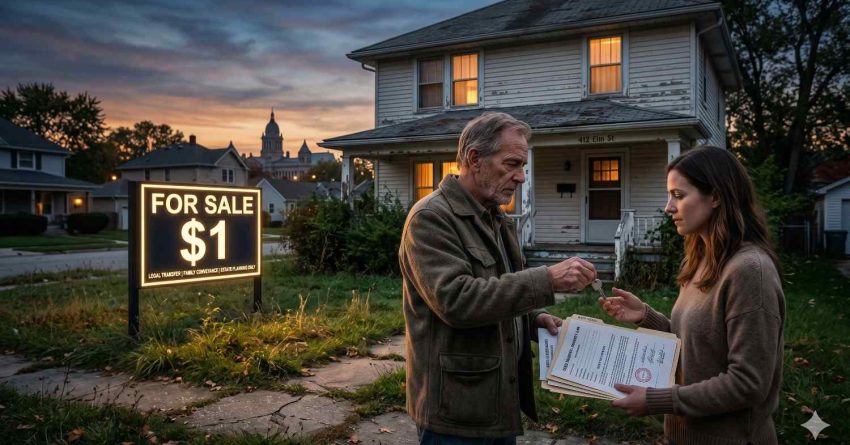
When a house is sold for $1, it means the property is being legally transferred from one party to another at a symbolic price rather than its actual market value. This type of transaction is not a true sale in the conventional sense. It is a structured transfer, most often used between family members, to move ownership of real estate while bypassing the standard buying and selling process.
The $1 figure satisfies a basic legal requirement in most jurisdictions: a contract needs some form of consideration, meaning something of value must be exchanged, for it to be enforceable. One dollar meets that threshold. The actual value of the home is irrelevant to the legal validity of the transfer. What matters is that both parties agree, the deed is properly executed, and the transaction is recorded with the appropriate local authority.
What a $1 Home Sale Actually Means
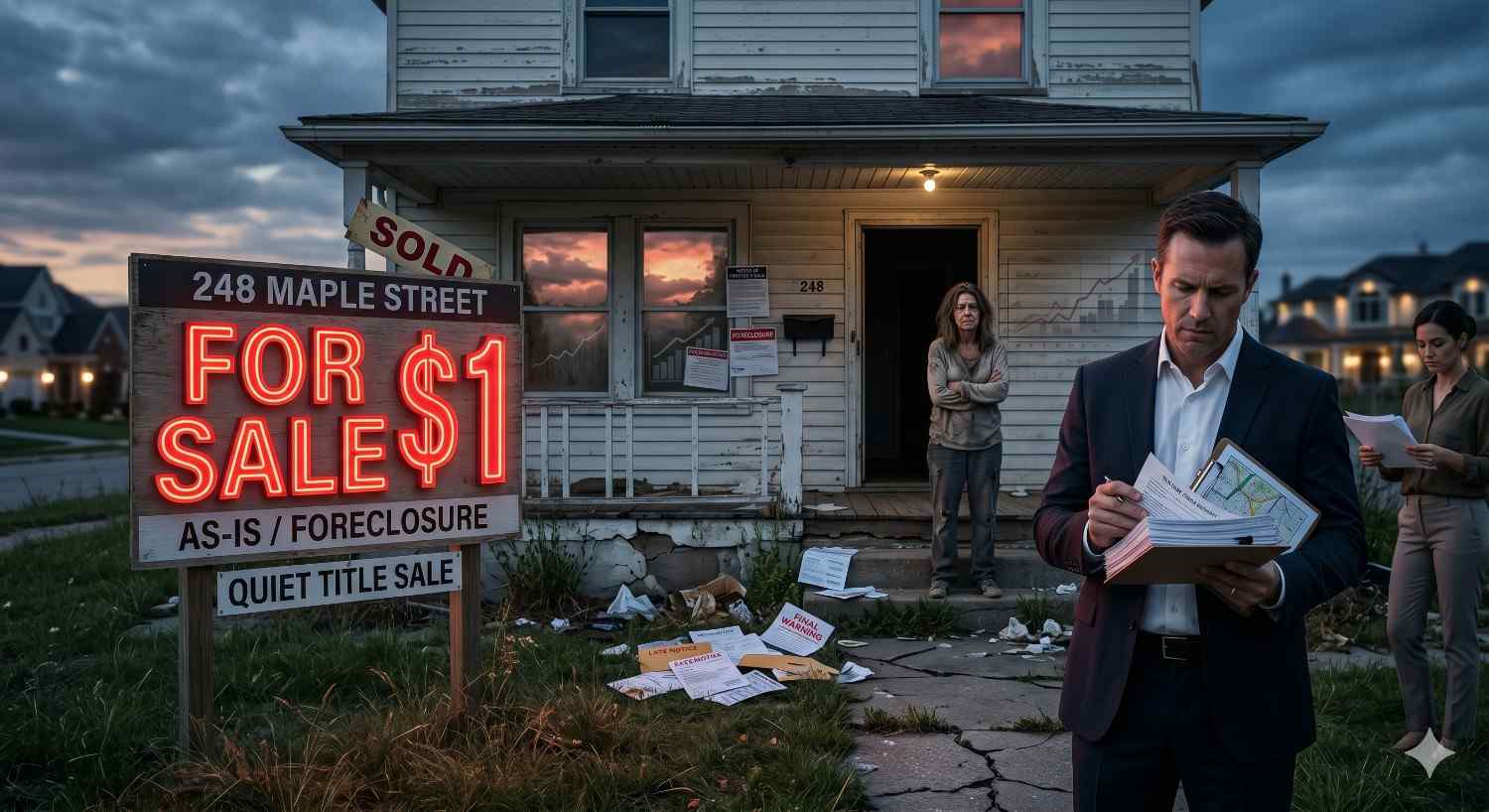
A $1 home sale is a legal mechanism used to transfer real property ownership at a nominal price. The transaction satisfies contract law requirements by establishing consideration, but it does not reflect the home’s fair market value. It is most commonly used to gift property between relatives, transfer ownership ahead of estate planning, or move a distressed property off a seller’s hands without a traditional listing.
The Legal Mechanics Behind a $1 Sale Price
Every valid real estate transaction requires a deed, a grantor (seller), a grantee (buyer), and consideration. The $1 price fulfills the consideration requirement without triggering a full market-rate transaction. The deed used is typically a quitclaim deed or a gift deed, both of which transfer whatever ownership interest the grantor holds without making warranties about the title’s condition.
Once signed and notarized, the deed must be recorded with the county recorder or register of deeds. Recording makes the transfer part of the public record and establishes the new owner’s legal claim to the property. The process is legally binding regardless of the price listed on the deed.
Why Sellers Choose $1 Over a Standard Sale
Sellers use a $1 price for several practical reasons. The most common is estate planning. A parent may transfer a home to an adult child to simplify inheritance, avoid probate, or reduce the complexity of their estate. In other cases, a property owner facing financial hardship may transfer a home to a trusted family member to protect it from creditors, though this carries legal risk if it is later deemed a fraudulent conveyance.
Municipalities and land banks also use $1 sales to move abandoned or tax-delinquent properties to buyers willing to rehabilitate them. In these cases, the low price reflects the property’s distressed condition and the expectation that the new owner will invest significantly in repairs.
Understanding the $1 sale as a legal transfer is only part of the picture. The property condition and repair needs that come with these transactions are often what determine whether the deal is genuinely advantageous for the recipient.
What Buyers and Recipients Need to Know
Receiving or purchasing a property for $1 does not mean the transaction is cost-free. Several financial and legal obligations attach to the new owner immediately upon transfer.
How ownership transfers through a deed determines what rights and risks the new owner inherits. A quitclaim deed, for example, transfers ownership without guaranteeing a clean title. If the property has liens, unpaid taxes, or unresolved claims, those obligations typically follow the property, not the previous owner.
Tax Implications and Hidden Costs of a $1 Property Transfer
The IRS and most state tax authorities do not treat a $1 sale as a $1 transaction for tax purposes. When a property transfers below fair market value, the difference between the sale price and the actual value may be treated as a taxable gift. In 2024, the federal gift tax annual exclusion is $18,000 per recipient. Transfers above that threshold require the grantor to file a gift tax return, though taxes may not be owed immediately depending on lifetime exemption usage.
The recipient also inherits the grantor’s cost basis in many cases, which affects capital gains taxes if the property is later sold. Property taxes, deferred maintenance, outstanding utility bills, and homeowner association fees are additional costs that transfer with ownership regardless of the purchase price.
When $1 Sales Appear in Real Estate Markets
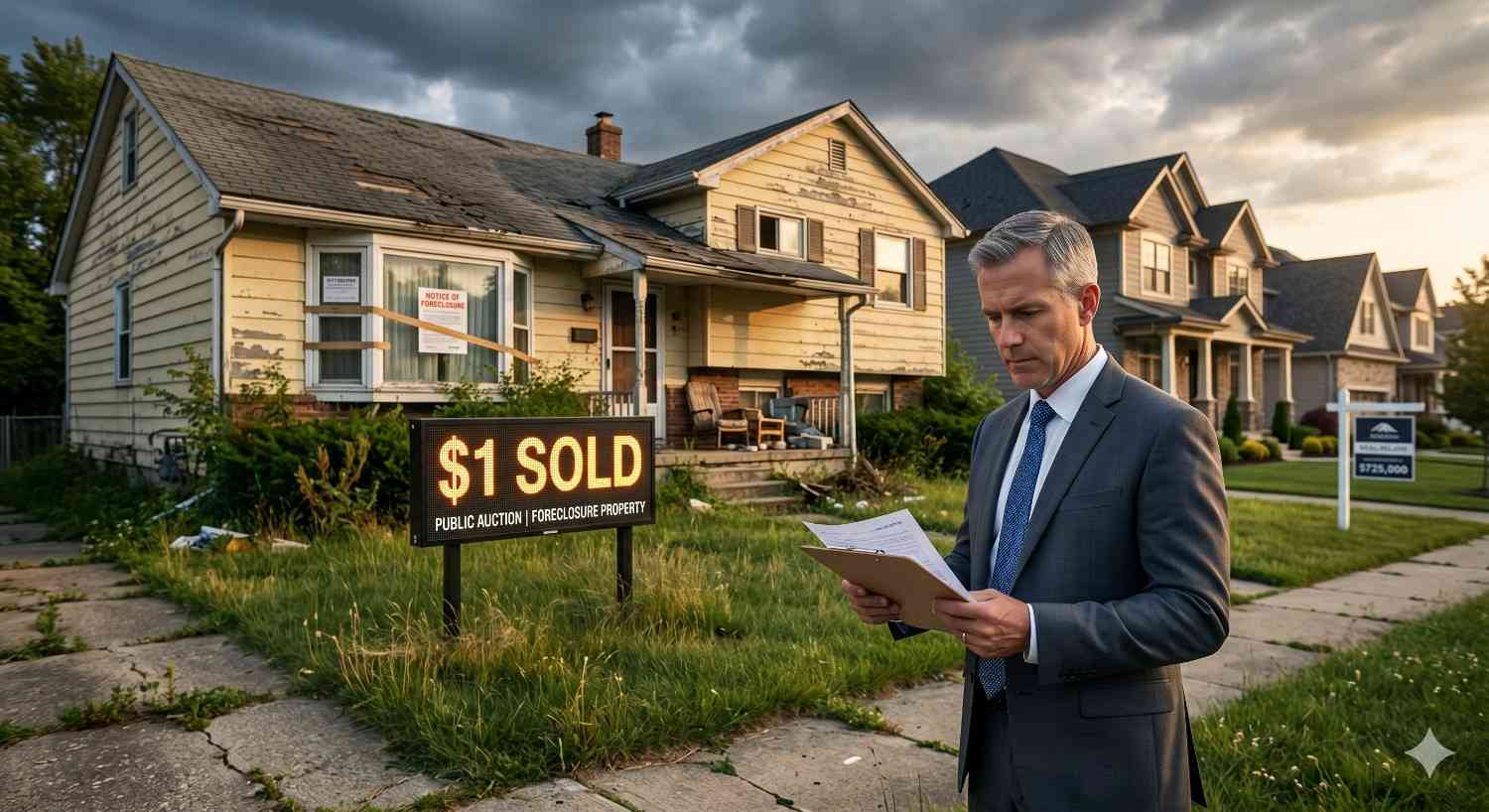
Beyond family transfers, $1 sales appear in several distinct real estate contexts. Urban renewal programs in cities like Detroit and Baltimore have used $1 home sales to incentivize buyers to purchase and rehabilitate vacant properties in distressed neighborhoods. These programs typically attach conditions: the buyer must occupy the home, complete repairs within a set timeframe, and maintain the property to code.
Foreclosure auctions occasionally produce $1 sales when no competitive bids are placed and the lender or municipality accepts a nominal amount to clear the property from their books. In these situations, the buyer assumes full responsibility for the property’s condition, any existing liens, and all future maintenance costs. The $1 price reflects risk, not generosity.
Conclusion
A house sold for $1 is a legal property transfer at a symbolic price, not a genuine market transaction. The low figure satisfies contract law while the real value, obligations, and costs remain fully intact for the new owner.
For homeowners, landlords, and property managers who acquire property this way, the next priority is understanding what the property needs to become safe, functional, and well-maintained.
At Mr. Local Services, we help new property owners assess, repair, and improve their homes with reliable professionals across every service category they need.