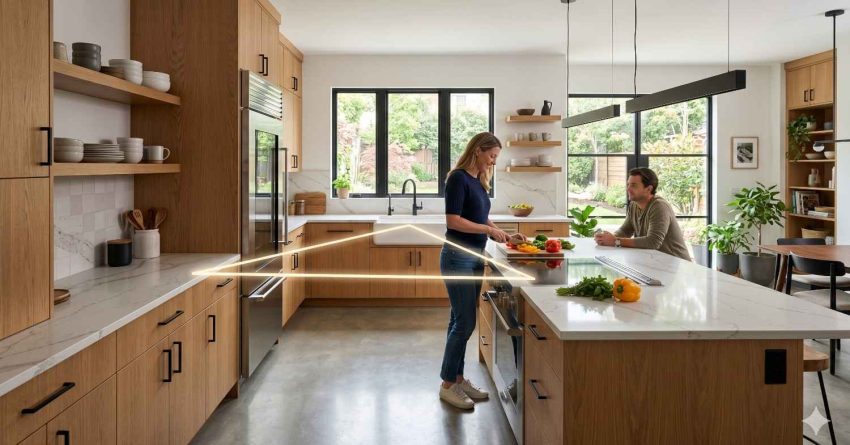
The kitchen 3 rule, often called the kitchen work triangle, is a classic design principle that connects the three most-used kitchen zones: the sink, the stove, and the refrigerator. It keeps these stations close enough for efficient movement but far enough apart for safe, comfortable cooking. For homeowners, landlords, and property managers planning upgrades, understanding this rule helps create kitchens that function well, feel organized, and add lasting value to any property.
Understanding the Kitchen 3 Rule
The kitchen 3 rule states that the sink, stove, and refrigerator should form a triangle where each side measures between 4 and 9 feet, with a total perimeter of 13 to 26 feet. No major obstacles should cut through this triangle. The goal is efficient workflow, fewer steps, and safer cooking.
The Three Core Zones Explained
Each point of the triangle represents a primary kitchen task. The refrigerator anchors food storage. The sink supports prep, cleaning, and water access. The stove handles cooking. When these three points are spaced correctly, a cook moves between them without backtracking, crossing paths with others, or stretching across long counters. This balance is why the rule has stayed relevant in residential kitchens for decades, even as appliances and layouts evolve.
Why the Rule Matters in Kitchen Design
A well-planned triangle saves time, reduces fatigue, and prevents accidents in tight spaces. Kitchens that ignore the rule often feel cramped, awkward, or inefficient, even when they look attractive. For property managers and landlords, applying the rule during renovations protects long-term tenant satisfaction. For homeowners, it improves daily livability and resale appeal. Real estate professionals frequently highlight functional kitchen layouts as a key value driver during property listings and inspections.
The principle defines the layout. The next question is how it shows up in real homes, especially when planning a full kitchen remodel where space, plumbing, and electrical points must align with the rule.
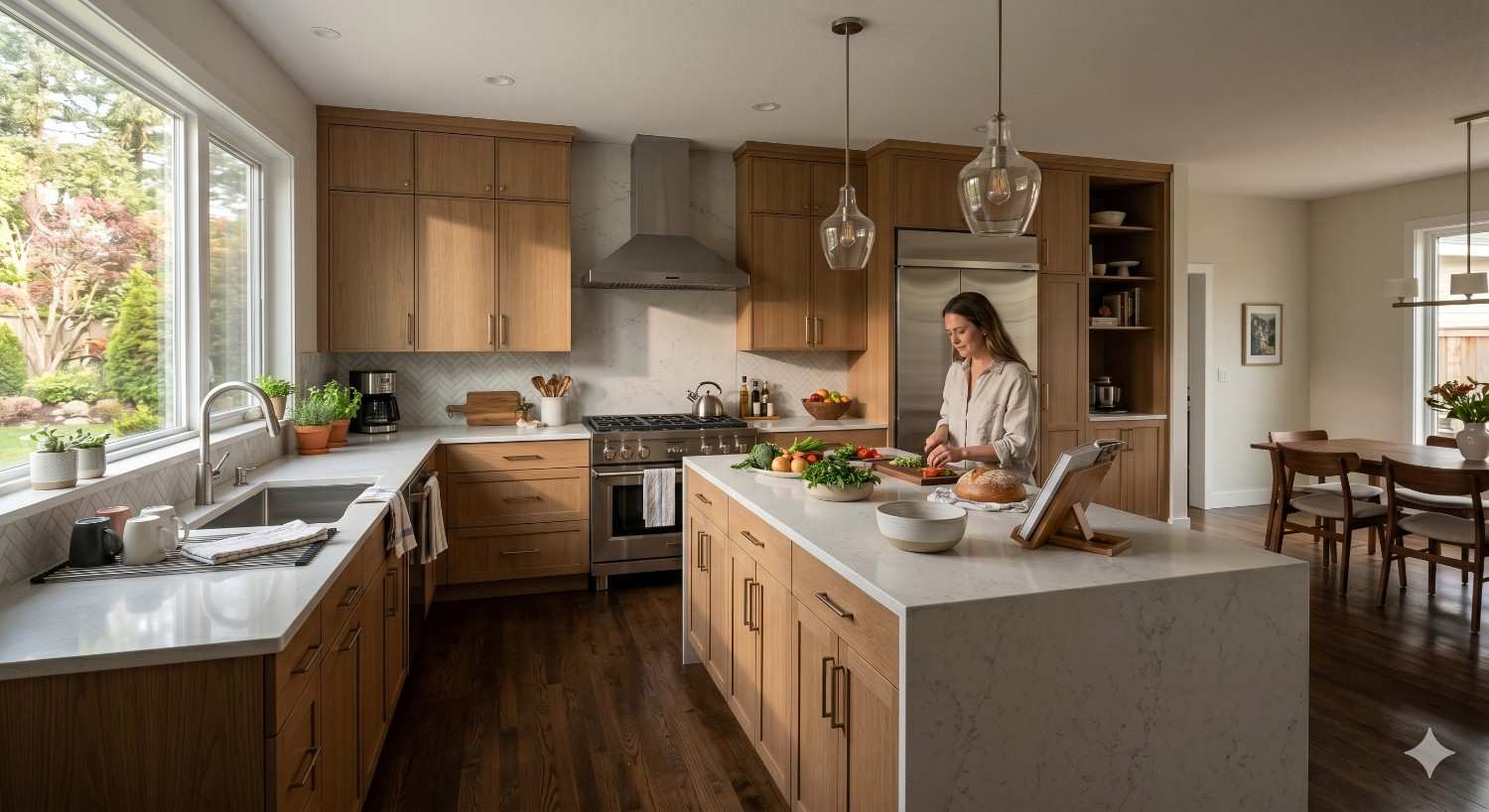
How the Kitchen 3 Rule Applies in Real Homes
In practice, the rule guides every major decision during a kitchen project, from appliance placement to plumbing routes. Designers begin by mapping the three zones, then build cabinets, counters, and storage around them. Walkways stay clear, and high-traffic areas avoid the triangle’s path. The rule works in galley, L-shaped, U-shaped, and island kitchens, though each layout requires slightly different spacing.
Common Layout Examples Using the Rule
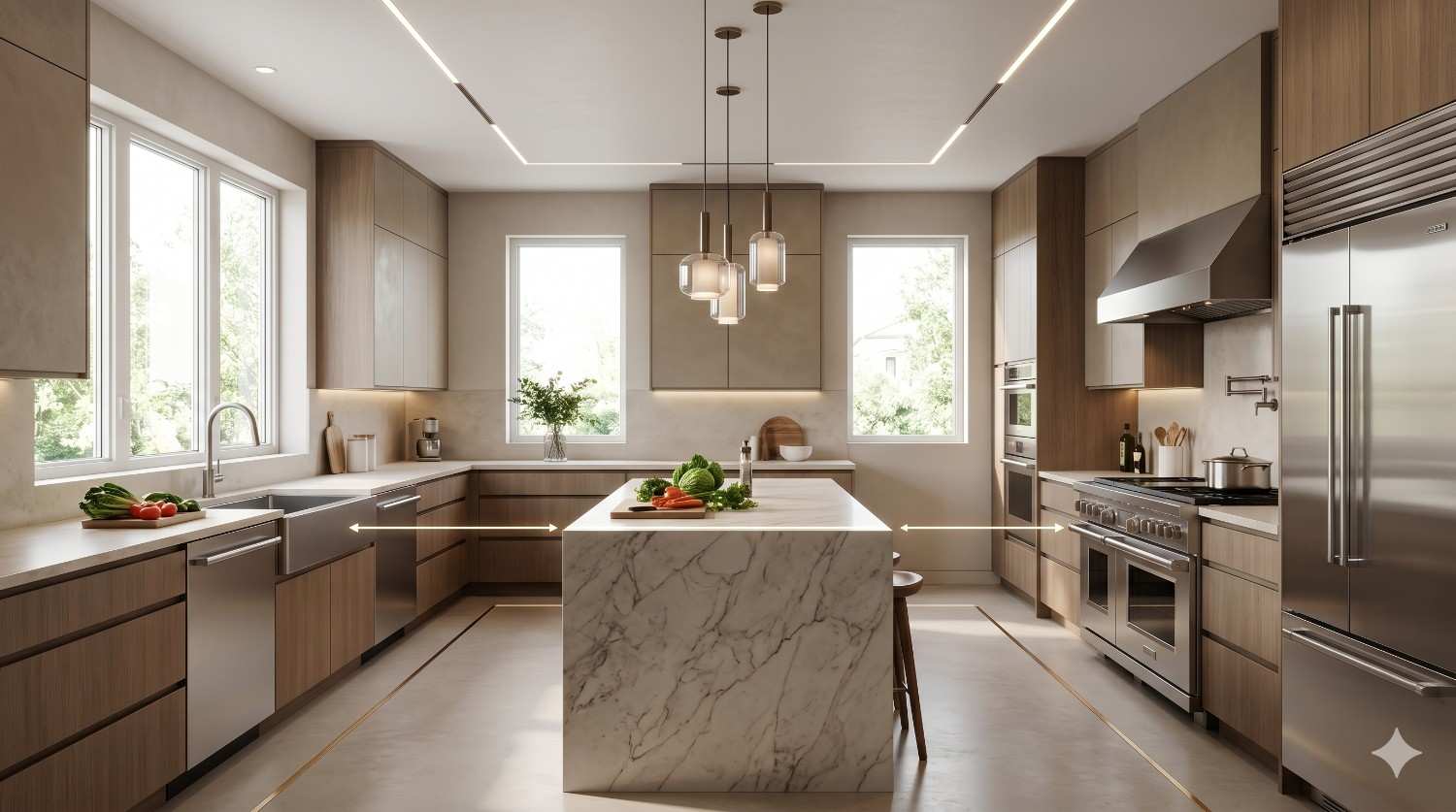
In an L-shaped kitchen, the sink usually sits at the corner with the stove and fridge on opposite legs. A U-shaped kitchen places one zone on each wall. Island kitchens often locate the sink or cooktop on the island itself, balancing the triangle across the room. Each option depends on careful cabinet and countertop placement, since these surfaces define the triangle’s working edges and storage flow.
When to Adapt or Break the Rule
Modern kitchens sometimes use a zone-based design instead, especially in larger homes with multiple cooks. Open-concept layouts, double islands, or extra appliances like wall ovens and prep sinks can stretch beyond the classic triangle. The rule is a guide, not a law. The priority remains the same: keep core tasks close, paths clear, and movement smooth. Skilled remodelers know when to follow the rule and when to adapt it.
Conclusion
The kitchen 3 rule organizes the sink, stove, and refrigerator into an efficient triangle that supports safe, comfortable cooking and smart kitchen design.
For homeowners and property managers, applying this rule during upgrades protects function, value, and daily livability, especially when working with skilled local professionals who understand layout fundamentals.
At Mr. Local Services, we connect you with trusted experts who plan, remodel, and install kitchens built around proven design principles. Start your project with us today.
Frequently Asked Questions
What are the three zones in the kitchen 3 rule?
The three zones are the sink, the stove, and the refrigerator. Together they form the kitchen work triangle that guides efficient layout planning.
What is the ideal triangle size for the kitchen 3 rule?
Each side should measure between 4 and 9 feet, and the total perimeter should fall between 13 and 26 feet for safe, efficient kitchen movement.
Does the kitchen 3 rule still apply to modern kitchens?
Yes, though many modern designs adapt it. The rule still guides core layout decisions, even when zone-based planning or large islands are added.
Can the kitchen 3 rule work in small kitchens?
Yes. In compact galley or L-shaped kitchens, the triangle naturally tightens, but the spacing principle still helps prevent cramped, inefficient layouts and traffic conflicts.
Should I follow the kitchen 3 rule during a remodel?
Most remodelers recommend it as a baseline. It improves daily function, supports resale value, and helps avoid costly redesigns after appliances are installed.
Add to Conversation