The monthly payment on a $300,000 mortgage for 30 years depends primarily on your interest rate, but at a 7% fixed rate, you can expect to pay approximately $1,996 per month in principal and interest alone. Add property taxes, homeowner’s insurance, and potentially private mortgage insurance, and your total monthly obligation typically rises to $2,300–$2,600 or more depending on your location and loan terms.
Understanding this number matters whether you are buying your first home, managing a rental property, or planning a long-term real estate investment. The base payment is only part of the picture. Knowing what drives that number — and what sits on top of it — helps you plan with confidence.

What Is the Monthly Payment on a $300,000 Mortgage?
At a 7% fixed interest rate on a 30-year loan with a $300,000 principal, your monthly principal and interest payment is approximately $1,996. This figure comes from a standard amortization formula that spreads repayment evenly across 360 monthly payments.
Over the full loan term, you will pay roughly $418,527 in interest alone, bringing your total repayment to approximately $718,527. That is why the interest rate is the single most powerful variable in your mortgage calculation. Even a half-point difference in rate changes your payment and your lifetime cost significantly.
How Interest Rate Changes the Payment
Your interest rate directly controls how much of each payment goes toward interest versus reducing your principal balance. At a 6% rate, your monthly principal and interest payment on a $300,000 loan drops to approximately $1,799. At 7.5%, it climbs to roughly $2,098.
That $299 monthly difference between a 6% and 7.5% rate adds up to more than $107,000 over 30 years. This is why locking in a lower rate — even by a fraction — has a compounding impact on your total cost of ownership. Improving your credit score before applying and comparing multiple lenders are two of the most effective ways to secure a better rate.
What the Payment Includes Beyond Principal and Interest
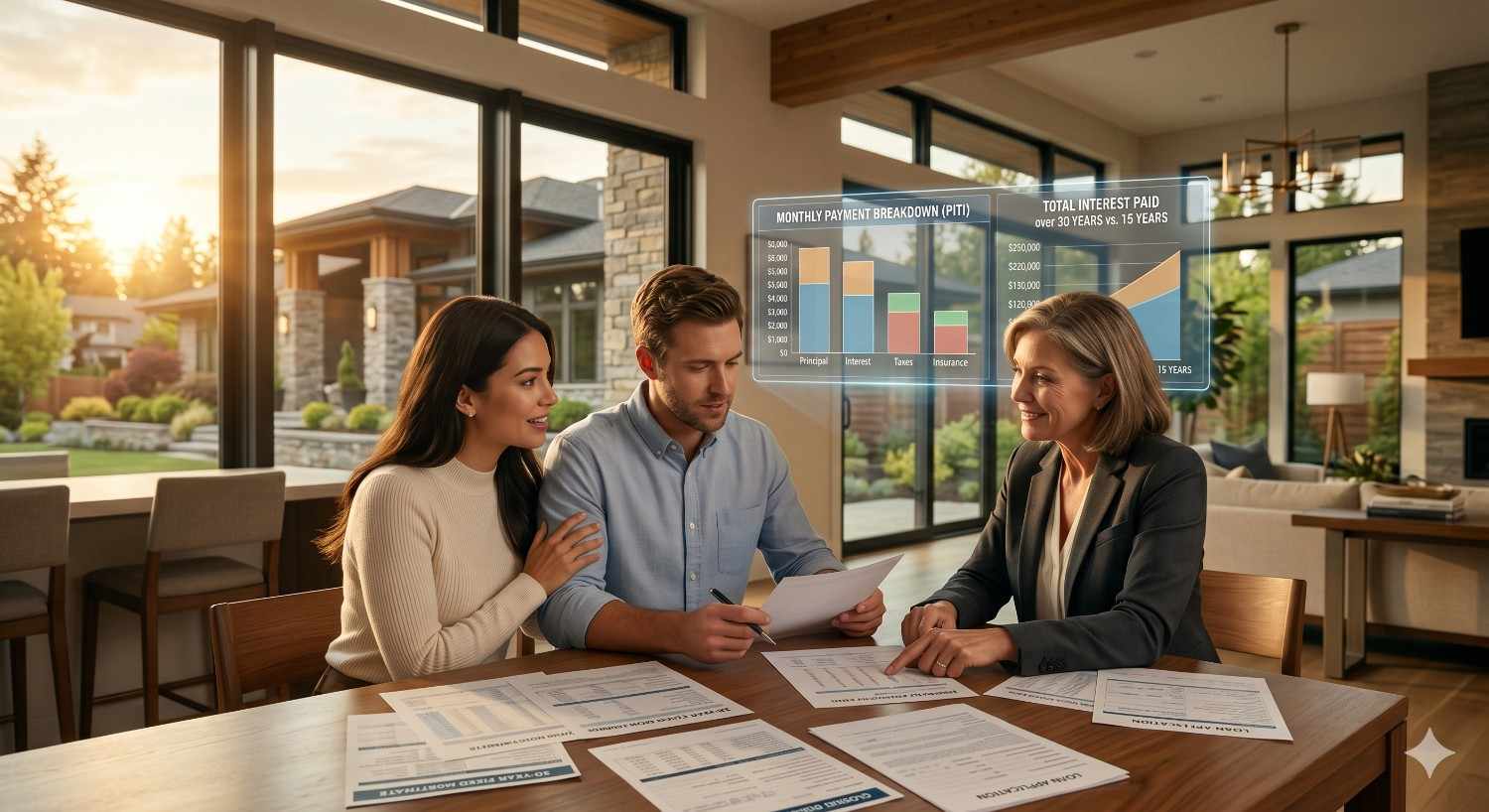
Most lenders require you to pay more than just principal and interest each month. Your full monthly mortgage payment typically includes four components, often called PITI:
- Principal: The portion reducing your loan balance
- Interest: The lender’s cost for extending the loan
- Taxes: Property taxes collected monthly and held in escrow
- Insurance: Homeowner’s insurance, and PMI if your down payment is below 20%
Property taxes vary widely by location. In high-tax states, they can add $400–$700 per month to a $300,000 mortgage payment. Homeowner’s insurance typically adds $100–$200 monthly. If you put less than 20% down, PMI adds another $100–$200 until you reach sufficient equity. These additions are why your actual monthly obligation often exceeds the base principal and interest figure by several hundred dollars.
Understanding the base payment is essential, but the total cost of owning a home extends well beyond what appears on your mortgage statement each month.
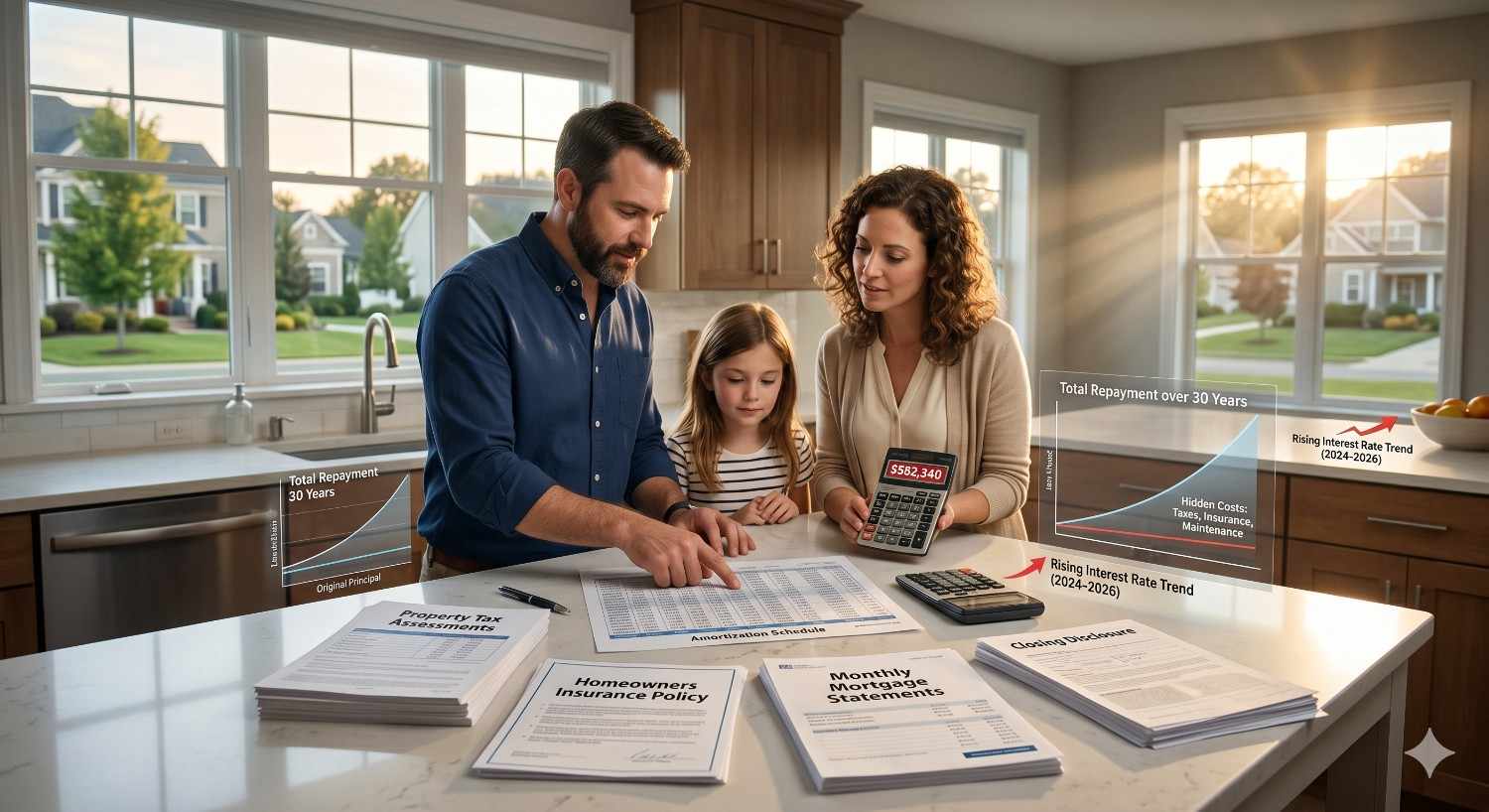
What Affects the Total Cost of a 30-Year Mortgage?
Several factors shape both your monthly payment and the total amount you repay over 30 years. Your credit score influences the interest rate a lender offers you. Your loan-to-value ratio determines whether PMI applies. Your location sets your property tax burden. And your choice between a fixed-rate and adjustable-rate mortgage affects how your payment may change over time.
A fixed-rate mortgage keeps your principal and interest payment stable for all 30 years. An adjustable-rate mortgage may start lower but can increase after the initial fixed period ends, introducing payment uncertainty. For most homeowners and property managers planning long-term, a fixed-rate loan provides the predictability needed to budget effectively.
How a Larger Down Payment Reduces Your Monthly Obligation
Putting more money down at closing reduces your loan principal, which directly lowers your monthly payment. A $60,000 down payment (20%) on a $300,000 home means you borrow only $240,000, reducing your monthly principal and interest payment at 7% to approximately $1,597. It also eliminates PMI entirely, saving an additional $100–$200 per month.
A larger down payment also reduces the total interest paid over the life of the loan. On a $240,000 loan at 7%, total interest paid over 30 years is approximately $334,821 — compared to $418,527 on the full $300,000. That is a difference of more than $83,000 in lifetime interest savings from a single upfront decision.
Is a 30-Year Mortgage the Right Choice for Your Property?
A 30-year mortgage offers the lowest monthly payment of any standard loan term, which makes it the most accessible option for buyers managing tight monthly budgets. The tradeoff is a significantly higher total interest cost compared to a 15-year loan.
A 15-year mortgage on $300,000 at 6.5% carries a monthly payment of approximately $2,613 — about $617 more per month than the 30-year equivalent. But the total interest paid drops to roughly $170,000, compared to over $400,000 on the 30-year term. For property managers and real estate investors evaluating long-term returns, that difference is material.
The right choice depends on your cash flow needs, investment horizon, and how long you plan to hold the property. Many homeowners choose the 30-year term for flexibility and direct extra payments toward principal when cash flow allows, effectively shortening the loan without locking into a higher required payment. When you are also focused on keeping your property in strong condition over that same 30-year window, balancing mortgage costs with ongoing maintenance budgets becomes part of the same financial plan.
Conclusion
The monthly payment on a $300,000 mortgage for 30 years starts at approximately $1,996 in principal and interest at a 7% rate, rising to $2,300–$2,600 when taxes and insurance are included.
Your rate, down payment, and loan structure determine the full cost. Planning for financing home improvements over time alongside your mortgage keeps your property valuable and your budget realistic across the full ownership period.
At Mr. Local Services, we help homeowners and property managers keep their properties in top condition — so every dollar of your investment works harder for you.
Frequently Asked Questions
What is the monthly payment on a $300,000 mortgage at 7%?
At a 7% fixed rate on a 30-year term, the monthly principal and interest payment on a $300,000 mortgage is approximately $1,996. Taxes and insurance will increase your total monthly payment.
How much interest will I pay over 30 years on a $300,000 mortgage?
At 7% interest, you will pay approximately $418,527 in total interest over 30 years on a $300,000 loan, bringing your total repayment to roughly $718,527.
Does a 15-year mortgage save money compared to 30 years?
Yes. A 15-year mortgage carries a higher monthly payment but saves $200,000 or more in total interest compared to a 30-year loan on the same principal and a similar rate.
What credit score do I need for a $300,000 mortgage?
Most conventional lenders require a minimum credit score of 620, but scores above 740 typically qualify for the best available interest rates, meaningfully reducing your monthly payment.
Can I reduce my monthly mortgage payment after closing?
Yes. Options include refinancing to a lower rate, requesting PMI removal once you reach 20% equity, or making extra principal payments to reduce your balance and shorten your loan term.