The ENERGY STAR verification process is a structured, third-party evaluation that confirms a home, building, or product meets the U.S. Environmental Protection Agency’s energy efficiency standards before receiving official certification. Homeowners, landlords, and property managers who pursue this certification gain documented proof of energy performance — a credential that carries real weight with buyers, tenants, and utility rebate programs.
Understanding this process helps you prepare your property correctly, avoid costly delays, and make informed decisions about upgrades before an inspector arrives.
This guide covers every stage of ENERGY STAR verification, from initial assessment through label issuance, so you know exactly what to expect and how to get it right.
What Is the ENERGY STAR Verification Process?
The ENERGY STAR verification process is the official sequence of inspections, tests, and documentation reviews that the U.S. Environmental Protection Agency (EPA) requires before any home, building, or product can carry the ENERGY STAR label. It is not a self-reported system. Every certification requires independent confirmation from a qualified third party.
The process exists because the ENERGY STAR label carries a specific promise: that the certified item performs measurably better than standard alternatives in energy consumption. Without a rigorous verification process, that promise would be unenforceable.
Understanding what the verification process involves — and what it does not — is the first step toward preparing your property or product effectively.
Why Verification Matters for Homeowners and Property Managers
For homeowners, ENERGY STAR certification provides documented evidence that a home meets efficiency standards recognized by the federal government. This documentation supports applications for utility rebates, federal tax credits, and green mortgage programs.
For landlords and property managers, certified properties attract energy-conscious tenants and command stronger market positioning. Certification also provides a defensible record of building performance — useful during property sales, lease negotiations, and insurance assessments.
Understanding the verification process is one part of a broader approach to property efficiency — our energy efficiency services covers the full range of upgrades, inspections, and improvements available to homeowners and property managers looking to improve their properties before or after certification.
Who Conducts ENERGY STAR Verification?
ENERGY STAR verification is conducted by certified third-party professionals authorized by the EPA or its designated program administrators. For homes, these professionals are called ENERGY STAR Certified Verifiers or HERS (Home Energy Rating System) Raters. For commercial buildings, verification is handled through the EPA’s ENERGY STAR Portfolio Manager platform, often with support from licensed energy auditors or engineers.
The key point is that no property owner or manufacturer can self-certify. The independence of the verifier is what gives the ENERGY STAR label its credibility.
Certified Verifiers vs. Self-Reported Claims
A certified verifier is a trained professional who has completed EPA-recognized training, passed required assessments, and operates under a quality assurance program. Their findings are submitted directly to program administrators — not filtered through the property owner.
Self-reported claims, by contrast, carry no official standing under the ENERGY STAR program. A property described as “energy efficient” or “built to ENERGY STAR standards” without third-party verification does not qualify for the label, rebates, or tax incentives tied to official certification.
HVAC systems are among the most commonly verified components in any ENERGY STAR assessment, and our HVAC inspection services explains what a professional evaluation covers and when your system may need attention before a verification visit.
Step-by-Step ENERGY STAR Verification Process
The ENERGY STAR verification process follows a defined sequence. Each step builds on the previous one, and skipping any stage will delay or invalidate the certification outcome.
Step 1 — Pre-Verification Assessment
Before a formal inspection takes place, a pre-verification assessment identifies whether the property or product is likely to meet ENERGY STAR thresholds. For homes, this typically involves a preliminary energy audit that evaluates insulation levels, air sealing, window performance, HVAC efficiency, and lighting systems.
This stage is where most preparation work happens. Homeowners and property managers use the pre-assessment findings to prioritize upgrades that will have the greatest impact on the final verification outcome.
During the pre-verification assessment, appliances are evaluated for energy performance — our appliance efficiency check resource outlines what technicians look for and how to prepare your equipment before an official inspection.
Step 2 — On-Site Inspection and Testing
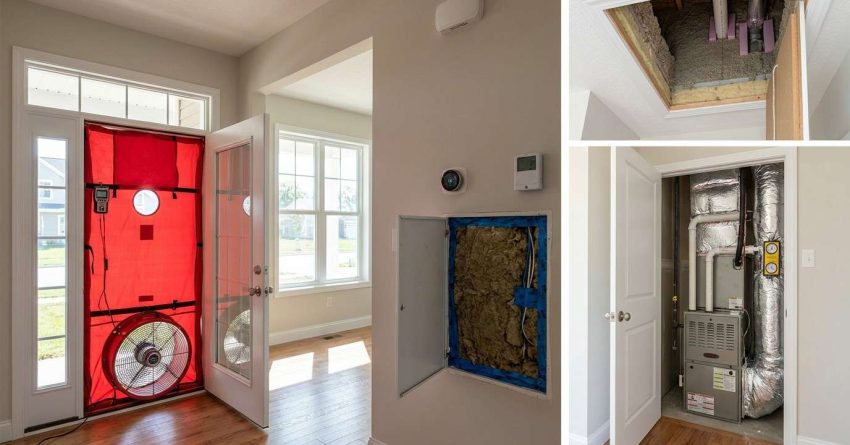
The on-site inspection is the core of the verification process. A certified verifier visits the property and conducts a series of standardized tests. For residential properties, these typically include a blower door test to measure air leakage, a duct blaster test to assess duct system tightness, and visual inspections of insulation, mechanical systems, and building envelope components.
Each test produces a measurable result that is compared against ENERGY STAR’s published performance thresholds. Properties must meet all applicable requirements — not just most of them.
Step 3 — Documentation and Submission
After on-site testing, the verifier compiles all test results, inspection findings, and supporting documentation into a formal report. This report is submitted to the relevant program administrator — typically the EPA directly or a state-level ENERGY STAR partner organization.
Documentation requirements vary slightly depending on whether the certification applies to a new home, an existing home, a commercial building, or a product. Verifiers are responsible for ensuring all required forms are complete and accurate before submission.
Step 4 — Certification and Label Issuance
Once the submitted documentation is reviewed and approved, the EPA or its program administrator issues official ENERGY STAR certification. For homes and buildings, this includes a certificate and the right to display the ENERGY STAR label in marketing materials, listings, and physical signage.
Certification is tied to the specific property or product at the time of inspection. Changes made after certification — such as replacing a verified HVAC system with a non-certified unit — can affect the property’s certified status.
What Gets Verified? Products, Homes, and Buildings
ENERGY STAR certification applies across three distinct categories, each with its own verification pathway and performance criteria.
ENERGY STAR Certified Products
Products such as appliances, lighting, HVAC equipment, water heaters, and electronics are verified through manufacturer testing conducted in EPA-recognized laboratories. Manufacturers submit test results demonstrating that their products meet ENERGY STAR specifications. The EPA reviews submissions and, upon approval, lists the product in the official ENERGY STAR product database.
Consumers can confirm a product’s certified status by checking the ENERGY STAR product finder on the EPA’s official website before purchasing.
ENERGY STAR Certified Homes
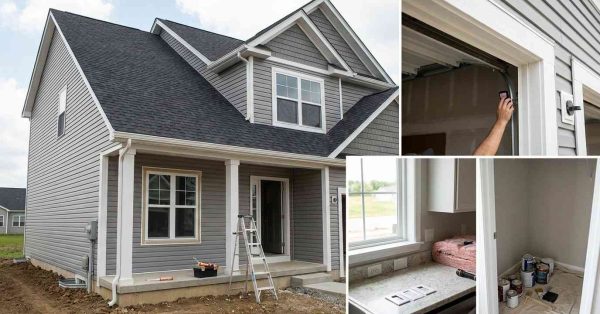
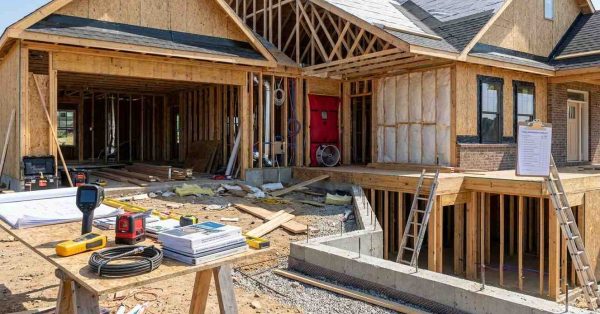
New homes are verified by a certified HERS Rater who inspects construction at multiple stages — not just at completion. The rater confirms that insulation, air sealing, windows, mechanical systems, and lighting all meet ENERGY STAR requirements as specified in the applicable version of the ENERGY STAR Residential New Construction program.
Homes that fall short of ENERGY STAR thresholds often require targeted upgrades before qualifying, and our home energy remodeling details the most impactful improvements that help properties meet certification standards.
ENERGY STAR Certified Buildings
Commercial and multifamily buildings are verified through the EPA’s ENERGY STAR Portfolio Manager tool. Building owners enter 12 months of energy consumption data, occupancy information, and operational details. The system calculates an ENERGY STAR score from 1 to 100. Buildings that score 75 or higher are eligible to apply for ENERGY STAR certification.
An on-site verification by a licensed professional engineer or registered architect is required to confirm that the submitted data accurately reflects the building’s actual conditions. Commercial buildings undergoing ENERGY STAR verification frequently require electrical system improvements to meet efficiency benchmarks, and our electrical system upgrades covers what those assessments involve and how licensed electricians support the process.
How Long Does ENERGY STAR Verification Take?
The timeline for ENERGY STAR verification depends on the category being certified and the readiness of the property or product at the time of application.
For new homes, the verification process runs concurrently with construction and typically adds two to four weeks to the overall project timeline when a HERS Rater is engaged early. For existing homes seeking certification, the process from initial audit to certificate issuance generally takes four to eight weeks, depending on whether upgrades are needed.
For commercial buildings, the Portfolio Manager data entry and review process typically takes four to six weeks after 12 months of qualifying energy data has been collected. On-site verification adds one to three weeks depending on building complexity and verifier availability.
Delays most commonly occur when documentation is incomplete, when test results fall below thresholds and upgrades are required, or when verifier scheduling creates gaps between inspection stages.
Common Reasons ENERGY STAR Verification Fails
Understanding why verification fails helps property owners prepare more effectively and avoid the cost of a second inspection cycle.
The most frequent failure points include insufficient air sealing, which causes blower door test results to exceed allowable leakage rates. Duct systems that leak conditioned air into unconditioned spaces — such as attics or crawlspaces — are another common cause of failed duct blaster tests.
Insulation that does not meet the required R-value for the climate zone, HVAC equipment that does not carry ENERGY STAR certification itself, and windows that fall below the required U-factor or solar heat gain coefficient thresholds are also common failure triggers.
In commercial buildings, inaccurate or incomplete energy data submitted to Portfolio Manager is the leading cause of failed or delayed certification. Buildings that score below 75 due to operational inefficiencies — rather than physical deficiencies — may need to address occupancy patterns, equipment scheduling, or plug load management before reapplying.
How ENERGY STAR Verification Affects Property Value and Energy Bills
ENERGY STAR certified homes and buildings consistently demonstrate lower energy costs than comparable non-certified properties. According to the U.S. Environmental Protection Agency, ENERGY STAR certified homes use approximately 10% less energy than standard new homes built to code, with some certified homes achieving savings of 20% or more depending on climate zone and construction quality.
For property owners, lower energy bills translate directly into reduced operating costs — a measurable financial benefit that supports higher asking prices and stronger rental yields. Certified properties also qualify for utility rebates and federal tax incentives that non-certified properties cannot access.
Replacing outdated windows is one of the most effective ways to improve a property’s energy rating before verification, and our energy-efficient window upgrades explains the options available and how new windows contribute to long-term energy savings.
Proper insulation is a critical factor in ENERGY STAR scoring, and our insulation and ceiling work outlines how ceiling and wall improvements directly affect a property’s thermal performance and verification outcome.
Maintaining ENERGY STAR Status After Verification
ENERGY STAR certification is not permanent by default. For commercial buildings, recertification is required annually because the Portfolio Manager score is based on rolling 12-month energy data. A building that was certified last year must resubmit current data and meet the 75-point threshold again to maintain its certified status.
For certified homes, the original certification applies to the home as built and verified. However, significant modifications — such as replacing a certified HVAC system with non-certified equipment, removing insulation during a renovation, or altering the building envelope — can compromise the conditions under which certification was granted.
Maintaining clean, unobstructed dryer vents is part of ongoing appliance efficiency upkeep after certification — our dryer vent maintenance explains how regular servicing protects both energy performance and household safety.
Keeping a property ENERGY STAR certified requires consistent attention to systems and equipment, and our ongoing energy maintenance resource connects homeowners with the professional services needed to sustain verified performance year-round.
Conclusion
The ENERGY STAR verification process is a structured, third-party pathway that confirms a home, building, or product meets federal energy efficiency standards through documented testing and independent review.
Preparing correctly — addressing insulation, air sealing, HVAC performance, and appliance efficiency before the inspection — is what separates properties that pass on the first attempt from those that require costly second cycles.
At Mr. Local Services, our team connects homeowners and property managers with skilled professionals across every service category that affects ENERGY STAR performance — from HVAC and electrical work to insulation, windows, and appliance maintenance — so your property is ready to verify and built to stay certified.
Frequently Asked Questions
What is the difference between ENERGY STAR certified and ENERGY STAR verified?
ENERGY STAR certified means a product, home, or building has completed the full verification process and received official EPA recognition. ENERGY STAR verified is sometimes used informally to describe the inspection stage, but only completed certification carries the official label and associated benefits.
How much does ENERGY STAR verification cost?
Costs vary by property type and location. For new homes, HERS Rater fees typically range from $300 to $1,000 depending on home size and regional rates. Commercial building verification costs depend on building complexity and the fees charged by the licensed professional conducting the on-site review.
Can existing homes qualify for ENERGY STAR verification?
Yes. Existing homes can pursue ENERGY STAR certification through the EPA’s ENERGY STAR Certified Homes program for existing homes, which evaluates current performance rather than construction-stage compliance. Upgrades to insulation, air sealing, windows, and mechanical systems are often required before an existing home can meet the program’s thresholds.
How often does ENERGY STAR certification need to be renewed?
For commercial buildings, ENERGY STAR certification must be renewed annually through Portfolio Manager using current 12-month energy data. For certified homes, the original certification does not expire, but significant modifications to the building’s energy systems can affect the validity of the original certification.
Does ENERGY STAR verification apply to appliances and HVAC systems?
Yes. Appliances, HVAC equipment, water heaters, and other products are verified through manufacturer testing in EPA-recognized laboratories. Consumers can confirm a product’s certified status using the official ENERGY STAR product finder before purchasing or specifying equipment for a property.
What happens if a product or home fails ENERGY STAR verification?
A failed verification means the property or product did not meet one or more required performance thresholds at the time of inspection. For homes, the verifier will identify which components failed and what corrective action is needed. Once upgrades are completed, a re-inspection can be scheduled. For products, manufacturers must retest and resubmit before the product can be listed in the ENERGY STAR database.
Is ENERGY STAR verification required for tax credits or rebates?
Many federal tax credits and utility rebate programs require ENERGY STAR certification as a condition of eligibility. The IRS Energy Efficient Home Improvement Credit and various state utility programs specify ENERGY STAR certification for qualifying products and improvements. Always confirm current program requirements directly with the administering agency before making purchasing decisions.