A newly built home still needs a thorough inspection before you sign. This final walkthrough checklist for new construction covers every area buyers, landlords, and property managers should review — from the roof and foundation to mechanical systems, appliances, and documentation — so nothing gets missed before closing day.
Skipping a thorough walkthrough means accepting defects the builder is still responsible for fixing, which can cost thousands after closing.
This checklist organizes every inspection area by category, explains what to look for, and helps you build a complete punch list to submit before you take ownership.
What Is a Final Walkthrough for New Construction?
A final walkthrough is a buyer’s last opportunity to inspect a newly built home before closing. It typically takes place 24 to 48 hours before the closing date and gives you the chance to confirm that all agreed-upon work is complete, all systems are functioning, and the home is in the condition specified in your purchase contract.
This is not the same as a home inspection. A home inspection is typically conducted earlier in the buying process by a licensed third-party inspector. The final walkthrough is your personal review — a chance to verify that everything is ready and to document any remaining issues before you accept the keys.
A final walkthrough is the last step before closing on a newly built home — our new construction services covers every professional support option available to buyers and property managers preparing for move-in.
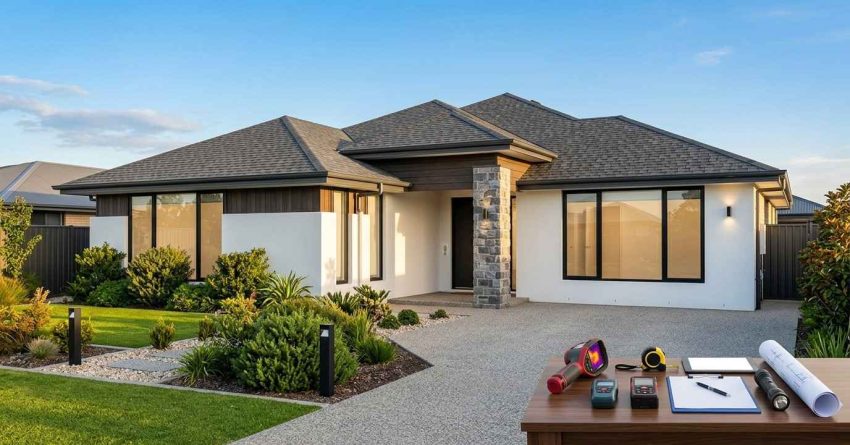
Bring your purchase contract, any previous inspection reports, a phone or camera for photos, a phone charger to test outlets, and a notepad for your punch list. Plan for at least two to three hours on a larger home.
Exterior Inspection Items
Start outside. The exterior is the first line of defense against weather, water intrusion, and structural problems. Walk the entire perimeter before entering the home.
Roof, Gutters, and Drainage
Look for missing, cracked, or improperly installed shingles. Check that flashing around chimneys, vents, and skylights is sealed correctly. Gutters should be securely attached, properly sloped toward downspouts, and free of debris. Downspouts should direct water at least six feet away from the foundation.
Inspecting the roof before closing protects your investment from day one — our roofing inspection tips outlines what to look for on shingles, flashing, gutters, and drainage systems in newly built homes.
Siding, Trim, and Foundation
Check siding panels for gaps, cracks, or sections that are not flush. Trim around windows and doors should be caulked and painted. Inspect the foundation for visible cracks, especially horizontal ones, which can indicate structural movement. Look for efflorescence — white mineral deposits — which signals moisture intrusion.
Driveway, Walkways, and Landscaping
Concrete and asphalt surfaces should be free of major cracks and properly sloped away from the home. Check that all landscaping specified in your contract has been installed. Proper grading and drainage around the foundation are essential exterior checks — our landscaping and grading explains how slope, soil compaction, and drainage design affect long-term property health.
Interior Structural and Safety Checks
Move inside and work room by room. Bring a flashlight for closets, utility spaces, and areas with limited natural light.
Walls, Ceilings, and Floors
Look for cracks, nail pops, uneven seams, and paint holidays — areas where paint coverage is thin or missing. Run your hand along wall surfaces to feel for bumps or depressions. Check ceiling corners for separation or cracking. Cracks, uneven seams, and surface imperfections in walls and ceilings are among the most common new construction issues — our drywall and ceiling defects explains how to identify and document these problems before closing.
Walk every floor surface. Uneven surfaces, gaps between planks, and loose tiles are all common new construction flooring issues — our flooring installation defects explains how to identify substandard work before you accept the home.
Doors, Windows, and Locks
Open and close every interior and exterior door. Doors should swing freely, latch securely, and seal completely when closed. Check that all hardware — hinges, handles, and deadbolts — is installed and functioning. Doors that stick, swing incorrectly, or latch poorly are a frequent punch list item in new builds — our door alignment and hardware covers what proper installation looks like and how to flag issues for the builder.
Test every window. Checking that every window opens, closes, locks, and seals correctly is a non-negotiable walkthrough step — our window seals and operation details what defects to look for and how they affect energy efficiency.
Stairways and Railings
Test every step for squeaks, movement, or instability. Railings should be firmly anchored and meet local building code height requirements. Stairway railings, handrails, and accessibility features must meet code before closing — our safety and accessibility checks outlines what to verify for both standard and mobility-accessible new construction.
Mechanical Systems Inspection
Mechanical systems are among the most expensive components in any home. Verify that every system has been installed, commissioned, and tested before you accept the property.
HVAC System and Vents
Turn on the heating and cooling system and let it run for at least 10 minutes. Confirm that air flows from every register in every room. Check that the thermostat responds correctly. Inspect the air handler and furnace for visible damage or improper connections. Verifying your heating and cooling system before closing is one of the most critical steps in any walkthrough — our HVAC inspection checklist explains exactly what a qualified technician checks and what red flags to watch for.
Plumbing Fixtures and Water Pressure
Run every faucet, flush every toilet, and test every showerhead. Water pressure should be consistent throughout the home. Check under sinks for leaks or improperly connected supply lines. Water pressure, drain flow, and fixture connections all require careful review during a new construction walkthrough — our plumbing inspection guide walks through every check a licensed plumber performs before a home is cleared for occupancy.
Electrical Panel, Outlets, and Fixtures
Confirm that the electrical panel is labeled correctly and that all breakers are properly sized. Test every outlet using your phone charger or a plug-in outlet tester. Turn on every light switch and confirm that fixtures are installed and functioning. Panel labeling, outlet function, and fixture installation are all part of a thorough mechanical review — our electrical safety checks details what a licensed electrician verifies during a new construction inspection.
Kitchen and Appliance Verification
The kitchen contains more systems and fixtures than any other room. Test everything individually.
Check that all cabinets open and close smoothly, that drawer slides operate correctly, and that cabinet hardware is fully installed. Countertops should be level, properly sealed at the backsplash, and free of chips or cracks. Run the kitchen faucet and check under the sink for leaks.
Every built-in appliance in a new construction home should be tested during the walkthrough — our appliance installation checks covers what to run, what to listen for, and what defects to document before signing off. Run the dishwasher through a full cycle. Test all oven burners and the oven itself. Confirm that the range hood vents to the exterior and that the refrigerator is level and cooling correctly.
Bathrooms and Utility Spaces
Test every bathroom fixture individually. Flush each toilet and confirm it refills correctly. Run the shower and tub, and check that drains clear quickly without backing up. Inspect caulking around tubs, showers, and sinks — gaps or missing caulk allow water intrusion behind walls.
Check exhaust fans in every bathroom. They should vent to the exterior, not into the attic. Confirm that all tile grout is complete and that no tiles are cracked or hollow-sounding when tapped.
In the laundry room and utility spaces, confirm that the washer and dryer connections are properly installed. Utility spaces in new construction often have improperly routed or uncleaned dryer vents — our dryer vent installation explains what a correctly installed vent looks like and why it matters for fire safety.
Final Documentation and Punch List
Before leaving the walkthrough, compile every defect, incomplete item, and concern into a written punch list. Photograph every issue with a timestamp. Submit the punch list to your builder in writing and request a written response with a completion timeline.
Confirm that you have received all documentation the builder is required to provide: the certificate of occupancy, warranty documents, appliance manuals, and any HOA documents. Ask for the contact information for the builder’s warranty department.
Once your punch list is complete, a skilled handyman can address minor defects the builder has not resolved — our punch list repairs explains how professional handyman services handle the small fixes that protect your investment.
Rekeying or replacing locks immediately after closing is a standard security step for any new construction home — our lock rekeying after closing explains why this matters and what a locksmith does during a new-home security setup.
If you need help identifying issues you may have missed, or if you want a professional review of any system before closing, Mr. Local Services connects you with qualified professionals across every service category covered in this checklist.
Conclusion
A thorough final walkthrough protects your investment and ensures the builder fulfills every obligation before you take ownership of your new home.
Documenting defects before closing gives you legal standing to require repairs — waiting until after closing transfers that responsibility to you.
At Mr. Local Services, our network of skilled professionals covers every system in this checklist — from HVAC and plumbing to electrical, flooring, and beyond. Contact us today to schedule a pre-closing review or post-closing repair service.
Frequently Asked Questions
What should I look for during a final walkthrough of a new construction home?
Focus on mechanical systems, surface finishes, doors, windows, and appliances. Test every outlet, fixture, and appliance, and document any defect with photos before submitting a written punch list to the builder.
How long does a final walkthrough take for a new construction home?
Most final walkthroughs take two to four hours depending on the size of the home. Larger homes with more systems and rooms require more time. Plan for at least two hours minimum and bring a checklist.
Can I bring a home inspector to a new construction final walkthrough?
Yes. Hiring a licensed home inspector for the final walkthrough is strongly recommended. An inspector brings professional tools and experience that help identify defects a buyer might miss during a self-guided review.
What happens if I find problems during the final walkthrough?
Document every issue in writing with photos and submit a formal punch list to the builder before closing. Most purchase contracts give the builder a set period to complete repairs. Do not close until all agreed-upon items are resolved or a written agreement is in place.
What is a punch list in new construction?
A punch list is a written record of all incomplete or defective items identified during the final walkthrough. It is submitted to the builder before closing and serves as the official record of work the builder must complete before or shortly after the buyer takes ownership.