A barndo + ADU combined build gives you a fully livable barndominium alongside a separate, self-contained accessory dwelling unit on the same property — delivering flexible housing, rental income potential, and long-term property value in a single construction project.
Combining these two structures on one lot is one of the most practical decisions a property owner can make today, and understanding the full scope of the build helps you plan smarter and avoid costly surprises.
This guide covers what a barndo + ADU combined build involves, why homeowners choose this approach, how the construction process works, which services you will need, and what the project typically costs.
What Is a Barndo + ADU Combined Build?
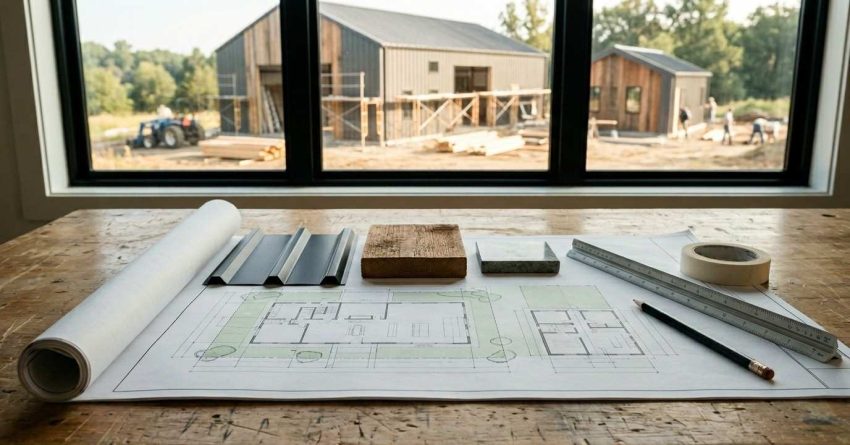
A barndo + ADU combined build is a construction project that delivers two distinct living structures on a single parcel: a barndominium as the primary residence and an accessory dwelling unit as a secondary, independent living space. The barndominium — commonly called a barndo — is a steel or metal-framed structure designed for residential use, often featuring open floor plans, high ceilings, and durable exterior finishes. The ADU is a smaller, fully functional unit that can be attached to the barndo, built as a detached structure on the same lot, or converted from an existing space such as a garage or workshop.
How a Barndominium Differs from a Traditional Home
A barndominium uses a post-frame or steel-frame construction method rather than the wood-stud framing found in conventional homes. This structural approach allows for wider open spans, faster build timelines, and lower per-square-foot material costs in many regions. The exterior typically uses metal siding and metal roofing, which offer strong resistance to weather, fire, and pests. Inside, barndos can be finished to any level of quality — from basic utility spaces to high-end residential interiors with custom cabinetry, polished concrete floors, and full mechanical systems.
Understanding what a barndo + ADU combined build involves starts with the broader world of alternative housing — our tiny home construction covers the full range of non-traditional build types, materials, and service options available to homeowners across the USA.
Why Combine a Barndominium with an ADU?
The decision to add an ADU to a barndominium build is driven by both financial and lifestyle goals. Rather than treating the two structures as separate projects, combining them from the start allows for shared site work, coordinated utility connections, and a single permitting process in many jurisdictions — reducing overall project cost and timeline.
Financial Benefits of Adding an ADU to a Barndo
An ADU on a barndo property creates an immediate income opportunity. Owners can rent the unit long-term to a tenant, use it as a short-term rental, or house a family member while maintaining complete privacy between the two living spaces. The additional unit also increases the appraised value of the property, which strengthens equity and improves refinancing options over time. For landlords and property investors, a barndo + ADU build on rural or semi-rural land offers a lower entry cost than comparable urban multi-unit properties while delivering similar income potential.
If you want to understand the rental income potential of an ADU in more detail, ADU rental income potential breaks down average earnings by region, unit size, and rental type to help you model your return before you build.
Lifestyle and Flexibility Advantages
Beyond income, the combined build supports multigenerational living arrangements — a growing priority for many American families. Aging parents, adult children, or long-term guests can occupy the ADU with full independence while remaining close to the main household. The barndo itself provides the space and structural flexibility to accommodate a home office, workshop, or hobby area alongside the primary living quarters, making the combined build one of the most versatile residential configurations available.
Planning Your Barndo + ADU Combined Build
Thorough planning before construction begins is what separates a smooth project from one that stalls at the permit office or runs over budget. Two areas demand the most attention early: local zoning compliance and site layout.
Zoning Laws and Permit Requirements in the USA
Zoning rules for barndominiums and ADUs vary significantly by state, county, and municipality. Some jurisdictions classify barndominiums as agricultural structures, which affects what residential permits apply. Others have specific ADU ordinances that govern unit size, setback distances, owner-occupancy requirements, and utility connections. Before purchasing land or finalizing a design, confirm that your parcel is zoned to allow both a primary residential structure and an ADU. Many rural counties are ADU-friendly, but urban-adjacent areas may impose stricter limits.
A full breakdown of state-by-state rules is available on our barndominium zoning and permit guide which covers what approvals you need, how long the process typically takes, and what documentation your contractor will need to submit.
Before breaking ground, many barndo + ADU owners benefit from a broader look at structural planning — our guide to remodeling and renovation planning explains how to coordinate trades, manage timelines, and set realistic scope expectations for complex builds.
Site Layout and Structural Considerations
The physical relationship between the barndo and the ADU on your lot affects drainage, utility routing, privacy, and future resale appeal. Attached ADUs share a wall with the barndo and require careful acoustic and fire separation detailing. Detached ADUs offer more privacy but require separate utility runs, which adds cost. Your site plan should account for driveway access to both units, parking, septic or sewer capacity for two households, and any easements or setback requirements that limit where structures can be placed.
Construction Process for a Barndo + ADU Build
The construction sequence for a combined build follows the same general phases as any residential project, but the dual-unit scope requires careful coordination between trades to avoid scheduling conflicts and rework.
Foundation, Framing, and Shell Options
Most barndominiums use a concrete slab foundation, which provides a stable, low-maintenance base for the steel or post-frame structure above. Pier-and-beam and crawl space foundations are used in some regions depending on soil conditions and local code. The ADU foundation is typically poured at the same time as the barndo slab to reduce mobilization costs. Once foundations are set, the barndo shell — including the steel frame, metal roofing, and exterior wall panels — is erected. This phase moves quickly compared to traditional stick-frame construction, often completing the weather-tight shell in a matter of weeks.
For a detailed look at foundation options and what each means for your build, our barndominium foundation types explains the trade-offs between slab, pier, and crawl space configurations for both the barndo and the ADU.
Interior Finishing and Systems Installation
Once the shell is weather-tight, interior work begins. Insulation is installed in the walls, roof, and floor system — spray foam is common in barndos due to the metal exterior’s thermal bridging characteristics. Rough-in work for electrical, plumbing, and HVAC follows, with inspections required before walls are closed. Drywall, flooring, cabinetry, and fixtures complete the interior. For a combined build, the ADU interior is typically finished to the same standard as the barndo to maximize rental appeal and appraisal value.
Selecting the right flooring for both the main barndo structure and the ADU unit is one of the most impactful finishing decisions you will make — our flooring installation options outlines materials, durability ratings, and cost ranges suited to open-plan and multi-unit builds.
Key Services Needed for a Barndo + ADU Combined Build
A barndo + ADU project draws on a wide range of professional services. Getting the right contractors in the right sequence is critical to staying on schedule and within budget.
Electrical, Plumbing, and HVAC for Dual-Unit Properties
Running separate electrical systems for a barndo and an attached ADU requires careful load planning and code-compliant panel design — our residential electrical services explains what a full electrical installation for a dual-unit property involves and what to expect from the process.
Dual-unit properties require independent water supply and drainage planning for each living space — our plumbing for new construction covers rough-in requirements, fixture selection, and inspection milestones for barndo and ADU builds.
Heating and cooling a barndominium with an attached ADU involves sizing two independent systems or designing a zoned solution — our HVAC system installation walks through equipment options, ductwork planning, and energy efficiency considerations for large-footprint builds.
Roofing, Flooring, and Exterior Finishing Services
Barndominiums most commonly use standing-seam metal roofing, which must be properly integrated across both the main structure and the ADU addition — our metal roofing installation covers material grades, fastening systems, and warranty considerations for combined builds.
Interior trim, built-in storage, and custom framing details are what separate a finished barndo from a polished, livable home — our custom carpentry work explains the scope of finish carpentry services available for both the primary structure and the ADU unit.
Cost Breakdown for a Barndo + ADU Combined Build
The total cost of a barndo + ADU combined build depends on size, finish level, site conditions, and regional labor rates. As a general framework, most combined builds in the USA fall between $150,000 and $450,000 for the complete project, with significant variation based on the factors below.
Factors That Affect Total Project Cost
Site preparation and utility connections are often underestimated. Rural lots may require well drilling, septic system installation, and long electrical service runs — each of which adds to the base construction cost. The barndo shell itself is typically priced per square foot, with basic kits starting around $20–$30 per square foot for materials only and turnkey builds ranging from $85 to $150 per square foot depending on finish level. The ADU adds a proportional cost based on its size and whether it shares utilities with the barndo or requires independent connections.
For a full cost breakdown by component, our barndominium cost per square foot guide covers material costs, labor rates, and regional pricing differences to help you build an accurate budget before you commit.
Interior wall finishing is one of the most labor-intensive line items in a barndo + ADU build budget — our drywall and ceiling finishing breaks down material costs, labor rates, and what affects pricing for large open-span spaces.
Maintaining Your Barndo + ADU After Construction
Once your combined build is complete, a consistent maintenance routine protects your investment and keeps both units safe, functional, and rentable. Metal exteriors require periodic inspection for fastener corrosion, sealant integrity around penetrations, and paint or coating condition. Roofing should be inspected annually, with particular attention to flashing at the ridge, eaves, and any roof penetrations.
Keeping both units weathertight over time starts with properly installed and maintained windows — our window installation and sealing covers inspection schedules, resealing timelines, and replacement options for barndo-style window configurations.
Entry doors on a barndo + ADU property take significant daily use across two separate units, making regular inspection and maintenance essential — our exterior door maintenance outlines what to check, when to reseal, and when replacement is the better investment.
Routine upkeep across a barndo and ADU covers a wide range of small but important tasks that add up quickly — our ongoing property maintenance explains how a handyman service plan keeps both units in top condition year-round without requiring multiple separate contractors.
Conclusion
A barndo + ADU combined build is one of the most practical and financially rewarding residential construction choices available to homeowners and property investors in the USA today.
Planning the project correctly from the start — covering zoning, site layout, construction sequencing, and service coordination — is what determines whether the build delivers on its full potential.
At Mr. Local Services, we connect you with skilled professionals across every trade your barndo + ADU build requires, from foundation to finish — contact us today to get started with a trusted team that delivers quality workmanship and transparent service from day one.
Frequently Asked Questions
What is the difference between a barndominium and a traditional home?
A barndominium uses a steel or post-frame structure instead of wood-stud framing, allowing for wider open spans and faster construction. The exterior typically features metal siding and roofing, while the interior can be finished to any residential standard.
Can I build an ADU on the same lot as a barndominium?
Yes, in most jurisdictions you can build an ADU on the same lot as a barndominium, provided the parcel meets local zoning requirements for both structures. Permit requirements, setback rules, and utility connection standards vary by state and county.
How long does a barndo + ADU combined build take to complete?
Most barndo + ADU combined builds take between six and fourteen months from permit approval to final inspection, depending on project size, contractor availability, and local inspection timelines. Combining both structures in a single project typically reduces the total timeline compared to building them separately.
What foundation type is best for a barndominium?
A concrete slab is the most common foundation for barndominiums because it provides a stable, low-maintenance base that works well with steel and post-frame construction. Pier-and-beam or crawl space foundations are used in regions with specific soil or drainage conditions.
Do I need separate utility connections for the barndo and the ADU?
In most cases, yes. Building codes typically require the ADU to have its own electrical panel, water meter, and in some jurisdictions a separate sewer or septic connection. Sharing utilities between units is possible in some configurations but requires specific engineering and code approval.
How much does a barndo + ADU combined build cost?
Total project costs typically range from $150,000 to $450,000 depending on size, finish level, site conditions, and regional labor rates. Site preparation, utility connections, and interior finish quality are the three factors that most significantly affect the final number.
What maintenance does a barndominium require after construction?
Barndominiums require annual inspection of the metal roof, exterior fasteners, sealants around all penetrations, and the condition of exterior coatings. Interior systems including HVAC, plumbing, and electrical should follow standard residential maintenance schedules for both the barndo and the ADU.