The easiest trades to enter are painting, landscaping, and handyman work, while the hardest are HVAC, electrical, and plumbing due to licensing, technical depth, and safety risk. Choosing the right trade depends on training time, physical demand, certification requirements, and earning potential. This ranked guide breaks down where each trade falls on the difficulty scale and helps homeowners, property managers, and aspiring professionals understand what each path realistically involves.
Trades Ranked from Easiest to Hardest (Quick Answer)
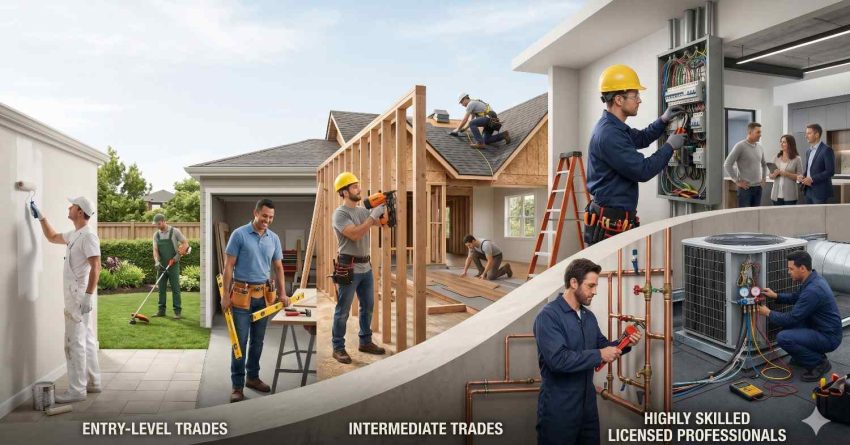
From easiest to hardest, common trades rank as follows: painting, landscaping, power washing, handyman, drywall, carpentry, flooring, roofing, locksmith, HVAC, plumbing, and electrical. Difficulty is measured by required training hours, licensing complexity, technical knowledge, and safety risk. Lower-ranked trades demand minimal certification. Higher-ranked trades require multi-year apprenticeships and state licensing.
Easiest Trades to Learn and Enter
Painting, landscaping, power washing, and basic handyman work sit at the easiest end of the scale. These trades require limited formal training, minimal tools, and no state licensing in most areas. A motivated worker can become competent within weeks to a few months. Cleaning services, dryer vent work, and pressure washing also fall here. The tradeoff is lower entry-level pay, higher competition, and physical repetition. These paths suit individuals seeking fast entry, flexible schedules, or a stepping stone into more advanced specialties like remodeling or carpentry.
Hardest Trades That Demand Years of Mastery
Electrical, plumbing, and HVAC rank as the hardest trades. Each requires four to five-year apprenticeships, classroom instruction, journeyman exams, and state licensing. Electricians work with code-driven wiring systems where mistakes cause fires. Plumbers handle pressurized water, gas lines, and waste systems. HVAC technicians combine electrical, refrigeration, and mechanical knowledge under EPA certification rules. Roofing and water damage restoration also demand significant skill due to safety hazards and structural decision-making. The reward is strong earning potential, steady demand, and clear career progression into supervisory or business-ownership roles.
After understanding where each path lands on the difficulty scale, the next step is exploring the full range of skilled trades and seeing how each connects to real property service needs.

How to Choose the Right Trade for Your Goals
Choose a trade based on four factors: training time you can commit, physical tolerance, income expectations, and long-term career flexibility. Easier trades like handyman or landscaping work suit people who want fast income and outdoor variety. Harder trades like electrical or HVAC reward patience with higher pay, licensure, and stability. Consider local demand, climate, and whether you want to work residential or commercial. Most successful tradespeople begin in one specialty, then expand into related services as they gain confidence.
Matching Trade Difficulty to Lifestyle and Income
A handyman or painter typically earns less per hour but enjoys low overhead and quick startup. A licensed electrician or plumber earns significantly more, often $70,000 to $100,000+ annually, but invests years in apprenticeship first. Roofers and HVAC technicians fall between, balancing strong pay with seasonal demand. Think honestly about matching a trade to your long-term goals before committing to training.
Why “Easy” and “Hard” Mean Different Things in the Trades
Easy does not mean unskilled, and hard does not mean unreachable. A painter producing flawless finishes has mastered surface prep, color theory, and customer communication. An electrician installing a panel applies code knowledge built over years. Difficulty reflects the depth of technical knowledge, licensing, and safety responsibility, not the value of the work. Every trade rewards craftsmanship, and homeowners benefit when professionals at every level take their work seriously and deliver consistent, dependable results.
Conclusion
Trades range from quick-entry roles like painting and landscaping to license-heavy specialties like electrical, plumbing, and HVAC. Difficulty reflects training depth, safety risk, and certification, not the importance of the work itself.
Whether you are hiring a professional or considering a trade career, understanding this ranking helps set realistic expectations around timelines, pricing, and quality.
When you need any trade handled by vetted professionals, Mr. Local Services connects you with skilled experts ready to deliver dependable results.
Frequently Asked Questions
What is the easiest trade to learn quickly?
Painting, landscaping, and power washing are the easiest trades to learn, requiring weeks of practice rather than years of formal apprenticeship or state licensing.
Which trade pays the most for the difficulty?
Electrical and plumbing typically offer the strongest pay relative to training, with experienced licensed professionals earning $80,000+ annually in many U.S. markets.
Do all trades require a license?
No. Painting, landscaping, and handyman work often need no license, while electrical, plumbing, and HVAC require state licensing and ongoing continuing education.
Which trade has the best long-term demand?
HVAC, electrical, and plumbing show the strongest long-term demand due to aging infrastructure, new construction, and energy-efficiency upgrades across residential and commercial properties.
Can you switch from an easy trade to a harder one?
Yes. Many electricians, plumbers, and HVAC technicians start as handymen, painters, or laborers, then transition into apprenticeships once they confirm their interest.