In most cases, you should stop flushing the toilet during a flood. Floodwaters can overwhelm municipal sewer systems and septic tanks, forcing wastewater back into your home through drains and toilets. Whether flushing is safe depends on the type of flood, the condition of your sewer line, and how saturated the ground around your property has become. Knowing when to stop using your plumbing protects your home from contamination, costly repairs, and serious health risks during severe weather events.
The Direct Answer: When Flushing Is Safe and When It Isn’t
Avoid flushing the toilet during a flood if floodwater has reached the street, your yard is heavily saturated, or sewer drains are gurgling. In these conditions, the system cannot accept additional wastewater, and flushing risks pushing sewage back into your home.
Flushing may still be safe if the flood is limited to surface runoff, your home connects to a working municipal system on higher ground, and no drains are bubbling, slow, or backing up. Always check basement floor drains, tubs, and sinks first. If any show signs of backflow, stop using all plumbing immediately and shut off water at the main valve until conditions improve.
Why Floodwater Affects Your Toilet’s Drainage
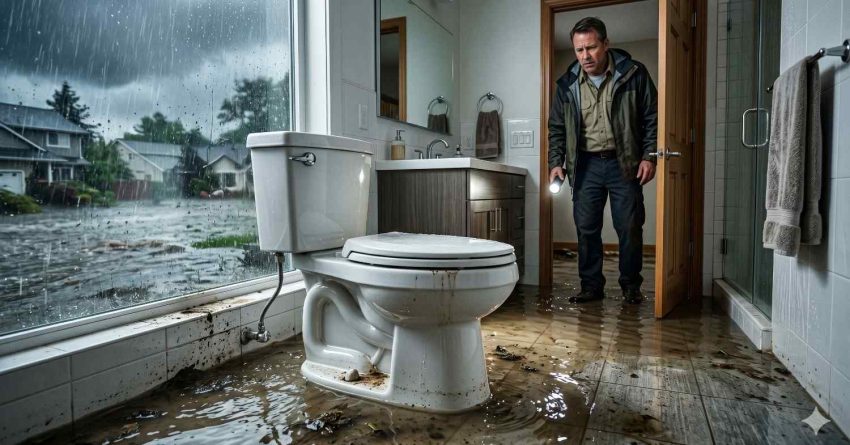
Toilets rely on gravity and a clear sewer line to carry waste away from your home. During a flood, sewer mains fill with stormwater, debris, and sewage from neighboring properties. Septic tanks become saturated by groundwater and can no longer absorb new waste. When the system has no capacity, anything you flush has nowhere to go and gets pushed back through the lowest drain in your home, often a basement toilet, shower, or floor drain.
Signs You Should Stop Flushing Immediately
Watch for gurgling sounds in drains, slow-draining sinks or tubs, water rising in toilet bowls without flushing, foul sewer odors indoors, and visible backup in lower-level drains. Any one of these signs means your sewer system is compromised. Stop flushing, avoid running water, and warn household members not to use any plumbing fixtures. Acting quickly reduces the risk of contaminated water spreading through your home.
Recognizing these warning signs early is only the first step. If sewage has already entered your home, professional water damage restoration becomes essential to prevent long-term structural and health problems.
What to Do If Sewage Backs Up Into Your Home
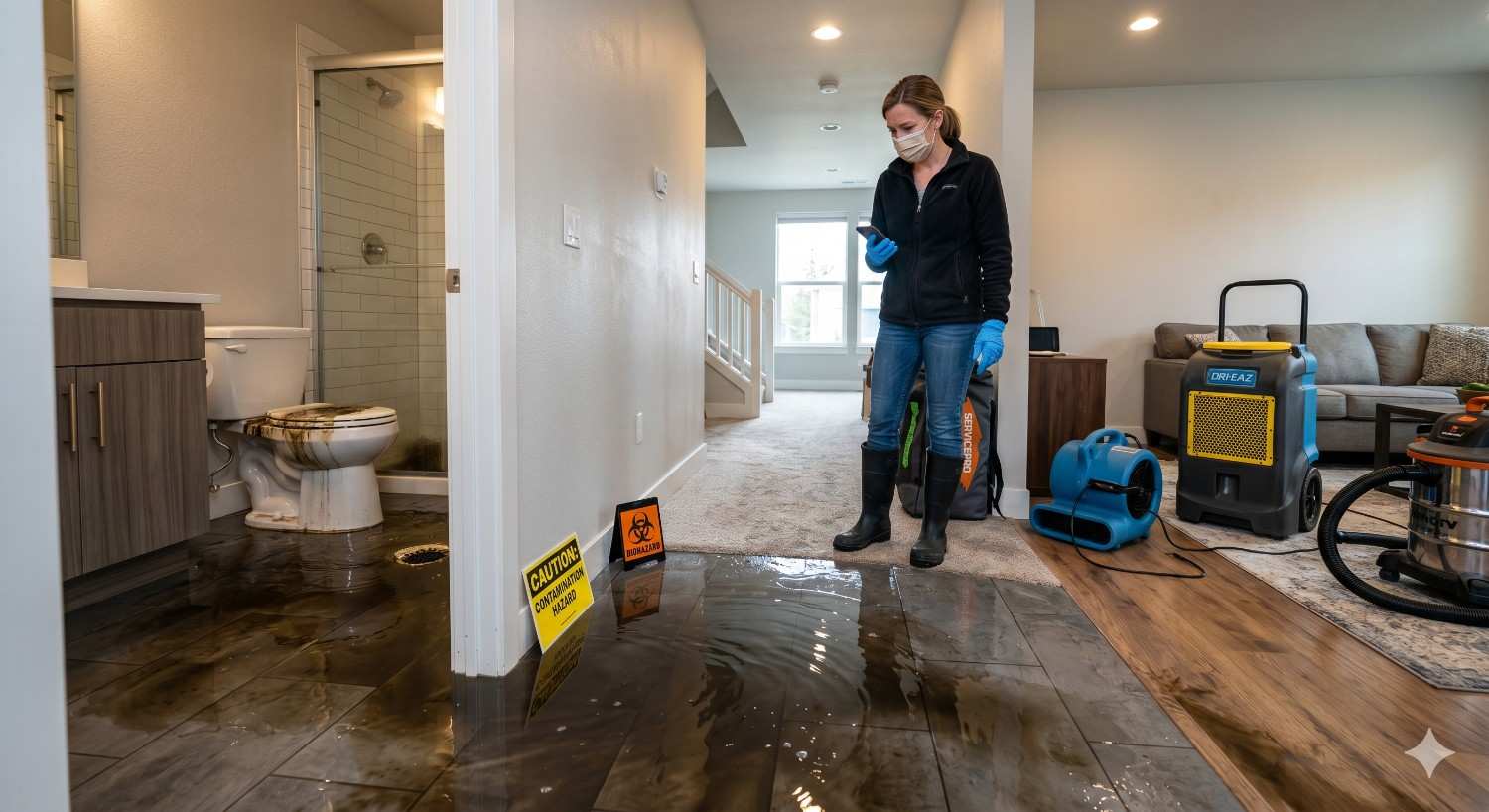
If sewage enters your home, prioritize safety. Keep family members and pets away from affected areas, turn off electricity to flooded rooms at the breaker, and avoid contact with contaminated water. Wear protective gear if you must enter the area, including rubber boots, gloves, and a mask.
Document the damage with photos for insurance, then contact a licensed professional. Sewage contains harmful bacteria, viruses, and parasites that require specialized cleanup, disinfection, and disposal. Standard household cleaners are not enough.
Steps to Take Before a Plumber Arrives
Shut off the main water supply to stop additional flow into the system. Open windows for ventilation if outdoor air is safe. Remove valuables and dry items from affected rooms. Do not attempt to plunge or snake the line yourself, as this can worsen the backup. Call for emergency plumbing repair right away to assess the line and restore safe drainage.
Protecting Your Plumbing Before the Next Flood
Prevention starts with knowing your home’s vulnerabilities. Install a backwater valve on your main sewer line to block sewage from reversing into your home during heavy rainfall. Consider sump pump installation in basements and crawl spaces to remove groundwater before it reaches drains. Schedule annual sewer inspections, clear gutters and downspouts, and grade your yard so water flows away from the foundation. These steps reduce the risk of backups during the next major storm.
Conclusion
Flushing during a flood is risky when sewer systems are overwhelmed, and ignoring warning signs can lead to dangerous backups inside your home. Acting early protects your property, your health, and your peace of mind.
For homeowners and property managers, having a trusted plumbing partner ready before disaster strikes makes recovery faster and easier.
When floods threaten your plumbing, we at Mr. Local Services connect you with vetted experts ready to respond fast. Call today.
Frequently Asked Questions
Is it safe to shower during a flood?
No. If sewers are backing up, showering pushes more water into a full system, increasing the risk of indoor sewage backup and contamination through floor drains.
How long should I wait to flush after a flood?
Wait until floodwaters recede, drains run normally, and your local utility confirms sewer service is restored. A plumber should inspect the line first.
Can I use a plunger if my toilet backs up during a flood?
No. Plunging a flood-related backup can damage seals, force contaminated water out, and worsen the problem. Call a licensed plumber instead.
Does homeowners insurance cover sewage backup?
Standard policies often exclude sewage backup. You typically need a separate sewer backup endorsement. Check your policy details before flood season.
What’s the difference between flood damage and sewage backup?
Flood damage comes from external water entering your home. Sewage backup comes from internal plumbing reversing flow, requiring specialized contamination cleanup.