Yes, water damage in a house can almost always be fixed when it is addressed quickly and correctly. The outcome depends on how long the water sat, what materials it touched, and whether mold has formed. Most homes are fully restored through a structured process of water extraction, drying, sanitizing, and rebuilding affected surfaces. Acting within the first 24 to 48 hours protects structural integrity, preserves indoor air quality, and significantly reduces total repair costs.
Yes, Water Damage in a House Can Be Fixed
Water damage is repairable in nearly every residential case, provided the source is stopped and drying begins within 24 to 48 hours. Drywall, flooring, insulation, and framing can all be restored or replaced. Severity depends on water category, exposure time, and affected materials. Professional restoration ensures hidden moisture is eliminated before rebuilding begins.
What Determines If Water Damage Is Repairable
Three factors decide repair feasibility: water type, duration, and structural exposure. Clean water from a supply line is easiest to address. Gray water from appliances requires sanitizing. Black water from sewage demands full material removal. Time is the second factor. Materials saturated for less than 48 hours are usually salvageable. The third factor is structure. Surface damage to drywall and trim is straightforward, while warped subflooring or compromised framing calls for replacement rather than repair.
When Professional Restoration Is Required
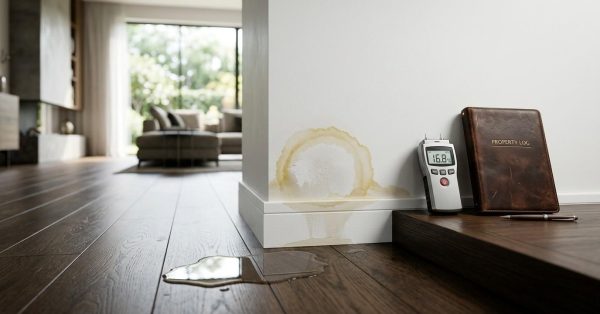
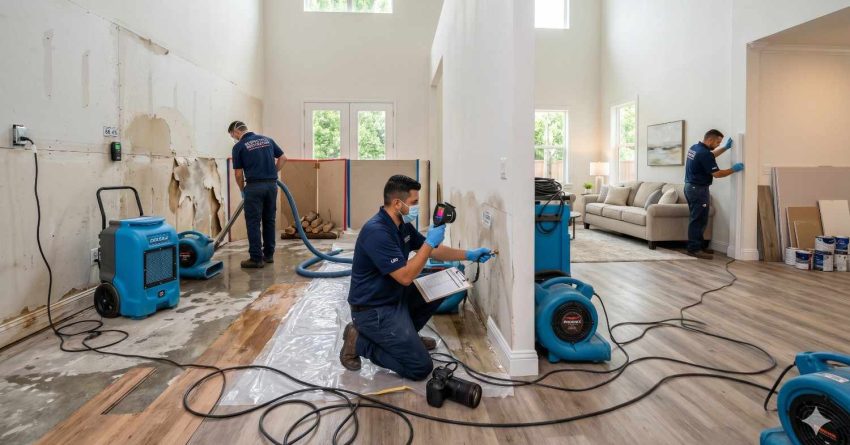
Homeowners can manage small spills, but anything beyond a localized puddle benefits from trained help. Hidden moisture inside wall cavities, under flooring, or in HVAC systems is invisible to the eye and requires moisture meters and thermal imaging. Certified technicians use commercial-grade air movers, dehumidifiers, and antimicrobial treatments to dry the space completely. Skipping this step risks mold growth, persistent odors, and structural decay months after the visible damage has dried.
The full answer to whether your home can be restored depends on how the work is sequenced. Professional water damage restoration follows a defined process that determines the cost, timeline, and final outcome.
The Water Damage Repair Process Explained
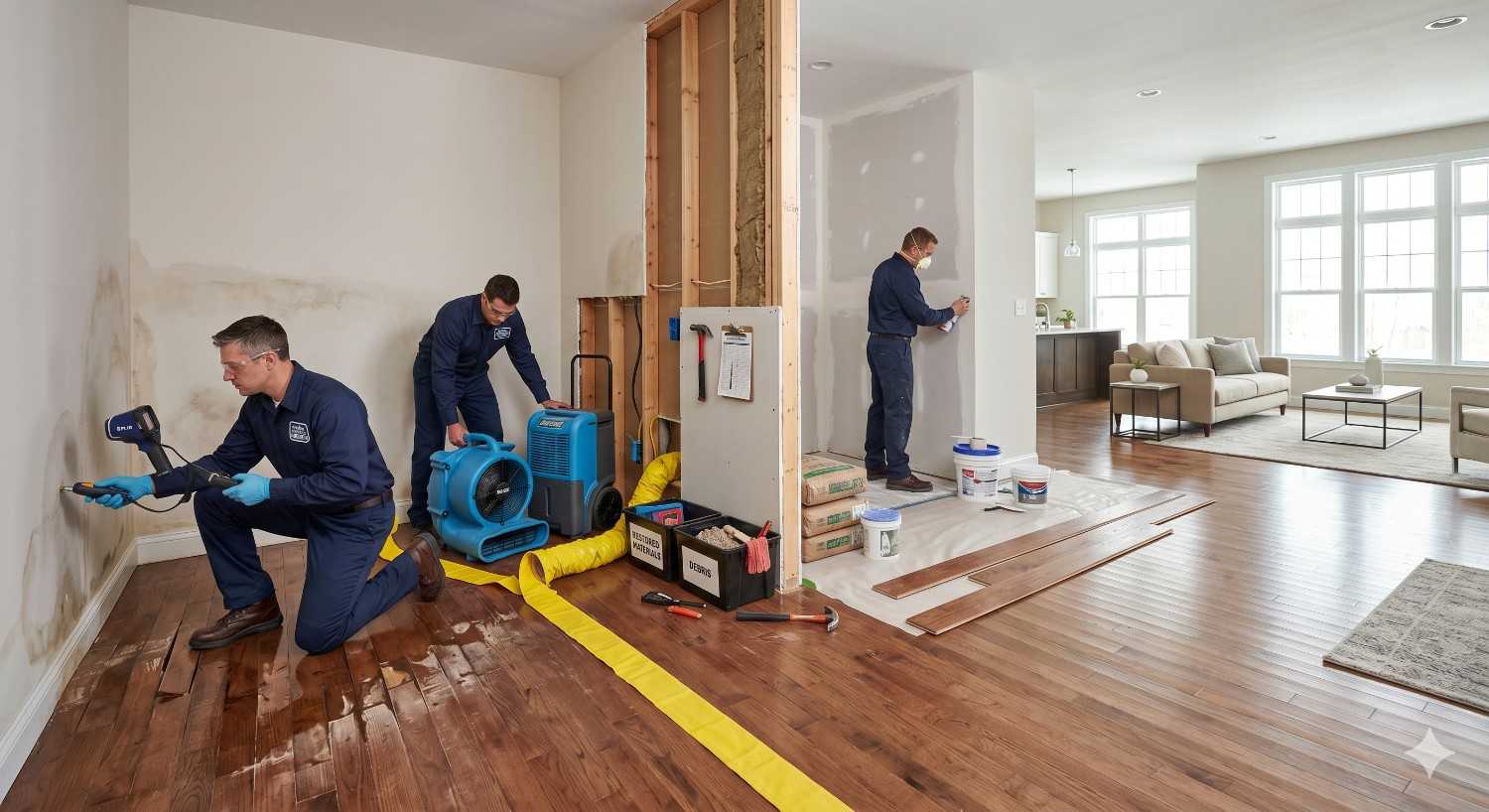
A standard residential water damage repair follows five stages: inspection, water extraction, drying and dehumidification, cleaning and sanitizing, and reconstruction. Each stage has measurable benchmarks, and skipping one compromises the rest.
Drying, Repair, and Restoration Steps
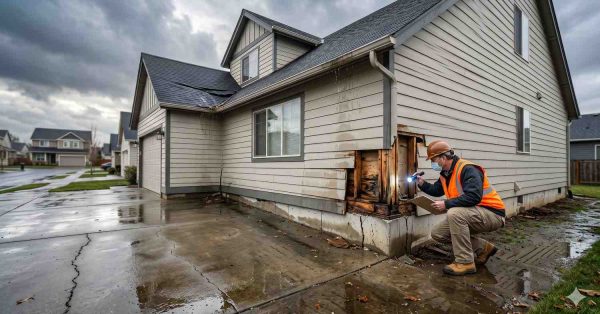
Inspection identifies water category and moisture spread using meters and infrared cameras. Extraction removes standing water with truck-mounted or portable pumps. Drying uses industrial air movers and dehumidifiers, typically running three to five days while moisture levels are tracked daily. Cleaning includes antimicrobial treatments, especially when mold remediation after water exposure is needed alongside drying.
Reconstruction is the final stage, where damaged drywall, flooring, baseboards, and paint are repaired or replaced to return the home to pre-loss condition.
Cost, Timeline, and Insurance Considerations
Most residential water damage repairs in the USA range from $1,300 to $5,600, with severe cases involving structural or mold work climbing higher. Timelines run from three days for minor leaks to several weeks for full reconstruction. Homeowners insurance typically covers sudden, accidental damage such as a burst pipe, but not gradual leaks or unmaintained plumbing. Documenting damage with photos, retaining receipts, and filing claims promptly improves coverage outcomes. Preventing recurrence often comes down to hidden plumbing leak repair and routine inspections of supply lines, water heaters, and appliance hoses.
Conclusion
Water damage in a house is fixable when homeowners act quickly, identify the source, and follow a structured drying and reconstruction process led by qualified professionals.
For homeowners, landlords, and property managers, fast response protects both property value and indoor health, turning a stressful event into a manageable repair project.
We at Mr. Local Services connect you with trusted water damage experts ready to assess, dry, and restore your home with transparent pricing and dependable workmanship.
Frequently Asked Questions
How long does it take to fix water damage in a house?
Minor water damage takes three to five days, while major repairs involving structural work or mold can take two to four weeks to fully complete.
Can water damage be fixed without replacing drywall?
Yes, if drywall is dried within 48 hours and shows no swelling, staining, or mold. Saturated or warped drywall must be cut out and replaced.
Will homeowners insurance cover water damage repair?
Insurance typically covers sudden, accidental water damage like burst pipes. It usually excludes gradual leaks, flooding, or damage caused by deferred maintenance.
Can a house be saved after severe water damage?
Most houses can be saved if the source is stopped, professional drying begins within 48 hours, and structural components are properly inspected and replaced.
Is water damage repair worth it for older homes?
Yes, water damage repair preserves structural integrity and prevents mold. For older homes, prompt restoration protects both property value and long-term livability.