Yes, tiny homes can have both air conditioning and heat. They use compact, purpose-built climate control systems designed to work within limited square footage, reduced power capacity, and unique structural constraints. The right system depends on the home’s size, location, power source, and whether it sits on a permanent foundation or moves on wheels. Tiny home owners have more climate control options today than ever before, and most can achieve year-round comfort with the right setup.
Yes, Tiny Homes Can Have Both AC and Heat
Tiny homes are fully capable of maintaining comfortable indoor temperatures in both summer and winter. Because they typically range from 100 to 400 square feet, they require far less heating and cooling capacity than a conventional home. That smaller load actually works in the owner’s favor — compact, efficient systems can handle the job without the cost or complexity of full-scale HVAC equipment. The key is matching the right system type to the home’s specific layout, insulation quality, and available power supply.
Common Heating Systems Used in Tiny Homes
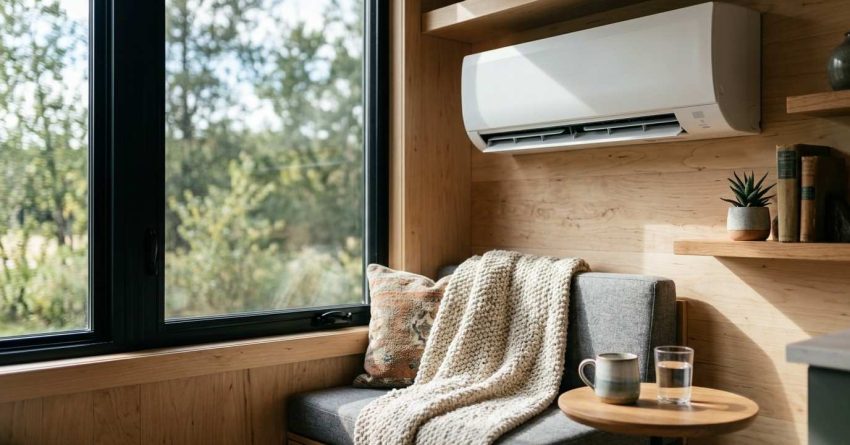
Several heating options work reliably in tiny homes. Mini-split heat pumps are among the most popular because they provide both heating and cooling in a single unit. Propane or electric wall heaters offer a simpler, lower-cost alternative for mild climates. Wood-burning or pellet stoves suit off-grid builds where fuel access is consistent. Radiant floor heating works well in foundation-based tiny homes with proper subfloor installation. Each option carries different installation requirements, fuel costs, and efficiency ratings that owners should evaluate before committing.
Common Cooling Systems Used in Tiny Homes
Mini-split systems again lead the cooling category, offering quiet, efficient performance without requiring ductwork. Portable air conditioners work as a budget-friendly option but consume more energy and require window venting. Window AC units fit smaller openings and cool effectively in moderate climates. For tiny homes on wheels, roof-mounted RV-style AC units are a common choice because they preserve interior wall space and connect directly to shore power or a generator. Ventilation fans and strategic window placement also reduce cooling demand significantly in mild regions.
Choosing the right system involves more than picking a unit that fits the space. Professional HVAC installation and service ensures the system is correctly sized, safely connected, and optimized for the home’s specific energy setup — which matters even more in a compact structure where an undersized or oversized unit creates immediate comfort and efficiency problems.
How Tiny Home HVAC Differs from Standard Home Systems
Standard residential HVAC systems are designed for homes with central ductwork, consistent power supply, and fixed foundations. Tiny homes rarely share those conditions. Most lack the wall depth and ceiling height needed for traditional ducted systems. Many run on limited electrical service — sometimes as low as 30 or 50 amps — which restricts which systems can operate simultaneously. Tiny homes on wheels face additional challenges: vibration, shifting, and the need for systems that can handle movement without damage.
Size, Power Source, and Installation Constraints
A ductless mini-split is the most versatile solution across these constraints because it requires only a small wall penetration and operates efficiently on standard electrical service. Propane systems work well where electrical capacity is limited but require proper ventilation to prevent carbon monoxide buildup. Off-grid tiny homes powered by solar panels need systems with low startup draw and high energy efficiency ratings. Every installation decision in a tiny home has a cascading effect — the wrong choice strains the electrical system, reduces efficiency, and shortens equipment lifespan.
What to Consider When Choosing Climate Control for a Tiny Home
Climate zone is the first factor. A tiny home in Minnesota needs robust heating capacity. One in Arizona prioritizes cooling. Homes in moderate climates benefit most from a single mini-split that handles both. Insulation quality directly affects how hard any system works — a well-insulated tiny home retains heat and cool air far more effectively, reducing system runtime and energy costs. Power availability determines which systems are even viable. Foundation-based tiny homes have more flexibility than mobile units, which must account for transport stress on equipment.
The overall tiny home construction and setup — including wall thickness, window placement, and vapor barriers — shapes every climate control decision that follows. Owners who plan HVAC alongside the build rather than after it consistently achieve better comfort outcomes and lower operating costs.
Conclusion
Tiny homes support a full range of heating and cooling options, from mini-splits to propane heaters to RV-style roof units. The right system depends on climate, power supply, and how the home is built and used.
Homeowners and property managers planning a tiny home setup benefit from evaluating climate control early — before construction or purchase decisions are finalized. The right system, properly installed, delivers reliable year-round comfort without oversized costs.
At Mr. Local Services, we connect you with skilled HVAC professionals who understand compact home systems. Contact us today to find the right climate solution for your tiny home.
Frequently Asked Questions
Can a mini-split heat and cool a tiny home?
Yes. A single mini-split unit handles both heating and cooling in most tiny homes. It requires no ductwork, operates quietly, and delivers strong energy efficiency in compact spaces.
Do tiny homes on wheels have heating and AC?
Yes. Tiny homes on wheels commonly use roof-mounted RV AC units, mini-splits, or propane heaters. Systems must be secured to handle road vibration and connect to available power sources.
What is the most energy-efficient heating for a tiny home?
Mini-split heat pumps rank among the most efficient options. They transfer heat rather than generate it, delivering more warmth per unit of electricity than resistance-based electric heaters.
How much does it cost to heat and cool a tiny home?
Monthly energy costs vary widely based on climate, insulation, and system type. Well-insulated tiny homes with efficient mini-splits often see monthly utility costs between $30 and $80 in moderate climates.
Do tiny homes need a separate HVAC system?
Not always. Many tiny homes use a single mini-split that handles both heating and cooling. Larger or off-grid builds may combine systems — such as a wood stove for heat and a portable AC for cooling.