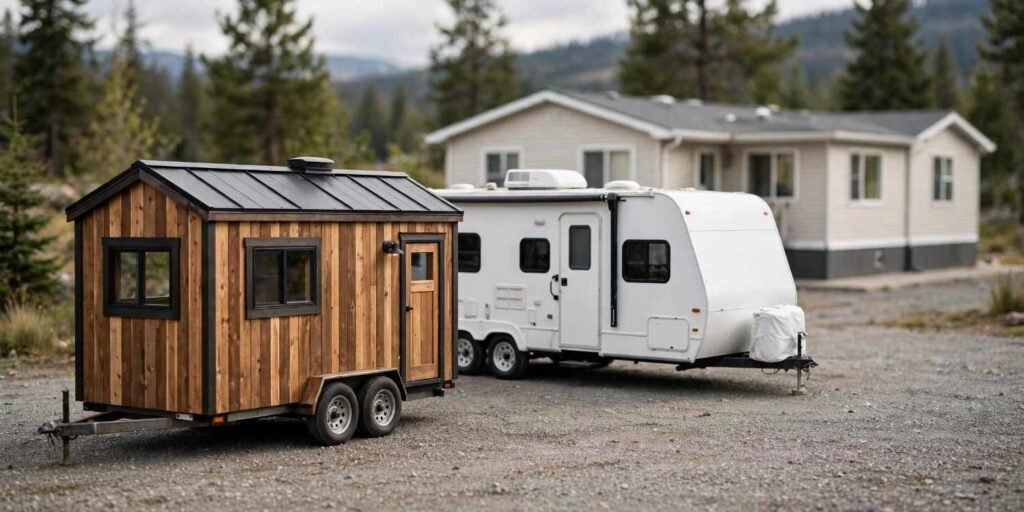
A tiny house on wheels costs more upfront than most RVs but holds its value better over time, while a mobile home offers the most square footage per dollar of the three. I break all three down here so you’re not guessing which one actually fits your life.
Picking between these three isn’t just about price. Zoning rules, financing options, and how often you plan to move all change which option makes sense for you. Getting this wrong means costly surprises later, and I’ve seen it happen often.
I walk through what separates these three structures, then compare cost, mobility, livability, and legal placement side by side. By the end you’ll know which option lines up with your budget and the way you actually want to live.
What Sets Tiny Houses, RVs, and Mobile Homes Apart
These three housing types get lumped together constantly, but they’re built differently, classified differently, and regulated differently. Getting the definitions straight up front makes every other comparison in this guide easier to follow.
Defining Each Structure Type
A tiny house on wheels is a small dwelling built on a trailer chassis, typically under 400 square feet, constructed using residential building techniques rather than automotive standards. An RV is a motorized or towable vehicle manufactured for temporary living and travel, built to RVIA safety and construction standards rather than residential building codes. A mobile home, more accurately called a manufactured home today, is a factory-built dwelling constructed to the HUD Code and transported to a permanent site on a steel chassis.
The construction standard is the real dividing line. Tiny houses follow residential or RVIA park model codes depending on how they’re built. RVs follow vehicle safety codes. Manufactured homes follow a federal HUD standard that governs everything from wind resistance to fire safety.
Legal Classification Differences
This classification difference isn’t just paperwork. It determines where you can legally park or place each structure, how it gets financed, and how it’s taxed. A tiny house on wheels often falls into a legal gray area, since many jurisdictions haven’t updated zoning codes to address them specifically.
RVs are classified as vehicles in most states, meaning they’re registered and taxed like one. Manufactured homes are classified as real property once installed on a foundation with utilities connected, which changes their financing and insurance options entirely.
Cost Comparison – Upfront Price, Financing, and Ongoing Expenses

Money is usually what decides this comparison, so I’m putting real numbers against each option.
Purchase Price Ranges
| Structure Type | Typical Price Range | Price Per Square Foot |
| Tiny House on Wheels | 60,000–150,000 | 150–400 |
| RV (Travel Trailer/Motorhome) | 20,000–300,000+ | Varies widely by class |
| Manufactured/Mobile Home | 50,000–150,000 | 50–100 |
Manufactured homes deliver the most livable space per dollar by a wide margin. Tiny houses cost more per square foot because of the custom, residential-grade construction packed into a small footprint.
Financing and Insurance Differences
Financing looks completely different across all three. RVs typically qualify for RV loans similar to auto loans, with terms up to 20 years. Manufactured homes on owned land often qualify for traditional or FHA-backed mortgages, while those on rented land usually need chattel loans instead.
Tiny houses on wheels are the hardest to finance. Most traditional mortgage lenders won’t touch them since they’re titled as vehicles, so buyers often rely on personal loans or RV-style loans at higher interest rates.
Ongoing Maintenance and Utility Costs
Utility hookups, propane, water tank refills, and seasonal maintenance all factor into the real cost of ownership. I always tell people to budget for this the way they’d budget for a car’s maintenance schedule, not a house’s.
Manufactured homes connected to municipal utilities tend to have the most predictable monthly costs. RVs and mobile tiny houses depend heavily on where they’re parked and whether full hookups are available.
Mobility and Site Flexibility Compared
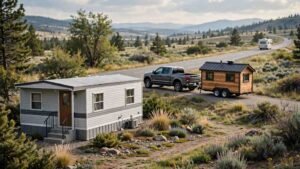
Mobility is the single biggest differentiator between these three, and it shapes almost every other decision that follows.
Towing and Drivability
RVs win this category outright. Motorhomes drive themselves, and travel trailers tow with a properly rated vehicle. A tiny house on wheels can be towed too, but its weight often requires a heavy-duty truck and, in many states, a special towing permit.
Manufactured homes aren’t mobile in any practical sense once installed. Moving one requires a specialized transport company and can cost thousands of dollars, even for a short distance.
Permanent vs Temporary Placement
RVs are built for constant movement and temporary stays. Manufactured homes are built for permanent placement on a foundation or pad. A tiny house on wheels sits in between, technically mobile but usually parked in one spot for years at a time.
Livability, Size, and Long-Term Comfort
Day-to-day comfort depends heavily on square footage, layout efficiency, and how well the structure holds up to weather over time.
Square Footage and Layout
Manufactured homes typically run 600 to 2,300 square feet, giving room for full-size bedrooms, closets, and separate living spaces. Tiny houses on wheels max out around 400 square feet, forcing loft bedrooms and multi-purpose furniture. RVs range enormously, from a compact 100-square-foot teardrop trailer to a 400-square-foot luxury motorhome.
Durability and Climate Resilience
Manufactured homes built to current HUD wind zone standards hold up well in most climates, including hurricane-prone regions when properly anchored. Tiny houses built on residential standards often match stick-built home durability. RVs are the least climate-resilient of the three, since their thinner walls and single-pane windows struggle in extreme heat or cold.
Zoning, Permits, and Legal Placement Rules
Where you’re legally allowed to put each of these structures varies enormously by city and county, and this is where a lot of buyers get tripped up.
Where Each Option Is Allowed
Manufactured homes are the most straightforward. Most residential zones allow them on land zoned for manufactured housing, and many suburban lots qualify outright. RVs are typically restricted to designated RV parks or campgrounds for long-term stays, with most cities capping how many consecutive days you can park one on private property.
Tiny houses on wheels face the most inconsistent rules nationwide. Some counties classify them as RVs and restrict placement the same way. Others require them to meet accessory dwelling unit standards, which opens up backyard placement on an existing residential lot.
Permit and Utility Hookup Requirements
Connecting any of these three to water, sewer, and electric requires permits in nearly every jurisdiction. Manufactured homes typically go through a standard building permit process tied to their HUD certification. Tiny houses and RVs usually need a separate utility connection permit, and rules differ sharply between counties, so I always recommend checking with the local building department before buying.
Which Option Fits Your Lifestyle and Budget

None of these three options is objectively better. Each one fits a different lifestyle, budget, and long-term plan.
Best Fit by Use Case
Someone planning to move every few months fits an RV best. Someone who wants a permanent, larger home at the lowest cost per square foot fits a manufactured home. Someone who values custom design, a small footprint, and occasional relocation fits a tiny house on wheels.
Whichever direction you go, the property still needs ongoing upkeep once it’s placed. Regular maintenance and repair services keep any of these structures functional and protect the investment you’ve made, no matter which one you choose.
Conclusion
Tiny houses, RVs, and mobile homes solve different problems even though they get compared constantly. Cost, mobility, and local zoning rules ultimately decide which one actually works for your situation.
Understanding the legal and financial differences upfront saves real money and frustration down the road. Each option carries its own maintenance demands once it’s in place.
We at Mr. Local Services help homeowners keep any property type running smoothly. Reach out when your tiny home, manufactured home, or RV needs professional upkeep.
Frequently Asked Questions
Is a tiny house on wheels considered an RV?
A tiny house on wheels is only considered an RV if it’s certified to RVIA park model standards. Many are built to residential codes instead, which changes how they’re classified and financed.
Can you get a mortgage for a tiny house on wheels?
Traditional mortgages rarely apply to tiny houses on wheels since they’re titled as vehicles. Buyers typically use personal loans or RV-style financing instead.
Are manufactured homes cheaper than tiny houses?
Manufactured homes cost less per square foot than tiny houses on wheels. A manufactured home delivers more livable space for the same budget in most cases.
Do RVs hold their value like tiny houses?
RVs depreciate faster than tiny houses on wheels, similar to how a car loses value. A well-built tiny house holds value closer to a traditional home.
Can I legally park a tiny house on wheels in my backyard?
Legality depends on local zoning and accessory dwelling unit rules. Some counties allow it outright, while others restrict it the same way they restrict RV parking.
What’s the biggest downside of a mobile home?
The biggest downside is depreciation on the structure itself when it’s not attached to owned land. Land ownership significantly changes a manufactured home’s long-term value.
Which option is best for full-time living?
A manufactured home suits full-time living best due to its larger size and standard utility hookups. Tiny houses work well too for those comfortable with a smaller footprint.