A luxury custom home is a residence built to the owner’s exact specifications using premium materials, advanced technology, and architect-led design rather than a standard builder plan. I have walked through dozens of these builds, and the difference always comes down to intention. Nothing in a true luxury home happens by accident.
Property owners chase this level of customization because production homes cap out fast on layout, finishes, and long-term flexibility. A custom build removes that ceiling entirely. It also protects resale value in ways a cookie-cutter floor plan simply cannot.
I cover the architectural styles that define high-end homes, the interior and kitchen features that separate luxury from average, smart home and outdoor living upgrades, premium materials and sustainable choices, and how to plan and budget the whole project realistically.
What Defines a Luxury Custom Home Today
Luxury custom home construction is a building process centered on architect-designed plans, high-end materials, and owner-directed customization at every stage. That definition has shifted over the past decade. Ten years ago, luxury mostly meant square footage and marble countertops.
Now it means something closer to intelligent design. I see clients prioritize how a home functions day to day over how big it photographs. Smart wiring, air quality, and flexible room use often outweigh a bigger great room.
The market backs this up. The National Association of Home Builders has tracked rising buyer demand for wellness-focused and tech-integrated features in upper-tier new construction through 2025, a shift away from purely decorative luxury.
Scale still matters, but it is one input among several now. A 3,000-square-foot home with flawless mechanical systems, custom millwork, and a well-planned floor plan often reads as more luxurious than a larger house with generic finishes.
Architectural Styles That Define High-End Homes
Modern luxury architecture leans heavily on clean lines, large glass expanses, and a strong connection between indoor and outdoor space. Transitional style sits right behind it, blending traditional bones with contemporary detailing. I find transitional design ages the best of the group because it does not lock an owner into one decade’s aesthetic.
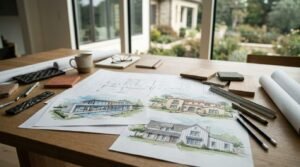
Mediterranean and Spanish Revival styles keep a strong foothold in warmer climates. Stucco exteriors, clay tile roofing, and wrought iron detailing give these homes a timeless quality that modern glass boxes sometimes lack.
Farmhouse and modern farmhouse designs moved upmarket significantly. Board-and-batten siding, oversized windows, and metal roof accents now show up on seven-figure builds regularly, not just mid-range new construction.
Craftsman and Prairie-style influences still matter in regions with strong architectural heritage. Exposed structural beams and deep roof overlines connect these homes to a design lineage buyers actively seek out.
Signature Interior Design Features in Luxury Homes
Interior architecture in luxury homes centers on volume, sightlines, and custom millwork rather than square footage alone. Coffered ceilings, oversized crown molding, and hand-built cabinetry show up constantly because they cannot be replicated with stock materials. That craftsmanship gap is exactly what buyers are paying for.
Open-concept layouts remain popular, but I see more owners requesting defined zones within open spaces now. A great room might flow openly while still using ceiling height changes or partial walls to signal distinct areas.
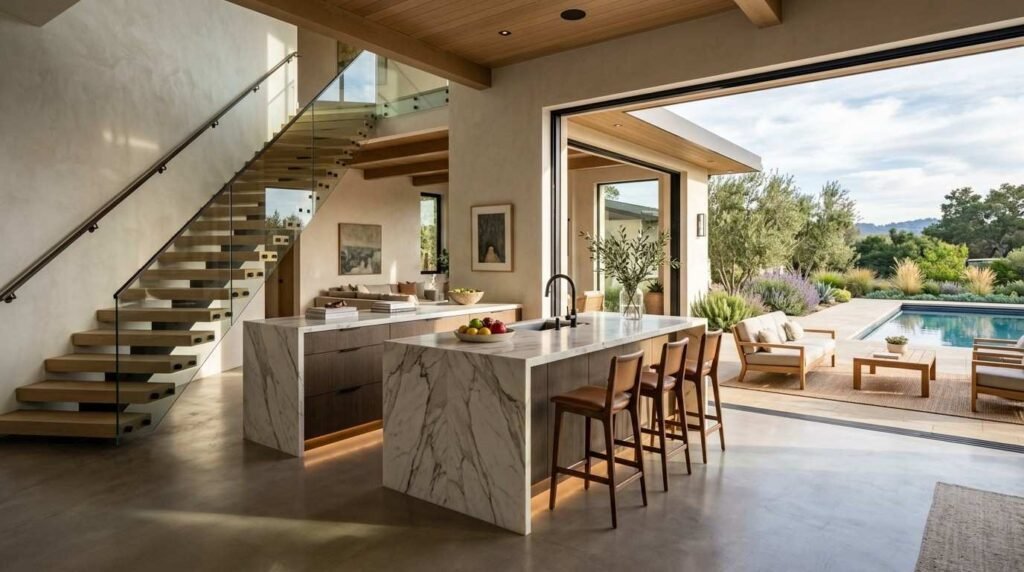
Statement staircases function as sculptural centerpieces in many high-end homes. Floating treads, glass railings, and curved designs turn a purely functional element into a visual anchor for the entire entry.
Natural light drives most interior planning decisions at this level. Floor-to-ceiling windows, skylights, and strategically placed clerestory windows reduce dependence on artificial lighting throughout the day.
Kitchen Features That Elevate a Luxury Custom Home
A luxury kitchen typically includes a dedicated prep kitchen or scullery, professional-grade appliances, and custom cabinetry built to the homeowner’s exact storage needs. The scullery trend specifically solves a real problem. It keeps the show kitchen photo-ready while all the actual mess happens out of sight.
Waterfall-edge islands in natural stone remain a defining visual feature. Quartzite and exotic granite dominate this application because they hold up to daily use without the maintenance demands of marble.
Appliance integration has become nearly invisible in top-tier kitchens. Paneled refrigeration, hidden ventilation systems, and flush-mounted induction cooktops let the cabinetry design lead rather than the equipment.
Butler’s pantries and beverage centers round out most high-end kitchen plans now. These secondary spaces handle overflow storage and entertaining needs without cluttering the primary cooking area.
Primary Suite and Spa-Inspired Bathroom Features
The modern primary suite functions as a private retreat, typically including a sitting area, dual walk-in closets, and a spa-caliber bathroom. Freestanding soaking tubs paired with oversized walk-in showers have become close to standard at this price point. Wet rooms, which combine both fixtures in one waterproofed space, are gaining ground fast.
Heated flooring and towel warmers show up in nearly every high-end bathroom I have seen designed in the last few years. These additions cost relatively little during construction but deliver a daily comfort difference that owners notice immediately.
Closet systems have grown into full rooms with custom millwork, islands, and dedicated lighting. Some primary suites now dedicate more square footage to closet space than an entire guest bedroom.
Steam showers and built-in sound systems round out the wellness-focused primary bath. These features connect directly to the broader health and recovery trend shaping luxury design decisions across the board.
Smart Home Technology and Automation Integration
Smart home integration in luxury builds means centralized control over lighting, climate, security, and entertainment through a single connected system. Homeowners increasingly expect this as a baseline feature rather than an upgrade. Voice control and app-based management now extend to irrigation, pool equipment, and even window shades.
Whole-home audio and automated lighting scenes remain the most requested additions during the design phase. Owners like the ability to shift a home’s entire ambiance with one command, whether that’s a movie-night setting or a dinner-party scene.
Security integration has grown more sophisticated too. Facial recognition entry, integrated camera systems, and remote monitoring give owners direct oversight of the property from anywhere.
Energy monitoring dashboards let homeowners track usage in real time. This pairs naturally with the sustainable features covered later in this guide, since automation and efficiency now go hand in hand in most builds.
Outdoor Living and Resort-Style Amenities
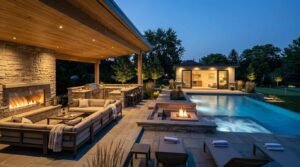
Outdoor living space in luxury homes now functions as a full second living area, often including a kitchen, fireplace, and covered lounge space. Infinity-edge pools and integrated spas remain the most requested standalone amenities. I see these designed with the same architectural intention as the interior, not treated as an afterthought.
Pool houses have evolved into fully functional guest suites in many high-end builds. Bathrooms, kitchenettes, and climate control turn these structures into genuine secondary living spaces rather than simple changing rooms.
Fire features, from linear gas fireplaces to fire pits integrated into seating walls, extend outdoor usability into cooler months. This directly addresses a common complaint about outdoor spaces sitting unused half the year.
Sport courts, putting greens, and dedicated entertaining lawns round out larger properties. These additions require careful site planning early in the design process to avoid conflicts with drainage and utility placement.
Premium Materials and Custom Finishes
Premium materials in luxury construction include natural stone, exotic hardwoods, and custom metalwork chosen for durability as much as appearance. Quartzite, marble, and granite dominate countertop and flooring applications where owners want a natural material’s visual depth. Each stone type carries different maintenance demands, which matters more than most buyers realize upfront.
Reclaimed and exotic wood species show up frequently in flooring, beams, and custom millwork. White oak remains the most requested flooring species right now due to its versatility across design styles.
Custom ironwork and metal detailing appear in railings, light fixtures, and door hardware. These pieces are typically fabricated specifically for one project, which adds cost but also adds a level of distinction that manufactured hardware cannot match.
Finish selection ultimately drives a large share of the total project budget. I always tell clients to lock in these decisions early, since changes mid-construction cause the most expensive delays on any custom build.
Energy Efficiency and Sustainable Luxury Features
Sustainable luxury construction combines high-performance building envelopes with renewable energy systems to reduce a home’s long-term operating costs. Solar integration, geothermal heating and cooling, and high-efficiency HVAC systems have moved from niche requests to standard specification items on most upper-tier builds. The U.S. Department of Energy reported that homes built to current high-performance standards use up to 40% less energy than homes built a decade earlier.
Triple-pane windows and advanced insulation packages reduce both energy loss and outdoor noise transfer. These upgrades pay for themselves gradually but also improve daily comfort in ways owners notice immediately.
Water conservation matters just as much as energy use in current luxury design. Greywater recycling systems and smart irrigation controls reduce landscape water consumption significantly without sacrificing curb appeal.
Certification programs give owners a way to document these choices formally. LEED and other green building certifications add resale value while confirming the home meets recognized efficiency benchmarks.
Planning and Budgeting for a Luxury Custom Build
Budgeting for a luxury custom home requires accounting for architectural fees, premium material costs, and contingency funds beyond the base construction estimate. Land acquisition and site preparation often get underestimated early in the process. Steep lots, poor soil conditions, or utility extensions can add substantial cost before the actual home construction even begins.

Design fees for architect-led custom homes typically run higher than production builders charge, but that investment controls costs elsewhere. A well-detailed set of plans prevents the expensive change orders that inflate budgets on poorly planned projects.
Timeline expectations matter as much as budget. Custom luxury builds commonly take twelve to twenty-four months from design approval to final walkthrough, depending on scope and material lead times.
Working with an experienced general contractor protects the schedule and the budget simultaneously. I always recommend owners vet contractors specifically on luxury project experience, since the coordination demands differ significantly from standard residential construction.
Conclusion
Luxury custom homes succeed when architecture, materials, and technology work together with clear intention rather than isolated upgrades. Every feature covered here, from spa-inspired bathrooms to sustainable systems, adds real long-term value when planned correctly.
The right team makes the difference between a smooth build and a stressful one. Budget, timeline, and design decisions all hinge on experienced guidance from day one.
We at Mr. Local Services connect homeowners with skilled professionals across every service category a luxury build demands. Reach out to us and let’s start planning your project the right way.
Frequently Asked Questions
What makes a home qualify as a luxury custom home?
A luxury custom home is built to an owner’s exact specifications using premium materials, architect-led design, and advanced systems throughout. Square footage alone does not define it. Craftsmanship, material quality, and thoughtful planning are what set it apart.
How long does a luxury custom home build typically take?
Most luxury custom builds take twelve to twenty-four months from design approval to completion. The timeline depends heavily on project scope, site conditions, and material lead times. Complex custom finishes often add the most delay.
What is the most expensive part of building a luxury custom home?
Premium materials and custom millwork typically consume the largest share of a luxury build’s budget. Kitchen and bathroom finishes alone can represent a significant percentage of total costs. Site conditions and land preparation also add substantial expense.
Do luxury custom homes need smart home technology?
Smart home technology has become close to standard in luxury construction rather than an optional upgrade. Centralized control over lighting, climate, and security is what most buyers now expect at this price point. Automation also supports the energy efficiency goals covered earlier in this guide.
Are sustainable features worth including in a luxury home?
Sustainable features reduce long-term operating costs while adding measurable resale value to a luxury property. Solar integration and high-performance building envelopes are increasingly standard specification items. Certification programs help document these choices for future buyers.
What architectural style is most popular for luxury homes right now?
Modern and transitional styles currently dominate luxury custom home design across most markets. Transitional design tends to age better since it blends traditional structure with contemporary detailing. Regional preferences still influence style significantly, though.
How much does land affect a luxury custom home budget?
Land conditions can add substantial cost before construction on the home itself even begins. Steep lots, poor soil, and utility extensions are common budget surprises. I always recommend a full site evaluation before finalizing any luxury build budget.
Why should I work with a contractor experienced in luxury builds specifically?
Luxury builds require coordination across specialized trades, premium material sourcing, and tighter tolerances than standard construction. An experienced contractor protects both the budget and the timeline throughout the process. That experience gap shows up quickly once a project is underway.