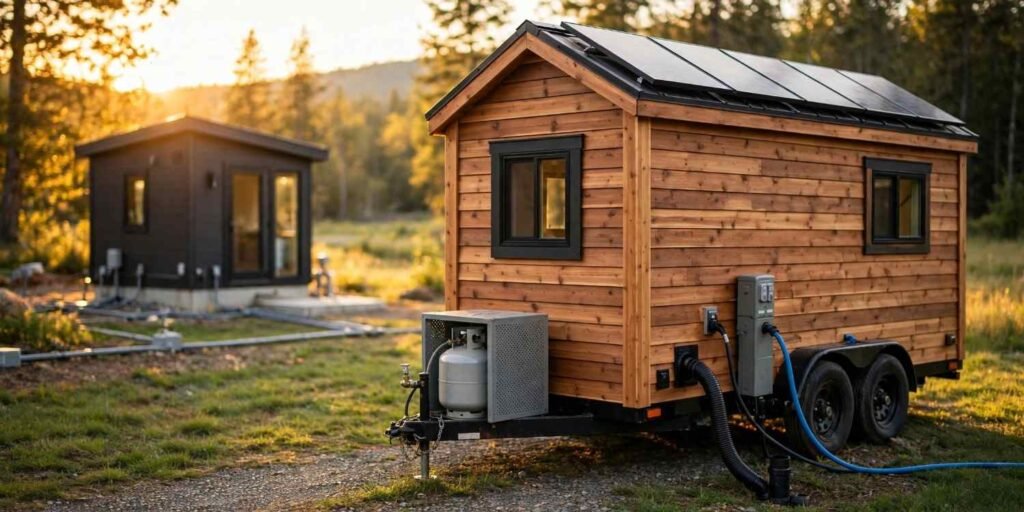
Getting utilities hooked up correctly determines whether a tiny home actually functions day to day. A tiny home needs four core utility connections to operate safely: electrical power, fresh water, wastewater removal, and often gas or propane, and how you get those four depends entirely on where the home sits.
Choosing wrong here costs real money later. A homeowner who wires for RV park amperage and then moves to a rural lot without grid access ends up replacing an entire electrical setup within a year.
I walk through hookup fundamentals, RV park and full hookup options, off-grid systems for power, water, and waste, permanent foundation connections and cost comparisons, and the permits and decisions that tie it all together.
What “Utility Hookups” Actually Mean for a Tiny Home
Utility hookup refers to the physical connections a home uses to receive power, water, and remove waste. Every tiny home needs some version of these connections regardless of whether it sits on wheels or a foundation.
The setup differs based on location, mobility, and local infrastructure access. A tiny home parked in an RV park pulls from shared utility lines. A tiny home on a rural five-acre lot generates and stores its own resources.
Water, Power, Sewer, and Gas – The Four Core Systems
A utility hookup system is a combination of connections that supplies water, electricity, and waste removal to a dwelling. Water arrives either through a direct line connection or an onboard tank. Power comes from grid electricity, solar, or a generator.
Sewer connections either tie into a municipal line, a septic tank, or a holding tank that requires periodic pumping. Gas, when used, typically runs on propane tanks refilled on a schedule rather than piped natural gas, since most tiny homes sit outside gas utility service areas.
Each system operates independently of the others. A home can have full electrical hookup and still rely on a holding tank for wastewater, which is common in RV parks that lack sewer connections at every site.
Permanent vs. Portable Hookup Setups
Portable hookups use hoses, cords, and connectors designed for regular disconnect and reconnect, built for tiny homes on wheels that relocate. Permanent hookups use hard plumbing and electrical conduit tied directly into a foundation, matching a stationary tiny home built on a fixed lot.
I always tell clients to decide on mobility first. That single decision drives every hookup choice that follows, because retrofitting a permanent setup for portability, or the reverse, means redoing most of the work.
RV Park Hookups for Tiny Homes on Wheels

RV parks offer the fastest path to full utility access for a tiny home on wheels. Most sites provide electrical, water, and sewer connections built directly into the parking pad, eliminating the need to install your own systems.
This option works best for tiny homes actively traveling or for owners not ready to commit to a fixed location. It also gives newer tiny home owners a low-risk way to live full-time while learning what their actual utility needs look like.
30-Amp vs. 50-Amp Electrical Service
A 30-amp service supplies roughly 3,600 watts, while a 50-amp service supplies up to 12,000 watts split across two 120-volt lines. Tiny homes running a single AC unit, basic appliances, and lighting usually operate fine on 30-amp.
Homes running multiple AC units, electric water heaters, and full kitchen appliances simultaneously need the higher capacity of 50-amp service. I recommend checking your total appliance wattage against the park’s available amperage before booking a site long-term.
Fresh Water, Black Tank, and Gray Tank Connections
Fresh water connects through a drinking-water-safe hose directly to the site spigot. The black tank holds toilet waste and the gray tank holds sink and shower water; both require periodic dumping unless the site has a full sewer connection.
Sites without direct sewer hookups require a black tank flush and manual dumping at a designated station. Full hookup sites eliminate this step entirely by connecting waste lines straight into the park’s sewer system.
Monthly and Long-Term RV Park Rates
RV park rates for tiny homes typically run $400 to $900 per month depending on region and amenities, with rural parks priced lower than parks near major metro areas. Long-term leases often reduce the nightly-equivalent rate significantly compared to short-term stays.
Some parks also charge separately for electric usage above a baseline threshold. I always ask upfront whether power is metered or included flat, since that detail changes the real monthly cost substantially.
Full Hookup Sites – What’s Included and What’s Not
A full hookup site provides electric, water, and sewer connections at the parking pad, meaning no tank dumping or water hauling is required. This is the highest-convenience option for tiny homes that stay parked long-term in one location.
Not every site labeled “full hookup” includes the same amenities, so confirming exactly what’s connected before signing a lease saves confusion later.
Electric, Water, and Sewer in One Site
The core definition of full hookup means all three primary utilities connect directly at the site without manual intervention. Water flows continuously through a hose connection, sewer drains automatically through a direct line, and electricity runs through a standard pedestal outlet.
This setup removes the daily maintenance tasks that come with partial hookup or off-grid living. And for many owners, that convenience alone justifies the higher monthly cost.
Cable, Wi-Fi, and Added Amenities
Some full hookup sites bundle cable television and Wi-Fi into the monthly rate, though quality varies widely between parks. Others charge these as add-ons or leave the tenant to arrange their own internet through a cellular hotspot or satellite service.
I recommend testing cell signal strength at the actual site before assuming Wi-Fi quality, since rural parks often sit in weak coverage zones regardless of what the park advertises.
Off-Grid Power Systems for Tiny Homes
Off-grid power means generating and storing your own electricity without a connection to the utility grid. This setup gives a tiny home total location freedom but demands more upfront investment and ongoing system management than grid-tied options.
Solar remains the most common off-grid power source for tiny homes because of falling panel costs and improved battery technology over the last several years.
Solar Panel and Battery Bank Sizing
A typical tiny home solar setup runs 800 to 3,000 watts of panels paired with a battery bank sized between 10 and 20 kilowatt-hours, depending on appliance load and climate. Homes running electric heat or AC units need significantly larger systems than homes using propane for heating and cooking.
Solar system sizing starts with your daily watt-hour usage, then works backward to panel and battery capacity. I always run this calculation before recommending equipment, because undersized systems fail during cloudy stretches and oversized systems waste money.
Generators as Backup Power
A generator serves as backup power during extended cloudy periods or high-demand days when solar and battery capacity fall short. Propane and gasoline generators both work, though propane burns cleaner and stores longer without degrading.
Most off-grid tiny home owners size their generator to cover essential loads only, rather than the full home, which keeps fuel consumption and generator size manageable.
Off-Grid Water Solutions
Off-grid water means sourcing and storing water without a municipal connection. Options range from simple tank delivery to drilled wells, and the right choice depends heavily on the property’s location and local water table.
Water planning matters more than most new off-grid owners expect, since running dry mid-week without a backup plan creates a genuine emergency.
Water Storage Tanks and Delivery Services
Storage tanks for off-grid tiny homes typically range from 250 to 1,500 gallons, refilled through scheduled delivery from a water hauling service. A family of two using average water habits burns through roughly 50 to 75 gallons daily, which sets the refill schedule.
Larger tanks reduce delivery frequency but require more space and a stronger foundation to support the weight of a full tank. I generally recommend sizing for at least two weeks of buffer before a scheduled refill.
Well Drilling and Rainwater Catchment
A private well provides a continuous water source once drilled, though drilling costs and depth vary heavily by region and local geology. Rainwater catchment systems collect and filter roof runoff into a storage tank, working best in regions with consistent rainfall throughout the year.
Both options require permits in most jurisdictions, and well water typically needs periodic testing to confirm it stays safe for drinking.
Off-Grid Wastewater and Septic Options
Wastewater management off-grid comes down to two main paths: a traditional septic system or a composting toilet paired with a greywater system. The right choice depends on lot size, local codes, and how hands-on the owner wants to be with maintenance.
Composting Toilets vs. Traditional Septic
A composting toilet is a waterless fixture that breaks down human waste into compostable material using aerobic decomposition. It eliminates the need for a sewer line or septic tank entirely, making it popular for remote off-grid tiny homes.
Traditional septic systems require a tank and drain field, along with a permit and periodic pumping every three to five years. Septic costs more upfront but requires less daily owner involvement than a composting toilet, which needs regular emptying and material management.
Greywater Systems and Local Codes
A greywater system reuses sink, shower, and laundry water for irrigation instead of sending it to a septic tank or sewer line. Many states regulate greywater reuse specifically, with some requiring permits and others banning certain uses outright.
I always check local greywater codes before installing any system, since rules shift significantly between counties even within the same state.
Permanent Foundation Hookups (Full Utility Connection)
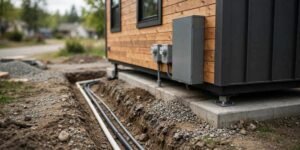
A permanent foundation hookup ties a stationary tiny home directly into municipal or well-based utilities the same way a traditional house connects. This option suits tiny homes built on owned land with no plans to relocate.
Connecting to Municipal Water and Sewer Lines
Connecting to municipal lines requires a permit, an inspection, and a licensed contractor to run the physical connection from the street line to the home. Costs vary based on distance from the existing line and local utility fees, often running several thousand dollars for the connection alone.
This route offers the most reliable long-term utility access with the least ongoing owner maintenance compared to tank-based or off-grid systems.
Standard Electrical Panel Installation
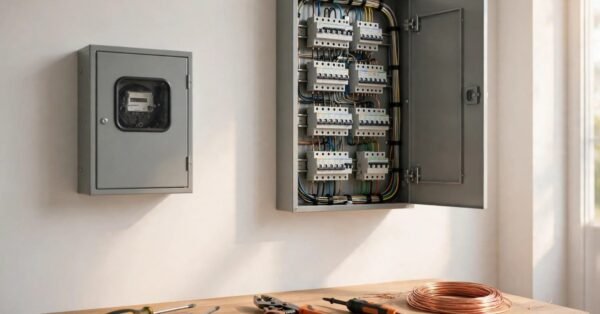
A standard electrical panel installation for a tiny home typically uses a 100-amp or 200-amp panel, matching the capacity of a small traditional home rather than an RV pedestal. This gives room for future appliance additions without needing a panel upgrade later.
I recommend sizing the panel slightly above current needs, since undersizing here means an expensive redo the moment you add a second AC unit or an electric range.
Cost Comparison – RV Park vs. Off-Grid vs. Full Hookup
Each hookup path carries a different cost structure, and comparing them side by side makes the tradeoffs clear before committing to one setup.
Upfront Installation Costs
RV park living requires almost no upfront installation cost beyond site fees, since the infrastructure already exists. Off-grid systems run $15,000 to $40,000 upfront for solar, battery, water, and septic combined, depending on system size and land conditions. Permanent foundation hookups typically cost $8,000 to $20,000 for municipal connections plus panel installation.
Ongoing Monthly Costs
RV parks run $400 to $900 monthly all-in. Off-grid setups carry minimal monthly cost beyond water delivery and occasional generator fuel, often under $150 monthly once installed. Permanent hookups add standard utility bills, generally $100 to $250 monthly depending on usage and region.
Statista reports the average tiny home costs between $30,000 and $60,000 to build, and utility hookup choice directly affects where that total lands, since off-grid systems shift cost from monthly bills into upfront equipment.
Permits, Codes, and Legal Requirements by Setup Type
Every hookup type carries its own permit requirements, and skipping this step creates real legal and safety risk regardless of setup.
Local Zoning and Utility Permit Basics
Zoning determines whether a tiny home can legally connect to utilities on a given parcel at all, separate from the utility connection permits themselves. Some counties classify tiny homes as RVs for zoning purposes, while others require full residential permitting depending on foundation type.
I always recommend confirming zoning classification before purchasing land or a park membership, since this single detail determines which hookup options are even legal in that location.
Working With Licensed Professionals
Electrical and plumbing connections generally require a licensed contractor to pull permits and pass inspection, regardless of hookup type. Off-grid solar and septic installations carry the same licensing requirement in most states, even though the home itself sits outside the grid.
Skipping licensed installation on gas or electrical connections creates a genuine fire and safety hazard, not just a paperwork problem.
Choosing the Right Hookup Setup for Your Tiny Home Lifestyle

The right hookup setup depends on how much you travel, how much upfront capital you have, and how much daily system maintenance you want to take on.
Questions to Ask Before You Decide
Start with mobility. A tiny home that moves every few months fits RV park hookups far better than a permanent foundation connection. Next, consider budget structure: off-grid trades a higher upfront cost for lower monthly bills, while RV parks reverse that tradeoff entirely.
Location availability matters just as much. Rural land with no utility access nearby makes off-grid the practical choice regardless of preference.
Signs You Need Professional Help
A property owner needs professional help the moment a project involves gas lines, electrical panel work, or septic system design, since mistakes in any of these carry safety and code consequences. Complex permitting processes across multiple utility types also signal it’s time to bring in an experienced contractor rather than handling coordination alone.
Conclusion
Tiny home utility hookups fall into three clear paths: RV park connections, off-grid systems, and permanent foundation hookups, each carrying distinct costs and maintenance demands.
Matching the right setup to your mobility needs, budget, and land access prevents costly redos and keeps your home functioning reliably year-round.
We help homeowners plan and install every piece of this puzzle correctly the first time. Reach out to Mr. Local Services to get your tiny home utility hookup done right.
Frequently Asked Questions
What is the cheapest utility hookup option for a tiny home?
RV park hookups cost the least upfront since the infrastructure already exists on-site. Off-grid systems cost more initially but reduce monthly expenses significantly over time.
Can a tiny home use both off-grid and full hookup systems?
Yes, many tiny homes use a hybrid setup, running solar for power while connecting to municipal water and sewer. This balances lower electric bills with the convenience of full water and sewer access.
How much does off-grid solar cost for a tiny home?
Off-grid solar systems for tiny homes typically cost $10,000 to $25,000, including panels, batteries, and installation. Costs scale with total energy usage and battery storage capacity needed.
Do tiny homes need a permit for utility hookups?
Most jurisdictions require permits for electrical, plumbing, and septic connections regardless of hookup type. Requirements vary significantly by county, so checking local codes before installation is essential.
What size generator does an off-grid tiny home need?
Most off-grid tiny homes use a 2,000 to 5,000-watt generator sized to cover essential backup loads rather than the entire home. Actual sizing depends on total appliance wattage and how often solar falls short.
Is a composting toilet legal for a permanent tiny home?
Composting toilets are legal in most states, but regulations vary by county, with some requiring specific permits or additional greywater system compliance. Checking local health department codes before installation avoids compliance issues.
How long does it take to connect a tiny home to municipal utilities?
Municipal utility connections typically take two to six weeks from permit application to final inspection, depending on distance from existing lines and local permitting speed. Rural areas with longer utility runs often take longer.
What’s the difference between 30-amp and 50-amp RV hookups?
A 30-amp hookup supplies about 3,600 watts while a 50-amp hookup supplies up to 12,000 watts across two separate lines. Homes running multiple high-draw appliances simultaneously need the 50-amp capacity.