HVAC for a tiny home on wheels is the combined heating, cooling, and ventilation system that keeps a mobile dwelling under roughly 400 square feet comfortable, dry, and safe. I treat it as one connected system, not three separate appliances bolted on.
Tiny homes lose and gain heat faster than any standard house. And the wrong system creates condensation, mold, and utility bills that erase the savings owners moved into a tiny home to capture.
In this guide I cover system basics, load sizing, heating and cooling options, mini splits, ventilation, power, codes, costs, maintenance, and how we choose the right installer.
What HVAC Means Inside a Tiny Home on Wheels
A tiny home on wheels sits somewhere between an RV and a permanent house, and its climate system reflects that split identity. I approach it as a sealed box on a trailer frame that reacts instantly to outdoor temperature.
The system has three jobs. It adds heat, removes heat and humidity, and exchanges stale indoor air for fresh outdoor air.
How Tiny Home HVAC Differs From Standard Residential Systems
Standard homes use ducted central systems sized around large air volumes and long runtimes. A tiny home has almost no room for ductwork and almost no thermal mass to buffer temperature swings.
That changes everything about equipment selection. We size for rapid response, low minimum output, and vibration tolerance during transport, which no residential heating and cooling system installation checklist covers by default.
The Core Components of a Mobile Climate System
Every tiny home climate system contains a heat source, a cooling source, an air distribution path, and a ventilation path. Some units combine two or three of those functions in one appliance.
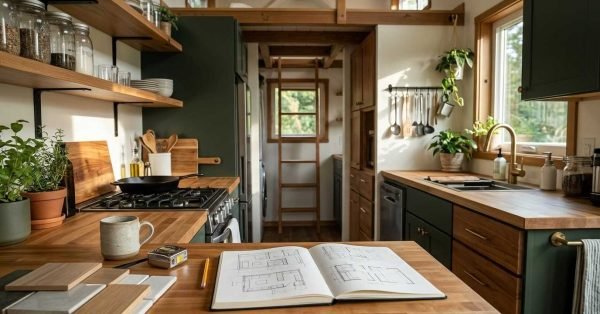
Controls matter more than people expect. A single thermostat placed near a loft ladder reads a completely different temperature than the floor level where people actually sit.
Why Square Footage Alone Never Sizes the System
Square footage tells me almost nothing on its own. A 240 square foot tiny home with poor insulation and eight windows demands more heating output than a 320 square foot build with spray foam walls and triple-pane glass.
Ceiling height, loft volume, window area, orientation, and air leakage all move the number. I calculate the load, then pick equipment.
Sizing, Load Calculation, and Climate Demands

Sizing is the single decision that determines whether the rest of the system succeeds. Oversized equipment short-cycles, never removes humidity, and wears out early. Undersized equipment runs constantly and still loses ground on the coldest nights.
I run a simplified Manual J style load calculation adapted for small mobile structures. It accounts for wall assembly, window performance, infiltration, occupancy, and design temperature.
BTU Basics for Sub-400 Square Foot Spaces
Most tiny homes on wheels land between 6,000 and 12,000 BTU for heating and cooling, though extreme climates push beyond that range. The U.S. Department of Energy recommends roughly 20 BTU per square foot as a starting point for room air conditioners, then adjusts for sun exposure, occupancy, and ceiling height.
I treat that number as a floor, not an answer. Lofts add vertical volume that the square footage figure ignores completely.
Insulation, R-Value, and Envelope Tightness
Insulation quality changes required capacity more than any other variable. Closed-cell spray foam delivers high R-value per inch inside thin walls and doubles as an air barrier, which matters in a structure that flexes down the highway.
A tight envelope cuts heating demand dramatically. It also makes mechanical ventilation mandatory, which I cover further down.
Regional Climate Zones and Seasonal Extremes
A tiny home parked in Arizona needs aggressive cooling and dehumidification capacity that a Montana build never touches. A Montana build needs heating output and freeze protection that an Arizona owner ignores.
Mobility complicates this. Owners who travel seasonally need a system that performs across multiple climate zones, which usually points toward a heat pump paired with a fuel-burning backup.
Heating Options for Tiny Homes on Wheels
Heating carries the highest stakes in a tiny home because failure during a cold snap freezes plumbing and makes the space unlivable. I evaluate every option on output, fuel availability, safety, electrical draw, and space consumption.
There is no universal best heater. There is a best heater for a specific build, climate, and power situation.
Propane Furnaces and Direct-Vent Wall Heaters
Propane remains the workhorse of mobile heating. Direct-vent wall heaters pull combustion air from outside and exhaust outside, which protects indoor air quality and avoids the moisture that unvented heaters dump into the room.
Output typically runs 8,000 to 20,000 BTU for tiny home models. Propane also runs without shore power, which makes it the default off-grid choice.
Never install an unvented propane heater in a sealed tiny home. The combustion moisture alone creates a condensation problem, and the carbon monoxide risk is real.
Electric Resistance and Radiant Floor Heat
Electric baseboard and wall heaters cost little upfront and install simply. They convert electricity to heat at 100% efficiency at the appliance, but they draw heavy amperage and punish anyone on a metered or off-grid supply.
Radiant floor heat delivers the most comfortable result. Hydronic or electric mats under the finished floor warm the surface people actually touch, and the low ceiling height of a tiny home makes that heat feel immediate.
Wood and Pellet Stoves
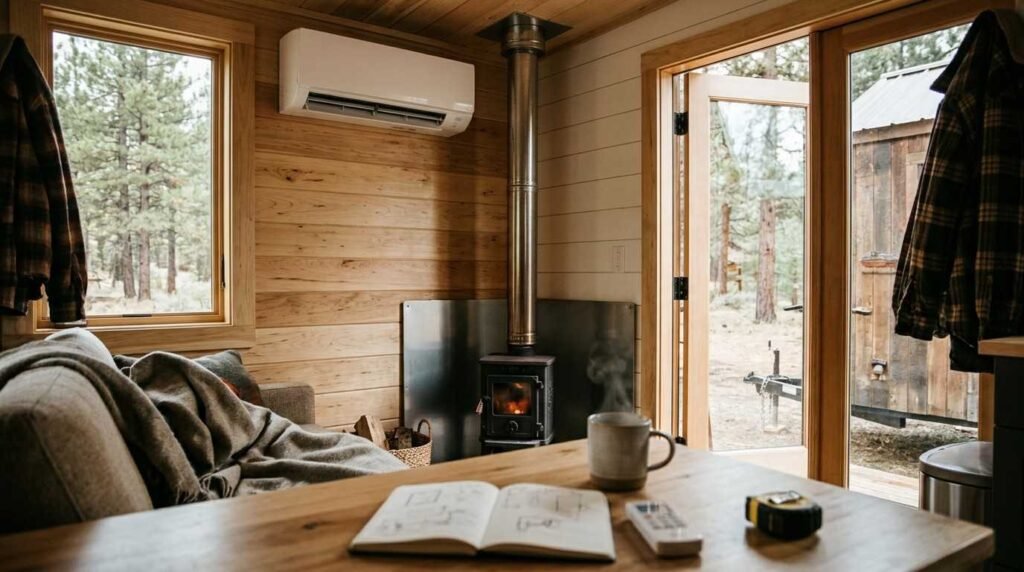
A small marine or cabin-grade wood stove heats a tiny home beautifully and works with zero electricity. The tradeoffs are clearance requirements, a roof penetration, ash management, and constant tending.
Clearances eat floor space fast. I plan the stove location before framing whenever a client wants one, because retrofitting the required heat shields and hearth into a finished build gets expensive.
Diesel and Hydronic Heaters
Diesel air heaters borrowed from the truck and marine world have become popular in tiny homes on wheels. They deliver strong output from a compact unit, sip fuel, and draw very little battery power.
Hydronic diesel systems go further by heating water for both space heat and domestic hot water. That dual function saves space, which matters more than almost anything else in a small build.
Cooling and Dehumidification Options
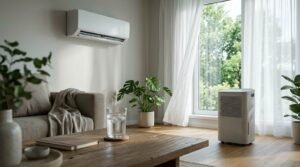
Cooling a tiny home looks easy on paper and gets complicated in practice. Small volume means fast temperature drops, but it also means an oversized unit hits setpoint in minutes and shuts off before removing any moisture.
I prioritize moisture removal alongside temperature control. A 75 degree room at 70% humidity feels worse than a 78 degree room at 45%.
Window, Portable, and Through-Wall Units
Window units cost the least and cool effectively. They block a window, create a security weak point, and vibrate loose during travel unless removed.
Portable units free the window but exhaust through a hose that leaks heat back into the room. Through-wall units solve the travel problem with a permanent sleeve and a weatherproof exterior grille.
Ductless Mini Splits as the Tiny Home Standard
Ductless mini splits have become the dominant choice, and for good reason. One indoor head, one outdoor condenser, and a small line set penetration deliver quiet, efficient, thermostatically controlled comfort.
They also dehumidify well because inverter compressors modulate output instead of cycling on and off. I cover their heating side in the next section.
Dehumidifiers and Standalone Moisture Control
Sometimes the answer is not more cooling. A compact dehumidifier pulls moisture in shoulder seasons when the air conditioner barely runs and interior humidity climbs anyway.
Owners in humid regions run one continuously. It protects cabinetry, prevents mold behind furniture, and keeps a water damage restoration call from ever becoming necessary.
Mini Split Heat Pumps: The All-in-One Solution
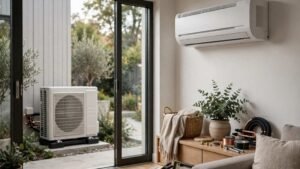
If I had to recommend one system for most tiny homes on wheels in the USA, it is a single-zone ductless mini split heat pump. It heats, cools, dehumidifies, and filters from one compact package.
The efficiency case is strong. The U.S. Department of Energy reports that heat pumps deliver up to three times more heat energy than the electrical energy they consume.
How Heat Pumps Handle Both Heating and Cooling
A heat pump moves heat instead of creating it. In summer it pulls heat from indoors and dumps it outside. In winter it reverses and extracts heat from outdoor air, even cold air, and delivers it inside.
That reversal is what makes it a two-in-one appliance. One installation, one wall penetration, one thermostat.
Cold Climate Performance and Backup Heat
Older heat pumps struggled below freezing. Modern cold-climate models hold useful capacity down to negative 5 degrees Fahrenheit and lower, though output drops as temperature falls.
I still specify a backup heat source for anyone parking below freezing regularly. A small propane or diesel heater covers the extremes and protects plumbing during a power outage.
Mounting, Line Sets, and Travel Considerations
Mobility creates the one real complication. The outdoor condenser needs a solid, vibration-isolated mount on the trailer frame or an exterior wall with proper blocking behind it.
Line sets need service loops and secure clamping so highway vibration never works a flare fitting loose. I also protect the condenser with a travel cover and confirm refrigerant charge after any long relocation.
Ventilation, Air Quality, and Moisture Management
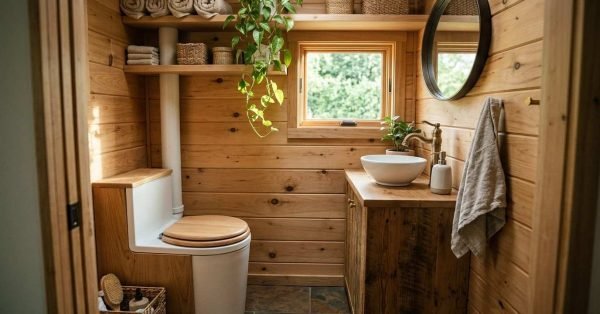
Ventilation is the most skipped part of tiny home HVAC and the most common cause of failure. A tight, well-insulated shell with two people breathing, cooking, and showering inside generates enormous moisture in a very small volume.
Without deliberate air exchange, that moisture lands on the coldest surface it can find. Then it grows something.
Why Tiny Homes Trap Humidity So Quickly
Two adults release several pints of water vapor per day through breathing alone. Add a shower, a stovetop, and a dog, and a 250 square foot space saturates fast.
The EPA identifies indoor relative humidity above 60% as a condition that supports mold growth. I target 40% to 50% year round.
ERVs, HRVs, and Exhaust Fans
An energy recovery ventilator or heat recovery ventilator exchanges stale indoor air for fresh outdoor air while capturing most of the heat from the outgoing stream. That solves ventilation without throwing away the heat I just paid for.
Spot exhaust fans in the bathroom and over the cooktop handle the biggest moisture bursts. They cost little and prevent most problems on their own.
Condensation, Mold, and Vapor Barriers
Condensation forms wherever warm interior air meets a cold surface. Single-pane windows, uninsulated metal framing, and thermal bridges at fasteners are the usual suspects.
A properly placed vapor retarder plus continuous insulation stops most of it. When moisture already caused damage, remediation and mold and moisture cleanup come before any new equipment goes in.
Power Sources, Off-Grid Loads, and Fuel Planning
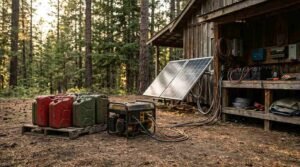
Climate equipment is the largest electrical load in a tiny home. Every heating and cooling decision has to survive a power budget review before I sign off on it.
I start with the power source, then work backward to the equipment. Choosing the equipment first is how people end up tripping breakers every evening.
30-Amp vs 50-Amp Shore Power
A 30-amp shore connection supplies roughly 3,600 watts total. A mini split, a water heater, and a hot plate running together exceed that quickly.
A 50-amp connection delivers about 12,000 watts across two legs and removes most restrictions. Many tiny home parks and RV sites offer only 30-amp, so I plan around the lower number by default.
Solar, Battery Banks, and Inverter Capacity
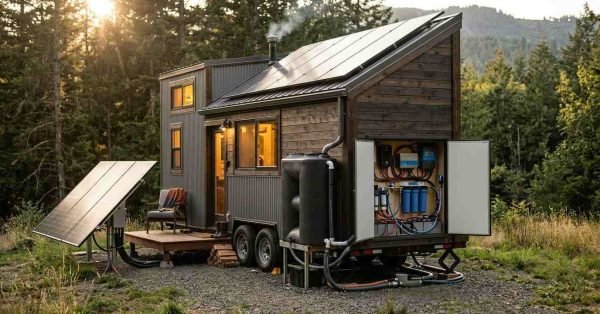
Running a mini split on solar is achievable and increasingly common. It requires a large enough array, a battery bank sized for overnight runtime, and an inverter that handles the compressor’s startup surge.
Inverter-driven mini splits help because they ramp instead of slamming on at full draw. Anyone considering this should evaluate the full solar power and battery setup alongside an electrician before purchasing equipment.
Propane Tank Sizing and Refill Cycles
Propane heating shifts the load off electricity entirely. Two 20-pound tanks with an automatic changeover regulator cover most shoulder-season use, while a 30 or 40 pound pair suits full winter occupancy.
I track consumption in the first cold month to establish a real refill interval. Guessing leads to a 3 a.m. outage in January.
Installation, Codes, and Certification Standards
Tiny homes on wheels occupy a genuine regulatory gray zone in the USA. They are usually classified as recreational vehicles or park model RVs rather than permanent dwellings, and that classification drives which HVAC rules apply.
Getting this wrong affects insurance, financing, and where the home is legally allowed to park. I verify the certification path before specifying equipment.
RVIA, ANSI 119.5, and Appendix Q
Most certified tiny homes on wheels are built to NFPA 1192 or ANSI A119.5 standards, which govern RV and park model construction including heating and ventilation requirements. Certification through a recognized inspection body makes parks and lenders far more comfortable.
Permanently sited tiny homes sometimes fall under Appendix Q of the International Residential Code, which addresses dwellings of 400 square feet or less. That path applies to foundation builds more than wheeled ones.
Permits, Inspections, and Park Requirements
Rules vary enormously by state, county, and even by RV park. Some jurisdictions inspect nothing on a wheeled structure. Others require permits for any gas appliance or 240-volt circuit.
I check local requirements before installation, not after. A propane line or condenser mount that fails inspection is expensive to redo.
Professional Install vs DIY Boundaries
Plenty of tiny home owners build their own homes, and I respect that. But refrigerant handling requires EPA Section 608 certification, and gas line work carries consequences no tutorial video prepares anyone for.
I draw the line at combustion appliances, refrigerant circuits, and 240-volt wiring. Filter changes, thermostat setup, and vent cleaning are fair game for owners, and a qualified handyman service covers the middle ground.
Costs, Efficiency, and Long-Term Operating Expenses

Budget conversations go better when owners see both numbers. Equipment cost is the visible one. Operating cost is the number that compounds for a decade.
I present them together every time.
Equipment and Installation Cost Ranges
A single-zone mini split heat pump typically runs $1,500 to $4,000 installed for a tiny home, depending on capacity and mounting complexity. Propane wall heaters land closer to $700 to $1,800 installed. Diesel air heaters fall in a similar range.
Electric baseboard is the cheapest to buy and the most expensive to run. Wood stoves vary widely once flue, hearth, and clearance work enter the estimate.
Monthly Energy and Fuel Costs by System Type
Operating cost depends on climate, occupancy, and local rates. The U.S. Energy Information Administration tracks average residential electricity at roughly 16 cents per kilowatt-hour nationally, with wide state variation.
A mini split in a moderate climate often runs $25 to $60 per month. Electric resistance heat in a cold month easily triples that.
Efficiency Ratings That Actually Matter
For cooling, I look at SEER2. For heat pump heating, HSPF2. Higher numbers mean more output per unit of energy consumed, and in a space this small the difference shows up on every bill.
For combustion appliances, I look at AFUE and, more importantly, whether the unit is direct-vent. Efficiency means nothing if the appliance is dumping moisture indoors.
Maintenance, Winterizing, and Seasonal Care
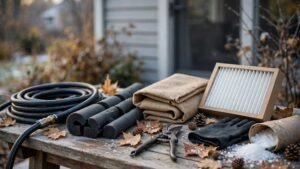
Every system I have described fails early without maintenance. Tiny homes are harder on equipment than houses because of vibration, temperature swings, and constant use of a single appliance.
I schedule maintenance by season rather than by calendar date. Travel adds its own checkpoints.
Filter, Coil, and Vent Servicing
Mini split filters need rinsing monthly and the blower wheel needs a deep clean annually. Skipping that step is the fastest route to reduced airflow, musty odors, and a frozen coil.
Combustion appliances need annual vent inspection for blockage, corrosion, and nesting. A blocked flue on a direct-vent heater is a carbon monoxide event waiting to happen, and routine dryer vent and exhaust cleaning follows the same logic for any other vented appliance onboard.
Winterizing a Tiny Home on Wheels
Winterizing protects plumbing more than equipment. I drain and blow out lines, add antifreeze to traps, and confirm the heat source will run unattended if the home sits empty.
Heat tape on exposed supply lines and an insulated skirt around the trailer underbelly prevent most freeze damage. Both cost far less than a burst line inside a finished wall, which is exactly the scenario that triggers a burst pipe and plumbing repair emergency.
Common Failure Points and Warning Signs
Short cycling signals an oversized unit or a refrigerant problem. Rising humidity with normal temperatures points to a failing dehumidification stage. A yellow flame instead of blue on a propane appliance means incomplete combustion.
Unusual noise after towing usually means a loosened mount or a stressed line set. I inspect the condenser and all gas connections after every relocation.
Choosing the Right HVAC Professional for a Tiny Home
Most residential HVAC contractors have never worked on a structure that moves. The frame flexes, the wall cavities are thin, the electrical service is limited, and the code path is unfamiliar.
I look for contractors with RV, marine, or tiny home experience specifically. That background changes how they mount, seal, and protect equipment.
Questions to Ask Before Hiring
I ask whether they have installed on a trailer-framed structure before. I ask how they isolate vibration, how they handle the line set penetration, and whether they hold EPA 608 certification.
I also ask for a written load calculation rather than a rule-of-thumb size. A contractor who sizes by square footage alone is guessing.
Why Mobile Structures Need Specialized Experience
A wheeled home experiences highway vibration, road salt, temperature cycling, and repeated utility disconnection. Equipment mounted the way it would be on a slab foundation works loose within a season.
Specialized installers plan for that from the first bracket. We connect tiny home owners with contractors who understand mobile structures, and pairing that with the right remodeling and interior build-out team keeps the mechanical and finish work coordinated from the start.
Conclusion
Tiny home HVAC connects sizing, heating, cooling, ventilation, power, codes, cost, and maintenance into one system where every choice affects the others.
Each section here points toward deeper resources on individual systems, and the right combination depends entirely on climate, power supply, and how often the home moves.
We help homeowners and property managers match the right system to the right build. Reach out to Mr. Local Services and get connected with a qualified installer today.
Frequently Asked Questions
What is the best HVAC system for a tiny home on wheels?
A single-zone ductless mini split heat pump suits most tiny homes. It heats, cools, and dehumidifies from one compact unit with minimal wall penetration.
How many BTUs does a tiny house need?
Most tiny homes need 6,000 to 12,000 BTU. Insulation quality, window area, ceiling height, and climate zone all shift that number significantly.
Can a mini split run on solar power?
Yes. Inverter-driven mini splits work well with solar when the array, battery bank, and inverter are sized for the compressor’s startup surge.
Do tiny homes on wheels need permits for HVAC installation?
It varies by jurisdiction. Many wheeled tiny homes fall under RV standards instead of residential code, but gas and 240-volt work often requires local approval.
How much does tiny home HVAC cost to install?
A mini split heat pump typically runs $1,500 to $4,000 installed. Propane wall heaters and diesel air heaters generally fall between $700 and $1,800.
What causes condensation inside a tiny home?
Warm indoor air meeting cold surfaces creates condensation. Tight construction, cooking, showering, and breathing generate moisture faster than a small space can clear it.
How do I winterize a tiny home on wheels?
Drain and blow out water lines, add antifreeze to traps, insulate the underbelly, and confirm the heat source runs reliably while unattended.