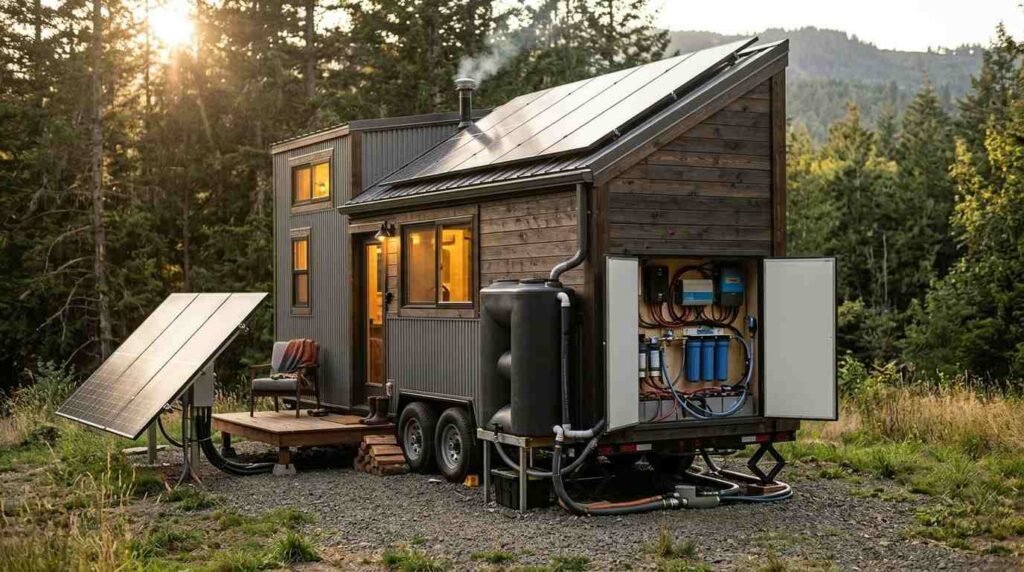
A tiny home on wheels runs on three connected systems: power, water, and waste. Solar panels and battery banks generate and store electricity, fresh water tanks and pumps deliver water, and gray or black water systems handle everything that goes down the drain. I’ve seen these three systems trip up more new tiny home owners than anything else about off-grid living.
Getting this wrong means dead batteries at night, an empty water tank on a Tuesday morning, or a waste tank that fills faster than expected. None of that is complicated once you understand how the pieces fit together, and none of it has to derail your first year of tiny living.
I walk through how the three systems connect, then cover power generation and backup options, fresh and gray water handling, black water and composting toilets, climate control without a grid hookup, and the permits and maintenance that keep everything legal and running long term.
How Off-Grid Systems Work Together in a Tiny Home on Wheels
Off-grid tiny home systems are not three separate projects. They are one interconnected loop where power runs the water pump, the water fills the tanks that feed the plumbing, and the waste system processes what comes out the other end.
Solar power is a renewable energy system that converts sunlight into electricity for use without a grid connection. That electricity runs your water pump, your fans, your lights, and often your refrigerator.
Power, Water, and Waste as One Integrated System
Think of it as a chain reaction. Solar charges your batteries, batteries run your water pump, your water pump fills your sink and shower, and your gray water tank catches the runoff.
I always tell people to size their water tank based on their battery capacity, not the other way around. A bigger tank sitting empty because your pump has no power to run does nothing for you.
Solar Power Systems for Tiny Homes
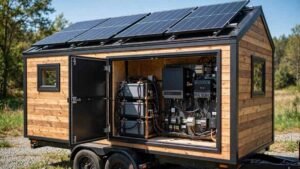
Solar remains the backbone of most tiny home electrical setups. It’s quiet, it requires almost no moving parts, and it keeps working as long as the sun shows up.
I recommend sizing your solar array around your actual daily energy use, not a generic package deal. A couple running a laptop, a mini-fridge, and LED lighting needs a very different setup than a family running power tools and a full-size refrigerator.
Solar Panels, Charge Controllers, and Sizing Basics
A charge controller is a device that regulates the voltage and current coming from solar panels to prevent battery overcharging. Skipping this component shortens battery life dramatically and is not a corner worth cutting.
Most tiny homes run 400 to 800 watts of panel capacity for moderate daily use. I size panels first, then work backward to battery capacity, because oversized panels with undersized batteries just waste sunlight.
Batteries and Battery Banks for Off-Grid Storage
Lithium batteries have become the standard choice for tiny home power storage because they last longer and weigh less than older lead-acid options. I’ve moved almost every client toward lithium in the last three years for exactly those reasons.
A battery bank is a group of batteries wired together to store and supply electrical energy as a single unit. Your bank size determines how many cloudy days you can survive before running low.
Backup and Supplemental Power Options
Solar covers most days, but every off-grid tiny home needs a backup plan for stretches of bad weather or heavy power draw. I never let a client rely on solar alone without a fallback.
A generator or a shore power hookup fills that gap when the sun doesn’t cooperate. Neither one needs to run constantly, just often enough to keep your batteries topped off.
Generators, Inverters, and Shore Power Hookups
An inverter is a device that converts stored battery DC power into the AC power household appliances require. Most tiny homes need at least one, sized to handle whatever your biggest single appliance draws.
Propane generators tend to run quieter and cleaner than gas models, which matters if you’re parked near neighbors. I generally suggest keeping a generator as a backup only, not a daily power source, since fuel costs add up fast.
Fresh Water Systems for Off-Grid Tiny Living
Fresh water storage and delivery is where a lot of tiny home planning goes sideways. People underestimate how much water they actually use in a day, and that math catches up with them within the first week.
The average person uses 80 to 100 gallons of water per day in a conventional home, according to the United States Geological Survey. Off-grid tiny home living cuts that dramatically, but the baseline number still shapes how big a tank you actually need.
Fresh Water Tanks, Pumps, and Filtration
A fresh water tank is a storage vessel that holds potable water for use in sinks, showers, and appliances. I usually recommend 40 to 100 gallons depending on how often you plan to refill and how many people live in the home.
A water pump moves water from the tank to your fixtures using battery-powered pressure. I always pair this with an inline filter, since even clean-looking tank water benefits from an extra layer of filtration before it hits your tap.
Water Conservation Fixtures and Usage Planning
Low-flow showerheads and faucet aerators cut your daily water use significantly without making showers feel weaker. I install these as a default in every tiny home I help set up, not as an upgrade option.
Planning your refill schedule around your actual tank size keeps you from running dry unexpectedly. I tell people to track their first month of usage closely, then adjust their refill routine from real numbers instead of guesses.
Gray Water Systems and Disposal
Gray water is wastewater from sinks, showers, and washing machines that does not contain human waste. It’s the water leaving your home constantly, and it needs somewhere legal and sanitary to go.
Many tiny home owners underestimate how quickly a gray water tank fills, especially with daily showers. I’ve seen tanks overflow within two days when people assume their gray water capacity matches their fresh water capacity.
Gray Water Tanks, Treatment, and Legal Disposal Options
A gray water tank is a holding container that captures wastewater until it can be emptied at an approved disposal site. Size this tank equal to or larger than your fresh water tank, since incoming water eventually becomes outgoing gray water.
Dumping gray water directly onto the ground is illegal in most jurisdictions, even though it seems less risky than black water. I always check local rules before assuming a “gray water is fine to dump” shortcut applies.
Black Water and Composting Toilet Systems
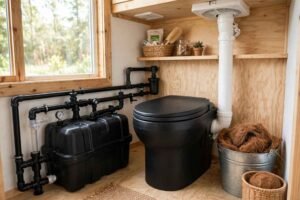
Black water handling is the piece that intimidates most first-time tiny home owners, and it’s also the piece with the most flexible solutions. You have real choices here, not just one standard setup.
Composting toilets have become the more popular option in the tiny home community over the last several years. They solve the black water tank problem entirely by processing waste on-site instead of storing it as liquid sewage.
Composting Toilets vs. Traditional Black Water Tanks
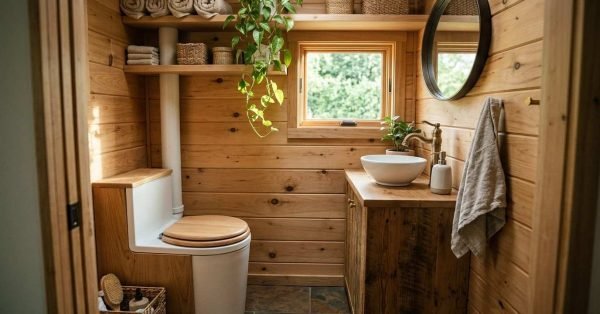
A composting toilet is a waterless system that separates liquid and solid waste to accelerate natural decomposition. It eliminates the need for a black water tank and the sewage hookups that come with one.
Traditional black water tanks require regular pump-outs at RV dump stations or septic-compatible facilities. I generally point people toward composting systems unless they’re staying somewhere with easy, frequent access to a dump station.
Odor Control and Waste Breakdown Basics
Proper ventilation and the right carbon-based cover material (like coconut coir) keep composting toilets odor-free. I’ve used systems with zero smell issues, and the difference always comes down to consistent maintenance, not the toilet brand.
A ventilation fan pulls moisture and odor out of the composting chamber continuously. Skipping this fan is the single biggest reason people report bad odors from an otherwise well-designed system.
Propane and Alternative Fuel Systems
Propane fills the gaps that electricity can’t efficiently cover, especially cooking and hot water. I treat it as a parallel system running alongside your electrical setup rather than a competitor to it.
Propane burns cleaner than gasoline and stores safely for long stretches without degrading. That stability makes it a practical choice for appliances you use daily.
Propane for Cooking, Heating, and Hot Water
A propane water heater heats water on demand using a gas flame instead of drawing battery power. This single swap can meaningfully extend your battery bank’s daily range by removing one of the biggest electrical loads in the home.
Most tiny homes run two 20-pound propane tanks for cooking and hot water combined. I recommend a two-tank setup so you always have a full backup when one runs empty mid-use.
Climate Control Without Grid Power
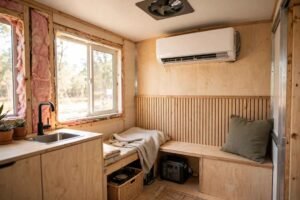
Keeping a tiny home comfortable without unlimited grid power comes down to insulation first, then targeted heating and cooling second. I always start conversations about climate control with insulation quality, because no HVAC system compensates for a poorly insulated shell.
Ventilation matters just as much as temperature control in a space this size. Moisture buildup from cooking, showers, and breathing needs somewhere to go.
Ventilation, Insulation, and Off-Grid HVAC Options
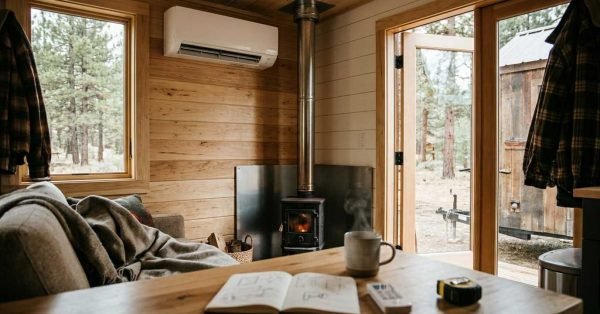
Mini-split systems designed for off-grid use draw far less power than standard central air units. These pair well with solar setups because they cycle on and off efficiently rather than running continuously.
A roof vent fan with a rain sensor pulls out humid air automatically, even when you’re not home. I consider this a non-negotiable addition in any climate with real humidity swings.
Permits, Codes, and Legal Considerations for Off-Grid Tiny Homes
Legal compliance is the part people want to skip and the part that causes the most headaches later. Off-grid systems still answer to local codes, even when you’re not hooked up to municipal utilities.
Water and waste disposal rules vary significantly by state and even by county. I always tell new tiny home owners to check local regulations before finalizing their system design, not after.
Zoning, RVIA Certification, and Local Water/Waste Regulations
RVIA certification is a safety and construction standard for recreational vehicles, including many tiny homes on wheels. Some jurisdictions require this certification before they’ll allow a tiny home to park long-term.
Local health departments typically regulate gray and black water disposal methods, even for off-grid setups. I recommend a quick call to the local building or health department before committing to a specific waste system design.
Maintenance and Seasonal Care for Off-Grid Systems
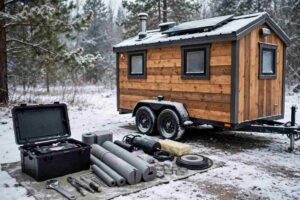
Every system covered so far needs ongoing maintenance to keep performing the way it did on day one. Skipping seasonal care is the fastest way to turn a well-designed setup into a constant repair project.
Winter and summer put different stresses on power, water, and waste systems. I plan maintenance schedules around the season, not a fixed calendar date.
Winterizing Power, Water, and Waste Components
Freezing temperatures can crack water tanks and pipes if they’re not drained or heated properly. I insulate exposed plumbing and add tank heaters before the first hard freeze every year, without exception.
Battery performance also drops in cold weather, sometimes losing 20% of usable capacity in freezing conditions according to the U.S. Department of Energy. Planning for that dip ahead of winter keeps your power supply predictable instead of surprising.
Conclusion
Off-grid power, water, and waste systems work as one connected loop, not three separate projects. Solar and batteries drive water delivery, water use shapes your gray water output, and waste handling closes the cycle.
Getting the sizing, permits, and maintenance right from the start saves real headaches down the road. A well-planned system runs quietly in the background instead of demanding constant attention.
We help homeowners plan and maintain reliable systems that actually hold up season after season. Reach out to Mr. Local Services when you’re ready to get your setup right the first time.
Frequently Asked Questions
How much solar power does a tiny home need?
Most tiny homes need 400 to 800 watts of solar panel capacity for moderate daily use. Actual needs depend on appliance load and how many cloudy days you expect to handle on battery alone.
How big should a fresh water tank be for a tiny home?
A fresh water tank between 40 and 100 gallons covers most tiny home households comfortably. Tank size should match your refill schedule and the number of people living in the home.
What is the difference between gray water and black water?
Gray water comes from sinks, showers, and washing machines, while black water contains human waste from the toilet. Gray water has fewer disposal restrictions, but both require legal, sanitary handling.
Do composting toilets really eliminate odor?
Composting toilets stay odor-free with proper ventilation and consistent use of a carbon-based cover material. A working ventilation fan is the key factor that prevents smell buildup.
How long do lithium batteries last in a tiny home system?
Lithium batteries typically last 8 to 10 years with regular use in a tiny home power system. Cold weather can temporarily reduce usable capacity, but it does not shorten the battery’s overall lifespan.
Do I need a permit for an off-grid tiny home?
Many jurisdictions require permits or RVIA certification before allowing a tiny home to park long-term. Requirements vary by state and county, so checking local zoning rules early prevents costly delays.
How often does a gray water tank need to be emptied?
A gray water tank typically needs emptying every three to seven days depending on household size and daily water use. Tracking actual usage in the first month helps set a reliable emptying schedule.
What backup power option works best for cloudy weather?
A propane generator provides reliable backup power during extended cloudy stretches without draining battery reserves further. Shore power hookups work well too when parked somewhere with electrical access.