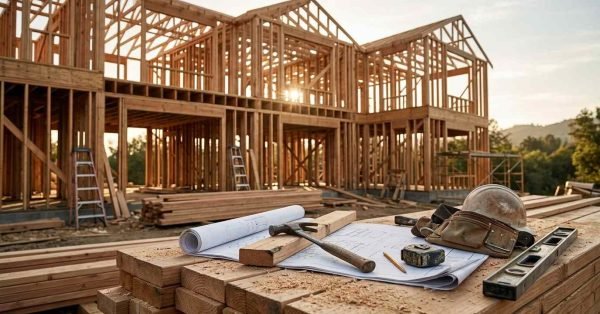
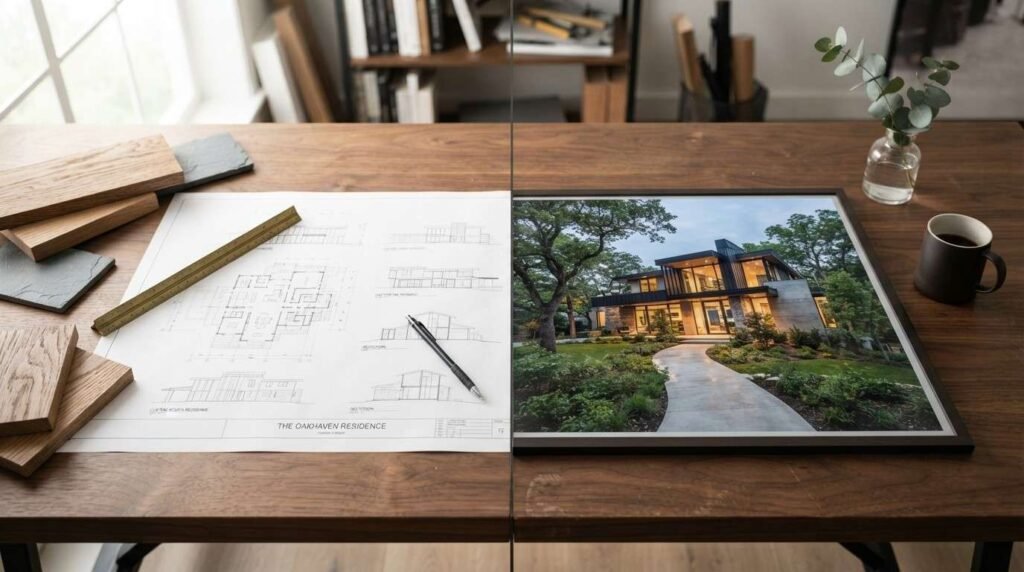
The biggest difference between a custom home and a spec home comes down to who makes the decisions, when, and at what cost. One gives you a blank canvas. The other hands you a finished painting at a set price. Understanding which model fits your situation saves you from a very expensive mistake.
Most buyers walk into this decision without a clear picture of what each path actually involves. That gap leads to budget surprises, timeline frustration, and homes that do not quite fit.
This guide breaks down both home types clearly: what they are, how they differ, and which one makes sense for your goals, budget, and timeline.
What Is a Custom Home?
A custom home is a property designed and built entirely to the buyer’s specifications. You choose the lot, hire the architect, select the builder, and make every decision from the floor plan layout to the cabinet hardware.
Nothing about a custom home exists before you commission it. The land is purchased separately. The design starts from scratch. The construction timeline runs from your first meeting with an architect to the day you receive the keys.
How the Design and Build Process Works
The process starts with land acquisition, then moves into architectural design, permitting, and finally construction. Each phase requires active involvement from the buyer.
Design alone takes three to six months in most cases. Permitting adds more time depending on the municipality. Construction on a custom home typically runs twelve to twenty-four months from groundbreaking to completion.
You are the decision-maker at every stage. That level of involvement is exactly what some buyers want and exactly what others find exhausting.
Who Custom Homes Are Built For
Custom homes suit buyers with a specific vision, a flexible budget, and no hard deadline on move-in. They work well for people building on inherited land, buyers with accessibility requirements, or anyone whose lifestyle demands a layout that standard construction simply does not offer.
Long-term homeowners who plan to stay in a property for decades get the most value from the custom process. The investment in personalization pays off over time.
What Is a Spec Home?
A spec home, short for speculative home, is built by a developer or builder before a buyer is identified. The builder makes all design decisions, selects the finishes, and constructs the home based on what sells well in that market.
By the time you tour a spec home, most of the major decisions are already locked in. You are buying a finished or near-finished product, not commissioning one.
How Spec Homes Are Designed and Sold
Builders design spec homes around market demand. They choose layouts, finishes, and features that appeal to the broadest pool of buyers in a given price range and neighborhood.
Some spec homes are fully complete at the time of sale. Others are sold during construction, which may allow the buyer to select a few finishes, countertops, flooring, and paint within the builder’s pre-approved options.
The pricing is set. The timeline is short. The process moves fast.
Who Spec Homes Are Built For
Spec homes fit buyers who need to move quickly, prefer a predictable price, and are comfortable with standard finishes and layouts. First-time buyers, relocating professionals, and buyers who want a move-in-ready new construction home without a multi-year build process are the natural audience.
The trade-off is personalization. You get speed and simplicity in exchange for design control.

Custom Home vs Spec Home: Key Differences
The comparison between these two home types touches four areas that matter most to buyers: cost, timeline, design flexibility, and location.
Cost and Budget Control
Custom homes cost more, and the final number is harder to predict. According to the U.S. Census Bureau, the average sales price of a new single-family home in the United States exceeded $500,000 in recent reporting periods, but custom builds regularly run higher depending on lot costs, architectural fees, and finish selections.
Spec homes carry a fixed price. What you see is what you pay, with limited room for negotiation and no risk of mid-build cost overruns driven by your own upgrade decisions.
Budget discipline is easier with a spec home. Budget freedom is greater with a custom home, but so is budget risk.
Timeline and Move-In Date
A spec home that is already complete can close in thirty to sixty days. A custom home built from scratch takes eighteen to thirty months in most markets, accounting for design, permitting, and construction.
That gap matters enormously for buyers with a lease ending, a school enrollment deadline, or a job relocation date. Speed is one of the clearest advantages a spec home holds.
Design Flexibility and Personalization
Custom homes offer complete design freedom. Every room, every finish, every structural decision reflects the buyer’s preferences.
Spec homes offer limited or no flexibility depending on how far along construction is. A home already framed and drywalled has no room for layout changes. A home in early framing may allow minor modifications, but the builder’s standard package governs most choices.
If the layout, the finishes, or the room configuration of a spec home does not fit your life, that is a permanent condition, not a temporary one.
Location and Lot Selection
Custom home buyers choose their own land. That means rural acreage, a specific school district, a particular street, or a view-facing orientation are all achievable if the land is available and the budget supports it.
Spec homes exist where builders choose to build. That is typically in established subdivisions or planned communities where infrastructure is already in place. You buy into the location the builder selected, not the one you would have chosen independently.
Pros and Cons of Each Option
Advantages and Drawbacks of Custom Homes
The advantages are real: full design control, a home built to your exact specifications, and a property that reflects your priorities rather than a builder’s market assumptions.
The drawbacks are equally real. Custom homes demand time, active involvement, and a higher tolerance for uncertainty. Cost overruns happen. Timelines slip. Decision fatigue is a genuine risk across an eighteen-month build.
Custom homes also require you to manage multiple relationships: architect, general contractor, subcontractors, municipal permit offices simultaneously.
Advantages and Drawbacks of Spec Homes
Spec homes deliver speed, price certainty, and simplicity. The builder handles every decision. You tour, you buy, you move in.
The drawbacks center on what you give up. Standard layouts may not fit your lifestyle. Finishes are chosen for mass appeal, not personal taste. And the location is fixed; you adapt to it rather than choosing it.
For buyers who prioritize convenience over customization, those trade-offs are entirely acceptable.

Which Option Is Right for You?
The right choice depends on three things: your timeline, your budget flexibility, and how strongly you feel about design control.
A spec home is the practical answer for buyers who need to move within the year, want a predictable price, and are comfortable with a standard layout in an established neighborhood. It removes complexity from the process.
A custom home is the right answer for buyers who have time, a clear vision, and the financial cushion to absorb the unexpected. It rewards patience and planning with a result that a spec home simply cannot replicate.
Neither option is universally better. They serve different buyers at different life stages with different priorities. Knowing which category you fall into is the most important decision you make before signing anything.
Conclusion
Custom homes and spec homes represent two fundamentally different approaches to new construction: one built around your decisions, the other built around the builder’s. The right fit depends on your timeline, your budget, and how much control matters to you.
Both paths lead to a new home. But the experience, the cost, and the result look very different depending on which road you take.
At Mr. Local Services, we work with homeowners at every stage, from new construction punch lists to ongoing maintenance and improvement. Reach out and let us help you keep your home in top condition from day one.
Frequently Asked Questions
Is a custom home more expensive than a spec home?
Yes, custom homes are almost always more expensive than spec homes. You pay for land separately, architectural fees add up, and every upgrade decision increases the final cost. Spec homes carry a fixed price with far less financial uncertainty.
How long does it take to build a custom home vs a spec home?
A spec home that is already complete can close in thirty to sixty days. A custom home typically takes eighteen to thirty months from design through construction completion. The timeline difference is one of the most significant practical factors in this decision.
Can you customize a spec home before closing?
It depends on how far along construction is. Early-stage spec homes sometimes allow finish selections within the builder’s approved options. Completed spec homes offer little to no customization. Structural changes are almost never possible once framing is done.
What is a semi-custom home?
A semi-custom home sits between a spec home and a fully custom build. The builder provides a base floor plan and a set of pre-approved options, and the buyer selects from those choices. It offers more personalization than a spec home with less complexity than a full custom build.
Do custom homes hold their value better than spec homes?
Not automatically. A custom home’s resale value depends on location, build quality, and how well the design appeals to future buyers. Highly personalized features that suit one owner may not appeal to the broader market. Spec homes built in desirable subdivisions often hold value just as well.
Which type of home is better for first-time buyers?
Spec homes are generally the better fit for first-time buyers. The fixed price, shorter timeline, and simpler process reduce the complexity of an already significant financial decision. Custom homes require experience managing a build, a larger budget, and a longer commitment.