The biggest difference between a custom home and a prefab or modular home comes down to where and how it’s built, and that single factor drives nearly every other difference in cost, time, and design.
Most buyers don’t realize how much that distinction shapes the entire experience. It affects your budget, your timeline, your financing options, and even how your home performs on the resale market.
In this guide, I walk through every major difference between custom and prefab/modular homes so you can make a clear, confident decision.
What Is a Custom Home?
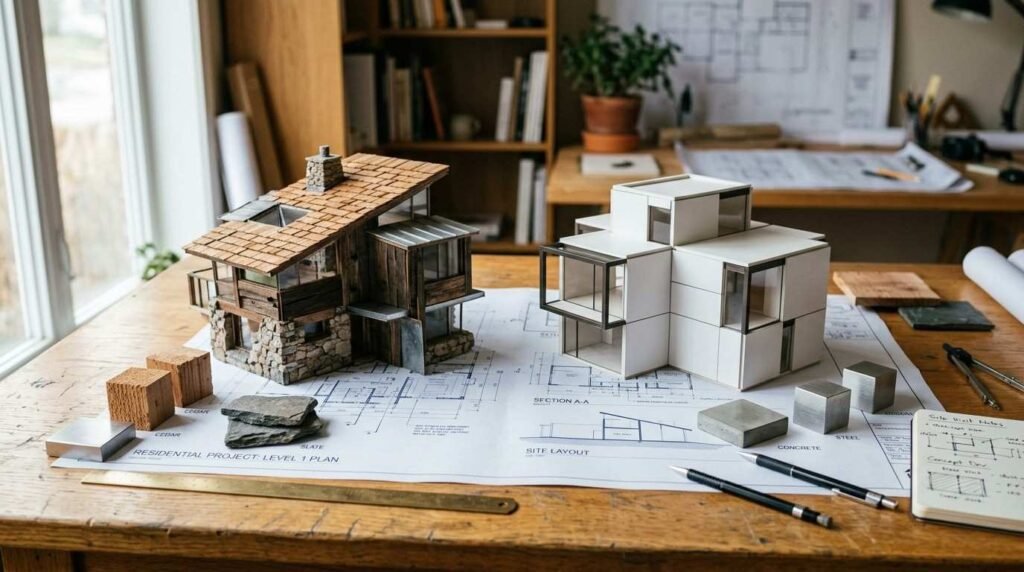
A custom home is a residence designed and built entirely from scratch, on a specific piece of land, according to the buyer’s exact specifications. There is no pre-existing floor plan. The buyer works directly with an architect or custom home builder to create every detail from the foundation type to the roofline to the placement of every window.
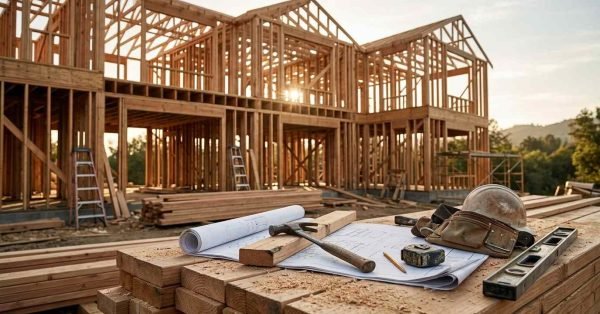
Custom homes are stick-built on-site. That means crews arrive at the lot, prepare the ground, pour the foundation, and construct the entire structure piece by piece in place. Every material decision, every subcontractor, and every design choice runs through the buyer and their builder.
How Custom Homes Are Built
The process starts with land acquisition and site preparation. After that, an architect draws up plans, the builder pulls permits, and construction begins foundation first, then framing, then mechanical systems, then finishes.
A typical custom home build involves dozens of subcontractors working in sequence: excavators, concrete crews, framers, electricians, plumbers, HVAC technicians, drywall crews, and finish carpenters. Each trade waits for the previous one to complete before starting. That sequential process is one of the main reasons custom builds take longer.
Weather, material delays, and subcontractor scheduling all affect the timeline. On-site construction is fully exposed to those variables.
Who Custom Homes Are Best For
Custom homes suit buyers who have a specific vision they cannot achieve any other way. If the floor plan, the materials, the architectural style, or the lot placement matters deeply, a custom build is the path that delivers it.
They also suit buyers with larger budgets and longer timelines. A custom home is not a fast or cheap option. But for the right buyer, the result is a home that fits their life exactly.
What Is a Prefab or Modular Home?
A prefab home, short for prefabricated home, is a residence built primarily or entirely off-site in a factory, then transported to a prepared lot and assembled. Modular homes are the most common and highest-quality type of prefab construction. They are built in sections called modules, each completed to a high degree in the factory before being craned onto a permanent foundation.
Modular homes are not mobile homes or manufactured homes. They are built to the same local and state building codes as site-built homes. Once placed and assembled, a modular home is legally and structurally a permanent residence.
How Prefab and Modular Homes Are Built
Factory workers build each module in a climate-controlled environment. Framing, insulation, wiring, plumbing, and interior finishes are all completed or nearly completed before the modules leave the factory. This parallel production process is what makes modular construction faster than site-built construction.
Once the modules arrive at the lot, a crane lifts each section onto a prepared foundation. A local crew connects the modules, completes the exterior, and handles the final utility hookups. The on-site phase is a fraction of the time required for a custom build.
Who Prefab and Modular Homes Are Best For
Modular homes are a strong fit for buyers who want a quality permanent home at a lower cost and on a faster timeline. First-time buyers, buyers working with tighter budgets, and buyers who need to move in quickly all benefit from the modular model.
They also work well for rural land buyers where finding and coordinating local subcontractors is difficult. The factory does most of the work, so the local labor requirement is much smaller.
Custom Home vs Prefab Home: The Core Differences
This is where the comparison gets practical. The differences between custom and modular homes are real, measurable, and significant. Understanding them clearly is what makes the decision straightforward.
Cost Differences
Custom homes cost more. The National Association of Home Builders reports that the average cost to build a new single-family home in the U.S. runs between $150 and $400 per square foot depending on location, materials, and design complexity. High-end custom builds in premium markets push well above that range.
Modular homes typically cost between $100 and $200 per square foot for the home itself, with site work, foundation, and utility connections adding to the total. The factory production model reduces labor costs and material waste, and those savings pass through to the buyer.
Budget overruns are also more common in custom builds. On-site construction involves more variables, and changes mid-build are expensive. Modular pricing is more predictable because most of the work happens in a controlled factory environment.
Build Time Differences
A custom home typically takes 10 to 18 months to complete from groundbreaking to move-in. Complex designs, difficult sites, or supply chain disruptions push that timeline longer.
A modular home typically takes 4 to 7 months from order to move-in. Factory production runs concurrently with site preparation, so both happen at the same time rather than in sequence. That parallel process cuts the total timeline nearly in half.
For buyers with a firm move-in deadline, a lease ending, a school year starting,or a job relocation, the modular timeline is a meaningful advantage.
Design and Customization Differences
Custom homes offer unlimited design flexibility. Every dimension, material, layout, and finish is open to negotiation. The buyer and architect start with a blank page.
Modular homes offer real but bounded flexibility. Most manufacturers provide a wide range of floor plans, and buyers can choose finishes, fixtures, and some layout modifications. But structural changes are limited by the module dimensions and factory production constraints. A buyer who needs a truly unique architectural design will find modular options limiting.
That said, modern modular homes look nothing like the boxy prefabs of decades past. High-quality modular manufacturers now produce homes that are visually indistinguishable from site-built construction.
Quality and Durability Differences
Both custom and modular homes are built to meet local and state building codes. Modular homes actually go through two rounds of inspection, one at the factory and one on-site, which some builders argue results in tighter quality control than a purely on-site build.
The factory environment eliminates weather exposure during construction. Framing lumber doesn’t sit in the rain. Drywall doesn’t absorb moisture before it’s installed. That controlled environment reduces the risk of moisture-related problems that can affect on-site builds.
Custom homes, built by experienced contractors with quality materials, are equally durable. The difference is not in the end result; it’s in the process that gets there.
Land, Permits, and Site Requirements
Both home types require land, a prepared site, and permits. The specifics differ.
For a custom home, the permitting process is tied to the architectural plans. The builder submits detailed drawings to the local building department, and permits are issued before construction begins. Any design changes during construction may require permit amendments, adding time and cost.
For a modular home, the factory builds to a pre-approved set of specifications. The local permit covers the site work, foundation, and final assembly. Because the factory modules are already inspected and certified, the local permitting process is often simpler and faster.
Zoning is a factor for both. Not every parcel of land is zoned for residential construction, and some areas have restrictions on modular homes specifically. Buyers need to verify local zoning rules before purchasing land for either type of build.
Utility hookups water, sewer or septic, electricity, and gas are required for both. Rural lots may require well drilling and septic system installation, which adds cost and time regardless of home type.
Financing a Custom Home vs a Prefab Home
Financing works differently for each type, and that difference matters.
Custom home buyers typically use a construction-to-permanent loan, also called a one-time close loan. The lender funds the build in draws as construction milestones are reached, then converts the loan to a standard mortgage when the home is complete. Lenders scrutinize the builder’s credentials, the plans, and the budget carefully before approving.
Modular home buyers have more options. Some lenders treat modular homes exactly like site-built homes and offer standard mortgage products once the home is on its foundation. Others require a construction loan for the factory and site phases. The Consumer Financial Protection Bureau notes that financing terms for factory-built homes vary significantly by lender, so shopping multiple lenders is important.
One practical note: modular homes are easier to appraise than custom homes mid-build, because comparable factory-built homes exist in the market. Custom homes are sometimes harder to appraise accurately during construction, which can create friction with lenders.

Resale Value and Long-Term Investment
Custom homes generally hold strong resale value, particularly in markets where comparable custom-built homes exist. A well-designed, well-located custom home appreciates in line with the broader real estate market and often commands a premium over production homes.
Modular homes have historically carried a resale stigma; buyers sometimes assumed they were lower quality than site-built homes. That perception is shifting. As modular construction quality has improved and awareness has grown, modular homes in desirable locations now appraise and sell comparably to site-built homes of similar size and finish level.
The Urban Land Institute has noted that factory-built housing is increasingly recognized by appraisers and lenders as a legitimate and durable housing product. Location, condition, and finish quality drive resale value for both types; the construction method matters less than it once did.
Which One Is Right for You?
The answer depends on four things: budget, timeline, design priorities, and land situation.
Choose a custom home when you have a specific architectural vision, a larger budget, a flexible timeline, and land that suits a fully custom design. Custom builds reward buyers who know exactly what they want and have the patience and resources to get it.
Choose a prefab or modular home when you need a quality permanent home at a lower cost, on a faster timeline, with less construction complexity. Modular homes are the right call for buyers who prioritize value, speed, and predictability over total design control.
Both paths lead to a real, permanent, code-compliant home. The difference is in how you get there and which trade-offs fit your life.
Conclusion
Custom homes and modular homes are both legitimate, durable paths to homeownership. The right choice comes down to what you value most: total design freedom or faster, more predictable delivery at a lower cost.
Understanding these differences protects your budget, your timeline, and your long-term investment. Neither option is universally better. Both serve different buyers well.
At Mr. Local Services, we connect homeowners and property managers with skilled professionals across every stage of the home journey. Reach out today and let us help you move forward with confidence.
Frequently Asked Questions
What is the main difference between a custom home and a modular home?
A custom home is built entirely on-site from scratch to the buyer’s exact specifications. A modular home is built in sections at a factory and assembled on a prepared foundation. The construction method drives most of the differences in cost, time, and design flexibility.
Are modular homes cheaper than custom homes?
Yes, modular homes typically cost less per square foot than custom homes. Factory production reduces labor costs and material waste, and the pricing is more predictable. Custom homes carry higher costs and a greater risk of budget overruns.
How long does it take to build a modular home compared to a custom home?
A modular home typically takes 4 to 7 months from order to move-in. A custom home typically takes 10 to 18 months. The modular timeline is shorter because factory production and site preparation happen at the same time.
Can you customize a modular home?
Yes, within limits. Most modular manufacturers offer a range of floor plans and allow buyers to choose finishes, fixtures, and some layout modifications. Structural changes are more limited than in a fully custom build because the modules have fixed dimensions.
Are modular homes built to the same quality standards as custom homes?
Yes. Modular homes are built to meet the same local and state building codes as site-built homes. They go through factory inspection and on-site inspection. The factory environment also eliminates weather exposure during construction, which reduces certain quality risks.
Do modular homes hold their value as well as custom homes?
Modular homes in good condition and desirable locations now appraise and sell comparably to site-built homes of similar size and finish. Location and condition drive resale value more than construction method for both types.
What kind of loan do I need to build a custom home?
Most custom home buyers use a construction-to-permanent loan, which funds the build in stages and converts to a standard mortgage at completion. Lenders review the builder’s credentials, the plans, and the budget before approving. Modular home buyers have more financing options, including standard mortgages once the home is on its foundation.