I get asked constantly which building method actually delivers the best value, and the honest answer changes depending on budget, timeline, and how much control someone wants over the finished product. Custom homes run $200 to $550 per square foot according to the National Association of Home Builders, while modular and prefab options often land 20% to 45% lower.
Picking the wrong method costs real money and real time, and I see people find that out the hard way after they’ve already signed a contract. A modular buyer expecting custom-level design flexibility ends up frustrated. A custom-home buyer expecting a six-month timeline ends up furious.
I walk through what each method actually is and how it gets built, then break down cost, speed, quality, and resale value side by side. From there, I cover design flexibility, land and permitting differences, financing paths for each option, and a decision framework that matches your priorities to the right build method.
What Are the Four Main Home Building Methods?
Four distinct paths get a house built in the US today, and each one trades speed for control in a different way. I break down what separates them before diving into the details.
Custom home construction is a building process in which an architect or designer creates a unique home plan built entirely on the owner’s chosen lot. Every wall, finish, and layout decision runs through the homeowner and a general contractor from day one.
Modular home construction is a building process in which large sections of a house are manufactured in a factory, then transported and assembled on a permanent foundation. The Modular Building Institute reports modular construction now accounts for 6.5% of new single-family starts in North America.
Builder-grade homes come from a production builder working off a limited set of pre-approved floor plans across an entire subdivision. Options exist, but the bones of the house stay fixed.
Prefab and manufactured homes are built almost entirely off-site under federal HUD code, then delivered as a complete or near-complete unit. I find this category gets confused with modular constantly, but the codes governing them are genuinely different.
Custom Homes Defined
A custom home is a residence designed from scratch around one buyer’s specifications, built on land the buyer already owns or is purchasing for that specific home.
I’ve watched this process take anywhere from 12 to 24 months, largely because every decision from window placement to cabinet hardware gets made individually instead of pulled from a catalog.
Modular Homes Defined
Modular sections roll out of a controlled factory environment where weather delays and material theft simply don’t happen the way they do on an open job site.
Once modules arrive, a crane sets them onto the foundation and crews stitch the sections together, run utilities, and finish the exterior. That whole on-site phase usually wraps in four to eight weeks.
Builder-Grade (Production/Tract) Homes Defined
A production builder buys land in bulk, designs a handful of floor plans, then repeats those plans across dozens or hundreds of lots. Efficiency of scale is the entire business model.
Buyers pick from a plan book and choose from a defined options list: different countertops, maybe an extra bedroom configuration. Structural changes outside that list rarely happen.
Prefab and Manufactured Homes Defined
Manufactured homes are built to the HUD Code, a federal standard that governs everything from wind-zone engineering to fire safety, and they roll off an assembly line on a permanent steel chassis.
Prefab is a broader term that includes manufactured homes, modular homes, and panelized construction. I use “prefab” here as the umbrella and reserve “manufactured” for HUD-code homes specifically.
How Custom Homes Are Designed and Built
Custom construction runs through distinct phases, and understanding them helps explain both the cost and the timeline.
The Custom Design Process
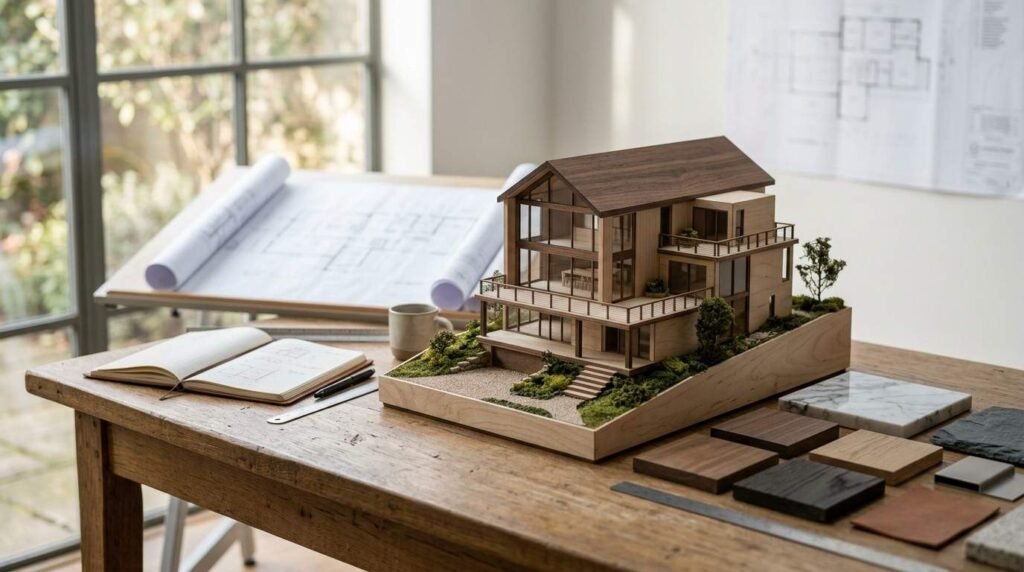
An architect or designer meets with the homeowner to translate wants into buildable drawings, then those drawings go through structural engineering and local plan review before anyone breaks ground.
This phase alone commonly takes two to six months. I tell clients this upfront because it’s the stage people most underestimate.
Site-Built Construction Timeline
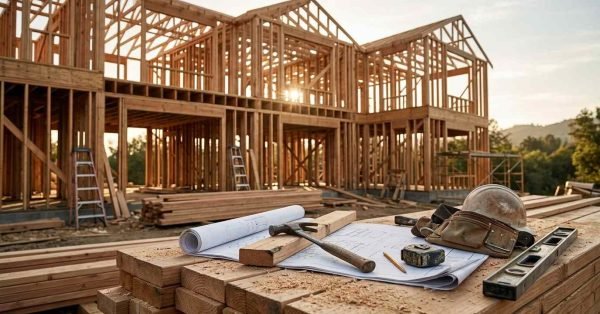
Foundation work, framing, mechanical rough-ins, and finishes happen sequentially on the actual lot, fully exposed to weather, local labor availability, and supply chain timing.
A typical custom build runs 10 to 16 months from groundbreaking to move-in, though larger or more complex homes stretch well past that.
Cost Comparison Across All Four Building Methods
Cost is usually the deciding factor, and the gap between methods is bigger than most people expect going in.
Custom Home Cost Breakdown
Custom construction costs $200 to $550 per square foot in most US markets, with coastal and high-labor-cost metro areas pushing past that range. Land, design fees, permits, and site work sit on top of the build cost itself.
A 2,500-square-foot custom home commonly lands between $500,000 and $1.4 million once everything is accounted for.
Modular, Builder-Grade, and Prefab Cost Ranges
Modular construction runs $100 to $200 per square foot for the structure itself, with site work, foundation, and finishing adding to that base number. Builder-grade production homes typically fall in a similar $110 to $210 per square foot range because of bulk material purchasing and repeated labor efficiency.
Manufactured homes come in lowest, often $50 to $100 per square foot, though land and foundation costs apply separately in nearly every case.
Timeline Comparison Speed to Move-In
Speed to occupancy separates these methods almost as sharply as cost does.
Fastest to Slowest Build Methods
Manufactured homes move fastest, often ready in 8 to 12 weeks total once ordered. Modular homes follow at roughly 4 to 6 months from contract to move-in.
Builder-grade production homes generally take 5 to 8 months depending on the builder’s pipeline and subdivision phase. Custom homes take the longest at 10 to 16 months, sometimes longer for architecturally complex designs.
Quality, Durability, and Long-Term Resale Value
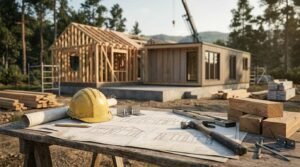
Quality perception drives a lot of the hesitation around modular and prefab, and some of that hesitation is outdated.
Material and Craftsmanship Differences
Modular homes are built to the same local and state building codes as site-built homes, and factory conditions often produce tighter tolerances than an open job site does. Custom homes allow the highest-grade materials and finish work because the homeowner controls every specification directly.
Builder-grade homes use code-compliant but standardized materials chosen for cost efficiency across an entire subdivision. Manufactured homes meet HUD Code, a federal standard, though it differs from local state building codes used for the other three methods.
Appreciation and Resale Considerations
Custom homes in strong locations tend to appreciate well because no two are identical and buyers pay for that scarcity. Modular homes appraise using the same comparable-sales approach as site-built homes once county records classify them as real property attached to a permanent foundation.
Manufactured homes historically appreciate slower, particularly when the land underneath is leased rather than owned outright.
Customization and Design Flexibility Differences
How much control a buyer keeps over the final design varies enormously across these four paths.
What You Can Change in Each Method
Custom construction offers unlimited design flexibility, layout, materials, and finishes, all built around the homeowner’s exact vision. Modular buyers select from a builder’s catalog of floor plans but often adjust room configurations, finishes, and some structural elements within engineering limits.
Builder-grade buyers choose from a fixed plan book with a defined options list for finishes and minor layout tweaks. Manufactured home buyers pick from set floor plans with the least structural flexibility of the four, though interior finish packages have expanded significantly in recent years.
Land, Permits, and Zoning Considerations by Build Type
Where a home sits and how it gets classified affects permitting far more than most buyers anticipate.
Foundation and Site Prep Requirements
Custom and modular homes both require a permanent foundation and go through the same local permitting process as any site-built structure. Builder-grade homes follow standardized foundation plans that speed up permit approval within a subdivision that’s already zoned and platted.
Manufactured homes face zoning restrictions in some municipalities that site-built and modular homes don’t face, and some jurisdictions require additional permits for HUD-code homes specifically. I always tell buyers to confirm local zoning before purchasing land for a manufactured home.
Financing Options for Each Home Building Method

Financing structure shifts based on how a home is classified, and this catches first-time buyers off guard constantly.
Construction Loans vs. Traditional Mortgages
Custom homes typically use a construction-to-permanent loan that converts to a standard mortgage once the home is finished and inspected. Modular homes usually qualify for the same construction and permanent mortgage products as site-built homes since they’re classified as real property.
Builder-grade production homes often qualify for standard mortgages directly since the builder carries construction risk before closing. Manufactured homes sometimes require chattel loans instead of traditional mortgages, particularly when the land is leased rather than owned, and chattel loans commonly carry higher interest rates.
Which Home Building Method Is Right for You?
Every buyer’s priorities land differently across cost, speed, control, and land situation, and that combination points toward one method more than the others.
Decision Checklist by Priority
Buyers prioritizing maximum design control and willing to accept a longer timeline lean toward custom construction. Buyers balancing decent customization against a faster timeline and lower cost per square foot lean toward modular.
Buyers wanting a proven floor plan in an established, already-zoned subdivision lean toward builder-grade. Buyers prioritizing the lowest possible cost and fastest occupancy, and who own or are buying land already zoned for it, lean toward manufactured housing.
Conclusion
Custom, modular, builder-grade, and prefab construction each solve a different problem around cost, timeline, and control. Understanding how they differ on financing, permitting, and long-term value turns a confusing decision into a clear one.
We help homeowners and property managers navigate every stage of a build or renovation project, from initial planning through final walkthrough. Reach out to Mr. Local Services to connect with trusted professionals who match your project to the right approach from day one.
Frequently Asked Questions
Is a modular home cheaper than a custom home?
Yes, modular homes typically cost $100 to $200 per square foot versus $200 to $550 for custom construction. The factory-controlled process reduces labor and material waste significantly.
How long does it take to build a modular home?
Modular homes take roughly 4 to 6 months from contract signing to move-in. Factory construction runs in parallel with site and foundation prep, cutting total time compared to custom builds.
Do modular homes hold their value like site-built homes?
Modular homes appraise the same way site-built homes do once classified as real property on a permanent foundation. Appreciation depends more on location and market conditions than construction method.
What’s the difference between modular and manufactured homes?
Modular homes meet local state building codes, the same as site-built homes, while manufactured homes meet the federal HUD Code. That code difference affects financing, zoning, and resale classification.
Can I customize a builder-grade home?
Builder-grade homes allow limited customization through a predefined options list covering finishes and minor layout choices. Structural changes outside that list generally aren’t available.
What financing works best for a manufactured home?
Manufactured homes on owned land often qualify for standard mortgages, while homes on leased land typically require chattel loans. Chattel loans usually carry higher interest rates than traditional mortgages.
Which building method is fastest to move-in?
Manufactured homes move fastest at 8 to 12 weeks total, followed by modular at 4 to 6 months. Custom homes take the longest at 10 to 16 months.
Do custom homes cost more to insure than modular homes?
Insurance costs depend more on square footage, location, and materials than construction method itself. Custom homes with higher-end finishes sometimes carry higher replacement-cost premiums.