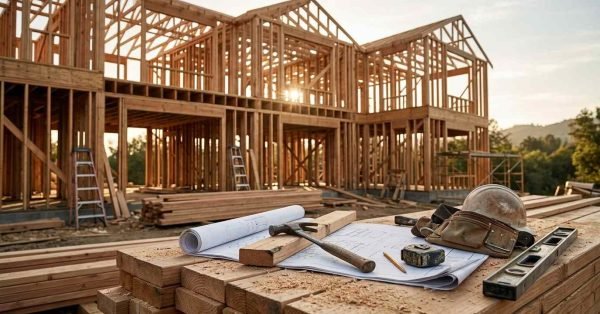
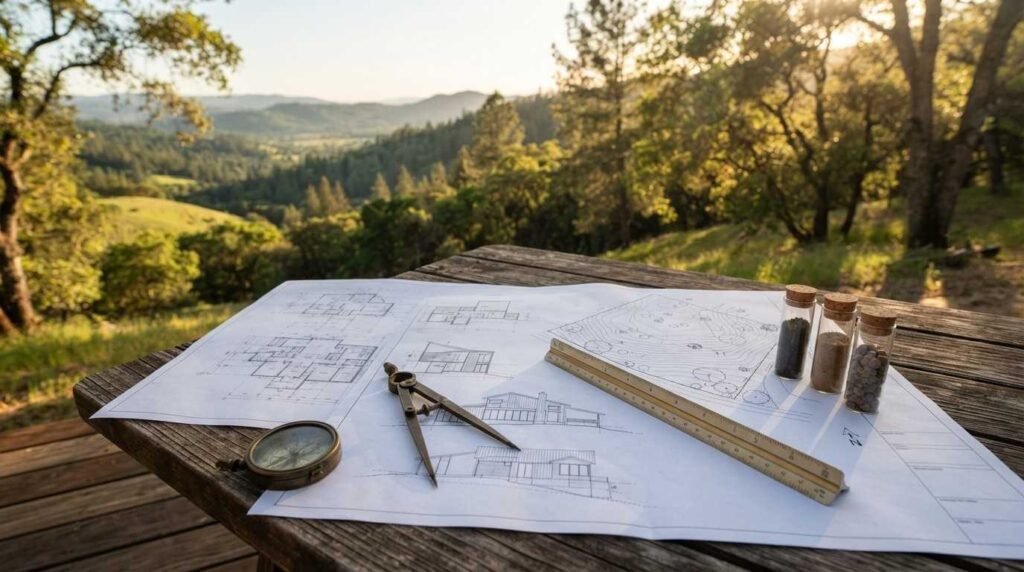
The right lot decides more about your custom home than the floor plan does. A great house plan on the wrong piece of land creates problems no architect can fully fix: bad drainage, blocked sun, utility costs that balloon before framing even starts. I’ve watched buyers fall for a view or a price tag and skip the parts of due diligence that actually protect the investment.
Land costs keep climbing, and buildable lots keep shrinking in a lot of markets right now. That pressure pushes people to move fast on a parcel before they’ve verified it can even support the home they want. A rushed decision here gets expensive fast, and it’s expensive in ways that show up months later, not on closing day.
This guide walks through lot types and how each one shapes your build, then covers the legal and physical checks zoning, soil, and site conditions that determine what you’re actually allowed to build. From there, I get into utilities and infrastructure, how location and lot shape affect design and budget, and the professionals and process you need around you to avoid the mistakes that trip up most first-time land buyers.
What “Choosing the Right Lot” Really Means for Custom Home Buyers
Choosing a lot is not the same skill as choosing a house. A lot is a piece of undeveloped or previously developed land defined by its legal boundaries, physical characteristics, and permitted uses under local zoning law. Most buyers walk a property, like the trees or the view, and stop there.
I look at a lot as a bundle of constraints first and a blank canvas second. Every constraint the zoning code, the soil, the slope, the utility lines narrows down what home actually fits. Buyers who understand this upfront avoid redesigning their dream home around a lot that never should have made the shortlist.
The right lot supports your design intent, fits your budget once site costs are included, and clears legal review without special exceptions. Anything less turns into compromise you didn’t plan for.
Understanding Lot Types and How They Shape Your Build
Lot type sets the boundaries of what’s realistic before you draw a single wall. Infill lots, suburban parcels, rural acreage, and waterfront property each come with a different cost structure and a different set of rules.
I always tell people to match lot type to lifestyle first, then worry about the house design. A rural five-lot-for-your-acre parcel and a narrow urban infill lot solve completely different problems, and they require completely different budgets for site work
Infill Lots vs. Suburban Lots vs. Rural Acreage
Infill lots sit within already-developed urban or close-in neighborhoods, typically on parcels previously built on or skipped during earlier development. They usually come with utilities already at the property line, which saves real money on site development.
Suburban lots in newer subdivisions tend to be larger and follow HOA design guidelines that restrict exterior materials, roof pitch, and sometimes square footage. Rural acreage offers space and privacy but often means paying for a well, a septic system, and a longer driveway before construction even starts.
I push people toward infill or suburban lots when budget certainty matters more than land. Rural acreage rewards buyers who have room in their budget for surprises.
Corner Lots, Cul-de-Sac Lots, and Waterfront Lots
Corner lots get more light and often allow more design flexibility, but they usually carry two street-facing setback requirements instead of one, which shrinks your buildable area. Cul-de-sac lots tend to have irregular, pie-shaped boundaries that create unique design opportunities but complicate garage placement and driveway angles.
Waterfront lots command premium prices and premium restrictions. Flood zone requirements, elevated foundation rules, and environmental setbacks from the water’s edge can eat into buildable square footage more than buyers expect.
I’ve seen waterfront deals fall apart at the permit stage because nobody checked the setback from the high-water mark before making an offer. That check belongs early, not after you’ve fallen in love with the view.
Zoning, Setbacks, and Building Codes You Must Verify First
Zoning determines what you’re legally allowed to build before design even enters the conversation. Skipping this step is the single most expensive mistake I see in custom home projects.
Zoning is a local government classification system that dictates permitted land uses, density, building height, and lot coverage within a defined area. Pull the zoning code for the parcel before you get emotionally attached to it.
How Zoning Classifications Affect What You Can Build
Residential zoning designations vary by density; single-family, low-density multi-family, and rural residential all carry different rules on lot coverage, accessory structures, and even home-based business use. Some zones cap house size as a percentage of lot size, which matters enormously if you’re planning a large home on a smaller parcel.
I always confirm the zoning designation matches the buyer’s actual plans, not just the general use category. A zone that technically allows single-family homes can still block a detached garage, a guest suite, or a home office over a certain square footage.
Setback Requirements and Buildable Area Calculations
Setbacks define the minimum distance a structure must sit from the front, side, and rear property lines. Front setbacks often run 20 to 30 feet, side setbacks 5 to 15 feet, and rear setbacks vary widely by municipality.
Subtract every setback from the total lot dimensions, and you get your actual buildable envelope, and that number is almost always smaller than buyers assume from looking at the lot size alone. I calculate this before recommending any lot, because a beautiful half-acre parcel with generous setbacks can leave less usable space than a smaller lot with lighter restrictions.
Soil Quality, Topography, and Site Conditions That Affect Cost
Soil and slope decide your foundation type, and foundation type swings your budget more than almost any other single factor. I treat this section as non-negotiable due diligence, not an optional nice-to-have.
Poor soil conditions turn a standard slab foundation into a deep pier-and-beam system costing tens of thousands more. Nobody wants that discovery after closing.
Soil Testing and Why It Matters Before You Buy
A geotechnical soil test identifies bearing capacity, expansive clay content, and groundwater levels that directly determine foundation design. The National Association of Home Builders notes that foundation costs can range from roughly 15% to over 25% of total construction budget depending on soil conditions and site prep needs. That range makes a soil test one of the cheapest insurance policies in the entire home-buying process.
I recommend ordering the soil test before the purchase contract goes non-contingent, not after. A few hundred dollars spent upfront prevents a five-figure surprise during foundation bids.
Slope, Drainage, and Grading Considerations
Sloped lots need retaining walls, extra excavation, or a walkout basement design to work with the grade instead of against it. Flat lots need positive drainage engineered away from the foundation, or you inherit water problems the day construction finishes.
I walk every lot after a rain when I can, because standing water reveals drainage problems no dry-day inspection ever catches. A lot that looks perfect on a sunny afternoon can hide a serious grading issue that only shows up in wet weather.
Utility Access and Infrastructure Readiness
Utility access is one of the most overlooked cost variables in lot selection. A lot two miles from the nearest water main looks the same on paper as one sitting right at the property line, until the site development bids come back.
I always confirm utility distance and connection cost before finalizing a lot decision. This single factor has derailed more budgets than almost any other site condition.
Water, Sewer, and Septic System Requirements
Municipal water and sewer connections are simpler and generally cheaper when the lines already run along the property line. Lots requiring a well and septic system need a percolation test to confirm the soil can actually support a septic field, and that test has to pass before you can assume the lot is buildable at all.
I never recommend skipping a perc test on any lot without existing sewer service. A failed test can make an otherwise perfect lot unbuildable for a standard home.
Electrical, Gas, and Broadband Availability
Extending power lines to a remote lot can run into the tens of thousands of dollars depending on distance from the nearest transformer. Natural gas access matters if the home design relies on gas appliances or heating, and broadband availability increasingly affects resale value as remote work stays common.
I ask the local utility company directly about extension costs before a client makes an offer. Verbal assurances from a seller about “utilities nearby” don’t hold up once the actual bids come in.
Evaluating Location Factors Beyond the Property Line
The lot itself is only half the equation. Location factors outside the property boundary shape daily life and long-term resale value just as much as the physical site does.
I encourage buyers to spend time in the neighborhood at different times of day before committing. A lot that seems quiet on a Tuesday morning can sit on a busy commuter route by Friday evening.
Commute Times, School Districts, and Neighborhood Growth
School district boundaries directly affect resale value in most markets, even for buyers without children. Commute time to major employment centers should factor into the decision with the same weight as the lot’s physical features.
I look at neighborhood growth trends too; permit activity, new construction nearby, and planned commercial development all signal where property values are headed. A lot in a growing area often appreciates faster than a nearly identical lot in a stagnant one.
Flood Zones, Natural Hazards, and Environmental Restrictions
FEMA flood zone maps classify properties into risk categories that determine whether flood insurance is required and how a home must be elevated during construction. A lot sitting in a high-risk flood zone carries ongoing insurance costs and construction restrictions that some buyers never budget for.
Wetland designations, wildfire risk zones, and protected habitat areas can all restrict where and how you build. I check these overlays early, because a restriction discovered after purchase can shrink the buildable area dramatically or block construction entirely.
How Lot Size and Shape Influence Your Home Design
Lot dimensions dictate home footprint more directly than most buyers realize going in. A narrow lot pushes design toward a two-story layout, while a wide, shallow lot favors a sprawling single-story plan.
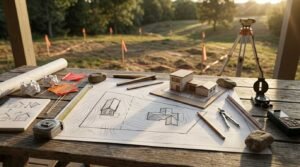
Irregular lot shapes pie-shaped, flag lots, or lots with an unusual angle create design opportunities but also complicate standard floor plans. I always match the lot’s actual dimensions against the home design before either one gets finalized, because forcing a rectangular floor plan onto an irregular lot usually means wasted space or an awkward layout.
Solar orientation matters here too. A lot’s east-west axis affects natural light, energy efficiency, and where you’ll want to position major windows and outdoor living space.
Budgeting for Land Costs vs. Site Development Costs
Land price is only the first number in a much longer budget conversation. Site development costs grading, utility connections, tree removal, driveway construction regularly add a substantial percentage on top of the purchase price, and buyers who forget this end up underfunded before the house is even framed.
I build a full site development estimate before recommending a final lot, not after the offer gets accepted. That estimate has changed which lot a buyer chose more times than I can count.
Hidden Costs That Surprise First-Time Lot Buyers
Tree removal, boulder excavation, and unexpected rock formations can add tens of thousands to a project that looked straightforward on paper. Impact fees, permit costs, and utility hookup charges vary widely by municipality and rarely show up in the listing price.
I ask sellers and local building departments directly about these fees before finalizing any lot decision. A lot priced lower than a competing parcel can end up costing more once every hidden fee gets factored in.
How to Compare Total Investment Across Multiple Lots
Compare lots on total delivered cost, not sticker price. That means land price plus estimated site development, utility connection, permit fees, and any required environmental mitigation, all added together into one number per lot.
I build this comparison as a simple side-by-side table for every client evaluating more than one parcel. It almost always changes which lot looks like the better deal.
Working With Professionals During the Lot Selection Process
Lot selection is not a solo research project. The right professionals catch problems a buyer without technical training simply won’t see until it’s too late to walk away cheaply.
I bring in the same core team on every lot evaluation, regardless of how straightforward the parcel looks at first glance. Skipping this step to save a few hundred dollars is the wrong place to cut corners.
The Role of a Surveyor, Civil Engineer, and Builder
A licensed surveyor confirms actual property boundaries and identifies easements that might restrict where you can build. A civil engineer evaluates drainage, soil-bearing capacity, and site grading needs before you commit to a purchase price.
Your builder should walk the lot with you before you make an offer, not after closing. Builders see site challenges through a construction-cost lens that most buyers and even real estate agents miss entirely.
Questions to Ask Before You Make an Offer on Land
Ask directly about easements, deed restrictions, HOA covenants, and any pending zoning changes in the area. Ask about utility connection distance, soil test results if available, and whether the lot has ever flooded.
I tell every client to get these answers in writing when possible. Verbal reassurances from a seller carry no weight once you own the problem.
Common Mistakes Homeowners Make When Choosing a Lot
Buyers fall in love with a view and skip the zoning check. That single mistake causes more redesigns and budget blowouts than any other error in the entire lot-selection process.
Another common mistake is assuming a lower purchase price means a better deal, without factoring in site development costs that can erase the savings several times over. Rushing the offer to beat other buyers, without ordering a soil test or confirming utility access first, ranks right up there too.
I see buyers skip the perc test on a septic lot because the seller assured them it would pass. That assumption has cost people an entire project when the test came back failed after the purchase closed.
A Step-by-Step Checklist for Selecting Your Custom Home Lot
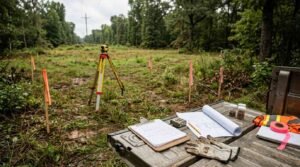
Here’s the sequence I walk every client through, in order, before any offer goes in.
- Confirm zoning classification and permitted uses for the parcel
- Calculate buildable area after all setback requirements
- Order a soil test and, if applicable, a septic perc test
- Confirm utility distance and connection costs with local providers
- Check FEMA flood zone status and any environmental overlays
- Walk the lot after rain to observe drainage firsthand
- Bring in a surveyor to confirm boundaries and easements
- Build a full site development cost estimate with your builder
- Compare total delivered cost across every lot under consideration
- Get zoning, utility, and disclosure answers in writing before offering
Following this order, in this sequence, prevents the majority of costly surprises I see in custom home projects.
Conclusion
Choosing the right lot means verifying zoning, soil, utilities, and site conditions before falling for a view or a price. Every constraint on a parcel shapes what home you can actually build and what it costs to build it.
Skipping due diligence turns an exciting purchase into an expensive lesson months later. The lots that work best are the ones vetted early, not the ones chosen on emotion.
We built our process around exactly this kind of due diligence. Reach out to Mr. Local Services, and we’ll help you evaluate a lot before you commit to it.
Frequently Asked Questions
What is the first thing to check before buying land for a custom home?
I check zoning classification first, since it determines what you’re legally allowed to build. Skipping this step risks falling for a lot that can’t support your planned home design.
How much does a soil test cost before buying a lot?
Soil tests typically run a few hundred dollars depending on lot size and testing depth required. That cost is minor compared to the foundation surprises it prevents.
Do I need a septic system if the lot has no sewer access?
Yes, a lot without municipal sewer access needs a septic system, which requires a passing percolation test first. I never recommend buying a lot without sewer access until that test confirms the soil can support a septic field.
How do setbacks affect how much of my lot I can build on?
Setbacks subtract a fixed distance from every property line, shrinking your buildable area below the total lot size. I calculate the actual buildable envelope before recommending any lot to a client.
What’s the difference between an infill lot and a suburban lot?
Infill lots sit within already-developed areas and typically have utilities already at the property line. Suburban lots are usually larger but often follow HOA design restrictions on exterior finishes and roofline.
How do I know if a lot is in a flood zone?
I check the FEMA flood zone map for the parcel’s exact address before recommending it. A high-risk flood zone designation adds insurance costs and construction requirements buyers need to budget for early.
Should I hire a surveyor before making an offer on land?
Yes, a surveyor confirms actual property boundaries and identifies easements that could restrict construction. I bring a surveyor in before any offer, not after the purchase closes.
Why do site development costs vary so much between lots?
Site development costs depend on utility distance, tree removal needs, grading requirements, and soil conditions unique to each parcel. Two lots priced identically can require very different site budgets once those factors get evaluated.
What’s the biggest mistake first-time land buyers make?
The biggest mistake I see is skipping zoning and soil verification because a lot looks perfect on the surface. That shortcut causes more budget blowouts and redesigns than any other single decision in the process.