Building a floating home requires careful planning across structural design, permitting, utility systems, and ongoing maintenance — and getting each phase right determines whether your home is safe, comfortable, and built to last.
Understanding the full scope of a floating home build helps you avoid costly mistakes before construction begins. This guide breaks down every major phase clearly.
From hull design and zoning permits to plumbing, electrical, and year-round upkeep, this guide covers what you need to know to plan and execute a successful floating home build.
What Is a Floating Home?
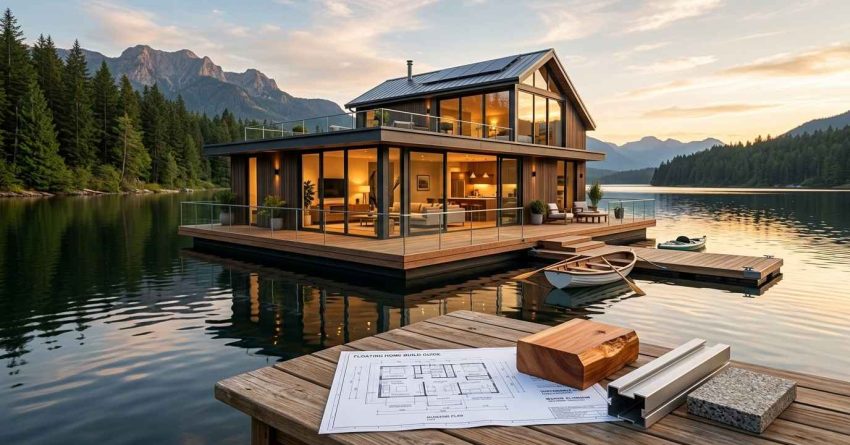
A floating home is a permanent residential structure built on a buoyant platform or hull that sits on a body of water. Unlike a boat, a floating home is not self-propelled and is typically moored in a fixed location at a marina or designated waterway. It functions as a full-time residence with the same systems found in a land-based home, including plumbing, electrical, heating, and cooling.
Floating Home vs. Houseboat: Key Differences
A houseboat is a motorized vessel with living quarters that can navigate waterways. A floating home is a stationary structure permanently moored in one location. Floating homes are typically larger, built to residential construction standards, and connected to shore-based utilities. Houseboats are registered as vessels; floating homes are often classified as real property.
Types of Floating Home Foundations
The two primary foundation types are concrete pontoons and steel hulls. Concrete pontoons offer durability and low maintenance, while steel hulls provide flexibility in design and are more common in custom builds. Some floating homes use foam-filled fiberglass floats for lighter structures. The foundation type affects buoyancy capacity, maintenance requirements, and long-term structural integrity.
Floating homes belong to a broader category of compact, alternative living structures — our complete guide to tiny home options covers the full range of small-footprint builds available to homeowners across the USA.
Planning Your Floating Home Build
Thorough planning before construction begins is the single most important factor in a successful floating home build. This phase covers site selection, legal requirements, and design decisions that affect every subsequent step.
Zoning Laws and Permits for Floating Homes in the USA
Floating homes are regulated at the state, county, and municipal level. Zoning laws vary significantly by location — some jurisdictions classify floating homes as real property, while others treat them as vessels subject to maritime regulations. Before purchasing a hull or hiring a designer, confirm that your intended mooring location permits permanent residential floating structures. You will typically need a building permit, a mooring permit from the marina or waterway authority, and approvals for utility connections. Consulting a local land-use attorney familiar with waterfront regulations is strongly recommended.
Choosing the Right Marina or Waterway Location
Location determines your access to utilities, your exposure to weather and water conditions, and your long-term mooring costs. Evaluate marinas based on available shore power capacity, freshwater and sewage hookup availability, wave and wind exposure, and proximity to services. Calm, protected waterways with established marina infrastructure are the most practical choice for permanent floating home living.
Understanding how structural decisions connect to long-term property value is essential — our home remodeling services explains how professional planning and design support translate into lasting results.
Floating Home Construction: Step-by-Step Process
The construction of a floating home follows a logical sequence from the foundation up. Each phase must be completed and inspected before the next begins.
Step 1 — Designing the Hull and Float Platform
The hull or float platform is the foundation of your floating home. A structural engineer with marine experience should design the platform to support the full weight of the structure, including all systems, furnishings, and occupants, with adequate freeboard — the distance between the waterline and the deck. Concrete pontoons are poured and cured before the structure is built on top. Steel hulls are fabricated, welded, and coated with anti-corrosion treatments before launch.
Step 2 — Structural Framing and Exterior Shell
Once the platform is in place, structural framing begins using light-gauge steel or engineered lumber. Weight distribution is critical — heavier materials must be positioned low and centered to maintain stability. The exterior shell typically uses fiber cement siding, composite panels, or other moisture-resistant cladding. Roof design is usually flat or low-pitch to reduce wind resistance and keep the center of gravity low.
Step 3 — Plumbing and Electrical Systems on Water
Water supply on a floating home connects to marina shore water via a flexible hose that accommodates movement. Waste management requires either a connection to a marina sewage system or a certified holding tank with pump-out service. All plumbing must use flexible connections at the hull interface to prevent cracking from movement and vibration.
Water supply and waste management on a floating home require specialized installation that differs significantly from land-based construction — our floating home plumbing resource explains what licensed plumbers assess and install for water-based properties.
Shore power connections and onboard wiring must meet strict safety codes for water-based dwellings, including compliance with ABYC (American Boat and Yacht Council) electrical standards and NFPA 303 fire protection requirements — our guide to marine electrical systems outlines what certified electricians inspect, install, and certify for floating home builds.
Step 4 — Interior Finishing and Insulation
Insulation on a floating home must address both thermal performance and moisture resistance. Closed-cell spray foam is the preferred choice because it provides a vapor barrier, adds structural rigidity, and resists moisture intrusion. Interior finishing follows standard residential practices, with a strong preference for moisture-tolerant materials such as PVC trim, porcelain tile, and engineered hardwood. Built-in storage and custom cabinetry are common in floating homes to maximize limited square footage.
Essential Systems Every Floating Home Needs
A floating home requires the same core systems as any permanent residence, but each system must be selected and installed with the waterborne environment in mind.
HVAC Solutions for Floating Homes
Water-source heat pumps are the most efficient HVAC option for floating homes because they use the surrounding water as a heat exchange medium. Mini-split systems are also widely used due to their compact size, zoned control, and ability to handle high-humidity environments. Ducted systems are less common because of the difficulty of routing ductwork through a compact, moisture-prone structure.
Heating and cooling a floating home presents unique challenges due to humidity, limited insulation space, and proximity to water — our HVAC for floating homes section explains which systems perform best and what professional installation involves.
Water Supply, Waste Management, and Plumbing
Shore water connections use a backflow preventer and pressure regulator to protect the home’s plumbing from pressure fluctuations. Hot water is typically supplied by a tankless water heater to save space. Greywater and blackwater must be managed according to local marina regulations and federal Clean Water Act requirements. Many floating homeowners install a composting toilet system as a supplementary waste management solution.
Electrical Safety and Shore Power Connection
Shore power is supplied through a marina pedestal at 30-amp or 50-amp service. A galvanic isolator or isolation transformer is required to prevent galvanic corrosion, which occurs when electrical current flows through the water between dissimilar metals. All outlets in wet areas must be GFCI-protected. A whole-home surge protector is strongly recommended to guard against voltage spikes from the marina electrical system.
Maintaining a Floating Home Year-Round
Floating homes require more frequent maintenance than land-based homes due to constant exposure to water, humidity, and biological growth. A consistent maintenance schedule protects the structure and extends its lifespan.
Hull Inspection and Anti-Fouling Maintenance
The hull or float platform should be inspected by a qualified marine surveyor every three to five years. Concrete pontoons should be checked for cracks, spalling, and rebar corrosion. Steel hulls require regular inspection for rust, coating failure, and weld integrity. Anti-fouling paint applied to submerged surfaces prevents the growth of barnacles, algae, and other marine organisms that accelerate structural deterioration.
High-humidity environments like floating homes accelerate lint buildup in dryer vents, creating a fire risk that requires regular professional attention — our dryer vent cleaning service ensures vents stay clear and safe year-round.
Seasonal Upkeep Checklist for Floating Homeowners
Consistent seasonal maintenance prevents small issues from becoming expensive repairs. Key tasks include:
- Spring: Inspect hull coating, check all through-hull fittings, test bilge pumps, service HVAC filters
- Summer: Clean and inspect dock lines and fenders, check shore power connections, inspect roof and exterior cladding
- Fall: Winterize water lines if in a freeze-prone location, inspect insulation for moisture intrusion, service heating system
- Winter: Monitor mooring lines for ice damage, check bilge pump operation, inspect electrical connections for corrosion
Keeping a floating home in top condition requires consistent attention to both structural and mechanical systems — our routine home maintenance service connects homeowners with skilled professionals who handle recurring upkeep tasks efficiently.
Costs to Build a Floating Home in the USA
Floating home construction costs vary widely based on size, location, materials, and the complexity of onboard systems. Most custom floating homes in the USA range from $150,000 to $500,000 or more for the structure alone, not including the mooring slip, which can cost between $500 and $2,500 per month depending on location and marina amenities.
Cost Breakdown by Component
| Component | Estimated Cost Range |
| Hull / Float Platform | $30,000 – $100,000 |
| Structural Framing and Exterior | $40,000 – $120,000 |
| Plumbing Systems | $15,000 – $35,000 |
| Electrical Systems | $12,000 – $30,000 |
| HVAC Systems | $10,000 – $25,000 |
| Interior Finishing | $25,000 – $80,000 |
| Permits and Engineering | $5,000 – $20,000 |
| Total Estimated Range | $137,000 – $410,000+ |
Interior finishing costs vary significantly based on the complexity of built-in storage, cabinetry, and structural woodwork — our custom carpentry work details what professional carpenters deliver for compact and custom builds.
Hiring Professionals for Your Floating Home Build
A floating home build requires a team of specialists, not generalists. The core team typically includes a naval architect or marine engineer for hull design, a licensed general contractor with marine construction experience, a licensed plumber familiar with marina utility connections, and a licensed electrician certified in marine electrical systems.
Interior wall finishing on a floating home requires moisture-resistant materials and precise installation — our drywall installation service connects you with professionals experienced in humidity-prone environments.
Selecting and installing windows that withstand waterfront conditions is a critical step in any floating home build — our marine-grade windows service covers selection, installation, and sealing for water-adjacent properties.
Exterior doors on floating homes must resist moisture, salt air, and temperature swings — our exterior door installation service ensures proper fitting, sealing, and hardware selection for waterfront builds.
When evaluating contractors, verify their experience with water-based construction specifically, check references from completed floating home projects, and confirm that all subcontractors carry appropriate licensing and insurance for marine work. Mr. Local Services connects homeowners with vetted professionals across all the trades needed to complete a floating home build to the highest standard.
Conclusion
Building a floating home involves coordinated decisions across hull engineering, permitting, utility systems, and interior construction. Each phase depends on the one before it, making thorough planning the foundation of a successful build.
The systems that keep a floating home safe and comfortable — plumbing, electrical, and HVAC — require specialists with marine experience, not standard residential contractors. Choosing the right professionals at every stage protects your investment.
Mr. Local Services connects you with skilled, vetted professionals across every trade your floating home build requires — from structural framing and plumbing to electrical, HVAC, and interior finishing.
Frequently Asked Questions
How long does it take to build a floating home?
Most custom floating home builds take between 12 and 24 months from design to completion. The timeline depends on hull fabrication lead times, permit approval, and the complexity of onboard systems. Pre-fabricated floating home kits can reduce the timeline to 6 to 12 months.
Do you need a special permit to live on a floating home?
Yes. Floating homes require building permits, mooring permits, and utility connection approvals. Requirements vary by state and municipality. Some jurisdictions also require a conditional use permit if the waterway is not zoned for permanent residential use.
Can a floating home be connected to city utilities?
Most floating homes connect to marina-supplied shore water, shore power, and sewage systems, which are typically connected to municipal infrastructure. Direct city utility connections are possible in some locations but depend on marina setup and local regulations.
How much does it cost to build a floating home?
Custom floating home builds in the USA typically range from $150,000 to $500,000 or more, depending on size, materials, and systems complexity. This figure does not include the cost of a mooring slip, which adds $500 to $2,500 per month in ongoing costs.
What is the lifespan of a floating home?
A well-maintained floating home built on a concrete pontoon or properly coated steel hull can last 50 years or more. Regular hull inspections, anti-fouling maintenance, and prompt attention to moisture intrusion are the primary factors that determine long-term structural lifespan.
Is a floating home considered real property?
In many US jurisdictions, floating homes that are permanently moored and connected to utilities are classified as real property, making them eligible for traditional mortgage financing and subject to property taxes. Classification varies by state, so confirming local rules with a real estate attorney is essential before purchase or construction.