Building a log home is one of the most rewarding construction projects a homeowner can undertake — a process that combines natural materials, skilled craftsmanship, and careful planning to create a structure that is as durable as it is distinctive. Log homes are defined by their use of solid or engineered log walls as the primary structural system, giving them a thermal mass, aesthetic character, and longevity that conventional framed homes cannot replicate. Whether you are planning a full custom build on raw land or evaluating a prefabricated log home kit, understanding every phase of the process is essential to making decisions that protect your investment.
Getting this process right matters because the decisions made in the planning stage — site selection, log species, foundation type, and design — directly determine your construction costs, build timeline, and long-term maintenance requirements.
This guide covers every major dimension of the log home build process: what log homes are and how they are built, planning and site preparation, design and floor plans, log selection, kit versus custom decisions, permits and codes, foundation options, the construction sequence, roofing, plumbing and electrical systems, HVAC and insulation, chinking and weatherproofing, windows and doors, flooring, interior finishing, outdoor living spaces, landscaping, long-term maintenance, financing and insurance, and how to hire the right contractors.
What Is a Log Home? Understanding the Basics of Log Construction
A log home is a residential structure in which the exterior walls are constructed primarily from logs — either solid round logs, hand-hewn square logs, or milled dimensional logs — that serve simultaneously as the structural system, the insulating layer, and the finished interior and exterior surface. This integration of structure and finish is what distinguishes log construction from conventional stick-frame building, where separate systems handle each function independently.
Log homes have been built in North America for centuries, and modern log construction has evolved significantly from the pioneer-era notched-log cabin. Today’s log homes are engineered to meet contemporary building codes, energy performance standards, and architectural design expectations while preserving the natural warmth and character that makes log construction so enduring.
Solid Log vs. Timber Frame vs. Log Siding
The three most common approaches to log home construction each produce a distinctly different result in terms of cost, appearance, energy performance, and construction complexity.
Solid log construction uses full-diameter logs — typically 8 to 14 inches or larger — stacked horizontally to form the wall system. The logs are notched at corners and sealed between courses with chinking or gasket systems. Solid log walls provide significant thermal mass, meaning they absorb heat during the day and release it slowly at night, which can reduce heating and cooling loads in the right climate.
Timber frame construction uses a structural skeleton of large-dimension timber posts and beams, with the wall infill provided by structural insulated panels (SIPs), conventional framing, or other systems. Timber frame homes have the exposed wood aesthetic of log construction but allow for greater design flexibility and more predictable energy performance because the insulation system is separate from the structural frame.
Log siding applies dimensional log-profile siding to a conventionally framed structure, creating the appearance of a log home at a lower cost and with simpler construction logistics. Log siding homes do not have the thermal mass or structural character of true log construction, but they are a practical option for budget-conscious buyers who want the aesthetic.
Log homes are built using several distinct structural approaches, and understanding how each method affects cost, energy performance, and long-term durability is essential before committing to a design — our complete guide to log home construction methods breaks down every system, from full-scribe solid log to post-and-beam timber frame, so you can choose the right structure for your land, climate, and budget.
Planning Your Log Home Build: Site, Budget, and Timeline
Successful log home builds are built twice — once on paper and once on the ground. The planning phase is where the most consequential decisions are made, and errors at this stage are the most expensive to correct once construction begins. A realistic plan addresses three interconnected variables: the site, the budget, and the timeline.
Choosing the Right Land and Site Conditions
Not all land is equally suited to log home construction. The ideal site provides stable, well-drained soil capable of supporting a log home’s foundation load, reasonable access for construction equipment and material delivery, and proximity to utilities or a viable plan for off-grid systems. Slope, aspect, prevailing wind direction, and sun exposure all affect both the construction process and the long-term energy performance of the finished home.
Soil testing is not optional. A geotechnical report identifies soil bearing capacity, frost depth, and drainage characteristics — all of which directly determine your foundation type and cost. Sites with expansive clay soils, high water tables, or significant slope require engineered foundation solutions that add cost and complexity.
Setting a Realistic Log Home Build Budget
According to the National Association of Home Builders, the average cost to build a new single-family home in the United States exceeded $392,000 in 2024, and log homes typically carry a premium of 15 to 30 percent above conventional construction costs due to the specialized materials, labor, and engineering involved. A realistic log home budget accounts for land acquisition, site preparation, foundation, the log package itself, mechanical systems, interior finishing, landscaping, and a contingency reserve of at least 10 to 15 percent for unforeseen conditions.
Many first-time log home builders underestimate the cost of site work, which can range from $20,000 to $80,000 or more depending on terrain, access road requirements, and utility installation distances.
Understanding Log Home Build Timelines
A typical log home build takes 12 to 24 months from permit approval to move-in, depending on the complexity of the design, the availability of your log home builder, and the efficiency of the permitting process in your jurisdiction. Kit homes with pre-cut log packages can compress the wall assembly phase significantly, but site work, foundation, mechanical rough-in, and interior finishing timelines are largely the same regardless of whether you choose a kit or a custom build.
Every successful log home build begins with thorough site evaluation and preparation, and the decisions made at this stage directly affect your foundation options, drainage performance, and total project cost — our dedicated guide to log home site preparation covers soil testing, access road requirements, utility hookups, and every land condition factor you need to assess before breaking ground.
Log Home Design and Floor Plans
The design phase of a log home build is where your vision takes structural form. Log home design is not simply a matter of aesthetics — the floor plan you choose determines how logs are stacked and notched, where mechanical systems are routed, how natural light enters the space, and how the home performs thermally over its lifetime.
Working with a Log Home Architect or Designer
Log home design requires a professional who understands the structural behavior of log walls, including how logs settle over time and how that settlement must be accommodated in door frames, window openings, interior partition walls, and mechanical penetrations. A log home architect or a designer employed by a log home manufacturer brings this specialized knowledge to the design process.
Many log home manufacturers offer in-house design services as part of their kit packages, which can reduce design costs but may limit customization options. Independent architects offer greater flexibility but require more coordination between the design team and the log supplier.
Customization Options and Style Considerations
Log homes range from compact single-story cabins to expansive multi-story mountain retreats with open loft systems, great rooms with cathedral ceilings, wraparound porches, and attached garages. The design choices that most significantly affect construction cost are ceiling height, roof complexity, the number of corners (each requires notching and labor), and the extent of custom millwork and built-in features.
The floor plan you choose shapes every downstream decision in your build, from structural log placement to mechanical system routing and interior finishing — our full resource on log home floor plans and design walks through open-concept layouts, loft configurations, single-story ranch plans, and multi-story designs, with guidance on working with a log home architect to customize your build.
Choosing the Right Logs: Species, Grading, and Sourcing
The logs used in your home’s wall system are its most fundamental structural and aesthetic component. Log selection affects the home’s structural integrity, thermal performance, insect and decay resistance, shrinkage behavior, and long-term maintenance requirements. Choosing the wrong species or accepting substandard grading can create problems that are expensive and disruptive to correct after construction.
Common Log Species Used in Home Construction
The most widely used log species in North American residential construction include Eastern white pine, Western red cedar, Douglas fir, Engelmann spruce, and lodgepole pine. Each species has a distinct combination of density, grain structure, natural oil content, and dimensional stability that makes it more or less suitable for different climates, construction methods, and aesthetic preferences.
Eastern white pine is the most commonly used species in the eastern United States due to its wide availability, workability, and relatively low cost. Western red cedar is prized for its natural decay and insect resistance, making it an excellent choice in humid climates. Douglas fir offers exceptional structural strength and is widely used in timber frame applications. Engelmann spruce and lodgepole pine are common in the Rocky Mountain region and are well-suited to high-altitude, low-humidity environments.
Log Grading Standards and What They Mean
Log grading standards establish minimum requirements for straightness, knot size and frequency, moisture content, and structural integrity. The Log Homes Council, a division of the National Association of Home Builders, publishes grading standards that many log home manufacturers follow. Logs that meet these standards are more dimensionally stable, less prone to excessive checking and splitting, and more predictable in their settling behavior.
The species of log you choose affects your home’s structural strength, thermal mass, insect resistance, shrinkage rate, and long-term maintenance requirements — our log species selection guide compares every major species used in residential log construction, including Eastern white pine, Western red cedar, Douglas fir, and Engelmann spruce, with grading standards and sourcing recommendations for each.
Log Home Kits vs. Custom Builds: Which Is Right for You?
One of the most consequential early decisions in the log home build process is whether to purchase a prefabricated log home kit or commission a fully custom build. Both paths can produce a beautiful, durable log home, but they differ significantly in cost structure, design flexibility, construction timeline, and the level of involvement required from the homeowner.
Pros and Cons of Log Home Kit Packages
A log home kit is a pre-engineered package that includes the log wall system — pre-cut, pre-notched, and numbered for assembly — along with the structural components needed to erect the shell. Kit packages vary widely in what they include: some provide only the log walls, while others include the roof system, windows, doors, and interior log components.
The primary advantages of a kit are cost predictability, faster wall assembly, and the engineering assurance that comes with a factory-produced system. The primary limitations are reduced design flexibility — most kit manufacturers offer a catalog of plans with limited customization — and the fact that the kit itself represents only a portion of the total build cost. Site work, foundation, mechanical systems, and interior finishing are not included and must be contracted separately.
Custom builds offer complete design freedom and allow the homeowner to specify every detail of the log selection, joinery style, and architectural character. The tradeoff is higher design and engineering costs, longer lead times, and greater complexity in coordinating the log supplier, general contractor, and subcontractors.
Choosing between a prefabricated log home kit and a fully custom build is one of the most consequential decisions in the planning process, affecting your budget, timeline, design flexibility, and contractor requirements — our detailed log home kits vs. custom builds comparison examines both paths side by side, covering cost differences, what kit packages include, and when a custom build delivers better long-term value.
Permits, Codes, and Regulations for Log Home Construction
Log home construction is subject to the same building permit and code compliance requirements as any other residential construction project, with some additional considerations specific to log structures. Understanding the regulatory landscape before you begin is essential to avoiding costly delays, failed inspections, and required modifications to work already completed.
Zoning, Setbacks, and Local Building Authority Requirements
The first regulatory step is confirming that your intended use — a primary residence, vacation home, or rental property — is permitted on your land under local zoning ordinances. Zoning regulations also establish setback requirements that determine how close to property lines, roads, and waterways you can build.
Log homes are classified as residential structures under the International Residential Code (IRC), which most U.S. jurisdictions have adopted in some form. However, some local jurisdictions have specific provisions or interpretations that affect how log wall assemblies are evaluated for energy code compliance, fire resistance, and structural load calculations. Working with a builder or permit expediter who has experience with log home projects in your jurisdiction can significantly reduce the time and friction involved in the approval process.
Navigating the permit and code compliance process for a log home build requires understanding how local jurisdictions classify log structures, what inspections are required at each construction phase, and how energy codes apply to log wall assemblies — our complete guide to log home building permits and compliance walks through the full approval process, from initial zoning review to final certificate of occupancy.
Foundation Options for Log Homes
The foundation of a log home must support the substantial weight of a full log wall system while managing the site’s specific soil conditions, frost depth, and drainage characteristics. Log homes are compatible with all standard residential foundation types, but the choice between them has significant implications for cost, usability, and long-term performance.
Crawl Space, Basement, Slab, and Pier Foundations Compared
A full basement provides usable below-grade space for mechanical systems, storage, or finished living area and is the most common foundation choice for log homes in cold climates where frost depth requires excavation below the freeze line regardless. A crawl space foundation elevates the home above grade, provides access to mechanical systems, and is less expensive than a full basement, but requires careful moisture management to prevent wood decay and insect activity in the log sill system.
A slab-on-grade foundation is the most cost-effective option and is well-suited to mild climates with stable, well-drained soils. However, slab foundations limit mechanical system access and are not appropriate in areas with significant frost heave risk. Pier-and-beam foundations are used on sloped sites or in areas with poor soil conditions, elevating the structure on concrete or steel piers to distribute the load to stable bearing strata.
The foundation you select must account for your soil conditions, frost depth, drainage patterns, and the structural load of a full log wall system — our resource on log home foundation types covers crawl space, full basement, slab-on-grade, and pier-and-beam options in detail, with guidance on which foundation performs best in different climate zones and terrain types.
The Log Home Construction Process: Phase by Phase
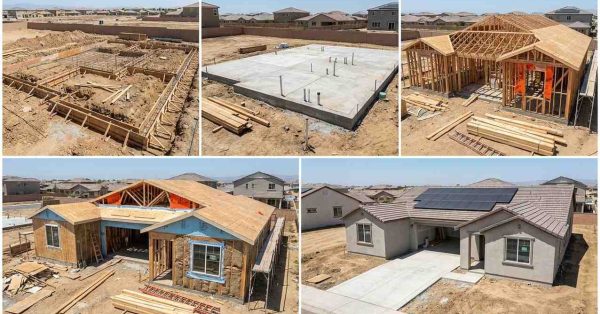
The log home build process follows a defined sequence of phases, each of which must be completed and inspected before the next begins. Understanding this sequence helps homeowners coordinate contractors, anticipate inspection requirements, manage material deliveries, and maintain a realistic timeline.
Site Preparation and Foundation Work
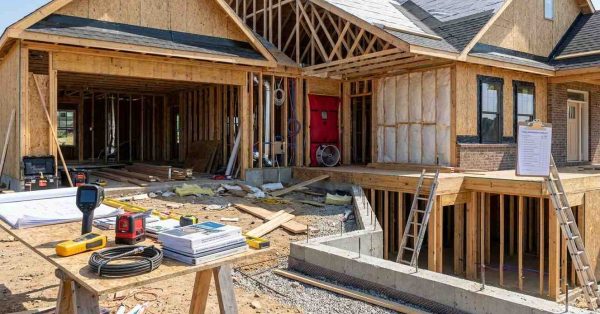
Site preparation begins with clearing and grading the building footprint, establishing access for construction equipment, and installing temporary utilities. Once the site is prepared, excavation begins for the foundation system. Foundation work includes forming and pouring concrete footings, constructing the foundation walls or slab, waterproofing below-grade surfaces, installing drainage systems, and backfilling. This phase typically takes four to eight weeks depending on foundation type and weather conditions.
Log Wall Assembly and Raising
Once the foundation is complete and the sill plate or log sill is installed, log wall assembly begins. For kit homes, pre-cut and numbered logs are delivered and assembled according to the manufacturer’s plan. For custom builds, logs are cut, notched, and fitted on-site by the log home builder. Log walls are raised course by course, with gaskets, chinking backer rod, or other sealing systems installed between each course. Corner notching — whether saddle notch, dovetail, butt-and-pass, or another style — is completed as the walls rise.
Roofing, Windows, and Exterior Finishing
With the log walls at full height, the roof system is framed and sheathed, roofing materials are installed, and the building is dried in. Windows and exterior doors are installed with the settling allowances required by log construction. Exterior chinking and sealing are applied, and the log exterior is stained and sealed to protect against UV degradation and moisture intrusion.
Interior Rough-In and Systems Installation
With the building envelope closed, interior rough-in work begins: framing interior partition walls, installing plumbing supply and drain lines, running electrical conduit and wiring, and installing HVAC ductwork or radiant heating systems. Rough-in inspections are completed before insulation and drywall are installed on partition walls. Interior finishing — flooring, cabinetry, trim, painting, and fixture installation — follows the rough-in phase.
The log home build process moves through a defined sequence of phases, and understanding what happens at each stage helps you coordinate contractors, manage inspections, and avoid costly delays — our full breakdown of log home construction phases covers every step from site clearing and foundation pour through log wall assembly, roofing, rough-in systems, and interior finishing.
Roofing a Log Home: Materials, Pitch, and Installation
The roof system of a log home must perform at the intersection of structural engineering, weather resistance, and aesthetic compatibility with the natural wood exterior. Log homes typically feature steeply pitched roofs with generous overhangs — both of which serve functional purposes in addition to their visual appeal. Deep overhangs protect log walls from direct rain exposure, reducing moisture infiltration and extending the life of the exterior stain and chinking system.
Best Roofing Materials for Log Home Aesthetics and Durability
Architectural asphalt shingles are the most common roofing material for log homes due to their cost-effectiveness, wide color availability, and compatibility with steep-pitch roof systems. Metal roofing — standing seam steel or aluminum — is increasingly popular for log homes because of its exceptional longevity (40 to 70 years), low maintenance requirements, and ability to shed snow loads efficiently in cold climates. Cedar shake and synthetic shake products offer a natural aesthetic that complements log exteriors, though cedar shake requires more maintenance than metal or asphalt alternatives.
Roof pitch in log homes typically ranges from 8:12 to 12:12 or steeper, which affects both the structural load on the log wall system and the choice of roofing material. Steeper pitches shed water and snow more effectively but increase material quantities and labor costs.
Selecting the right roofing system for a log home requires balancing aesthetic compatibility with the natural wood exterior, structural load capacity, and long-term weather resistance — working with experienced professionals who understand log home roofing options ensures your roof system is properly engineered for the pitch, overhang depth, and material weight your log structure requires.
Plumbing and Electrical Systems in Log Homes
Installing plumbing and electrical systems in a log home presents challenges that do not exist in conventional framed construction. The primary challenge is log wall settlement: solid log walls settle vertically as the logs dry and compress under the weight of the structure above, and this settlement — which can range from one to three inches per eight feet of wall height in the first several years — must be accommodated in every system that penetrates or connects to the log wall.
Unique Challenges of Running Systems Through Log Walls
Plumbing supply lines and drain-waste-vent stacks that pass through log walls require flexible connections and oversized chase openings that allow the wall to settle without stressing the pipe. Electrical conduit penetrations through log walls require similar settlement allowances, and outlet boxes and switch plates mounted on log walls must be installed with hardware that allows vertical adjustment as the wall settles.
Running plumbing through a log home presents unique challenges because log walls settle over time, requiring flexible connections and carefully planned chase systems to prevent pipe stress — connecting with specialists experienced in plumbing systems in log homes ensures your supply lines, drain-waste-vent stack, and fixture rough-ins are installed with the settlement allowances and access provisions that log construction demands.
Interior partition walls in a log home are typically framed conventionally and must be constructed with a compression space at the top plate — a gap between the top of the partition wall and the underside of the log above — that allows the log wall to settle without transferring load to the partition. This compression space must be concealed with adjustable trim or a slip joint that maintains a finished appearance as settlement occurs.
Electrical wiring in a log home must account for the natural movement and settling of log walls, requiring conduit systems, flexible connections at junction points, and careful planning of outlet and switch placement before logs are stacked — our electrical wiring for log structures service ensures your system meets code, accommodates log movement, and is safely installed by licensed electricians familiar with the unique demands of log construction.
HVAC and Insulation for Log Homes
Heating, cooling, and ventilating a log home requires a different approach than conventional construction because log walls do not function like insulated stud walls. Log walls provide thermal mass — the ability to absorb, store, and slowly release heat — rather than resistance insulation. This distinction has significant implications for how HVAC systems are sized, designed, and controlled.
Heating, Cooling, and Ventilation Strategies for Log Structures
The thermal mass of a log wall moderates interior temperature swings by absorbing heat during warm periods and releasing it during cool periods. In climates with significant day-night temperature variation, this thermal flywheel effect can meaningfully reduce heating and cooling loads. In climates with sustained extreme temperatures, thermal mass alone is insufficient, and supplemental insulation in the roof system and foundation becomes critical to overall energy performance.
Common heating systems for log homes include forced-air furnaces with ductwork, radiant floor heating (hydronic or electric), wood stoves and fireplaces (which complement the log home aesthetic and provide backup heat), and mini-split heat pump systems that provide both heating and cooling without ductwork. Radiant floor heating is particularly well-suited to log homes because it heats the thermal mass of the floor slab or subfloor, which then radiates heat upward evenly throughout the space.
Log homes have distinct heating and cooling requirements because log walls provide thermal mass rather than conventional cavity insulation, which means your HVAC system must be sized and designed specifically for the way log structures absorb, store, and release heat — our HVAC systems for log homes service connects you with technicians who understand how to design efficient, properly zoned systems for log construction.
Log Home Chinking, Sealing, and Weatherproofing
Chinking and sealing are the primary systems that prevent air infiltration, moisture intrusion, and insect entry through the gaps between log courses and at corner joints. In traditional log construction, chinking was a mortar-like material applied between log courses to fill gaps and create a weathertight seal. Modern chinking materials are synthetic elastomeric compounds that remain flexible as logs expand, contract, and settle — a critical performance requirement that rigid mortar cannot meet.
Chinking Materials and Application Methods
Modern synthetic chinking is applied as a thick, paste-like compound that bonds to the log surface on both sides of the gap while remaining flexible in the center. This three-point adhesion system — bonding to both log faces but not to the backer rod in the center — allows the chinking to stretch and compress with log movement without cracking or losing its seal.
Log profiles that use tight-fitting machined log surfaces with gasket systems between courses may require less chinking than hand-scribed or round log profiles, but all log homes require periodic inspection and maintenance of their sealing systems to maintain weathertight performance. Exterior log surfaces are also treated with UV-protective stains and water repellents that must be reapplied on a regular schedule — typically every three to five years depending on climate exposure and product type.
Chinking and sealing are the primary weatherproofing systems that prevent air infiltration, moisture intrusion, and insect entry through the gaps between log courses — our comprehensive log home chinking and sealing guide covers every material type, from traditional mortar-style chinking to modern synthetic elastomeric compounds, with application methods, maintenance schedules, and product comparisons for every log profile.
Windows and Doors for Log Homes
Windows and doors in a log home are not installed the same way as in conventional framed construction. Because log walls settle vertically over time, every window and door opening must be constructed with a settling space above the frame — a gap that allows the log wall to compress downward without transferring load to the window or door frame, which would cause binding, cracking, and seal failure.
Sizing, Framing, and Energy Efficiency Considerations
The structural opening for a window or door in a log home is constructed using a vertical log buck — a dimensional lumber frame that is set into the log wall opening and attached to the logs on either side with a slip joint that allows vertical movement. The window or door unit is then installed within the buck. The settling space above the buck is filled with compressible insulation and concealed with adjustable trim that can be repositioned as settlement occurs.
Windows in a log home must be installed with slip joints and adjustable hardware that accommodate the natural vertical settling of log walls over the first several years after construction — our log home window installation service ensures every window is properly framed, sealed, and adjusted to move with the structure without binding, leaking, or losing its energy performance rating.
Energy performance is a critical consideration for log home windows because the large glazed areas common in log home designs — picture windows, clerestory windows, and expansive sliding glass doors — can be significant sources of heat loss in cold climates. Triple-pane glazing, low-emissivity coatings, and thermally broken frames are recommended for log homes in climate zones 5 and above.
Exterior and interior doors in a log home require the same settling allowances as windows, with properly constructed door bucks, compression springs, and adjustable trim systems that maintain a weathertight seal as the log structure settles — our log home door framing and installation service covers pre-hung door installation, custom door buck construction, and hardware selection for both entry and interior applications.
Flooring Options for Log Home Interiors
Flooring selection in a log home must balance aesthetic compatibility with the natural warmth of exposed log walls, practical performance in an environment that may experience greater humidity variation than a conventional home, and compatibility with any radiant heating system installed beneath the floor.
Hardwood, Stone, and Tile Flooring in Log Home Settings
Solid hardwood flooring is the most popular choice for log home interiors because its natural grain and warmth complement the log wall aesthetic seamlessly. However, solid hardwood is sensitive to moisture and humidity changes, and log homes — particularly those in humid climates or with crawl space foundations — can experience humidity swings that cause solid hardwood to expand, contract, and gap. Engineered hardwood, which uses a plywood core beneath a hardwood veneer, is more dimensionally stable and is a better choice for log homes with radiant floor heating or significant humidity variation.
Stone tile — slate, travertine, flagstone, and porcelain tile with stone-look finishes — is an excellent choice for log home entry areas, kitchens, and bathrooms because of its durability, moisture resistance, and compatibility with radiant floor heating. Luxury vinyl plank (LVP) has become increasingly popular in log homes because of its waterproof performance, realistic wood-look aesthetics, and compatibility with radiant heat systems.
Flooring in a log home must complement the natural warmth of exposed log walls while performing well in environments that can experience greater humidity variation than conventional framed homes — our guide to flooring options for log home interiors covers hardwood, engineered wood, stone tile, and luxury vinyl plank, with recommendations on which materials handle moisture, radiant heat, and the rustic aesthetic of log construction best.
Interior Finishing: Carpentry, Drywall, and Painting
Interior finishing in a log home requires tradespeople who understand how to work within the unique constraints of log construction — non-plumb walls, settling allowances, exposed log surfaces, and the need to integrate conventional finishing materials with natural wood in a way that feels intentional rather than awkward.
Balancing Rustic Character with Modern Interior Finishes
The most successful log home interiors balance the rustic character of exposed log walls and timber structural elements with clean, well-crafted conventional finishes on partition walls, ceilings, cabinetry, and trim. This balance requires careful material selection and skilled execution at every stage of the finishing process.
Interior trim, built-in cabinetry, stair systems, and custom millwork in a log home require a carpenter who understands how to work with and around log walls that are not perfectly plumb, square, or dimensionally consistent — our custom carpentry for log homes service delivers finish carpentry that integrates seamlessly with the natural character of your log interior.
In log homes where interior partition walls are framed conventionally, drywall installation requires careful attention to settling allowances at the top plate so that partition walls do not transfer load to the log structure as it settles — our drywall installation in log homes service ensures every partition wall, ceiling system, and finish surface is installed with the correct clearances and fastening methods for log construction.
Finishing the interior surfaces of a log home — from painted partition walls and ceilings to stained log accents and sealed wood trim — requires products and application techniques suited to wood-rich environments with natural humidity variation — our interior painting for log home finishes service covers surface preparation, primer selection, stain and topcoat application, and color consultation for log home interiors.
Log Home Decks, Porches, and Outdoor Living Spaces
Outdoor living spaces are an integral part of the log home experience. Wraparound porches, covered decks, screened porches, and open-air patios extend the livable footprint of the home into the natural landscape and are among the most valued features of log home properties. Designing and building these spaces requires the same attention to structural integration and material compatibility that the log home itself demands.
Deck Materials and Design Considerations for Log Homes
Deck framing attached to a log home must be connected with hardware that accommodates the vertical settling of the log wall — a ledger board attached rigidly to a settling log wall will be pulled downward as the wall settles, potentially damaging both the deck structure and the log wall connection point. Properly engineered deck connections use slotted hardware or other settling-accommodation systems that allow the log wall to move independently of the deck frame.
Decking materials for log homes range from pressure-treated lumber and naturally durable species like cedar and redwood to composite decking products that offer low maintenance and long service life. The choice of decking material should complement the log home’s exterior aesthetic while meeting the practical requirements of the climate and use pattern.
A well-designed deck or covered porch extends the living space of a log home while complementing its natural aesthetic, but deck framing must be properly connected to the log structure with hardware that accommodates wall settling and seasonal wood movement — our log home deck construction service designs and builds decks, wraparound porches, and covered outdoor living areas that are structurally integrated with your log home and built to last.
Landscaping and Site Finishing Around Your Log Home
The landscaping and site finishing work completed after the log home is built plays a critical role in protecting the structure’s long-term performance. Poor drainage, excessive vegetation against log walls, and overhanging tree canopy are among the most common contributors to premature log deterioration, moisture damage, and pest infestation.
Drainage, Grading, and Vegetation Management
The finished grade around a log home must slope away from the foundation at a minimum of six inches over the first ten feet to direct surface water away from the structure. Inadequate drainage allows water to pool against the foundation and log sill, creating conditions that accelerate wood decay and attract wood-boring insects. French drains, swales, and downspout extensions are commonly used to manage surface and subsurface water flow around log home sites.
The landscaping plan around a log home must prioritize drainage away from the foundation, maintain adequate clearance between vegetation and log walls to prevent moisture retention and insect access, and create a site environment that enhances the natural character of the structure — our landscaping around a log home service covers grading, drainage systems, planting design, and hardscape installation tailored to log home properties.
Trees near a log home require careful management to prevent overhanging branches from depositing debris on the roof, retaining moisture against log walls, or creating structural risk during storms — our tree management near log homes service covers tree trimming, hazard tree removal, stump grinding, and ongoing canopy management to protect your log home’s exterior and roof system.
Log Home Maintenance: Protecting Your Investment Long-Term
A log home that is properly maintained will last for generations. A log home that is neglected will deteriorate rapidly. The difference between these two outcomes is a consistent, proactive maintenance program that addresses the specific vulnerabilities of log construction: UV degradation of exterior surfaces, moisture infiltration through failed chinking and sealing systems, wood-boring insect activity, and foundation drainage issues.
Staining, Sealing, and Annual Inspection Schedules
The exterior log surfaces of a log home must be protected with a penetrating stain and water repellent system that is reapplied on a regular schedule. Most log home stain manufacturers recommend reapplication every three to five years, though the actual interval depends on climate exposure, the orientation of the wall surface, and the quality of the original application. South-facing and west-facing walls typically require more frequent attention because of greater UV and weather exposure.
Annual inspections should assess the condition of the chinking and sealing system, the integrity of the exterior stain, the condition of the roof and gutters, the performance of the foundation drainage system, and any evidence of insect activity or wood decay. Catching problems early — a small section of failed chinking, a cracked log check that has allowed water infiltration, or early signs of insect activity — is dramatically less expensive than addressing the consequences of deferred maintenance.
Pest Control and Wood Preservation for Log Structures
Wood-boring insects, carpenter ants, and termites pose a specific threat to log homes because the log walls themselves are the primary structural element — any infestation that compromises log integrity can have serious structural consequences — our pest control for log structures service provides inspection, treatment, and prevention programs specifically designed for the unique vulnerabilities of log construction.
Protecting a log home over the long term requires a consistent maintenance program that includes annual inspections, periodic re-staining and re-sealing, chinking repairs, pest monitoring, and drainage management — our complete log home maintenance and preservation guide covers every task in a structured annual schedule, with product recommendations, inspection checklists, and guidance on when to call a professional versus handle maintenance yourself.
Log Home Financing and Insurance Considerations
Financing and insuring a log home requires working with lenders and insurers who understand the unique characteristics of log construction. Many conventional lenders and standard homeowners insurance carriers have limited experience with log homes, which can create challenges in the appraisal process, the underwriting process, and the determination of appropriate coverage limits.
Construction Loans, Permanent Mortgages, and Specialty Insurers
Log home construction is typically financed with a construction-to-permanent loan — a single loan that funds the build phase through a series of draws tied to construction milestones and then converts to a permanent mortgage when the certificate of occupancy is issued. Lenders who specialize in log home construction understand how to structure draw schedules around the log home build sequence and how to appraise log homes accurately using comparable sales from the log home market.
Standard homeowners insurance policies may undervalue a log home because appraisers unfamiliar with log construction may not accurately estimate the replacement cost of the log wall system, custom joinery, and specialized labor required to rebuild after a loss. Specialty insurers who focus on log and timber frame homes offer policies that cover the full replacement cost of the structure, including the log package, custom features, and the additional time required to source and assemble a replacement log system.
Financing and insuring a log home requires working with lenders and insurers who understand how log construction is appraised, what specialty coverage is required for log structures, and how construction loan draws are structured for a phased log home build — our log home financing and insurance guide explains construction loan mechanics, permanent mortgage options, and how to find specialty insurers who cover log homes at full replacement value. Hiring the Right Contractors for Your Log Home Build
The success of a log home build depends as much on the quality of the people building it as on the quality of the materials. Log home construction requires a combination of specialized expertise — log home builders who understand log joinery, settling behavior, and weatherproofing systems — and skilled general tradespeople who can handle the conventional framing, mechanical systems, and interior finishing work that complements the log structure.
What to Look for in a Log Home Builder or General Contractor
A qualified log home builder should have verifiable experience with the specific construction method you are using — hand-scribed, milled, or timber frame — and should be able to provide references from completed projects of similar scope and complexity. Membership in the Log Homes Council or a similar industry organization is a positive indicator of professional standards and ongoing education.
For the general contracting and subcontracting work that surrounds the log package — foundation, mechanical systems, interior finishing, and site work — look for tradespeople who have worked on log home projects before and understand the unique requirements of log construction, including settling allowances, compression spaces, and the coordination required between the log builder and the mechanical trades.
Many log home projects require a combination of specialized log builders and skilled general tradespeople who can handle the conventional framing, finish work, and systems installation that complement the log structure — our skilled contractors for log home projects service connects you with experienced professionals who understand the unique requirements of log construction and can coordinate seamlessly with your log home builder.
Conclusion
Building a log home is a multi-phase process that integrates site selection, structural design, log species selection, foundation engineering, mechanical systems, weatherproofing, interior finishing, and long-term maintenance into a single cohesive project. Every decision made in the planning phase shapes the outcomes of every phase that follows.
The resources linked throughout this guide go deeper into each component of the build — from foundation types and construction phases to chinking systems, flooring options, and maintenance schedules — giving you a complete reference library for every stage of your log home project.
When you are ready to move from planning to action, Mr. Local Services connects you with skilled, experienced professionals across every trade your log home build requires — delivering quality workmanship, transparent service, and dependable results from groundbreaking to move-in day.
Frequently Asked Questions
How long does it take to build a log home from start to finish?
A typical log home build takes 12 to 24 months from permit approval to move-in. Timeline varies based on design complexity, builder availability, and local permitting speed. Kit homes can compress the wall assembly phase but not site work or interior finishing.
How much does it cost to build a log home in the United States?
Log home construction typically costs 15 to 30 percent more than conventional construction, with total project costs ranging from $200,000 to over $600,000 depending on size, location, log species, and finish level. Site work, foundation, and mechanical systems are major cost variables.
Do log homes require special building permits or codes?
Log homes are permitted under the same residential building codes as conventional homes in most U.S. jurisdictions, but some local authorities have specific interpretations for log wall energy compliance and structural load calculations. Working with a builder experienced in local log home permitting is strongly recommended.
How do log walls handle settling, and why does it matter?
Log walls settle vertically as logs dry and compress under structural load, typically one to three inches per eight feet of wall height over the first several years. This settling must be accommodated in every door frame, window opening, interior partition wall, and mechanical penetration to prevent binding, cracking, and system damage.
What is the best log species for building a home?
The best log species depends on your climate, budget, and aesthetic preference. Eastern white pine is widely available and cost-effective in the eastern U.S. Western red cedar offers superior decay and insect resistance in humid climates. Douglas fir provides exceptional structural strength for timber frame applications.
How often does a log home need to be restained and resealed?
Most log home stain and sealant systems require reapplication every three to five years, depending on climate exposure, wall orientation, and product type. South-facing and west-facing walls typically need more frequent attention due to higher UV and weather exposure.
Can a log home be energy efficient?
Yes. Log homes achieve energy efficiency through thermal mass rather than resistance insulation. When properly designed with adequate roof insulation, high-performance windows, and a correctly sized HVAC system, log homes can meet or exceed modern energy code requirements in most climate zones.