A geodesic dome home is a spherical or partial-sphere structure built from a network of triangular panels that distribute weight evenly across the entire frame, creating one of the strongest and most energy-efficient home designs available. These homes have attracted growing interest from homeowners, property investors, and alternative housing enthusiasts across the USA who want a structure that performs well in extreme weather, reduces energy costs, and stands apart from conventional construction.
Understanding what a geodesic dome home actually involves — from initial costs and permitting to long-term maintenance — helps you make a confident, informed decision before committing to a build.
This guide covers the full picture: what geodesic dome homes are, what they cost, how to navigate permits, what maintenance looks like, and how to decide whether this structure type fits your property goals.
What Is a Geodesic Dome Home?
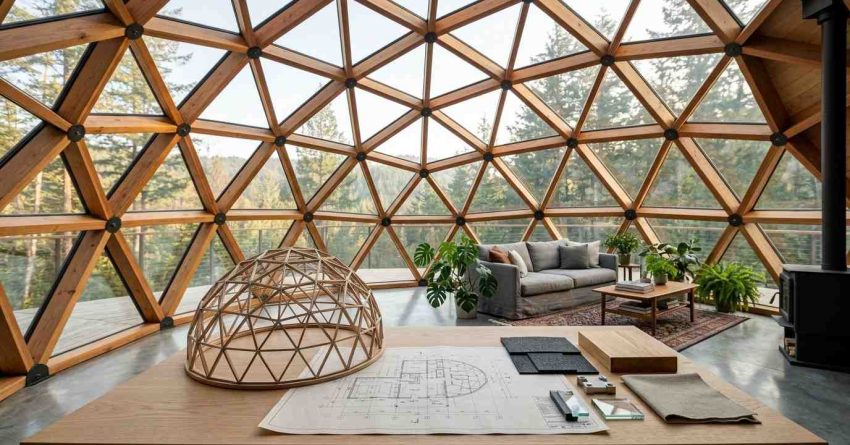
A geodesic dome home is a residential structure based on the geodesic sphere design, originally developed by architect and inventor Buckminster Fuller in the mid-20th century. The design uses a network of triangles arranged across a curved surface to create a self-supporting shell that requires no internal load-bearing walls. This structural approach allows for wide, open interior spaces that are difficult to achieve in conventional rectangular construction.
Geodesic dome homes are classified as alternative or non-traditional housing. They share the alternative housing category with other compact and unconventional structures — our complete guide to tiny home living covers the full spectrum of alternative housing types, from container homes to yurts, helping you compare options before committing to a build.
The dome’s shape is defined by its frequency rating, which refers to how many times each triangular face of the base structure is subdivided. Higher frequency ratings produce a smoother, more spherical appearance and greater structural complexity. Most residential geodesic domes in the USA use a 3V or 4V frequency design, which balances structural integrity with manageable construction complexity.
Key Structural Features of a Geodesic Dome
The defining structural feature of a geodesic dome is its triangulated panel system. Triangles are the only geometric shape that cannot be distorted under load without changing the length of at least one side, which makes them inherently rigid. When hundreds of triangles are connected across a curved surface, the resulting structure distributes stress evenly across every joint and panel rather than concentrating it at corners or load-bearing walls.
This distribution of force gives geodesic domes exceptional resistance to wind, snow load, and seismic activity. The dome’s curved exterior also reduces wind resistance compared to flat-walled structures, which is a meaningful advantage in high-wind regions. The interior volume-to-surface-area ratio is higher in a dome than in any other enclosed shape, which directly affects heating and cooling efficiency.
Benefits of Living in a Geodesic Dome Home
Geodesic dome homes offer a distinct set of advantages that appeal to homeowners focused on energy performance, structural resilience, and long-term durability. These benefits are not incidental — they are direct results of the dome’s geometry and construction method.
Energy Efficiency and Climate Control
The spherical shape of a geodesic dome minimizes the surface area exposed to outside temperatures relative to the interior volume it encloses. Less exposed surface area means less heat loss in winter and less heat gain in summer. This geometric efficiency can significantly reduce heating and cooling loads compared to a conventionally shaped home of the same interior square footage.
Air circulation inside a dome also behaves differently than in a rectangular room. Heat rises naturally toward the apex, and with proper ventilation design, this convection pattern can be used to regulate interior temperature without mechanical assistance. Many dome homeowners report lower utility costs as a direct result of these passive climate control characteristics.
Structural Strength and Durability
Geodesic domes are among the most structurally resilient residential building forms available. The triangulated frame distributes applied loads — whether from wind, snow, or seismic movement — across the entire structure rather than concentrating stress at specific points. This makes domes particularly well-suited to regions with harsh weather conditions, including high-wind coastal areas, heavy-snow mountain zones, and earthquake-prone regions.
The materials used in dome construction also contribute to longevity. Most modern residential domes use treated wood or steel hubs and struts, with exterior panels made from structural insulated panels (SIPs), fiberglass, or steel cladding. When properly sealed and maintained, these materials resist moisture, rot, and pest damage more effectively than traditional wood-frame construction.
Geodesic Dome Home Costs: What to Expect
The cost of a geodesic dome home varies widely depending on size, materials, site conditions, and whether you purchase a prefabricated kit or commission a fully custom build. Entry-level dome kits for small residential structures start around $15,000 to $30,000 for the shell components only. Fully finished, move-in-ready dome homes on prepared sites typically range from $150,000 to $400,000 or more, depending on location and finish level.
These figures cover the structure itself. Site preparation, foundation work, utility connections, interior finishing, and permitting fees are additional costs that vary significantly by location and project scope. Whether you are finishing an interior or adapting a dome shell into a livable space, understanding home remodeling costs helps you plan your budget accurately — our remodeling services breaks down what professional work typically includes and how pricing is structured.
Kit Homes vs. Custom Builds
Geodesic dome kit homes are prefabricated packages that include the structural components — hubs, struts, and sometimes panel covers — needed to assemble the dome shell. Kits reduce design and engineering costs and allow owner-builders to manage more of the construction themselves. The trade-off is that kits offer limited customization and require the buyer to source and coordinate all interior finishing, foundation work, and utility installation independently.
Custom-built geodesic domes are designed from the ground up by an architect or structural engineer and built by a licensed contractor. Custom builds allow full control over size, frequency, materials, window placement, and interior layout. They cost significantly more than kit builds but result in a structure that is fully tailored to the site, climate, and owner’s requirements. For most residential applications in the USA, custom builds are the preferred route when the dome will serve as a primary residence.
Building and Permitting a Geodesic Dome Home in the USA
Building a geodesic dome home in the USA requires navigating the same permitting and inspection process as any other residential structure, with the added complexity that many local building departments have limited experience reviewing non-standard structural designs. Most jurisdictions require a building permit, structural engineering drawings stamped by a licensed engineer, and inspections at key construction stages.
The permitting timeline for a geodesic dome is often longer than for a conventional home because plan reviewers may need additional time to evaluate the non-standard geometry. Engaging a structural engineer with dome experience early in the process reduces delays and helps ensure that submitted drawings meet local code requirements on the first submission.
Once your dome is built, ongoing structural adjustments and minor repairs are best handled by a qualified professional — our handyman repair help resource explains the range of tasks a skilled handyman can manage inside and around alternative home structures.
Zoning Laws and Building Code Considerations
Zoning laws govern where a geodesic dome home can be built, and they vary significantly by county and municipality. Some rural and agricultural zones permit alternative structures with minimal restrictions, while suburban and urban zones may have setback requirements, height limits, or aesthetic standards that complicate dome placement.
Building codes in the USA are primarily based on the International Residential Code (IRC), which does not explicitly address geodesic dome construction. This means that dome builders must demonstrate code compliance through engineering analysis rather than by following prescriptive code tables. A licensed structural engineer must calculate load paths, connection details, and panel performance to satisfy the building official’s requirements. Some states have adopted amendments to the IRC that affect alternative structures, so verifying local requirements before finalizing your design is essential.
Interior Design and Layout Challenges
The interior of a geodesic dome presents design challenges that do not exist in rectangular homes. The curved walls and angled ceiling panels make it difficult to place standard furniture, install conventional cabinetry, or partition the space into separate rooms using standard framing methods. Every wall, shelf, and built-in element must account for the dome’s geometry.
Furniture, Walls, and Space Planning
Standard rectangular furniture fits poorly against curved dome walls, leaving awkward gaps that waste space and create visual clutter. Many dome homeowners address this by using freestanding furniture positioned away from the perimeter, or by commissioning custom-built pieces designed to follow the dome’s curvature. Modular furniture systems with adjustable configurations tend to work better in dome interiors than fixed-dimension pieces.
Partitioning a dome interior into separate rooms requires non-load-bearing partition walls that can be built at any angle. Because the dome shell carries all structural loads, interior walls are purely spatial dividers and can be positioned freely. However, the angled ceiling panels mean that partition walls near the perimeter will have a sloped top edge, which affects door placement and ceiling height in divided spaces. Careful space planning before construction — ideally with a designer experienced in dome interiors — prevents costly adjustments after the shell is complete.
Maintenance and Upkeep for Geodesic Dome Homes
Geodesic dome homes require regular maintenance focused on the areas most vulnerable to wear: panel seams, connector hubs, exterior cladding, and the apex vent or skylight. The triangulated panel system that defines a geodesic dome requires specialized attention when leaks or seal failures occur — our dome roof maintenance guide explains what professional roofing inspections cover and when to call in a licensed roofer for panel-level repairs.
Roofing, Sealing, and Weatherproofing
The exterior of a geodesic dome is covered by dozens or hundreds of panel seams, each of which must be properly sealed to prevent water infiltration. Sealant at panel joints degrades over time due to UV exposure, thermal expansion and contraction, and physical movement of the structure. Annual inspection of all exterior seams is the single most important maintenance task for a dome homeowner.
When seam sealant fails, water can enter the panel system and migrate through the interior structure before becoming visible as a stain or drip inside the dome. Seal failures in geodesic dome panels can allow moisture intrusion that spreads quickly through the interior — if you notice signs of dampness or staining, our water damage repair outlines the professional assessment and remediation process that protects your home’s structure.
Apex vents and skylights are additional points of vulnerability. These penetrations through the dome shell must be flashed and sealed correctly during installation and inspected annually for signs of deterioration. Replacing failed flashing or resealing a skylight is a straightforward repair when caught early but can become a significant remediation project if water damage has spread into the surrounding panels.
Is a Geodesic Dome Home Right for You?
A geodesic dome home is a strong fit for homeowners who prioritize energy efficiency, structural resilience, and a distinctive living environment, and who are prepared to navigate the additional complexity that comes with non-standard construction. The benefits are real and well-documented, but so are the challenges: higher permitting complexity, limited contractor familiarity, interior design constraints, and ongoing seam maintenance requirements.
Dome homes are particularly well-suited to off-grid or rural settings where energy performance matters most and zoning restrictions are minimal. They are less well-suited to dense suburban environments where aesthetic standards, HOA rules, or resale market expectations favor conventional construction.
If you are still weighing whether a dome is the right fit, exploring the full range of alternative housing options gives you a clearer picture of what each structure type demands in terms of cost, maintenance, and lifestyle — our tiny homes guide covers every major category side by side.
The decision ultimately comes down to how well the dome’s specific strengths align with your property goals, site conditions, and long-term plans. For homeowners who have done the research and are ready to move forward, a geodesic dome home offers a level of structural performance and energy efficiency that few conventional designs can match.
Conclusion
Geodesic dome homes combine geometric efficiency, structural strength, and energy performance in a residential form that stands apart from conventional construction. Understanding the costs, permitting requirements, and maintenance demands specific to dome structures is essential before committing to a build.
For homeowners ready to explore alternative housing seriously, the dome’s advantages in climate resilience and long-term durability make it one of the most compelling non-traditional options available in the USA today.
Mr. Local Services connects dome homeowners with skilled professionals for roofing inspections, water damage assessment, interior remodeling, and ongoing maintenance — reach out to get matched with the right expert for your property.
Frequently Asked Questions
How long does a geodesic dome home last?
A well-built and properly maintained geodesic dome home can last 50 years or more. The lifespan depends heavily on the quality of exterior sealing, the materials used for panels and connectors, and how consistently annual maintenance is performed.
Are geodesic dome homes energy efficient?
Yes. The spherical shape minimizes surface area relative to interior volume, which reduces heat loss and heat gain. Many dome homeowners report meaningfully lower heating and cooling costs compared to conventionally shaped homes of similar size.
Can you get a mortgage for a geodesic dome home?
Financing a geodesic dome home can be more difficult than financing a conventional home. Many lenders classify domes as non-standard structures, which limits mortgage product availability. Construction loans and portfolio lenders are often the most accessible financing routes for dome builds.
How much does it cost to build a geodesic dome home?
Kit-based dome shells start around $15,000 to $30,000 for components only. Fully finished, site-ready dome homes typically cost between $150,000 and $400,000 or more, depending on size, location, materials, and finish level. Site preparation and permitting are additional costs.
Do geodesic dome homes require special maintenance?
Yes. The primary maintenance focus is the exterior panel seams, which must be inspected and resealed regularly to prevent water infiltration. Apex vents, skylights, and connector hubs also require periodic inspection. Annual professional inspections are strongly recommended.
Are geodesic dome homes legal to build in the USA?
Geodesic dome homes are legal to build in most jurisdictions in the USA, but they require standard building permits and must meet local zoning and building code requirements. Because domes are non-standard structures, engineering drawings stamped by a licensed structural engineer are typically required for permit approval.
What are the biggest challenges of living in a geodesic dome home?
The most common challenges include interior design constraints caused by curved walls, difficulty finding contractors experienced with dome construction, longer permitting timelines, and the need for consistent exterior seam maintenance. Resale value can also be less predictable than for conventional homes in the same market.