Passive solar design principles are the foundational rules that allow a home to collect, store, and distribute the sun’s heat without mechanical systems — reducing energy costs and improving year-round comfort through smart building design. These principles apply to new construction and existing homes alike, making them relevant for homeowners, landlords, and property managers across the United States who want to improve energy performance and long-term property value.
This guide explains each passive solar principle clearly, covers how orientation, insulation, and climate affect performance, and shows how these strategies connect to practical home improvement decisions.
What Is Passive Solar Design?
Passive solar design is a building strategy that uses a home’s structure, materials, and layout to capture and manage solar energy naturally. Unlike mechanical heating and cooling systems, passive solar relies on architectural decisions — window placement, material selection, and building orientation — to regulate indoor temperature without consuming electricity or fuel.
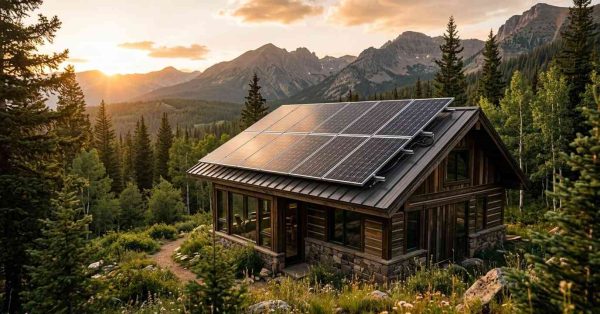
The term “passive” distinguishes this approach from active solar systems, which use photovoltaic panels or solar thermal collectors with pumps and controls. Passive solar works through the building itself. When designed correctly, a passive solar home stays warmer in winter and cooler in summer with significantly less mechanical assistance.
Passive solar design is one of the most effective strategies within the broader field of home energy efficiency — our complete home energy efficiency guide covers every method homeowners can use to reduce energy consumption and lower utility costs year-round.
How Passive Solar Systems Differ from Active Solar
Active solar systems generate or transfer energy using mechanical components. Passive solar systems have no moving parts. The home’s walls, floors, windows, and roof do the work. This distinction matters for homeowners because passive solar improvements are often structural or architectural — they involve windows, insulation, and building materials rather than equipment installation.
Core Components of a Passive Solar Home
Every passive solar home relies on five interacting components: an aperture to admit sunlight, an absorber to capture heat, thermal mass to store it, a distribution system to spread it, and controls to regulate gain and loss. These five elements form the basis of all passive solar design principles.
The Five Passive Solar Design Principles
The U.S. Department of Energy identifies five core principles that define how passive solar homes function. Each principle addresses a specific stage in the solar energy cycle — from collection to regulation.
1. Aperture — Letting Sunlight In
The aperture is the glazed area — typically south-facing windows — through which sunlight enters the home. In the Northern Hemisphere, south-facing glass receives the most consistent solar exposure throughout the day. The size and placement of the aperture directly determines how much solar energy the home can collect during heating season.
Effective aperture design balances solar gain in winter with shading in summer. Overhangs, awnings, and window placement angles are calculated to allow low winter sun to enter while blocking high summer sun.
2. Absorber — Capturing Solar Heat
The absorber is the surface that receives direct sunlight and converts it to heat. Dark-colored, hard surfaces — such as tile floors, brick walls, or concrete slabs — function as absorbers. The absorber sits in the direct path of sunlight entering through the aperture and transfers heat energy into the thermal mass behind or beneath it.
3. Thermal Mass — Storing Heat Energy
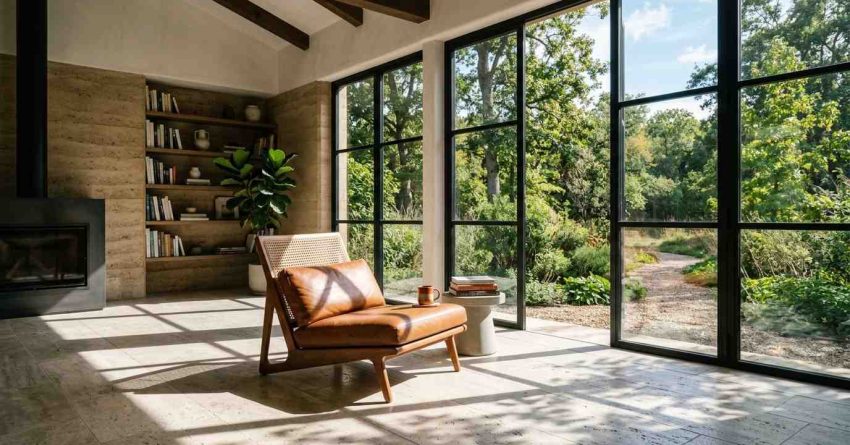
Thermal mass refers to dense materials that absorb heat during the day and release it slowly at night. Concrete, brick, stone, and tile are common thermal mass materials. The thermal mass acts as a heat battery — collecting energy when the sun is strong and releasing it when temperatures drop.
The effectiveness of thermal mass depends on its thickness, density, and surface area exposed to sunlight. Poorly sized thermal mass leads to overheating during the day and insufficient heat release at night.
Understanding these five principles is the foundation for any solar strategy — if you are exploring broader options, our solar energy for homes resource explains how passive and active systems work together to maximize a property’s energy performance.
4. Distribution — Moving Heat Through the Home
Distribution describes how heat moves from the collection zone to the rest of the living space. In passive solar homes, distribution happens through three natural processes: conduction (heat moving through solid materials), convection (warm air rising and circulating), and radiation (heat emitting from warm surfaces into cooler spaces).
Open floor plans, interior transoms, and ceiling fans set to low speed assist distribution without adding significant mechanical load.
5. Control — Regulating Heat Gain and Loss
Controls prevent overheating in summer and excessive heat loss in winter. Fixed overhangs, operable vents, thermal curtains, and low-emissivity window coatings all function as controls. Proper control design ensures the home responds appropriately to seasonal changes without requiring constant manual adjustment.
Orientation and Site Planning for Solar Gain
Building orientation is the single most important site decision in passive solar design. In the United States, the optimal orientation places the longest wall of the home facing true south — not magnetic south. This maximizes solar exposure during winter months when the sun tracks low across the southern sky.
Site planning also accounts for obstructions. Trees, neighboring buildings, and topographic features can shade south-facing glazing and significantly reduce solar gain. A solar site analysis evaluates shading patterns across all seasons before finalizing window placement.
Window Placement and Glazing Ratios
The ratio of south-facing glazing to floor area is a critical design variable. Most passive solar guidelines recommend south-facing glass equal to 7–12% of the total conditioned floor area for heating-dominated climates. Exceeding this ratio without sufficient thermal mass causes overheating. Falling below it reduces solar contribution.
Window placement is central to solar gain, and choosing the right glazing type matters as much as position — our window installation services explains how professional window upgrades can improve both solar performance and thermal comfort in your home.
Insulation and Air Sealing in Passive Solar Homes
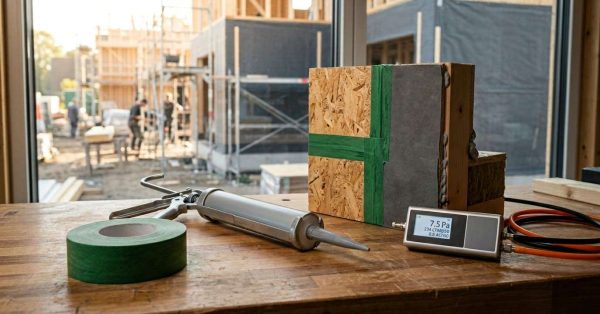
Passive solar design only performs as intended when the building envelope is tight and well-insulated. A home with excellent solar orientation but poor insulation loses collected heat rapidly through walls, ceilings, and floors. The thermal envelope — the continuous layer of insulation and air barrier surrounding conditioned space — must be designed to retain solar gains overnight and during cloudy periods.
Air sealing addresses infiltration, which is the uncontrolled movement of air through gaps in the building envelope. Even small gaps around windows, doors, and penetrations can account for significant heat loss in cold climates.
How Thermal Envelope Performance Affects Solar Efficiency
A well-sealed, well-insulated home requires less solar gain to maintain comfortable temperatures. This means smaller aperture areas, less thermal mass, and simpler distribution systems — all of which reduce construction cost and complexity. Improving insulation and air sealing is often part of a larger renovation scope — our home remodeling services outlines how a full remodel can integrate passive solar upgrades alongside structural and interior improvements.
Passive Solar Design for Different U.S. Climates
Passive solar strategies vary significantly by climate. The United States spans multiple climate zones, and a design optimized for Minnesota performs poorly in Arizona. Understanding climate-specific requirements is essential before applying any passive solar principle.
Even the most well-designed passive solar home benefits from a properly sized and maintained heating and cooling system — our HVAC system services explains how mechanical systems complement passive solar strategies to maintain year-round comfort.
Cold and Mixed Climates
In cold climates — including the Northeast, Midwest, and Mountain West — the priority is maximizing winter solar gain while minimizing heat loss. South-facing glazing ratios are higher, thermal mass is substantial, and insulation values are aggressive. Triple-pane windows with low-emissivity coatings are standard in these regions.
Mixed climates require designs that balance winter heating needs with summer cooling demands. Operable shading, ventilation strategies, and carefully sized overhangs become more important as cooling loads increase.
Hot and Arid Climates
In hot climates — including the Southwest and parts of the Southeast — passive solar design shifts focus from heat collection to heat avoidance. South-facing glazing is minimized, overhangs are deep, and thermal mass is used to absorb daytime heat and prevent it from entering living spaces. Night-flush ventilation, which draws cool night air through the home to reset thermal mass, is a common strategy in arid regions.
Passive Solar Design and Home Remodeling
Applying passive solar principles to an existing home requires a different approach than new construction. Retrofitting focuses on the highest-impact improvements available within the constraints of the existing structure. The most common retrofit strategies include adding south-facing windows or skylights, upgrading glazing to low-emissivity products, adding thermal mass to existing floors or walls, improving insulation in the building envelope, and installing exterior shading devices.
Retrofitting Existing Homes with Passive Solar Features
Not every home is a good candidate for a full passive solar retrofit. Homes with significant south-facing obstructions, poor structural orientation, or limited renovation budgets may see better returns from insulation and air sealing improvements alone. A professional energy audit identifies which passive solar strategies will deliver the greatest benefit for a specific property.
Retrofitting a home with passive solar features is a significant project that requires skilled planning and execution — our remodeling and renovation services connect homeowners with experienced professionals who can assess, design, and implement passive solar upgrades from start to finish.
Benefits of Passive Solar Design for Homeowners
Passive solar design delivers measurable benefits across energy performance, comfort, and property value. Homes designed with passive solar principles typically experience lower heating and cooling costs, more consistent indoor temperatures, reduced dependence on mechanical systems, and improved resilience during power outages or fuel supply disruptions.
For landlords and property managers, passive solar features can reduce tenant utility costs, improve tenant satisfaction, and increase the marketability of rental properties. For homeowners planning long-term ownership, passive solar improvements represent a durable investment that compounds over time through reduced operating costs.
Working with Professionals to Apply Passive Solar Principles
Applying passive solar design principles effectively requires expertise in building science, local climate data, and construction methods. Homeowners benefit most from working with professionals who understand how each principle interacts with the others — and how local conditions affect design decisions.
Smaller passive solar improvements — such as adding thermal curtains, sealing gaps, or installing interior shading — can often be handled efficiently by a skilled professional through our handyman services, giving homeowners a practical entry point without committing to a full renovation.
For larger projects involving structural changes, window replacement, or insulation upgrades, a coordinated team of specialists ensures that passive solar improvements are integrated correctly and finished to a high standard. When passive solar retrofits involve opening walls to add insulation or reconfigure interior layouts, finishing work becomes essential — our drywall and ceiling work services ensure every surface is restored cleanly and professionally after structural modifications.
Mr. Local Services connects homeowners and property managers with skilled professionals across every service category needed to plan, execute, and finish passive solar improvements — from initial assessment through final inspection.
Conclusion
Passive solar design principles — aperture, absorber, thermal mass, distribution, and control — work together as an integrated system that uses the sun’s energy to heat and regulate a home naturally. Orientation, insulation, and climate all shape how these principles are applied in practice.
For homeowners and property managers, understanding these principles is the first step toward making informed decisions about energy efficiency upgrades, renovations, and long-term property investment strategies.
Contact Mr. Local Services today to connect with experienced professionals who can assess your property, identify the highest-impact passive solar improvements, and deliver quality results across every phase of the project.
Frequently Asked Questions
What is the most important passive solar design principle?
Thermal mass and aperture work together as the most critical pairing. Without sufficient south-facing glazing to admit sunlight and adequate thermal mass to store it, the other principles cannot function effectively.
Can passive solar design work in cold climates like the Midwest or Northeast?
Yes. Cold climates are actually well-suited to passive solar design because the heating season is long and solar gain is highly valuable. South-facing glazing, high-performance insulation, and substantial thermal mass deliver strong results in these regions.
How much can passive solar design reduce heating costs?
According to the U.S. Department of Energy, well-designed passive solar homes can reduce heating energy use by 50% or more compared to conventional construction, depending on climate and design quality.
Does passive solar design work for existing homes or only new construction?
Passive solar principles can be applied to existing homes through targeted retrofits — including window upgrades, insulation improvements, and the addition of thermal mass materials. The scope and cost vary by property, but meaningful improvements are achievable in most homes.
What is thermal mass and why does it matter in passive solar homes?
Thermal mass refers to dense materials — such as concrete, brick, or stone — that absorb heat during the day and release it slowly at night. It prevents overheating during sunny periods and maintains warmth after the sun sets, stabilizing indoor temperatures naturally.
How does building orientation affect passive solar performance?
In the United States, homes oriented with their longest wall facing true south receive the most consistent solar exposure. Deviating significantly from true south reduces solar gain and diminishes the effectiveness of all other passive solar design elements.
What is the difference between passive solar design and active solar systems?
Passive solar design uses the building’s structure — windows, materials, and layout — to collect and manage solar energy without mechanical components. Active solar systems use equipment such as photovoltaic panels or solar thermal collectors with pumps and controls to generate or transfer energy.