An HVAC maintenance plan is one of the most cost-effective investments a homeowner or property manager can make — keeping heating and cooling systems running safely, efficiently, and reliably year-round. Without a structured plan, small issues go undetected until they become expensive failures. A scheduled maintenance agreement puts a professional technician on your side before problems start.
Skipping routine HVAC care leads to higher energy bills, shortened system life, and unexpected repair costs that a simple maintenance visit could have prevented.
This guide explains what an HVAC maintenance plan includes, how often service should be scheduled, what warning signs to watch for, and how to choose the right plan for your property.
What Is an HVAC Maintenance Plan?
An HVAC maintenance plan is a scheduled service agreement between a property owner and a licensed HVAC provider that covers regular inspections, tune-ups, and preventive care for heating and cooling systems. Rather than waiting for a breakdown to call a technician, a maintenance plan establishes a consistent service schedule that keeps your system operating at peak performance throughout the year.
Homeowners, landlords, and property managers all benefit from maintenance plans because they replace unpredictable repair costs with a predictable, manageable service structure. A plan typically covers both the heating and cooling sides of your system, ensuring neither is neglected as seasons change.
Understanding what an HVAC maintenance plan covers starts with knowing the full scope of HVAC services available — our HVAC services overview explains every system type, service category, and what homeowners can expect from professional HVAC care.
What Does an HVAC Maintenance Plan Include?
A comprehensive HVAC maintenance plan covers three core service areas: seasonal tune-up visits, filter replacement and air quality checks, and full system inspection with safety testing. Each component plays a specific role in keeping your system efficient, safe, and long-lasting.
Seasonal Tune-Up Visits
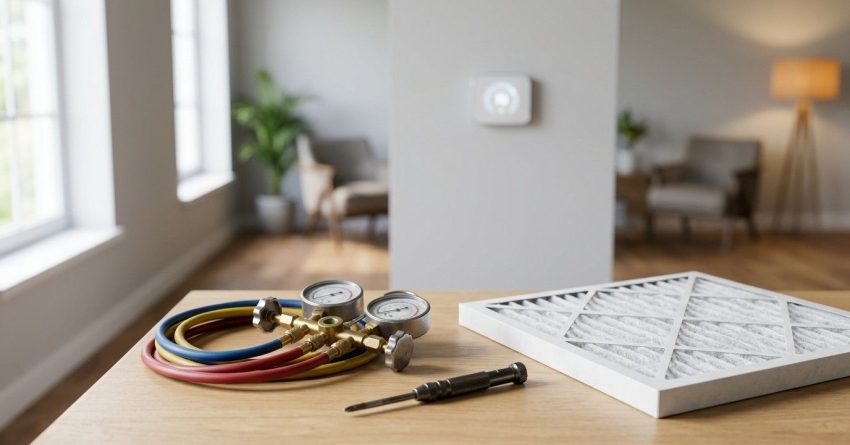
A seasonal tune-up is a professional service visit timed to prepare your system for the demands of the upcoming heating or cooling season. During a spring tune-up, the technician focuses on the air conditioning components — cleaning coils, checking refrigerant levels, and verifying that the system can handle summer cooling loads. A fall tune-up shifts focus to the heating system, testing the furnace or heat pump, inspecting the heat exchanger, and confirming that the system is ready for winter operation. These visits catch wear and inefficiency before they escalate into failures during the season’s peak demand.
Filter Replacement and Air Quality Checks
Air filters are the first line of defense for both system performance and indoor air quality. A clogged or degraded filter forces the system to work harder, reducing efficiency and accelerating component wear. During a maintenance visit, the technician checks the current filter condition, replaces it if needed, and assesses whether the filter type and MERV rating are appropriate for the household’s needs. Replacing filters on schedule is one of the most impactful steps in any maintenance routine — our air filter replacement guide covers the right filter types, replacement intervals, and how to match filters to your specific system.
System Inspection and Safety Testing
Every maintenance visit includes a thorough inspection of the system’s mechanical and electrical components. Technicians check electrical connections and capacitors, inspect the heat exchanger for cracks that could allow carbon monoxide to enter the living space, test safety controls and shutoff mechanisms, and verify that the drain line is clear. This safety-focused inspection is what separates a professional maintenance plan from a simple filter swap — it identifies hazards that are invisible to the untrained eye and addresses them before they become dangerous.
How Often Should HVAC Maintenance Be Performed?
HVAC maintenance should be performed at least twice a year — once in spring before the cooling season begins and once in fall before the heating season starts. This twice-yearly schedule ensures that both the air conditioning and heating systems receive dedicated attention before they face peak demand.
Older systems, high-use commercial properties, and homes in extreme climates may benefit from more frequent visits. Systems over ten years old are more prone to component wear and benefit from additional inspections to catch developing issues early. Manufacturer warranties often require documented annual or semi-annual maintenance to remain valid, making a scheduled plan a financial protection measure as well as a performance one.
Scheduling the right number of visits each year is easier when you understand what a professional inspection covers — our HVAC tune-up service outlines exactly what technicians check during each visit and how to book a seasonal appointment.
Signs Your HVAC System Needs Immediate Attention
Even with a maintenance plan in place, certain warning signs indicate that your system needs attention before the next scheduled visit. Recognizing these signals early prevents minor issues from becoming full system failures.
Unusual noises — grinding, banging, or squealing — indicate mechanical problems such as a failing motor, loose components, or debris in the system. These sounds should never be ignored. Short cycling, where the system turns on and off repeatedly without completing a full heating or cooling cycle, points to issues with the thermostat, refrigerant levels, or airflow restriction. Warm air coming from vents when the cooling system is running suggests a refrigerant leak or compressor problem that requires immediate diagnosis.
A sudden spike in energy bills without a change in usage habits is a reliable indicator that the system is working harder than it should — often due to a dirty coil, clogged filter, or failing component. Ice buildup on the outdoor unit or refrigerant lines signals a refrigerant or airflow problem that can damage the compressor if left unaddressed. Strange odors, particularly a burning smell or a musty odor from vents, require prompt inspection to rule out electrical issues or mold growth in the ductwork.
When warning signs appear, fast action prevents minor issues from becoming costly failures — our HVAC repair services explains the most common repair scenarios, what to expect from a service call, and how to get a technician dispatched quickly.
Benefits of an HVAC Maintenance Plan for Homeowners
A structured HVAC maintenance plan delivers measurable benefits across energy costs, system reliability, and long-term property value. Homeowners and property managers who invest in preventive care consistently see better outcomes than those who rely on reactive repairs.
Improved energy efficiency is one of the most immediate benefits. A well-maintained system runs at its designed efficiency rating, consuming less energy to deliver the same level of heating or cooling. Systems with dirty coils, clogged filters, or low refrigerant work harder and cost more to operate every month. Extended system lifespan is another significant advantage — regular maintenance reduces wear on components, delays the need for full system replacement, and protects the investment already made in the equipment.
Maintenance plans also reduce the risk of unexpected breakdowns, which tend to occur at the worst possible times — during heat waves or cold snaps when HVAC technicians are in highest demand. Many plans include priority scheduling, meaning plan holders receive faster response times during peak seasons. Warranty compliance is a practical financial benefit as well, since most manufacturer warranties require documented professional maintenance to remain valid.
Keeping your HVAC system in peak condition is just one part of protecting your property year-round — our home maintenance services covers the full range of preventive care options available for residential and commercial properties.
HVAC Maintenance Plan vs. Reactive Repairs
Homeowners who rely on reactive repairs — calling a technician only when something breaks — typically pay more over time than those on a structured maintenance plan. Emergency service calls carry premium labor rates, and parts replaced under emergency conditions often cost more than the same components addressed during a planned visit. A single compressor replacement can cost several times the annual cost of a maintenance plan.
Beyond direct repair costs, reactive maintenance creates operational risk. A system that fails during a heat wave or a cold snap leaves occupants without comfort while the homeowner waits for an available technician. Maintenance plans eliminate most of this risk by catching developing problems before they cause failures. The predictability of a plan also makes budgeting easier — a fixed annual cost replaces the uncertainty of unknown repair bills.
Homeowners who want to compare all available service structures before committing to a plan can review the full HVAC service options, which outlines every service tier, coverage level, and scheduling format offered.
How to Choose the Right HVAC Maintenance Plan
Choosing the right HVAC maintenance plan starts with understanding what is and is not included. A quality plan should clearly specify the number of annual visits, which components are inspected and serviced during each visit, whether filters and minor parts are included in the plan price, and whether plan holders receive discounts on repairs or parts.
Verify that the provider is licensed, insured, and employs certified technicians. A plan is only as reliable as the company behind it — look for providers with documented service histories, transparent pricing, and clear contract terms that do not lock you into multi-year agreements without cancellation options. Response time commitments matter as well, particularly for properties where HVAC failure creates immediate safety or habitability concerns.
Consider the age and condition of your current system when selecting a plan tier. Newer systems in good condition may need only a basic two-visit plan, while older systems or those with known issues benefit from more comprehensive coverage that includes priority repair access. For properties that need broader preventive care beyond HVAC, combining a maintenance plan with handyman services ensures every system and surface stays in reliable working order throughout the year.
Conclusion
An HVAC maintenance plan protects your heating and cooling systems through scheduled inspections, filter care, and safety testing — keeping performance consistent and preventing costly breakdowns before they happen.
Preventive maintenance extends system lifespan, lowers energy costs, and eliminates the financial unpredictability of reactive repairs, making it a sound investment for any residential or commercial property.
At Mr. Local Services, we connect homeowners and property managers with licensed HVAC professionals who deliver reliable, transparent maintenance care year-round — contact us today to find the right plan for your property.
Frequently Asked Questions
What is typically included in an HVAC maintenance plan?
A standard HVAC maintenance plan includes seasonal tune-up visits, air filter inspection and replacement, coil cleaning, thermostat calibration, safety control testing, and a full inspection of electrical connections and mechanical components. Most plans cover both the heating and cooling systems.
How much does an HVAC maintenance plan cost?
HVAC maintenance plans typically range from $150 to $500 per year depending on the number of visits, the services included, and whether repair discounts are part of the agreement. Basic two-visit plans cost less, while comprehensive plans with priority service and parts coverage cost more.
Is an HVAC maintenance plan worth it?
Yes, an HVAC maintenance plan is worth it for most homeowners because it prevents costly breakdowns, extends system lifespan, improves energy efficiency, and often pays for itself by avoiding a single emergency repair call. Systems on maintenance plans consistently outperform neglected systems over time.
How often should HVAC filters be replaced?
HVAC filters should be replaced every one to three months depending on the filter type, household size, and whether pets or allergy sufferers are present. Thicker media filters may last up to six months, while standard one-inch filters in active households need monthly replacement.
Can I do HVAC maintenance myself?
Homeowners can handle basic tasks like filter replacement and keeping the outdoor unit clear of debris, but professional maintenance is required for refrigerant checks, electrical inspections, heat exchanger testing, and coil cleaning. DIY maintenance alone does not satisfy manufacturer warranty requirements.
What happens if I skip HVAC maintenance?
Skipping HVAC maintenance leads to reduced efficiency, higher energy bills, accelerated component wear, and a significantly higher risk of unexpected system failure. Neglected systems also void most manufacturer warranties, leaving homeowners responsible for the full cost of repairs or replacement.
Does an HVAC maintenance plan cover repairs?
Most standard HVAC maintenance plans cover preventive services but not repairs. Some premium plans include discounted labor rates or parts coverage for repairs identified during a maintenance visit. Always review the plan contract carefully to understand what is and is not included before signing.