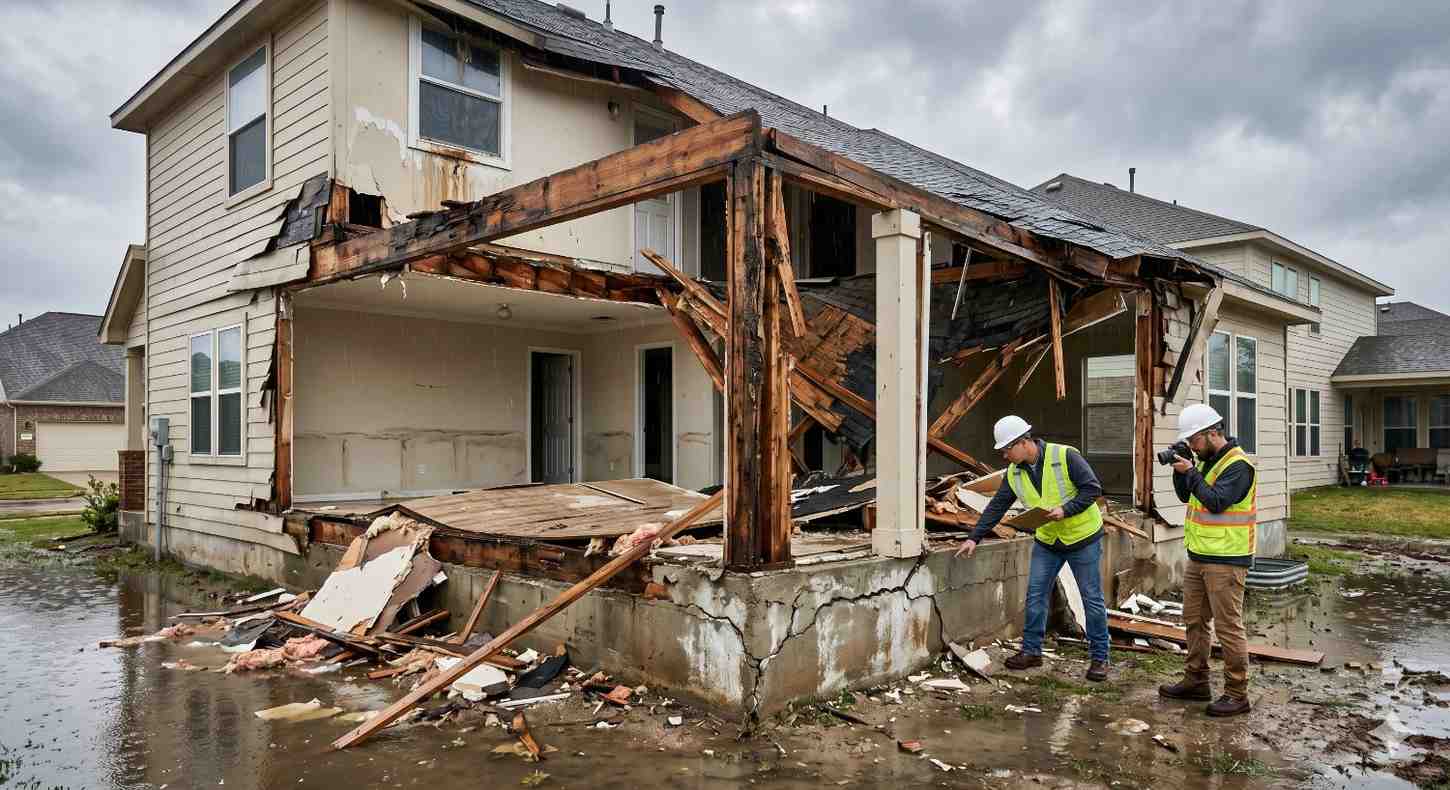
Yes, a house can collapse from water damage when moisture compromises load-bearing structures over time. Water weakens wood framing, corrodes steel supports, erodes foundations, and rots subflooring. While total collapse is rare, partial structural failures like ceiling cave-ins, floor sagging, and wall buckling occur regularly across the USA. The risk grows significantly when leaks go undetected for months or when flooding saturates structural materials. Understanding how water damage progresses helps homeowners and property managers act before small issues become catastrophic failures.
Yes, A House Can Collapse From Water Damage
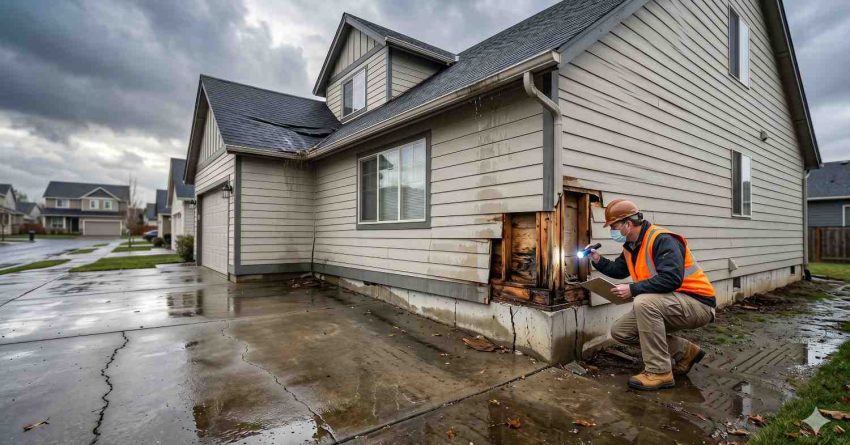
Water damage can cause partial or complete house collapse when it weakens load-bearing components such as foundations, framing, joists, and roof structures. Prolonged exposure leads to wood rot, mold-driven decay, rusted fasteners, and softened concrete, all of which reduce a structure’s ability to hold weight safely.
How Water Weakens Structural Integrity
Water attacks a home through three primary mechanisms. First, it saturates wood framing, causing fibers to swell, rot, and lose tensile strength within weeks of sustained exposure. Second, moisture corrodes nails, screws, brackets, and steel beams that hold the structure together. Third, water erodes foundation soil, creating voids that lead to settling, cracking, and uneven load distribution. Once any of these systems fail, the weight a house was designed to carry shifts to weaker components, accelerating the path toward structural failure.
Warning Signs Of Imminent Structural Failure
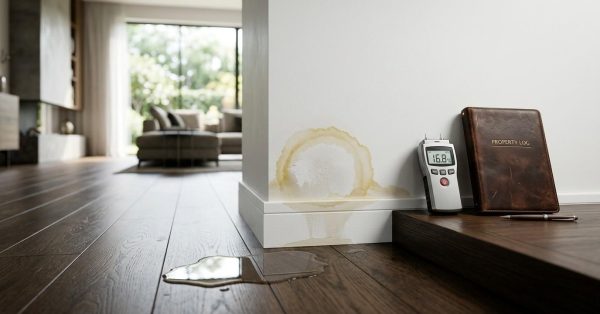
Visible indicators include sagging ceilings or floors, doors that no longer close properly, cracks wider than a quarter inch in walls or foundations, and bowed framing. Musty odors signal hidden moisture and active wood rot. Discolored drywall, peeling paint, and warped flooring point to water migrating through structural cavities. If you notice multiple signs at once, treat the situation as urgent. Quick action through professional water damage restoration often prevents a costly partial collapse.
Common Causes That Lead To Water-Related Collapse
Most collapse cases trace back to slow, undetected water exposure rather than sudden disasters. Burst pipes, failed water heaters, roof leaks, foundation seepage, ice dams, and clogged gutters are the leading culprits. Storm flooding adds rapid saturation that overwhelms even well-maintained homes. In commercial buildings, HVAC condensation lines and rooftop drainage failures cause similar damage patterns. The danger compounds when water reaches insulation, subfloors, or wall cavities where it stays trapped and continues to feed mold and rot for months.
Hidden Leaks vs. Sudden Flooding
Hidden leaks are far more dangerous long-term. A pinhole pipe leak behind a wall can saturate framing for a year before any visible sign appears, by which point structural members may already be compromised. Sudden flooding causes immediate, obvious damage and typically prompts fast response. Engaging roof leak repair specialists early prevents slow leaks from quietly destroying load-bearing systems.
How To Prevent Water Damage From Destroying Your Home
Prevention starts with consistent inspections. Check your roof, gutters, attic, basement, and plumbing fixtures at least twice a year. Install water leak detectors near washing machines, water heaters, and under sinks. Maintain proper grading around the foundation so water flows away from the home. Address minor stains, drips, or musty smells immediately. Schedule early plumbing leak detection for older homes where pipe failure risk is highest. Routine maintenance costs a fraction of structural repair and protects long-term property value.
Conclusion
Water damage can absolutely cause a house to collapse, but only when warning signs go unaddressed for extended periods. Early detection, consistent maintenance, and professional intervention prevent nearly all structural failures from reaching that point.
For homeowners, landlords, and property managers, vigilance protects both safety and investment. Regular inspections and timely repairs preserve a property’s structural integrity for decades.
If you suspect water damage in your home, contact Mr. Local Services today and connect with trusted experts who restore safety and value fast.
Frequently Asked Questions
How long does it take for water damage to weaken a house?
Structural weakening can begin within 24 to 72 hours of exposure. Significant damage to framing and subflooring typically develops over several weeks of sustained moisture contact.
Can a small leak really cause structural damage?
Yes. Small, persistent leaks behind walls or under floors saturate wood and corrode fasteners over months, often causing more serious structural harm than a single major flood event.
What part of the house collapses first from water damage?
Ceilings and floors fail first because they bear constant load and absorb water quickly. Sagging ceilings from upstairs leaks are the most common partial collapse scenario.
Does homeowners insurance cover water damage collapse?
Sudden, accidental water damage is usually covered. Gradual leaks, neglected maintenance, and flood damage typically require separate policies or specific endorsements to qualify.
When should I call a professional after water damage?
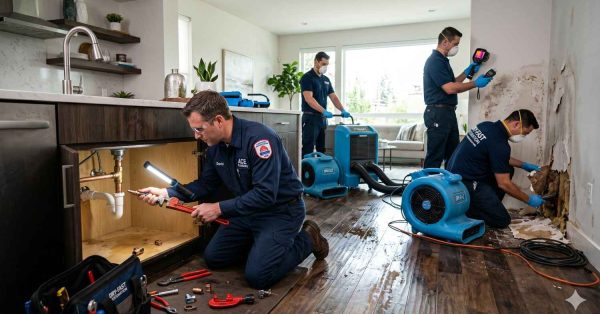
Call immediately if you see sagging, cracks, persistent odors, or standing water. Fast professional assessment prevents minor damage from escalating into structural failure.