Water damage in a home shows up as discolored stains, peeling paint, warped floors, bubbling walls, sagging ceilings, and visible mold growth. You may also notice musty odors, soft drywall, or rusted fixtures. These signs often appear gradually, starting small and spreading if left untreated. Knowing exactly what water damage looks like helps homeowners, landlords, and property managers act fast, protect property value, and avoid costly structural repairs across residential and commercial spaces.
Common Visual Signs of Water Damage in a Home
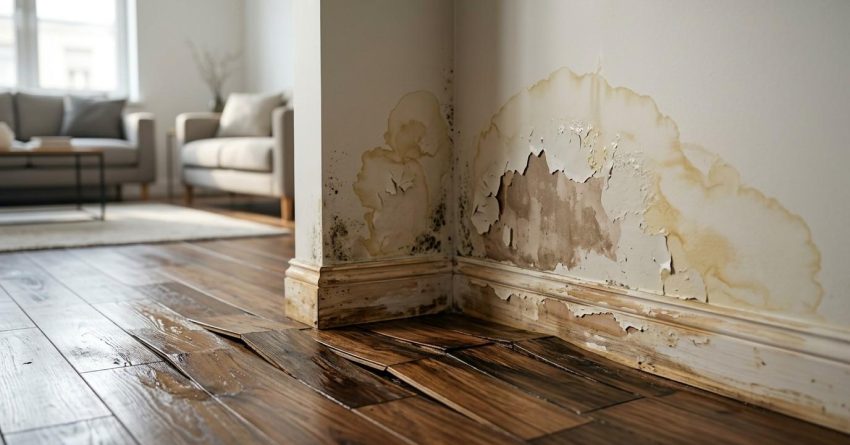
Water damage looks like yellow or brown stains on ceilings and walls, peeling or bubbling paint, warped wood floors, swollen baseboards, sagging drywall, and dark mold patches. A persistent musty smell, soft spots underfoot, and rust on metal fixtures also indicate moisture intrusion that needs immediate inspection.
These signs vary in size and severity depending on the water source, exposure time, and surface materials affected. Catching them early prevents structural decay, electrical hazards, and long-term health risks tied to mold growth.
Stains, Discoloration, and Warping
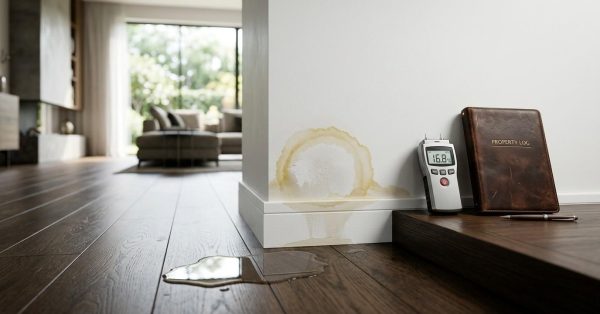
Discoloration is usually the first visible sign. Ceilings develop ring-shaped yellow or brown spots where water has pooled above. Walls show streaks running downward from the leak source. Hardwood floors cup, crown, or buckle when moisture seeps between planks. Vinyl and laminate flooring lift at the seams. Wallpaper bubbles and separates from drywall. Paint peels, flakes, or cracks in patches that spread outward over time. These changes often signal slow leaks behind plumbing, roofing, or appliance lines that may have been active for weeks.
Mold, Mildew, and Musty Odors
Mold appears as black, green, or gray clusters on damp surfaces, often in corners, behind furniture, or near baseboards. Mildew shows up as a thin, powdery film on walls, ceilings, or grout lines. A heavy, earthy, musty smell usually arrives before visible mold, signaling hidden moisture inside walls, under floors, or above ceilings. According to the EPA’s indoor air quality guidance, mold can begin growing within 24 to 48 hours of water exposure, making fast identification critical for protecting both property and health.
Identifying these signs is only the first step. Professional water damage restoration handles the drying, repair, and rebuilding work needed to fully restore the affected areas.
Where Water Damage Typically Shows Up First
Water damage often appears first in areas connected to plumbing, roofing, or appliances. Common starting points include kitchen ceilings below upstairs bathrooms, walls behind dishwashers and washing machines, areas near water heaters, basement corners, attic decking under roof valleys, and around window frames during heavy rain.
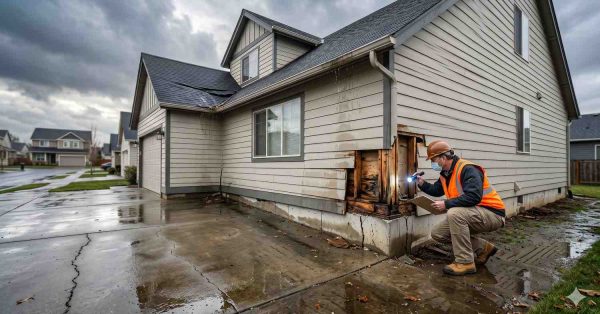
Outside the home, look for pooling water near the foundation, cracked siding, missing shingles, and clogged gutters spilling water against exterior walls. Inside, check under sinks, around toilet bases, and behind refrigerators with water lines. These locations carry the highest risk because water travels along pipes, framing, and gravity paths before surfacing in visible spots.
Hidden Areas Most Homeowners Miss
Crawl spaces, attic insulation, behind drywall, under flooring, and inside HVAC ducts often hide moisture for months. Subfloor rot, insulation sagging, and corroded ductwork develop silently. Working with mold remediation specialists ensures hidden colonies are tested, contained, and fully removed before they spread further into the structure.
Early Signs vs. Severe Water Damage
Early water damage looks like minor discoloration, faint odors, slight paint bubbling, or small soft spots. These signs are usually fixable with targeted repairs. Severe damage shows as sagging ceilings, collapsed drywall, blackened mold growth, warped structural beams, and standing water. Severe cases require professional drying, demolition of affected materials, and structural rebuilding. Ceiling stains directly below the attic often point to roofing issues, where a roof leak inspection helps confirm whether shingles, flashing, or underlayment are the source before interior repairs begin.
Conclusion
Water damage looks like stains, warping, peeling paint, mold growth, and musty odors that signal moisture has entered walls, ceilings, or floors.
Spotting these signs early protects property value, prevents health risks, and keeps repair costs manageable for homeowners, landlords, and property managers nationwide.
Need fast, reliable help inspecting or repairing water damage? Connect with Mr. Local Services today and get matched with trusted local experts.
Frequently Asked Questions
What are the first signs of water damage?
The first signs include faint stains, peeling paint, soft drywall, slight warping in floors, and a musty odor that appears before any visible mold growth.
Can water damage go away on its own?
No. Water damage worsens over time, leading to mold, rot, and structural decay. Professional drying and repair are required to fully resolve the problem.
How fast does mold grow after water damage?
Mold can begin growing within 24 to 48 hours of water exposure, especially in warm, humid, poorly ventilated spaces with porous materials like drywall or carpet.
Does homeowners insurance cover water damage?
Most policies cover sudden, accidental damage like burst pipes but exclude gradual leaks, flooding, or neglect. Always review policy terms with your insurance provider.
Should I hire a professional for water damage?
Yes. Professionals have moisture meters, industrial dryers, and remediation tools to detect hidden damage, prevent mold, and restore the property safely and completely.