Framing is the most expensive part of building a house, typically accounting for 15% to 25% of total construction costs. For most new builds, that translates to tens of thousands of dollars before a single wall is painted or a floor is laid. Understanding where that money goes, and what other cost categories follow closely behind, helps homeowners and property managers plan smarter, avoid budget surprises, and make confident decisions from the ground up.
The Single Biggest Cost in Home Construction
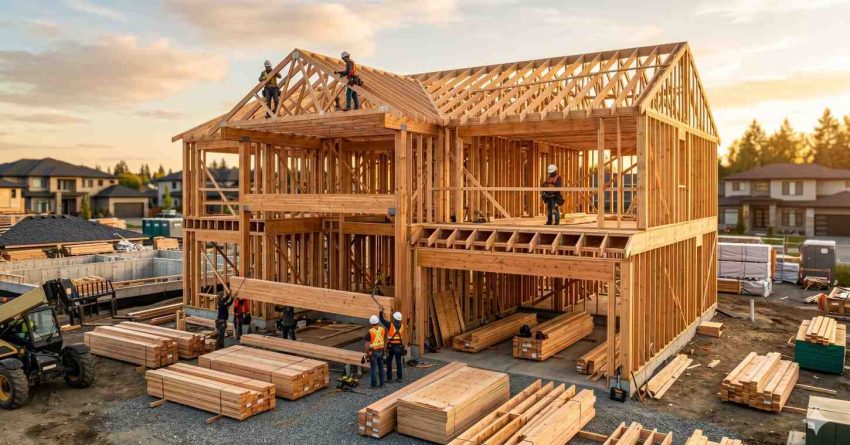
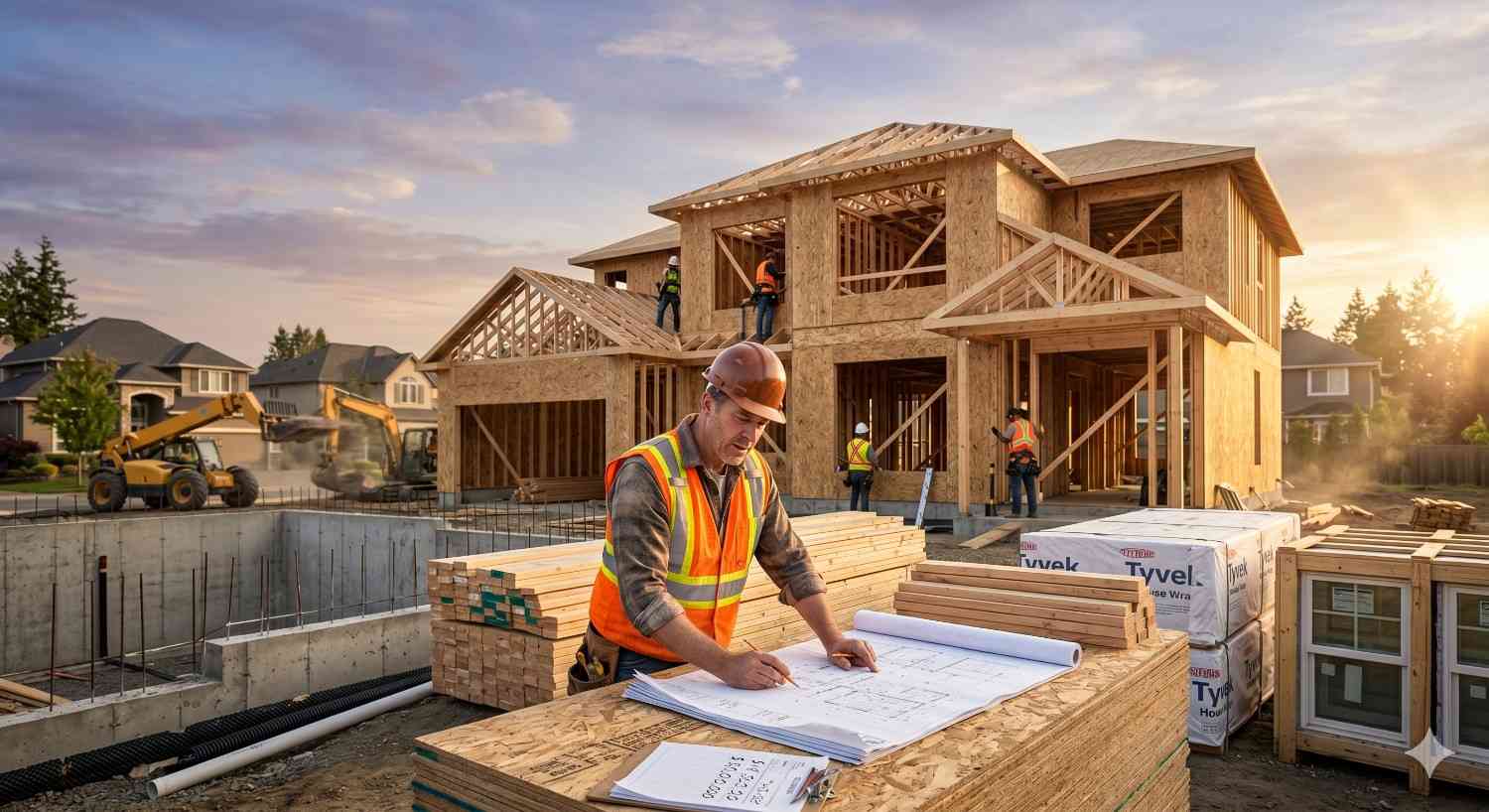
Framing is the structural skeleton of a house. It defines every room, supports every load, and determines the shape of the entire structure. Because it requires significant quantities of lumber, engineered wood, and skilled labor, framing consistently ranks as the highest single line item in residential construction budgets.
For a standard 2,000-square-foot home, framing costs typically range from $20,000 to $50,000, depending on design complexity, regional labor rates, and current lumber prices. No other single phase of construction consumes as large a share of the budget in one concentrated window of work.
Why Framing Dominates the Budget
Lumber prices are volatile. Since 2020, material costs have fluctuated dramatically, and framing is almost entirely material-dependent. A complex roofline, multiple stories, or custom architectural features multiply both material quantities and labor hours. Contractors also price framing work at a premium because structural errors at this stage are costly to correct once the build progresses. The combination of high material volume, skilled labor demand, and zero margin for error drives the cost upward.
What Framing Actually Includes
Framing covers wall framing, floor systems, roof framing, and structural sheathing. It includes the installation of load-bearing walls, headers above doors and windows, floor joists, ceiling joists, and roof rafters or engineered trusses. Exterior sheathing panels are typically included as well. Every system that attaches to the house later, from drywall to roofing to windows, depends on the framing being precise and structurally sound.
Understanding framing costs is essential, but it only tells part of the story. The total construction budget across all systems involves several other major cost categories that homeowners need to account for before breaking ground.
Other High-Cost Categories That Follow Framing
Framing is the largest single cost, but it does not stand alone. Several other construction phases carry significant price tags that can reshape a project budget if underestimated.
Foundation, Roofing, and Mechanical Systems
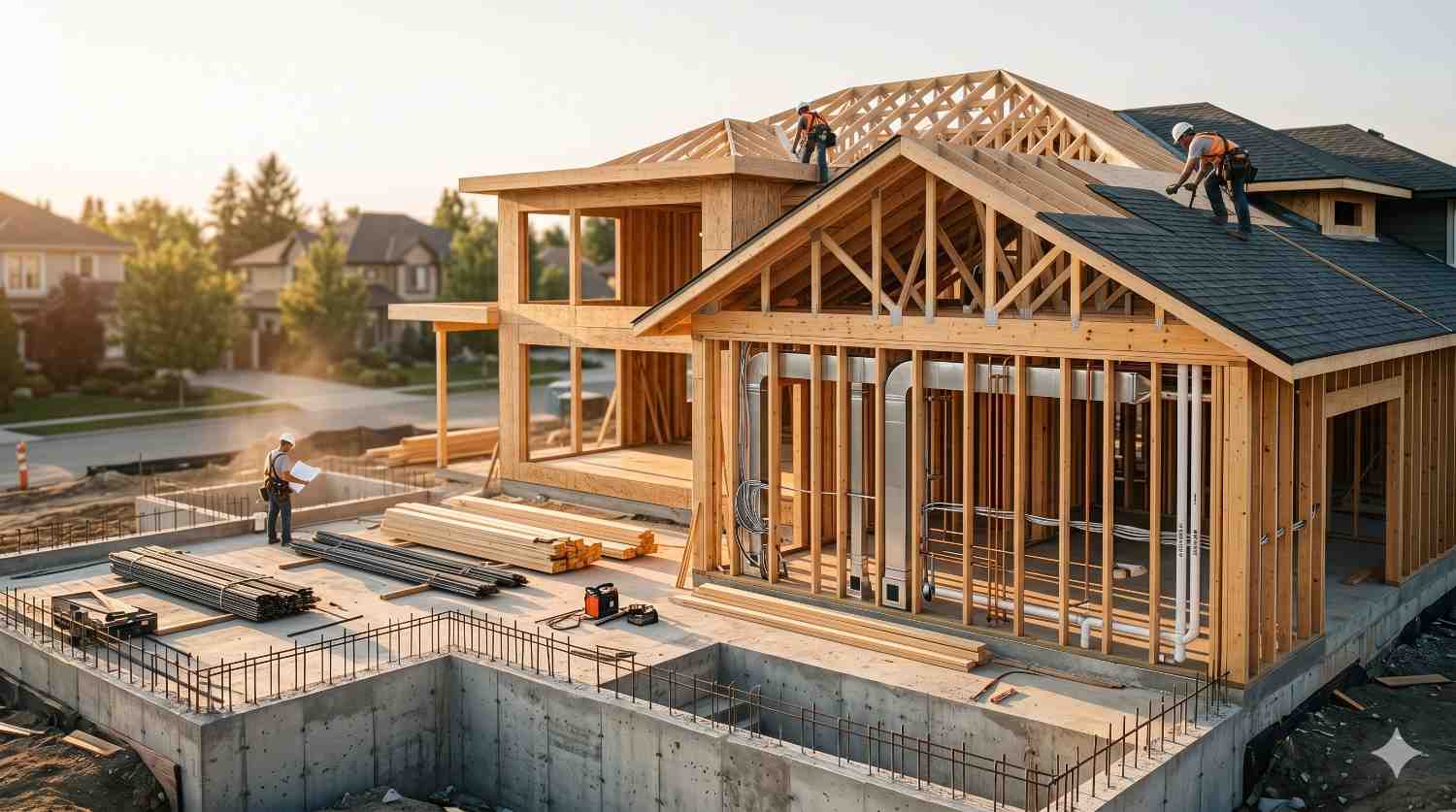
The foundation typically costs between $10,000 and $30,000, depending on soil conditions, basement inclusion, and local requirements. A slab foundation costs less than a full basement, but both require excavation, concrete, and waterproofing.
Roofing materials and labor represent another major expense, often ranging from $8,000 to $20,000 or more for a new build. Roof complexity, pitch, and material choice, whether asphalt shingles, metal, or tile, all affect the final number.
Mechanical systems, meaning HVAC, plumbing rough-in, and electrical rough-in, collectively rival framing in total cost when combined. Each trade requires licensed professionals, permits, and inspections. These systems are invisible once the walls close in, but they are among the most expensive components of any new home.
How to Manage the Most Expensive Parts of Your Build
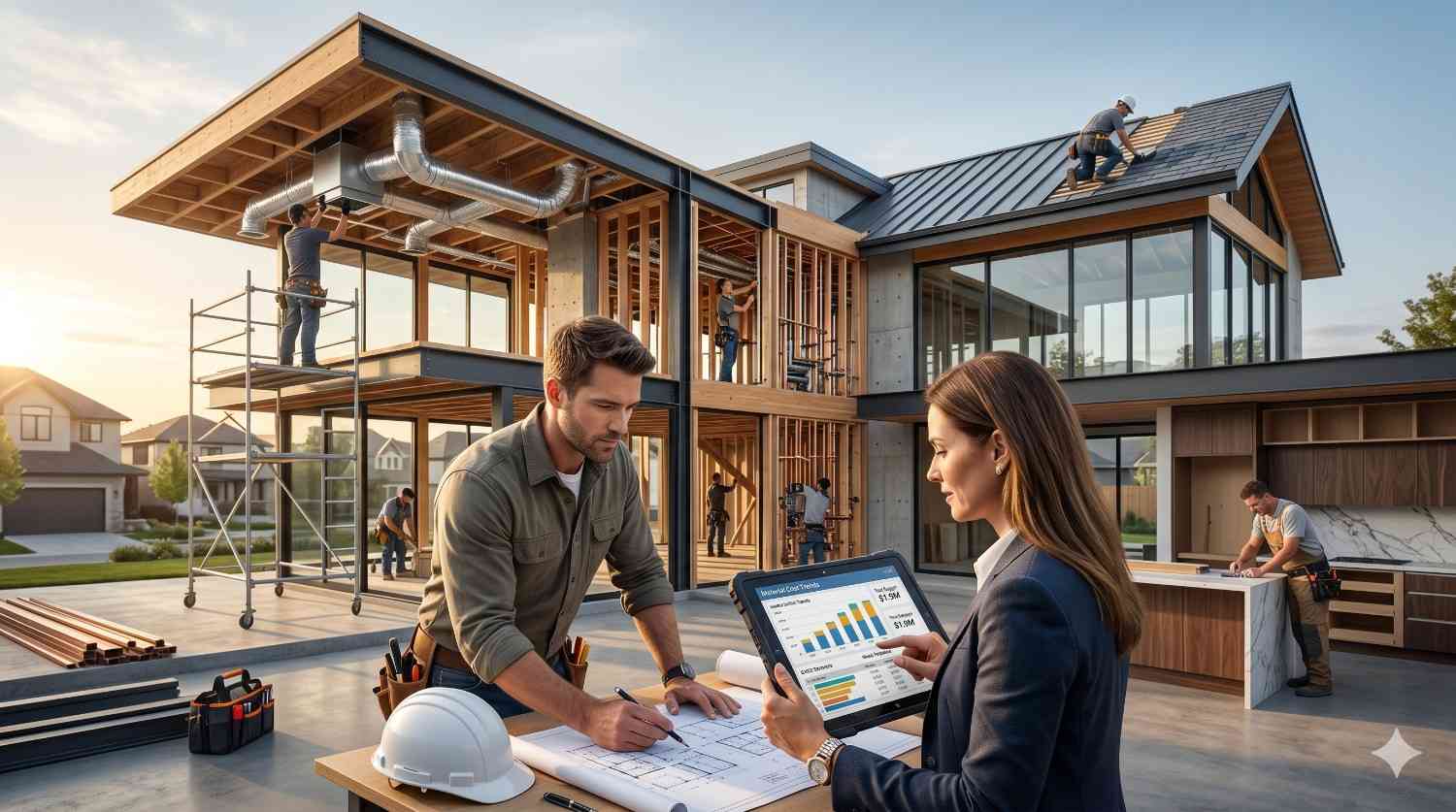
Knowing where costs concentrate allows for smarter planning. A few practical approaches help homeowners control spending without compromising structural integrity.
Simplify the design where possible. Complex rooflines, cantilevers, and non-standard floor plans increase framing labor and material costs significantly. A straightforward rectangular footprint costs less to frame than an irregular shape of the same square footage.
Get multiple bids for framing and foundation work specifically. These two phases carry the most budget risk and the widest variation in contractor pricing. Comparing at least three bids gives a realistic market baseline.
Lock in material costs early. Lumber prices shift with supply chain conditions. Some contractors offer fixed-price contracts that protect against mid-build price increases. Understanding what is and is not included in a fixed bid prevents disputes later.
Plan for contingency. Most construction professionals recommend reserving 10% to 15% of the total budget for unexpected costs. Framing and foundation work are where surprises most commonly surface.
Conclusion
Framing is the most expensive part of building a house, driven by high material demand, skilled labor requirements, and structural precision. Foundation work, roofing, and mechanical systems follow closely and together shape the majority of a construction budget.
For homeowners and property managers planning new builds or evaluating structural upgrades and renovations, understanding these cost drivers is the foundation of sound decision-making.
At Mr. Local Services, we connect you with trusted professionals across every phase of construction and home improvement, so your project stays on budget and on track.
Frequently Asked Questions
What percentage of a home’s construction cost goes to framing?
Framing typically accounts for 15% to 25% of total construction costs, making it the single largest expense in most residential builds.
Is the foundation or framing more expensive to build?
Framing is generally more expensive than the foundation. Foundation costs average $10,000 to $30,000, while framing often ranges from $20,000 to $50,000 depending on size and complexity.
Does a two-story house cost more to frame than a single-story?
Yes. A two-story house requires more framing material and additional structural support, which increases both labor hours and total material costs compared to a single-story home of similar square footage.
How do lumber prices affect home construction costs?
Lumber is the primary material in framing. When lumber prices rise, framing costs increase proportionally. Price volatility since 2020 has made framing one of the most unpredictable budget items in new construction.
What is the cheapest way to reduce framing costs without cutting corners?
Simplifying the floor plan, reducing roofline complexity, and using standard lumber dimensions rather than custom sizes are the most effective ways to lower framing costs while maintaining structural integrity.