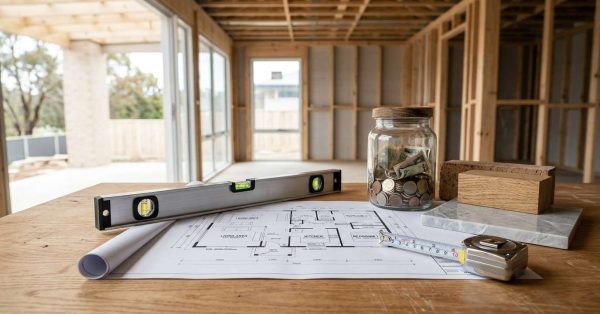
Renovation restores or updates an existing space without changing its structure or purpose. Remodeling changes the structure, layout, or function of a space entirely. Both improve a property, but they involve different scopes, costs, permits, and timelines. Knowing which one your project requires helps you set a realistic budget, hire the right professionals, and avoid costly surprises. This guide breaks down the difference clearly so homeowners and property managers can plan with confidence.
Renovation vs. Remodeling: The Core Difference
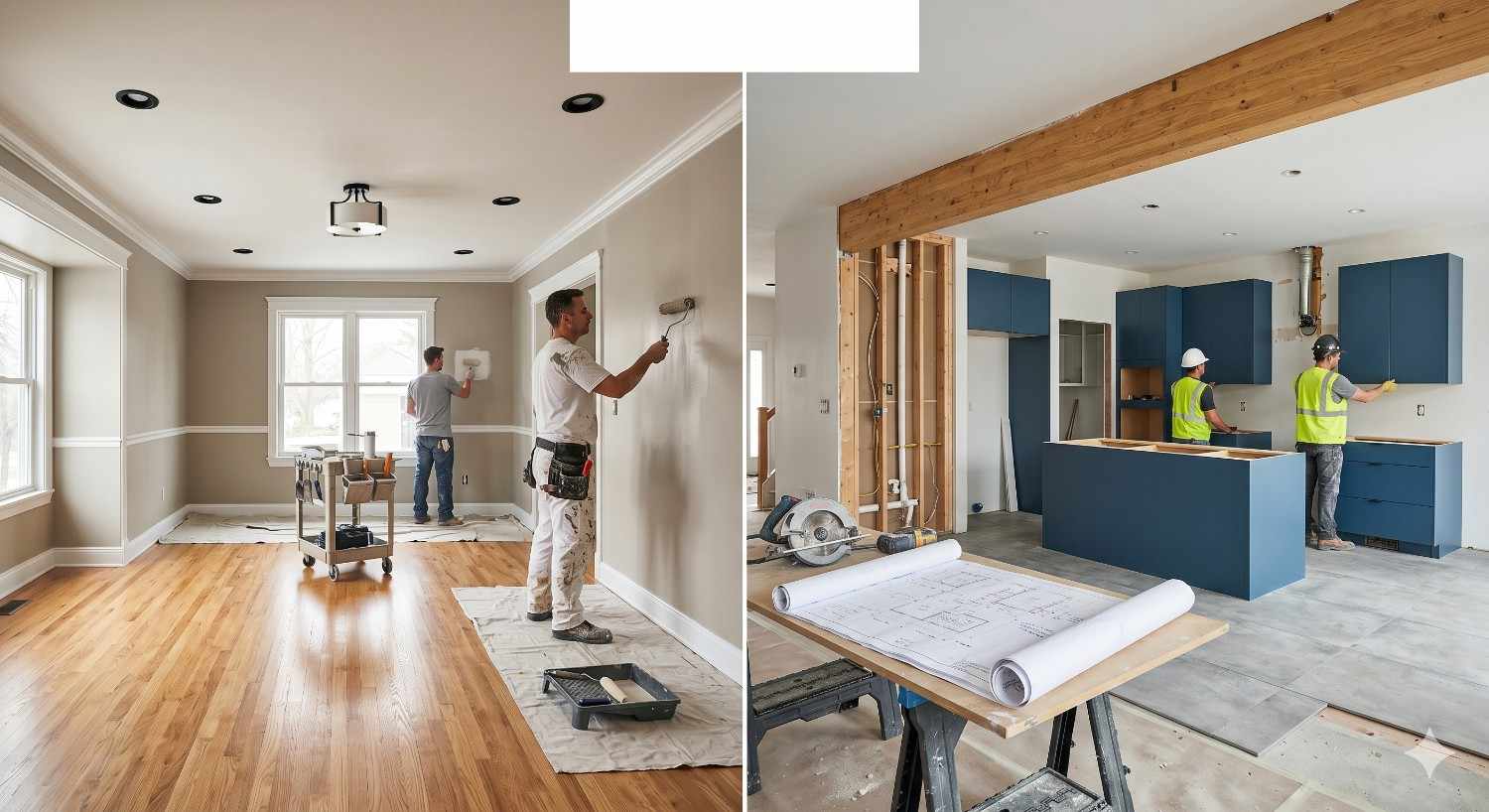
Renovation refreshes a space. Remodeling rebuilds it. Renovation includes painting, refinishing floors, replacing fixtures, or updating cabinets while keeping the original layout. Remodeling involves moving walls, changing room functions, expanding square footage, or rebuilding plumbing and electrical systems. Renovation preserves what exists. Remodeling redefines it.
This distinction matters because each path follows different rules. Renovations are usually faster, less expensive, and rarely require structural permits. Remodels demand engineering, permits, and skilled trades coordination. Choosing the wrong category leads to underestimated budgets and missed timelines.
What Renovation Actually Means
A renovation improves the condition of a space without altering its core design. Replacing worn carpet, repainting walls, installing new countertops on existing cabinets, or upgrading light fixtures all qualify. The room serves the same purpose afterward. It simply looks newer, performs better, or feels updated. Renovation is the right choice when the layout works, the structure is sound, and you want a refreshed appearance or improved functionality without major construction. Most renovation projects move quickly because they avoid permits, demolition, and structural changes that typically slow remodels.
What Remodeling Actually Means
Remodeling transforms how a space looks and functions. Knocking down a wall to combine a kitchen and dining room, converting a garage into a living suite, or relocating bathroom plumbing all qualify. The room becomes something different. Remodeling often touches load-bearing walls, plumbing lines, electrical systems, or HVAC ducting, which means permits, inspections, and licensed contractors. It costs more and takes longer, but it delivers transformative results when a home no longer fits how a family lives or when a property needs a layout that supports modern use.
Understanding the definition is the starting point. The scope of a full home remodeling project depends on structural goals, permit requirements, and the trades involved.
When to Choose Renovation Over Remodeling
Choose renovation when the layout already works and the home needs cosmetic or functional updates rather than structural change. Aging finishes, outdated cabinetry, worn flooring, or tired paint are renovation territory. Choose remodeling when the existing layout limits how the home is used, when rooms need to be combined or divided, or when major systems require relocation. Property managers often renovate between tenants to maintain market value, while owners pursuing long-term lifestyle changes typically remodel.
Common Renovation vs. Remodeling Scenarios
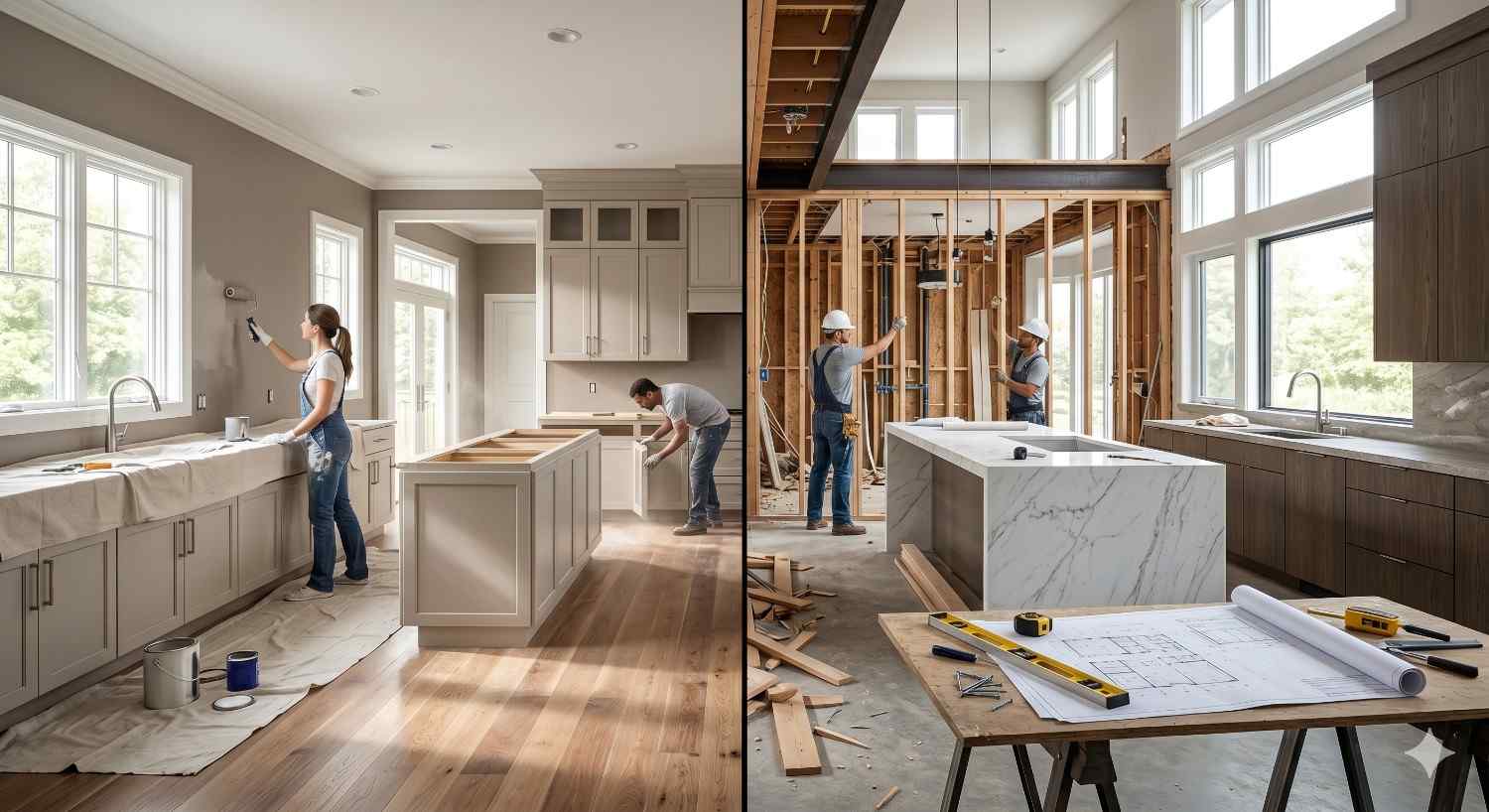
A landlord refreshing a rental unit between tenants is renovating. A homeowner expanding a kitchen into an open-concept living area is remodeling. Restoring an older property to its original character through repairs and finish updates is renovation. Adding a primary suite, converting an attic into a bedroom, or relocating a bathroom is remodeling. Roofing repairs, exterior painting, and deck refinishing are renovation work. Adding a new deck, installing additional rooms, or rebuilding a foundation falls under remodeling.
Cost, Timeline, and Permit Differences
Renovations typically cost less and finish in days or weeks. Remodels often run several times higher and stretch across months because of demolition, structural work, and inspection cycles. Renovations rarely need permits unless electrical or plumbing changes are involved. Remodels almost always require building permits, structural reviews, and licensed trade coordination. Reviewing permit requirements and budget planning early prevents delays and surprise costs once work begins.
Conclusion
Renovation restores and refreshes what already exists. Remodeling reshapes structure, layout, or function entirely. Each path serves different goals, budgets, and timelines.
Choosing correctly protects property value, avoids permit issues, and keeps projects on schedule for homeowners, landlords, and property managers planning ahead.
Whether you need a refresh or a full transformation, Mr. Local Services connects you with vetted professionals ready to deliver quality workmanship and transparent pricing. Start your project today.
Frequently Asked Questions
Is painting considered renovation or remodeling?
Painting is renovation. It refreshes the appearance of a space without altering structure, layout, or function, making it one of the most common cosmetic renovation upgrades.
Does remodeling always require a permit?
Most remodels require permits because they involve structural, electrical, plumbing, or HVAC changes. Cosmetic renovations rarely need permits, but local rules vary by city and project scope.
Which adds more value, renovation or remodeling?
Both add value. Renovations offer faster returns through cosmetic appeal. Remodels deliver larger long-term value when they improve layout, square footage, or functional use of the home.
How long does a typical renovation take?
Most renovations take a few days to several weeks, depending on scope. Painting or flooring may finish in days, while full kitchen renovations can extend to four weeks.
Can renovation become remodeling mid-project?
Yes. If structural issues are uncovered or layout changes are added, a renovation can shift into remodeling. This expands permits, costs, and timelines significantly.