Saying the wrong thing to a contractor can raise your costs, lower the quality of work, or damage the professional relationship before the first nail is driven. Knowing which statements to avoid gives you more control over your project, protects your budget, and sets the foundation for a smoother working relationship. This guide covers the most common communication mistakes homeowners and property managers make — and what to do instead.
Things You Should Never Say to a Contractor
Certain phrases signal to a contractor that you are uninformed, overly trusting, or financially flexible — and experienced contractors, both honest and dishonest, will respond to those signals. Avoiding these statements keeps the power balanced and the project on track.
Phrases that hand over too much control, reveal budget flexibility, or suggest you are not paying close attention are the most damaging things you can say. They invite scope creep, inflated estimates, and shortcuts. Protecting yourself starts with understanding exactly which words create those vulnerabilities.
“Just Do Whatever You Think Is Best”
This phrase sounds cooperative, but it removes your oversight entirely. Without clear direction, contractors make decisions based on what is easiest or most profitable for them — not necessarily what is best for your property. Always define the scope of work in writing before any project begins. Specify materials, finishes, and timelines. Leaving decisions open-ended creates disputes and unexpected charges that are difficult to contest after the fact.
“I’m Not in a Rush — Take Your Time”
Timelines directly affect cost and quality. When a contractor knows there is no deadline pressure, your project often gets deprioritized in favor of jobs with firm completion dates. Delays also extend labor costs and can leave your property exposed to weather, safety risks, or secondary damage. Always establish a realistic project timeline with milestone checkpoints, even for smaller jobs.
Financial Disclosures That Work Against You
How much you reveal about your finances is one of the most consequential decisions you make before a project starts. Contractors use budget information to calibrate their bids — and not always in your favor.
“My Budget Is Flexible” or “Money Isn’t an Issue”
These statements are an open invitation to upcharge. A contractor who knows your budget has no ceiling will price accordingly. Keep your actual budget private. Instead, ask for an itemized estimate based on the scope of work and compare it against your internal number. If the estimate exceeds your budget, negotiate specific line items rather than revealing your upper limit.
“I Already Got a Quote for Much Less”
Mentioning a competing bid can backfire in two ways. It may pressure a contractor to cut corners to match a lower price, or it may signal that you are primarily price-driven, which can affect how seriously they take the project. If you have multiple bids, use them as internal reference points. Ask each contractor to justify their pricing based on materials, labor, and timeline — not to simply beat a number.
How you communicate with your contractor shapes every outcome from the first estimate to the final walkthrough — and the shift from what to avoid to what to say is where most homeowners lose or gain the most ground.

Statements That Signal Distrust or Micromanagement
There is a meaningful difference between staying informed and hovering. Contractors work best when they feel trusted within a clear framework. Statements that signal constant surveillance or suspicion can create friction that slows the job and strains the relationship.
“I’ll Be Watching Everything You Do”
This statement puts contractors on the defensive immediately. It implies distrust before they have done anything to earn it. A better approach is to schedule regular check-ins at agreed milestones. Ask for progress photos if you cannot be on-site. Review completed phases before approving payment for the next stage. This keeps you informed and in control without creating an adversarial dynamic that affects the quality of work.
What to Say Instead — Setting the Right Tone
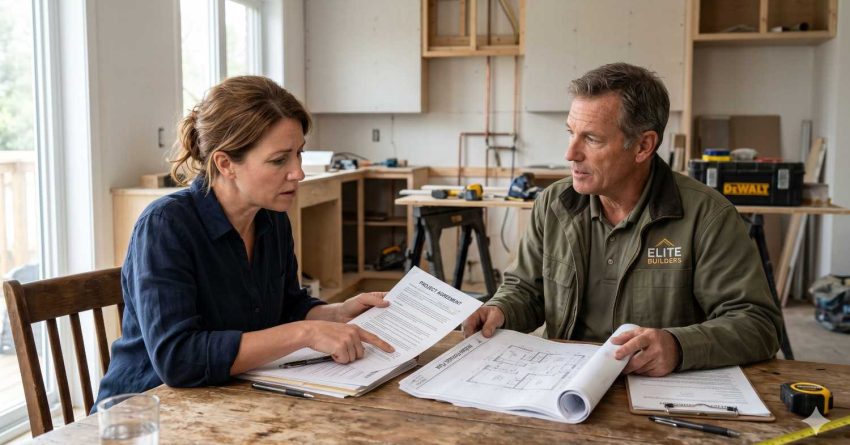
Effective contractor communication is direct, specific, and documented. State your expectations clearly at the start. Define the scope, materials, timeline, and payment schedule in a written contract. Ask questions about the process, not just the price. Request references and verify licensing before work begins. When changes arise — and they often do — address them in writing with a formal change order before any additional work proceeds. Choosing the right contractor for your project begins with knowing what questions to ask and what boundaries to set from the first conversation.
Conclusion
What you say to a contractor directly affects your project’s cost, quality, and timeline. Protecting your budget and your property starts with intentional communication.
Homeowners and property managers who set clear expectations, document agreements, and avoid revealing financial flexibility consistently get better outcomes across routine repairs and smaller home projects and large-scale renovations alike.
At Mr. Local Services, we connect you with skilled, vetted professionals who communicate transparently and deliver quality work — contact us today to get started.
Frequently Asked Questions
Is it okay to tell a contractor your exact budget?
Sharing your exact budget gives contractors a ceiling to price toward. Provide a general range only, then evaluate itemized estimates against your actual number privately before negotiating.
Should you tell a contractor you have other bids?
You can acknowledge that you are comparing estimates without revealing specific numbers. Use competing bids as internal benchmarks, not as negotiating pressure that may push contractors to cut quality.
What should you always put in writing with a contractor?
Every project should have a written contract covering scope of work, materials, start and completion dates, payment schedule, and a change order process. Verbal agreements are difficult to enforce.
Can being too friendly with a contractor hurt your project?
Overly casual relationships can blur professional boundaries and make it harder to enforce timelines or dispute charges. Maintain a respectful, professional tone throughout the project regardless of rapport.
What are red flags that a contractor is taking advantage of you?
Watch for vague estimates, pressure to skip permits, requests for large upfront payments, and reluctance to provide a written contract. These patterns often indicate poor practices or potential fraud.