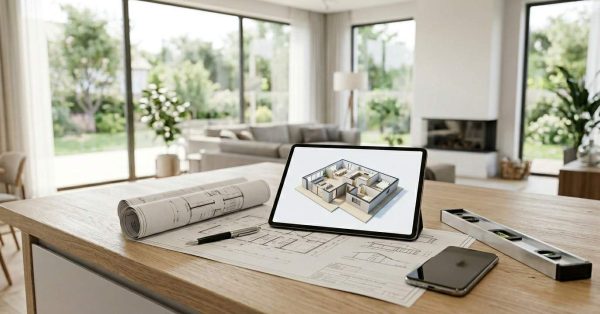
Architectural design services are the professional planning, documentation, and oversight processes that transform a building idea into a safe, code-compliant, buildable structure. They cover everything from the first concept sketch through construction administration, and they apply to new builds, additions, renovations, and commercial projects of all sizes. Whether you are planning a home addition, a full gut renovation, or a new commercial space, understanding what architectural design services include — and when you actually need them — helps you make smarter decisions, avoid costly mistakes, and get better results from every dollar you invest in your property.
This guide explains what architectural design services cover and why they matter for property owners across the USA.
It walks through every phase, service type, cost structure, and hiring consideration so you can move forward with confidence.
What Architectural Design Services Actually Include
Architectural design services are the full range of professional activities an architect or licensed design professional performs to plan, document, and guide a construction project from concept to completion. These services go far beyond drawing floor plans. They include site analysis, structural coordination, code compliance review, permit documentation, material specification, and construction oversight — all working together to ensure a project is safe, functional, legal, and built to last.
The scope of services varies by project type and complexity, but most architectural engagements follow a structured sequence of phases, each producing specific deliverables that contractors, engineers, and building departments rely on to do their work correctly.
Understanding what is included in architectural design services helps property owners set realistic expectations, budget accurately, and communicate clearly with the professionals they hire.
Schematic Design and Conceptual Planning
Schematic design is the first formal design phase, where an architect translates your goals, site conditions, and budget into an initial concept. This phase produces rough floor plans, basic elevations, and site diagrams that establish the overall size, shape, and organization of the project. The goal is not precision — it is alignment. Schematic design confirms that the project vision is feasible before significant resources are committed to detailed drawings.
Design Development and Technical Drawings
Design development takes the approved schematic concept and adds technical detail. Wall thicknesses, structural systems, mechanical and electrical layouts, window and door placements, and material selections are all defined at this stage. The drawings produced here are detailed enough for cost estimating and engineering coordination, but they are not yet the final construction documents. This phase is where design decisions become specific and binding.
Construction Documents and Permit Drawings
Construction documents are the complete, legally binding drawing set that contractors use to build and that building departments use to issue permits. They include architectural drawings, structural drawings, mechanical and electrical plans, specifications, and all details required for code compliance. These documents are the most time-intensive deliverable in the architectural design process and represent the highest level of precision in the entire service scope.
The Core Phases of an Architectural Design Project
Architectural design projects follow a defined sequence of phases, each building on the last. Understanding this sequence helps property owners know what to expect at every stage, what decisions they need to make, and what their architect is responsible for delivering.
The five standard phases recognized by the American Institute of Architects are pre-design, schematic design, design development, construction documents, and construction administration. Not every project requires all five phases, but most significant residential and commercial projects move through each one in order.
Pre-Design and Site Analysis
Pre-design is the research and discovery phase that happens before any design work begins. It includes site surveys, zoning and code research, utility identification, soil analysis, and program development — the process of defining exactly what the building needs to accomplish. Pre-design findings directly shape every design decision that follows, which is why skipping or rushing this phase is one of the most common causes of costly design revisions later.
Design Phases From Concept to Construction
The three middle phases — schematic design, design development, and construction documents — represent the progressive refinement of the design from a rough concept to a fully detailed, buildable set of drawings. Each phase requires owner review and approval before the next begins. This structured approval process protects property owners from paying for detailed work on a design direction they have not confirmed, and it gives architects clear checkpoints to manage scope and budget alignment.
Construction Administration and Project Oversight
Construction administration is the phase where the architect monitors the construction process to ensure the project is built according to the approved drawings and specifications. This includes site visits, review of contractor submittals and shop drawings, responses to requests for information, and documentation of any changes to the original design. Construction administration is often undervalued by property owners, but it is one of the most important services an architect provides — catching errors during construction is far less expensive than correcting them after the fact.
Types of Architectural Design Services Available
Architectural design services are not one-size-fits-all. The type of service you need depends on your project type, property classification, and the scope of work involved. The three primary categories are residential, commercial, and renovation or remodeling design services, each with distinct requirements, deliverables, and regulatory considerations.
Residential Architectural Design Services
Residential architectural design services cover single-family homes, multi-family buildings, accessory dwelling units, and home additions. These services address the unique requirements of residential construction, including zoning setbacks, occupancy classifications, energy codes, and livability standards. Residential projects requiring an architect typically include new custom homes, significant structural additions, and projects in jurisdictions with strict design review requirements. Residential architectural design frequently involves roof structure planning, load calculations, and drainage coordination — if your project includes a new roof or significant roof modification, our residential roofing services detail what structural and material decisions need to align with your architect’s drawings before work begins.
Commercial Architectural Design Services
Commercial architectural design services apply to office buildings, retail spaces, restaurants, warehouses, mixed-use developments, and any structure classified as commercial under local building codes. Commercial projects are subject to more complex code requirements than residential work, including ADA accessibility standards, fire and life safety systems, occupancy load calculations, and commercial energy codes. Commercial architectural design projects require close coordination between structural drawings and building systems — our commercial electrical planning explains how electrical layout, panel placement, and code compliance integrate with the architectural design documents your contractor will follow.
Renovation and Remodeling Design Services
Renovation and remodeling design services address existing structures being modified, expanded, or repurposed. These projects present unique challenges because the architect must work within existing conditions that may not match original drawings, may contain hazardous materials, or may not comply with current codes. Renovation design services often specify interior partition layouts, ceiling heights, and finish materials — our drywall and ceiling work explains how those architectural specifications translate into the actual installation work your crew will execute on site.
Architectural design services lay the foundation for every successful build — when your project involves structural changes or additions, our remodeling design services walk through exactly what a licensed professional plans, documents, and coordinates before a single wall comes down.
When Do You Actually Need an Architectural Designer?
Not every construction project legally requires a licensed architect, but many projects benefit significantly from professional design services even when they are not mandated. Understanding the difference between when architectural services are required and when they are simply valuable helps property owners make informed decisions about their investment.
Projects That Require Licensed Architectural Services
Most jurisdictions in the USA require a licensed architect to prepare and stamp construction documents for projects above a certain size or complexity threshold. These thresholds vary by state and municipality, but they typically include new construction above a defined square footage, multi-family residential buildings, all commercial construction, and any project involving structural modifications to load-bearing systems. Building departments will not issue permits for these project types without architect-stamped drawings. Attempting to proceed without licensed architectural services on a required project results in permit denials, stop-work orders, and potential legal liability.
Many projects that require an architect also involve significant plumbing system changes — our plumbing system design explains how plumbing layouts are coordinated with architectural drawings to meet code requirements and avoid costly rework during construction.
Projects Where Architectural Design Adds Value
Even when architectural services are not legally required, they often deliver measurable value. A well-designed addition integrates seamlessly with the existing structure, maximizes usable space, and avoids the proportional and functional problems that plague projects designed without professional input. Architectural design also reduces contractor errors, minimizes change orders, and produces documentation that protects property owners if disputes arise. For any project where the design complexity, budget, or long-term property value is significant, professional architectural design services are a sound investment.
What to Expect From the Architectural Design Process
Knowing what happens at each stage of the architectural design process helps property owners stay engaged, make timely decisions, and avoid the delays that come from unclear expectations. The process is collaborative, iterative, and document-driven — and your active participation at key decision points directly affects the quality and efficiency of the outcome.
Initial Consultation and Scope Definition
The architectural design process begins with an initial consultation where the architect learns about your project goals, site conditions, budget, and timeline. This meeting establishes the project program — the list of spaces, functions, and performance requirements the design must satisfy. A well-run initial consultation also clarifies the scope of architectural services being provided, the fee structure, and the expected timeline for each phase. Coming to this meeting with a clear sense of your priorities, your budget range, and any non-negotiable requirements gives your architect the information needed to develop an accurate proposal and a realistic project schedule.
Timelines and Milestones by Project Type
Architectural design timelines vary significantly by project type and complexity. A straightforward single-family home addition might move from schematic design to permit-ready construction documents in eight to twelve weeks. A custom new home typically requires four to six months of design work before permit submission. Commercial projects can take six months to over a year depending on size, jurisdiction, and the complexity of engineering coordination required. These timelines do not include the permit review period, which adds weeks to months depending on the jurisdiction and the completeness of the submitted documents.
Deliverables You Receive at Each Phase
At the end of each design phase, your architect delivers a specific set of documents for your review and approval. Schematic design produces concept drawings and a preliminary cost estimate. Design development produces detailed drawings, outline specifications, and an updated cost estimate. Construction documents produce the complete permit and construction drawing set, including all architectural, structural, and systems drawings. Understanding what you are reviewing at each phase — and what decisions you need to make — keeps the project moving and prevents costly revisions caused by late-stage changes to previously approved design directions.
Architectural deliverables typically include window schedules that specify size, placement, glazing type, and energy performance — our window design and installation explains how those specifications are carried through from the architect’s drawings to the finished installation. Door schedules are a standard deliverable in architectural design packages, covering hardware, fire ratings, and dimensional requirements — our door specification services shows how those design decisions connect to the actual products and installation your contractor will complete.
How Architectural Design Services Affect Property Value
Architectural design quality has a direct and measurable impact on property value. Well-designed buildings are more functional, more energy-efficient, more durable, and more appealing to future buyers than structures built without professional design input. The relationship between design quality and property value operates across multiple dimensions, from immediate construction cost control to long-term operating efficiency and resale performance.
Design Quality and Long-Term Property Performance
A professionally designed building performs better over its lifetime than one built from generic plans or contractor-drawn documents. Proper structural design prevents settlement, moisture intrusion, and premature material failure. Thoughtful space planning maximizes usable square footage and reduces the need for costly modifications as occupant needs change. Material specifications that account for local climate, maintenance requirements, and durability expectations reduce long-term operating costs and protect the property’s condition over time. Architectural design decisions directly influence long-term property value, and material choices are a significant part of that equation — our flooring material selection explains how flooring specifications made at the design stage affect durability, maintenance costs, and resale appeal.
Energy Efficiency, Code Compliance, and Resale Value
Energy efficiency is one of the strongest drivers of property value in modern architectural design, and mechanical system coordination is central to that outcome — our HVAC system planning explains how heating, cooling, and ventilation layouts are integrated into architectural drawings to meet energy codes and reduce long-term operating costs. Code-compliant construction also protects property value by ensuring the building can be legally occupied, insured, and sold without remediation. Properties with documented architectural design, permitted construction, and final inspections command higher resale prices and sell faster than comparable properties with unpermitted work or undocumented modifications.
How to Choose the Right Architectural Design Professional
Choosing the right architect or design professional is one of the most consequential decisions in any construction project. The right professional brings technical competence, clear communication, and a design sensibility aligned with your goals. The wrong choice leads to cost overruns, design revisions, permit problems, and contractor conflicts that are expensive and time-consuming to resolve.
Credentials, Licensing, and What They Mean
In the USA, the title “architect” is legally protected and requires licensure through the National Council of Architectural Registration Boards (NCARB) or a state licensing board. Licensed architects have completed an accredited degree program, fulfilled an internship requirement, and passed the Architect Registration Examination. Only licensed architects can legally stamp construction documents for projects that require architectural review. When hiring for a project that requires permitted construction, always verify that your design professional holds a current license in your state. You can verify architect licenses through your state’s licensing board website.
Questions to Ask Before Hiring
Before signing an architectural services agreement, ask prospective architects about their experience with your specific project type, their familiarity with local building codes and permit processes, their fee structure and what is included in each phase, their availability and expected communication frequency, and how they handle scope changes and budget overruns. Ask to see completed projects similar to yours and speak with past clients about their experience. A qualified architect will answer these questions directly and provide references without hesitation.
Red Flags to Watch For
Avoid architects who are unwilling to provide a written contract, who cannot clearly explain their fee structure, or who promise unrealistically fast timelines. Be cautious of professionals who discourage permit applications, who cannot provide proof of current licensure, or who have no professional liability insurance. An architect who discourages permits is exposing you to significant legal and financial risk. Professional liability insurance — also called errors and omissions insurance — protects you if design errors cause construction problems or financial losses.
Once your architectural design is complete and construction begins, finish work becomes the next major decision — our interior and exterior painting helps you understand how paint specifications in your design documents translate into the final look and protection of your completed project.
Architectural Design Services vs. Related Services
Architectural design services are frequently confused with related but distinct professional services. Understanding the differences helps property owners hire the right professional for each aspect of their project and avoid paying for services they do not need or missing services they do.
Architect vs. Interior Designer vs. Draftsperson
A licensed architect is qualified to design the full building — structure, systems, envelope, and interior — and is legally authorized to stamp construction documents for permitted projects. An interior designer focuses on the interior environment: space planning, finishes, furniture, lighting, and aesthetics. Interior designers are not licensed to stamp structural or permit drawings in most jurisdictions. A draftsperson produces technical drawings based on designs provided by others but does not perform the design analysis, code review, or engineering coordination that an architect provides. For projects requiring permits or structural modifications, a licensed architect is the appropriate professional. For interior finish and furnishing decisions, an interior designer adds specialized value.
Architectural drawings frequently specify custom millwork, built-ins, and structural wood elements that fall outside standard contractor scope — our custom carpentry work explains how those design specifications are executed by skilled carpenters working from your architect’s detailed drawings.
When You Need Both an Architect and a Contractor
An architect and a general contractor serve complementary but distinct roles. The architect designs the project and produces the documents. The contractor builds it. On most significant projects, you need both — and the sequence matters. Hiring a contractor before your architectural design is complete leads to inaccurate bids, scope disputes, and change orders that erode your budget. The correct sequence is to complete architectural design and obtain permits before soliciting contractor bids. This gives contractors a complete, accurate scope to price and eliminates the ambiguity that drives cost overruns.
How Much Do Architectural Design Services Cost?
Architectural design fees vary widely based on project type, scope, geographic location, and the fee structure used. Understanding how architects charge and what factors drive total cost helps property owners budget accurately and evaluate proposals from multiple firms.
Common Fee Structures Explained
Architects use several standard fee structures. A percentage of construction cost is the most common approach for new construction and major renovations, typically ranging from 8% to 15% of the total construction budget depending on project complexity. A fixed fee is common for well-defined project scopes where the architect can accurately estimate the time required. An hourly rate is used for consulting, feasibility studies, and projects with undefined scope. Some architects use a hybrid approach, charging a fixed fee for design phases and an hourly rate for construction administration. Each structure has advantages depending on your project type and your preference for cost certainty versus flexibility.
Deck additions are one of the most common projects where homeowners ask whether architectural design services are worth the cost — our deck design and construction breaks down when a licensed architect is required for deck projects and how design fees compare to the value added.
Factors That Affect Total Design Cost
The primary factors that drive architectural design fees are project size, complexity, site conditions, the number of design revisions required, and the level of construction administration services included. Projects with unusual site conditions — steep slopes, flood zones, historic districts, or contaminated soil — require more pre-design research and more complex documentation, which increases fees. Projects in jurisdictions with lengthy permit review processes or multiple design review boards require more architect time for approvals, adding to total cost. Requesting extensive design revisions after an approved phase is complete is one of the most common sources of fee overruns — clear decision-making at each phase approval point is the most effective way to control total design cost.
How Mr. Local Services Supports Your Design and Build Journey
Architectural design services define what gets built. The skilled professionals who execute that design determine how well it gets built. Mr. Local Services connects homeowners, landlords, and property managers across the USA with trusted, vetted professionals across every service category your project requires — from the first site preparation through the final finishing touches.
A complete property project extends beyond the structure itself — our landscape design services explains how site grading, drainage, and outdoor living elements are coordinated with your architectural design to create a cohesive, functional property from the foundation to the property line. After architectural design and construction are complete, a thorough post-build clean is the final step before occupancy — our post-construction cleaning details what a professional clean-up covers and why it matters for protecting the finishes and materials your architect specified.
Whether you are coordinating a full design-build project or filling in specific service gaps as your project progresses, Mr. Local Services gives you access to reliable professionals who understand how their work connects to the larger design and construction picture. Contact us today to find the right team for every phase of your project.
Conclusion
Architectural design services cover every stage of a building project — from site analysis and concept development through construction documents and on-site oversight — giving property owners the planning foundation every successful build requires.
The right architectural design professional reduces risk, controls cost, and produces a building that performs better and holds its value longer than one built without professional design input.
At Mr. Local Services, we connect you with skilled professionals across every service category your project needs — reach out today and let us help you build with confidence from design through completion.
Frequently Asked Questions
What is included in architectural design services?
Architectural design services include pre-design research, schematic design, design development, construction documents, and construction administration. Deliverables include concept drawings, technical plans, permit documents, material specifications, and on-site oversight during construction.
Do I need an architect for a home addition?
Whether you need a licensed architect for a home addition depends on your state and local jurisdiction. Most areas require architect-stamped drawings for additions above a certain square footage or involving structural modifications. Check with your local building department before starting design work.
How long does the architectural design process take?
A straightforward home addition typically takes eight to twelve weeks from schematic design to permit-ready documents. A custom new home takes four to six months. Commercial projects can take six months to over a year depending on size, complexity, and jurisdiction requirements.
What is the difference between schematic design and design development?
Schematic design produces rough concept drawings that establish the overall size, shape, and organization of a project. Design development takes the approved concept and adds technical detail — wall thicknesses, structural systems, material selections, and mechanical layouts — in preparation for construction documents.
How much do architectural design services cost in the USA?
Architectural fees typically range from 8% to 15% of total construction cost for new builds and major renovations. Fixed fees, hourly rates, and hybrid structures are also common. Total cost depends on project size, complexity, site conditions, and the level of construction administration included.
Can architectural design services help with permits?
Yes. Preparing permit-ready construction documents is one of the core deliverables of architectural design services. Architects are familiar with local building codes, zoning requirements, and permit submission processes, and they coordinate with building departments to address review comments and obtain approvals.
What happens during construction administration?
During construction administration, the architect visits the site at key milestones, reviews contractor submittals and shop drawings, responds to requests for information, and documents any changes to the approved design. This oversight ensures the project is built according to the construction documents and helps catch errors before they become expensive corrections.
Is architectural design worth it for a remodel?
For remodels involving structural changes, permit requirements, or significant investment, architectural design services are typically worth the cost. They reduce contractor errors, minimize change orders, ensure code compliance, and produce documentation that protects your investment and supports future resale.